 Bellingham Siding
 Window Installation in Sunnyland: What Bellingham's Climate Actually Demands
Sunnyland is one of Bellingham's established residential neighborhoods, with a mix of mid-century homes and newer infill construction set among the mature tree cover common across this part of the city. Like the rest of Bellingham, it sits close enough to Bellingham Bay and the Salish Sea to deal with the same core climate pressures that define window performance across Whatcom County: salt-tinged marine air, rain that comes in sideways as much as it falls straight down, and a moss and mildew season that can stretch across most of the calendar year on shaded walls and trim. None of that is unique to Sunnyland specifically, but it's the reality every window in the neighborhood has to hold up against, year after year.
Windows take more of that punishment than almost any other part of a home's exterior. They're where the building envelope has the most seams, the most moving hardware, and the most opportunities for water to find a way in if the installation isn't handled correctly. A window unit itself matters, but in this climate the flashing and installation detail around it usually matters more.
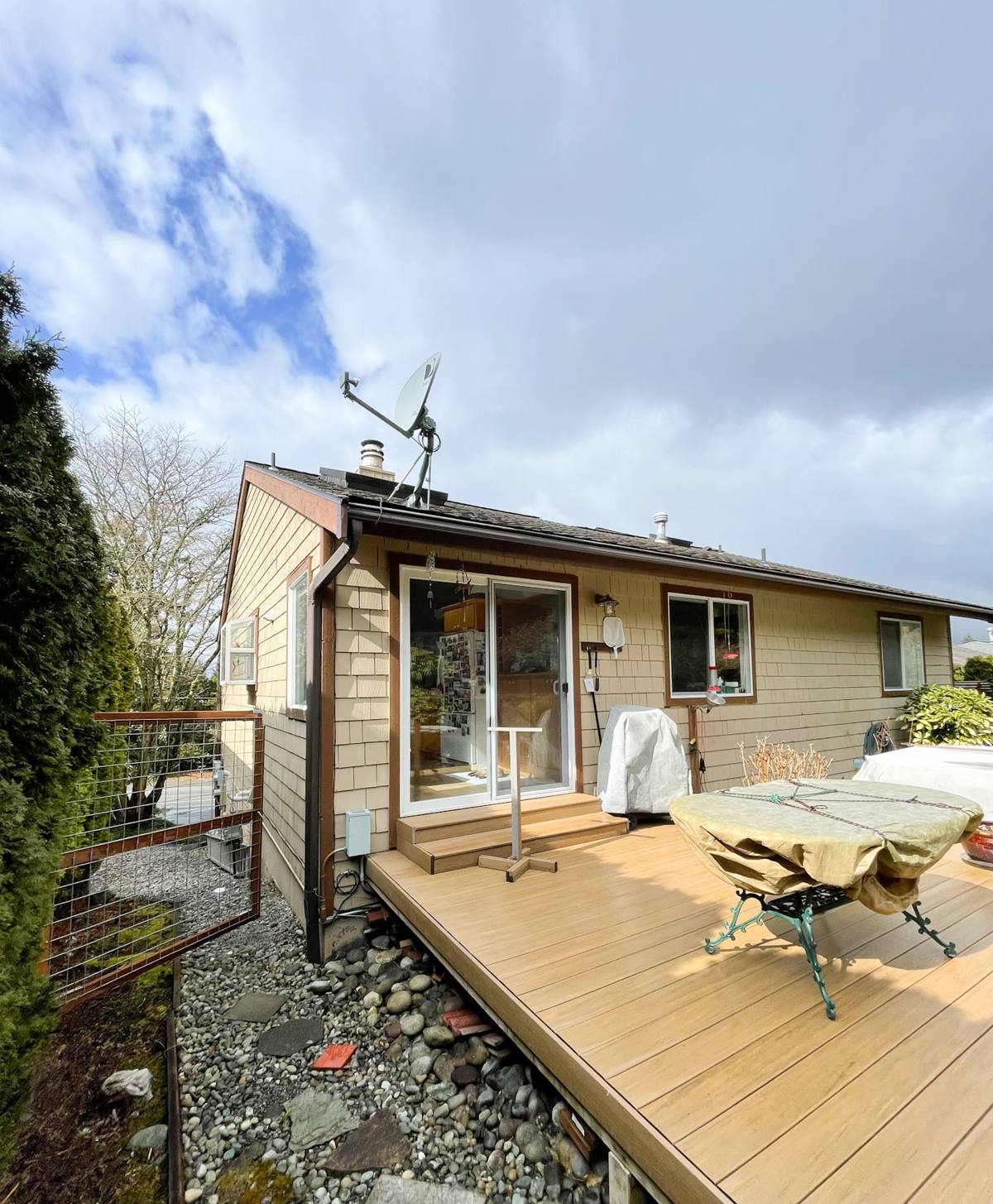
What Sunnyland's Climate Does to Windows
Salt Air and Marine Exposure
Bellingham's proximity to the bay means a steady background level of salt-carrying moisture moving through the air across the city, Sunnyland included, even on days without an obvious storm. That kind of sustained low-grade exposure is hard on window hardware, fasteners, and lower-quality frame finishes over time. It's a slow process rather than a dramatic one, which is exactly why it tends to go unnoticed until hardware is already stiff or corroded.
Driving Rain
Rain in this part of Whatcom County frequently arrives pushed by wind rather than falling straight down, and that changes how water behaves around a window opening. Wind-driven rain gets forced into lap joints, trim seams, and gaps around the frame from angles a simple vertical rainfall assumption doesn't account for. A window that would stay dry in a calmer, drier climate can still leak here if the flashing wasn't lapped and sealed with that kind of exposure in mind.
A Long Moss Season
Mild temperatures, consistent dampness, and tree cover across neighborhoods like Sunnyland add up to an extended moss and mildew season, often running most of the year on north-facing or shaded elevations. Window sills, trim, and the wood framing around older single-pane or poorly sealed windows are common places it takes hold, especially where water sits instead of draining away cleanly.
Temperature Swings and Condensation
The gap between warm, heated interiors and cold, damp exteriors through Bellingham's fall and winter months puts real condensation pressure on glass and frames. Fogging, moisture trapped between panes, or water pooling on interior sills is common on older windows in the neighborhood, and it's usually a sign a seal has already failed rather than just a cosmetic nuisance.
Signs a Sunnyland Home Needs New Windows
- Fogging or visible moisture trapped between the panes of a double-pane window
- Noticeable drafts or cold spots near the frame even with the window fully closed and locked
- Wood sills or trim that feel soft, look discolored, or show visible rot
- Windows that are difficult to open, close, or lock compared to how they used to operate
- Visible daylight or gaps where the frame meets the surrounding siding
- Paint or finish peeling, bubbling, or chalking faster than the rest of the home's exterior
- Rising heating bills without any other clear explanation
What a Correct Window Installation Actually Involves
Flashing Is What Actually Keeps Water Out
We spend more time on flashing detail than on window brand, because in this climate flashing is the difference between a window that stays dry for decades and one that starts leaking within a couple of wet seasons. That means the flashing laps correctly with the surrounding weather-resistive barrier and siding, water is directed out and away from the rough opening instead of getting trapped behind it, and every seam uses materials rated for sustained moisture exposure rather than relying on caulk to do that job alone. This is standard on every installation we do, not something a homeowner has to specifically request.
Common Mistakes We See on Older Homes
On repair and replacement calls in and around Sunnyland, the water damage we find almost never comes from the window unit itself failing. It comes from flashing that was never properly lapped in the first place, or from caulk used as a substitute for flashing instead of a supplement to it. Caulk breaks down and cracks with age and UV exposure; it was never designed to be the sole barrier against wind-driven rain over the long term.
Choosing the Right Windows for This Climate
We install vinyl and fiberglass window systems built for the Pacific Northwest's wet, mild climate, and we walk homeowners through the real trade-offs rather than pushing a single brand as the only correct answer. What matters most for a Sunnyland home is a tight, well-engineered frame, a glazing package that performs for both energy efficiency and condensation resistance, and hardware rated to hold up under sustained marine-air exposure.
| Frame Material | Strengths | Trade-offs |
|---|---|---|
| Vinyl | Lower cost, good energy performance, resists rot | Fewer custom color options; can expand and contract more with temperature swings |
| Fiberglass | Very dimensionally stable, holds paint if a custom color is wanted, resists rot | Higher upfront cost than vinyl |
- Frame material: Vinyl and fiberglass both resist rot in a way uncladded wood frames don't, which matters given how much moisture Bellingham sees through the year.
- Glazing package: Double or triple-pane glass with low-E coatings improves energy performance in both directions and helps reduce interior condensation during cold, damp stretches.
- Hardware grade: Corrosion-resistant hardware holds up longer against the marine air reaching neighborhoods like Sunnyland than standard-grade hardware does.
- Warranty structure: A manufacturer's product warranty is only as good as the installation behind it, which is why we stand behind our installation work separately from the manufacturer's coverage.
Our Installation Process
- On-site assessment of existing windows — frame condition, seal integrity, hardware function, and how current flashing ties into the surrounding siding
- A straightforward read on which windows are reasonable repair or reglaze candidates and which make more sense to replace
- A written scope and estimate before any work begins, with product and installation warranties spelled out separately
- Careful removal of the old window and inspection of the rough opening and sheathing for hidden moisture damage
- Installation with full flashing integration into the existing weather-resistive barrier and siding, not caulk-only sealing
- Final function check — operation, locking hardware, and a visual seal check — before we call the job done
Window Installation Cost Factors in Sunnyland
| Factor | What It Affects | Why It Matters Here |
|---|---|---|
| Number and size of windows | Total material and labor | Larger or custom-sized openings common in older Sunnyland homes cost more to source and install |
| Frame material and glazing package | Unit cost and long-term performance | Better glazing and hardware pay off in a climate with this much sustained moisture and marine air |
| Condition of the rough opening | Repair costs found during removal | Years of minor water intrusion behind older siding and trim can hide rot that isn't visible until the old window comes out |
| Flashing and siding integration | Labor time and installation complexity | Correct flashing takes more time than a quick caulk-and-frame job, but it's what actually keeps water out long-term |
| Lead time on custom sizing | Project timeline, not direct cost | Older homes often have non-standard openings that require custom-built windows rather than stock sizes |
Real numbers depend on the specific home and openings involved, which is why we look at the property in person before quoting rather than pricing off a general estimate.
Why Hire a Crew That Already Works in Sunnyland
A contractor who works this part of Bellingham regularly already knows how salt air, driving rain, and a long moss season behave on real homes across a full year, not just how a window performs on a spec sheet. That shows up in the small decisions that actually determine long-term performance: how much lap a flashing detail gets, whether caulk is treated as a full seal or a supplement to proper flashing, and which hardware grade gets specified for a given wall's exposure. We also handle siding, roofing, and decks, so the person doing your window flashing understands how it needs to tie into the siding and drainage details around it rather than treating the window as an isolated component.
If you've got drafty, foggy, or hard-to-operate windows on a Sunnyland property, or you're just not sure whether repair or replacement makes more sense, we're glad to take a look. Reach out using the form below to schedule a free, no-pressure estimate.