 Bellingham Siding
 Fairhaven's Siding Takes a Different Kind of Beating
Fairhaven sits close enough to Bellingham Bay that salt-laden air is a daily fact of life, not an occasional nuisance. Add in the driving, wind-pushed rain that rolls through Whatcom County for much of the year and a moss and algae season that can stretch from fall through spring, and you have a climate that quietly stresses siding in ways drier inland neighborhoods never see. Homes here don't usually fail all at once. They fail one soft spot, one hairline crack, one moss-choked shadow line at a time, until an owner finally notices paint bubbling near a window trim or a board that flexes under a thumb.
Siding repair in this neighborhood isn't just patch-and-paint work. It's diagnosing what the salt air, moisture, and shade have actually done to the wall assembly behind the surface, then fixing it so the same failure doesn't reappear in two winters.
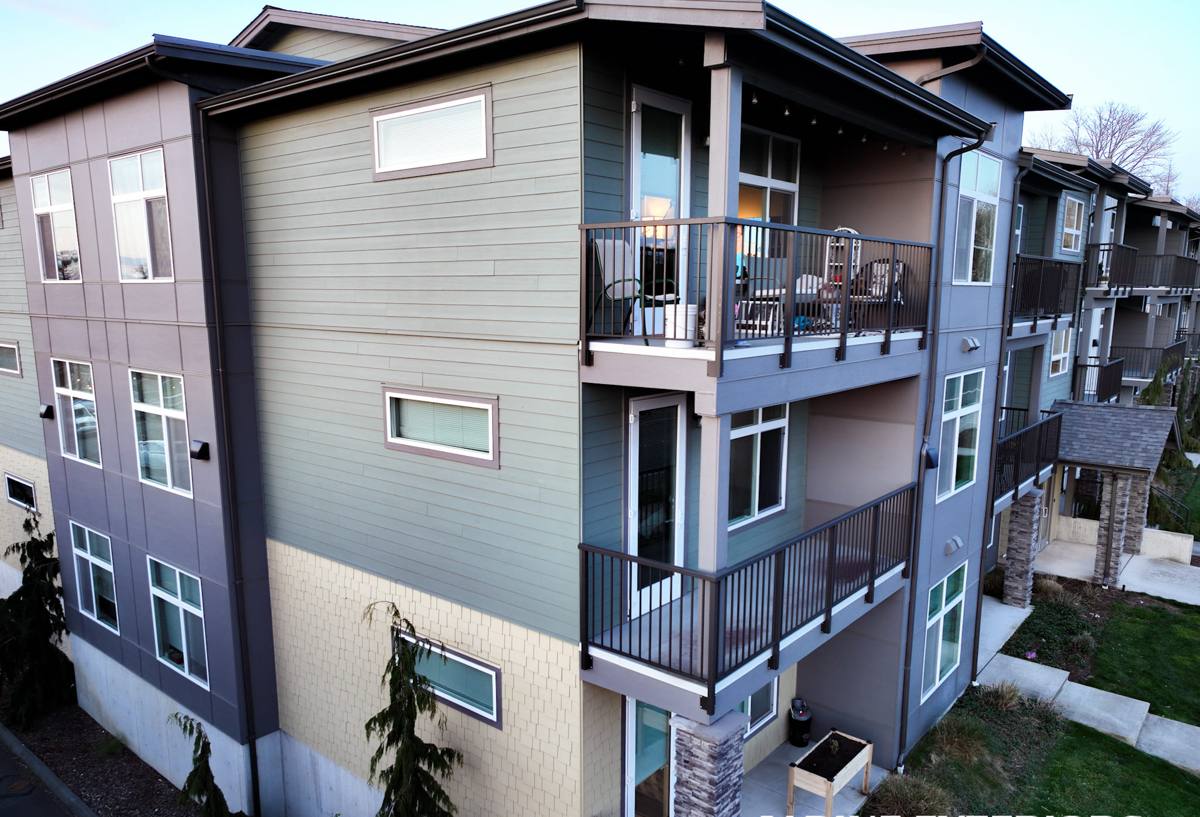
What the Local Climate Does to Siding Over Time
Salt Air
Airborne salt accelerates corrosion on fasteners, flashing, and any exposed metal trim. On siding materials that rely on paint film for protection, salt exposure also breaks down that film faster than it would a few miles inland, which is part of why homes closer to the water tend to need attention sooner.
Driving Rain
Wind-driven rain doesn't just fall on siding, it gets pushed sideways into joints, laps, and butt seams. Over years, caulking that was never designed to be a primary water barrier starts to fail, and water finds its way behind the cladding at the exact spots builders assumed would stay dry.
Moss and Algae
Shaded walls, north-facing elevations, and anything near overhanging trees stay damp longer here than in sunnier climates. That constant moisture supports moss and algae growth, which holds water against the siding surface and, on wood-based products, can accelerate rot at the exact spots the growth takes hold.
Common Repair Issues We See on Fairhaven Homes
- Soft, spongy, or delaminating boards at the bottom courses, where splash-back and standing moisture concentrate
- Cracked or split siding near window and door trim, often from a combination of moisture cycling and material movement
- Failed caulk joints that have opened up gaps at seams, corners, and penetrations
- Moss and algae staining that keeps a wall damp longer than a clean, sun-exposed wall
- Rust streaking from corroding fasteners or metal flashing, a giveaway of a moisture and salt-air combination at work
- Paint failure and peeling that's outpacing the rest of the house, usually a sign moisture is moving through the siding from behind
What a Correct Repair Actually Involves
A lot of siding "repair" in this climate is really just cosmetic patching over a moisture problem that keeps working underneath. That's how the same repair ends up needed again 18 months later. A repair worth paying for starts with finding out why the siding failed in the first place, not just what it looks like on the surface.
Step One: Diagnose, Don't Just Patch
Before any board comes off, we look at what's driving the damage: is water getting behind the siding at a flashing detail, a caulk joint, or a penetration for a hose bib or vent? Is the damage isolated to one section or is it a pattern across a whole elevation? Patching a symptom without fixing the water path behind it is the single most common reason siding repairs don't hold up.
Step Two: Open It Up and Check the Wall Behind It
Once we know where the damage is concentrated, we remove the affected siding and inspect the water-resistive barrier, flashing, and sheathing underneath. Any homeowner who's had a "quick fix" siding repair that reappeared knows the reason: nobody checked what was happening behind the cladding.
Step Three: Repair the Details, Not Just the Boards
Correct flashing at windows, doors, and penetrations, proper lap and joint spacing, and the right fasteners for a coastal climate all matter more than the siding material itself. Skipping these details is how a repair looks fine for a season and fails again by the next wet winter.
Step Four: Match and Finish
Replacement sections need to match the existing siding's profile, exposure, and color as closely as possible. On factory-finished fiber cement, that's straightforward because the color is baked into the product rather than mixed on site. On field-painted materials, matching an aged finish is harder and often means repainting a full elevation to avoid a visible patch.
Repair or Replace? How We Help You Decide
Not every problem area needs a full re-side, but not every problem is a good candidate for a spot repair either. The table below covers the factors we actually weigh on a Fairhaven job site.
| Factor | Favors Repair | Favors Replacement |
|---|---|---|
| Extent of damage | Isolated to one or two elevations or sections | Spread across most of the house |
| Underlying wall condition | Sheathing and barrier are sound where opened up | Rot or moisture damage found behind multiple sections |
| Siding age | Siding is well within its expected service life | Siding is near or past the end of its useful life |
| Material match | Replacement material and finish can be matched closely | Discontinued profile, color, or product line |
| Root cause | Cause was a single failed detail (caulk, flashing) now correctable | Cause is systemic (design, ventilation, chronic moss/moisture) |
When damage is limited and the wall behind it checks out sound, a targeted repair is the honest, cost-effective answer. When we find the same failure pattern repeating across the house, or the existing siding is already near the end of what it can give, we'll tell you that plainly rather than stringing together patches that won't hold.
Our Fairhaven Repair Process
- On-site assessment — we walk the affected areas, probe for soft spots, and check nearby trim, flashing, and caulk joints for related issues
- Diagnosis — we identify the moisture path or mechanical cause behind the damage before quoting anything
- Written scope and estimate — a clear explanation of what's being repaired, why, and what it involves, with no pressure to upsell a full replacement you don't need
- Removal and inspection behind the siding — confirming the wall assembly underneath is sound, or flagging what needs attention if it isn't
- Correct reinstallation — proper flashing, fastening, and joint detailing built for a wet, salt-air climate
- Match and finish — replacement siding matched to the existing material as closely as possible
- Final walkthrough — reviewing the completed work with you before we consider the job done
Why We Repair With James Hardie Fiber Cement
When a repair calls for new siding material, we use James Hardie fiber cement exclusively. We don't install vinyl, LP SmartSide, or other engineered wood products, and that's a deliberate standard, not a limitation on our end. Fiber cement doesn't rot, doesn't feed moss and algae the way wood-based products can, and holds up to salt air and driving rain without the maintenance burden that comes with painted wood trim or engineered wood siding. Hardie's ColorPlus factory finish also means a repaired section can be matched to the existing wall without a field-mixed paint that ages differently over time. For a neighborhood dealing with constant moisture and salt exposure, that combination of moisture resistance, non-combustible material, and finish durability is why it's what we put back on the wall.
Why Local Experience on This Neighborhood Matters
A contractor who's worked on homes throughout Bellingham and Whatcom County knows which elevations in Fairhaven take the worst of the weather, which construction eras in the neighborhood tend to have particular flashing or trim details, and what moisture damage from years of salt air and shade actually looks like once the siding comes off. That experience shortens the diagnosis, avoids repairs that only address the surface, and means fewer surprises once a wall is opened up. It also means realistic expectations from day one about what a repair can fix and what genuinely needs a fuller scope.
What Homeowners Can Do Between Repairs
- Rinse moss and algae growth off siding gently at least once a year, especially on shaded or north-facing walls
- Trim back trees and shrubs that keep siding shaded and slow to dry after rain
- Check caulk at windows, doors, and trim joints annually and have gaps re-caulked before they widen
- Watch for soft spots, bubbling paint, or discoloration low on the wall, which often show up before damage is visible elsewhere
- Keep gutters and downspouts clear so roof water isn't dumping directly onto siding below
- Address small repairs promptly rather than waiting, since moisture damage in this climate tends to spread, not stay contained
If you're seeing soft spots, cracked boards, or persistent moss staining on your Fairhaven home, we're happy to take a look and give you an honest assessment of what it needs. Request a free, no-pressure estimate using the form below.