 Bellingham Siding
 Why Cordata Homes Take a Different Kind of Beating
Cordata sits in north Bellingham, close enough to the Puget Sound marine air that homes here deal with a mix of weather most siding products were never designed to handle well: salt-laced wind off the water, long stretches of driving rain that comes in sideways more often than straight down, and a moss season that can run from late fall through spring. None of these is dramatic on its own. Together, over ten or fifteen years, they're what actually determines whether a siding job still looks good and performs correctly — or whether it's quietly failing behind the paint.
Salt air accelerates corrosion on fasteners, flashing, and trim if the wrong materials or install details are used. Driving rain finds every gap in a water-management plan, not just the obvious ones. And moss doesn't just grow on roofs — it colonizes north-facing and shaded siding surfaces in Whatcom County, holding moisture against the wall assembly for months at a time. A siding job that's only rated for "average" weather doesn't hold up to that combination as well as one that's actually built for it.
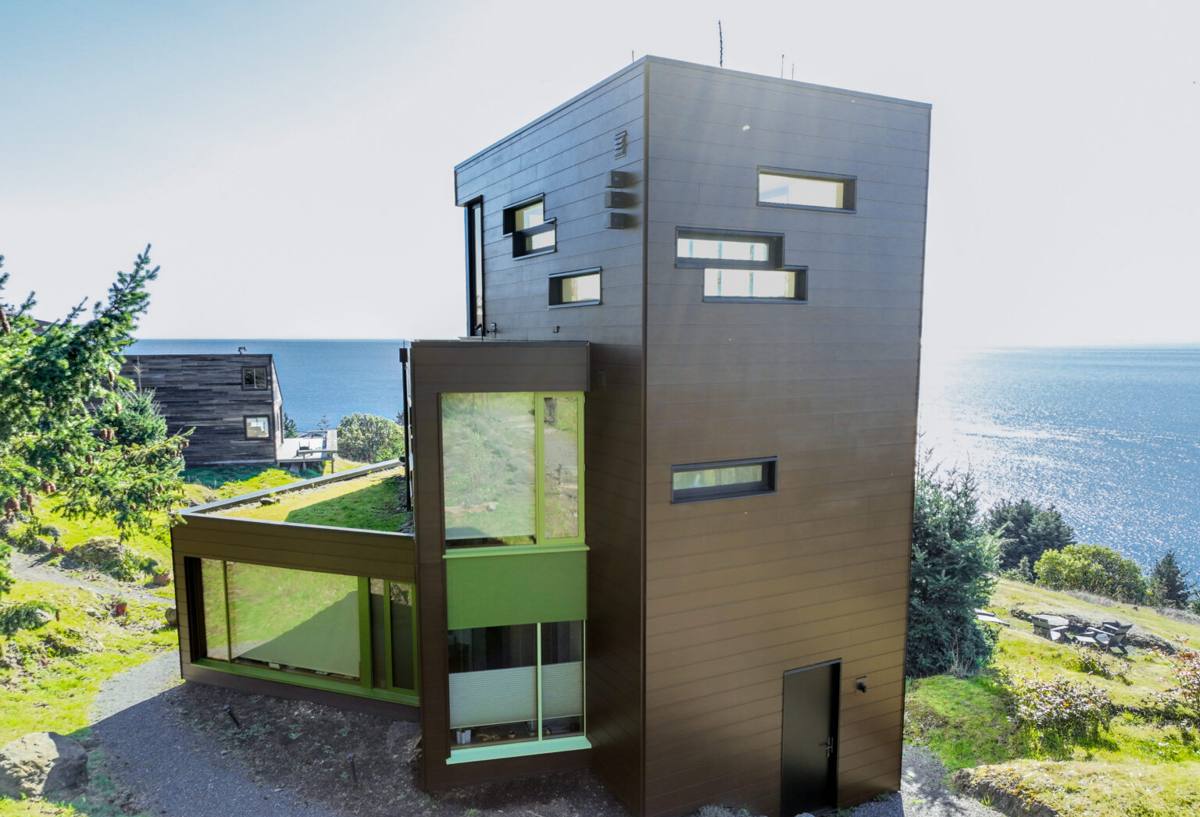
What Correct Siding Installation Actually Involves
Siding is a system, not a single product. The board or panel you see is the last piece of a layered assembly, and in a climate like Cordata's, the layers underneath matter as much as the finish coat. A correct install includes:
Water Management First
Before any siding goes up, the wall needs a weather-resistant barrier installed shingle-style so water is always directed outward and down, never trapped behind the cladding. Every window, door, and penetration needs proper flashing integrated into that barrier — not caulked over as an afterthought. This is the part of the job that's invisible once it's done, and it's also the part that determines whether the house stays dry for the next few decades.
Fastening and Clearances
Fiber cement siding has specific fastening patterns, nail spacing, and penetration depth requirements set by the manufacturer. Get those wrong and you either void the warranty or create stress points where the board can crack. Siding also needs proper clearance from grade, roof lines, decks, and other transitions so water has somewhere to go instead of wicking up into the bottom edge of the boards.
Joints, Caulking, and Finish Details
Butt joints, corners, and trim intersections are where most siding failures start. Factory-primed or factory-finished edges, correctly sealed joints, and the right caulk for a coastal climate all extend the life of the job significantly compared to shortcuts at these details.
Why We Only Install James Hardie Fiber Cement
We made a decision as a company to install James Hardie fiber cement siding exclusively — not vinyl, not LP SmartSide, not cedar, not primed spruce, not other fiber cement brands. That's not a marketing position; it's a standard we hold because of what we've seen play out on Pacific Northwest homes over time.
Fiber cement is non-combustible, dimensionally stable, and doesn't absorb and release moisture the way wood-based products do. Hardie's ColorPlus factory finish is baked on under controlled conditions, which gives it better fade and chip resistance than field-applied paint. Hardie also builds climate-specific HZ product lines engineered for exactly the kind of wet, humid conditions Whatcom County sees most of the year. When it's installed to spec — which is the part that actually matters — it's a system that's proven itself in this climate, backed by a strong transferable warranty.
We're upfront that other products have real strengths. Vinyl is inexpensive and low-maintenance in mild climates. Wood has a look some homeowners specifically want. But when we weigh moisture behavior, long-term maintenance, fire performance, and warranty structure against what Cordata's weather actually does to a house, fiber cement — installed correctly — is what we're willing to put our name on.
Our Installation Process
Every job follows the same sequence, whether it's a full re-side or a section replacement:
- Assessment and measurement — we inspect the existing wall assembly, check for hidden moisture damage, and take exact measurements for material ordering.
- Tear-off and substrate check — old siding comes off and we look at the sheathing underneath before anything new goes up. Rot or soft spots get addressed, not covered.
- Weather barrier and flashing — the house wrap and flashing details go in first, integrated at every window, door, and penetration.
- Siding installation — Hardie boards or panels installed to manufacturer fastening specs, with correct clearances and joint treatment.
- Trim and finish work — corners, trim boards, and caulking completed to a standard that holds up to driving rain, not just looks finished on install day.
- Final walkthrough — we go over the finished job with the homeowner before calling it done.
Siding Options Compared for a Cordata Climate
| Factor | James Hardie Fiber Cement | Vinyl | Wood / Primed Spruce |
|---|---|---|---|
| Moisture behavior | Dimensionally stable, doesn't absorb water | Doesn't absorb water but can warp with heat/cold cycling | Absorbs moisture, prone to rot in prolonged wet exposure |
| Salt air / coastal exposure | Engineered for humid, coastal conditions (HZ lines) | Can become brittle and fade faster near salt air | Requires frequent refinishing to resist salt exposure |
| Moss and algae resistance | Factory finish resists staining better than field paint | Can trap moisture behind panels where moss/algae take hold | Vulnerable to moss and mildew without regular treatment |
| Fire performance | Non-combustible | Combustible | Combustible |
| Typical maintenance | Occasional wash, repaint on a much longer cycle | Low maintenance but limited repair options if damaged | Regular repainting/sealing, ongoing rot monitoring |
| Warranty structure | Strong transferable manufacturer warranty when installed to spec | Varies widely by manufacturer and grade | Typically no manufacturer warranty on the material itself |
Signs a Cordata Home Needs New Siding
Homeowners often wait too long because siding damage isn't always obvious from the ground. Some signs worth taking seriously:
- Soft spots or visible warping when you press on the siding
- Paint that's peeling, bubbling, or repeatedly failing in the same spots
- Persistent moss or dark streaking on north- or shade-facing walls that comes back quickly after cleaning
- Gaps or separation at seams, corners, or trim boards
- Rising energy bills with no other clear cause, which can point to a compromised water/air barrier
- Visible cracking, especially near fastener locations
What to Ask Before Hiring a Siding Contractor
Siding is one of those projects where a good-looking result on day one can hide a bad install for years. Before hiring anyone in Whatcom County, it's worth asking:
- Do they install to the manufacturer's written fastening and clearance specs, or their own shortcuts?
- Will they show you the weather barrier and flashing details before siding goes on, not just the finished exterior?
- Are they factory-trained or certified on the specific product they're installing?
- What does their warranty actually cover — labor, material, or both — and is it transferable if you sell the home?
- Do they regularly work in this specific area, and do they understand how local moisture and moss patterns affect the job?
Living With New Siding in a Wet Climate
Even the right product installed correctly still benefits from basic upkeep in a climate like this one. An annual rinse-down removes the early stages of moss and mildew before they take hold, particularly on shaded or north-facing walls. Keeping gutters clear prevents overflow from running down and staining or saturating siding near roof lines. And a periodic visual check — especially after a hard winter storm season — catches small caulking or trim issues before they become water intrusion problems. None of this is heavy maintenance; it's the difference between siding that looks good for its full service life and siding that starts showing its age early because small issues went unaddressed.
Why Local Experience in Cordata Matters
Siding specs on paper are the same everywhere, but how a wall assembly actually performs depends on the specific conditions it faces — wind exposure, shade patterns, proximity to the water, and how a lot sits relative to prevailing weather. A crew that regularly works in and around Cordata and greater Bellingham has already seen how these conditions play out on real houses, which details tend to fail first in this climate, and which ones are worth the extra time to get right. That's not something a general install manual covers, and it's a meaningful difference between a siding job that looks right on install day and one that's still performing correctly a decade later.
If you're weighing a siding project for your Cordata home, we're happy to take a look and talk through what your house actually needs — no pressure, no upsell, just a straight assessment and a free estimate.