 Bellingham Siding
 Roofing in Blaine Isn't the Same Job as Roofing Inland
Blaine sits right on the water at the top of Whatcom County, and that location changes what a roof has to survive. You've got salt-laden air blowing off the Strait of Georgia and Semiahmoo Bay, wind-driven rain that doesn't fall straight down the way it does further inland, and a moss season that can run eight or nine months out of the year under our cloud cover. A roof spec that works fine in Bellingham proper or out in the valley can wear out faster in Blaine simply because of where it sits.
We've replaced roofs across this stretch of the county long enough to know which materials and details hold up here and which ones look fine on the shelf but fail early once salt air and moss get to work on them. This page covers what that actually means for a Blaine roof replacement — not generic roofing advice, but the specifics for this location.
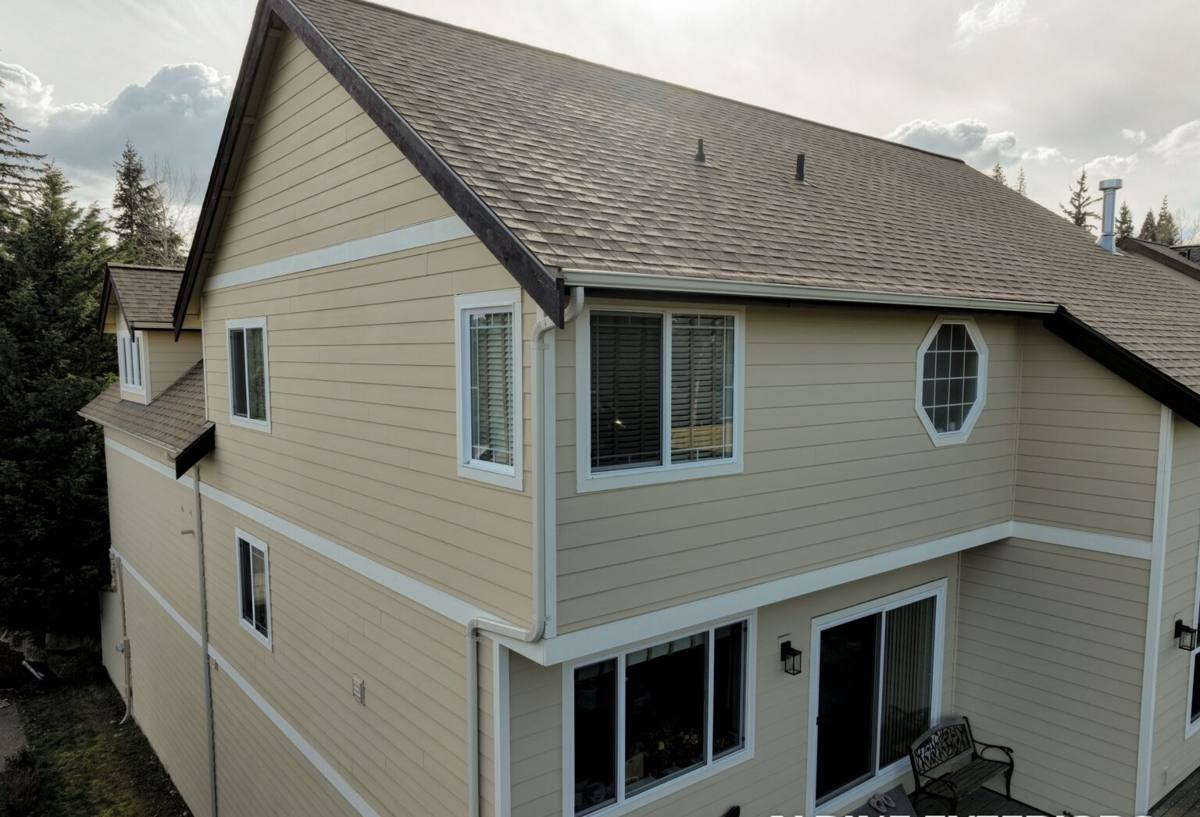
What Blaine's Climate Actually Does to a Roof
Salt Air
Proximity to saltwater accelerates corrosion on anything metal — flashing, fasteners, drip edge, vent stacks, and any exposed hardware. Cheap or mismatched metal components can start rusting years before the shingles or panels around them are due for replacement. On a roof this close to the water, every metal component needs to be corrosion-resistant, not just the parts that are visible from the ground.
Driving Rain
Wind off the water pushes rain sideways, not straight down. That means water gets forced up under shingle tabs, into laps, and around penetrations that would stay dry in a calmer inland rainstorm. Underlayment quality, shingle nailing pattern, and flashing detail at every roof-wall intersection matter more here than they would on a sheltered lot a few miles inland.
Moss and Moisture
Whatcom County's long wet season keeps roofs damp for extended stretches, and Blaine's tree cover and coastal humidity add to it. Moss doesn't just look bad — it holds moisture against the roof surface, lifts shingle edges as it grows, and works its way into fastener holes and laps. A roof with no thought given to ventilation or moss resistance will show moss again within a season or two of replacement, no matter how good the shingle is.
Signs a Blaine Roof Is Due for Replacement, Not Another Repair
- Granule loss showing up in gutters or at downspout outlets, especially on the north and west-facing slopes
- Moss established at the ridge or in shaded valleys that keeps coming back after cleaning
- Rust staining below metal flashing, vent stacks, or exposed fasteners
- Curling, cupping, or cracked shingles, particularly on slopes that catch the most wind off the water
- Soft spots, sagging, or visible daylight in the attic near eaves or valleys
- Interior staining on ceilings after wind-driven storms specifically, even if the roof is dry in calm weather
- A roof approaching or past 20 years old with no major work done on flashing or ventilation
If it's mostly cosmetic wear with no active leaks or structural softness, a repair or partial re-roof might still make sense. We'll tell you honestly which category your roof falls into rather than push a full replacement you don't need yet.
What a Correct Roof Replacement Involves Here
Tear-Off and Deck Inspection
We remove the old roofing down to the deck rather than layering over it. That lets us actually see the plywood or OSB underneath, replace any sections that have gone soft from long-term moisture, and confirm the deck is solid before anything new goes down. Skipping this step is how a new roof ends up failing early over an old, hidden problem.
Underlayment Suited to Wind-Driven Rain
Given how often rain comes in sideways here, we use synthetic underlayment with ice-and-water shield at eaves, valleys, and any low-slope transitions — the areas most exposed to wind-forced water intrusion, not just the code-minimum locations.
Corrosion-Resistant Metal Throughout
Flashing, drip edge, vent boots, and fasteners get specified for coastal exposure. This is the single most common corner cut on cheaper roof jobs near the water, and it's the one that causes visible rust streaks and leaks around penetrations within a few years.
Ventilation That Actually Discourages Moss
A well-ventilated attic keeps the underside of the deck drier, which reduces the moisture that feeds moss growth and extends shingle life. We check existing intake and exhaust ventilation as part of every replacement and correct it if it's undersized or blocked — most older Blaine homes were built before current ventilation standards and are running with less airflow than they should have.
Moss-Resistant Shingle Options
Algae- and moss-resistant shingles (typically copper- or zinc-infused granules) cost a bit more up front but meaningfully slow moss return in a climate like ours. We'll walk you through whether that upgrade pencils out for your specific roof and tree cover.
Material Options for Blaine Homes
| Material | How It Handles Salt Air & Moss | Typical Lifespan | Best Fit |
|---|---|---|---|
| Architectural asphalt shingle | Good with moss-resistant granules and proper ventilation; standard-grade shingles moss up faster | 25–30 years | Most Blaine homes; best value with the right spec |
| Standing-seam metal | Excellent shedding of wind-driven rain; needs marine-grade or coated metal near the water to avoid corrosion | 40–50+ years | Owners planning to stay long-term or wanting minimal moss growth |
| Cedar shake | Attractive but holds moisture and needs regular moss/maintenance attention in this climate | 20–30 years with upkeep | Owners committed to ongoing maintenance for the look |
| Synthetic/composite shingle | Resists moisture and moss well, doesn't corrode | 30–50 years | Owners wanting low maintenance without the metal look |
There's no universally "right" choice — it depends on your budget, how long you plan to own the home, and how much moss maintenance you want to sign up for. We'll give you straight numbers for your roof, not a push toward whatever has the best margin.
Cost Factors for a Blaine Roof Replacement
| Factor | Why It Moves the Price |
|---|---|
| Roof size and pitch | More surface area and steeper slopes mean more material and labor time |
| Number of layers to remove | Multiple existing layers add tear-off time and disposal cost |
| Deck condition | Rotted or soft sheathing found during tear-off needs replacement before new roofing goes down |
| Material choice | Asphalt, metal, cedar, and composite all carry different material and labor costs |
| Ventilation upgrades | Adding or correcting intake/exhaust venting is worth the modest added cost given our moss climate |
| Flashing and penetration count | Chimneys, skylights, and multiple roof planes each add detail work and metal |
Broad ranges vary widely based on these factors — we'll give you an exact number after walking your roof, not a phone estimate.
Our Process for a Blaine Roof Replacement
- On-site inspection: We walk the roof and check the attic, looking for moisture history, ventilation gaps, and deck condition, not just surface wear.
- Written estimate: You get a clear scope and price — materials, tear-off, disposal, and any deck or ventilation work called out separately, no vague allowances.
- Material selection: We go over the options above against your budget and how long you plan to stay in the home.
- Scheduling around weather: We watch the forecast and plan tear-off days to keep your home protected — coastal weather here can turn fast, so we don't leave a deck exposed overnight without a plan.
- Tear-off and deck repair: Old roofing comes off, the deck gets inspected, and any soft sections are replaced before anything new goes on.
- Installation: Underlayment, flashing, ventilation corrections, and the new roofing system go in to spec, with attention to every penetration and edge.
- Final walkthrough: We go over the finished roof with you, including care and moss-prevention notes specific to your setup.
Why a Crew That Already Works Blaine Matters
A roofer who mostly works drier, inland neighborhoods can still do competent general roofing — but they may not automatically upgrade fastener grade for salt exposure, or size ventilation for a moss-heavy microclimate, because it's not what they run into every day. Working this part of Whatcom County regularly means we're not guessing at what holds up here; we've seen what fails and adjust the spec before it becomes your problem five years down the road.
It also means faster response if something needs attention after a storm, and a crew that's familiar with permitting and inspection expectations in this area rather than learning them on your project.
Maintaining a New Roof in Blaine's Climate
- Have gutters cleared at least twice a year — clogged gutters back water up under the edge of the roof, especially during wind-driven storms
- Trim back overhanging branches to cut down shade and debris that feed moss growth
- Get a light moss treatment or soft wash every year or two, even on moss-resistant shingles, to keep growth from establishing
- Check attic ventilation isn't blocked by insulation or storage after any attic work
- Have flashing and metal components inspected every few years given the accelerated corrosion risk this close to the water
If your roof is showing wear, moss you can't keep ahead of, or you just want an honest read on how many years it has left, we're glad to take a look. Request a free, no-pressure estimate using the form below and we'll walk your roof and give you a straight answer.