 Bellingham Siding
 Roof Replacement in Birch Bay: Built for the Coast, Not Just the Coast Down the Road
Birch Bay sits right on the water, and that changes what a roof has to survive compared to a home a few miles inland in Bellingham. The combination of salt-laden air, wind-driven rain off the Strait, and Whatcom County's long wet season adds up to conditions that most roofing materials and installation shortcuts simply aren't built for. If you're planning a roof replacement in Birch Bay, the job isn't just "put new shingles on" — it's choosing materials and details that hold up to a coastal microclimate year after year.
We've worked enough roofs along this stretch of Whatcom County to know where problems actually start: not usually in the field of the roof, but at the edges, the penetrations, and the places where two materials meet. That's where salt air corrodes fasteners, where wind-driven rain finds a way under improperly lapped flashing, and where moss gets its first foothold.
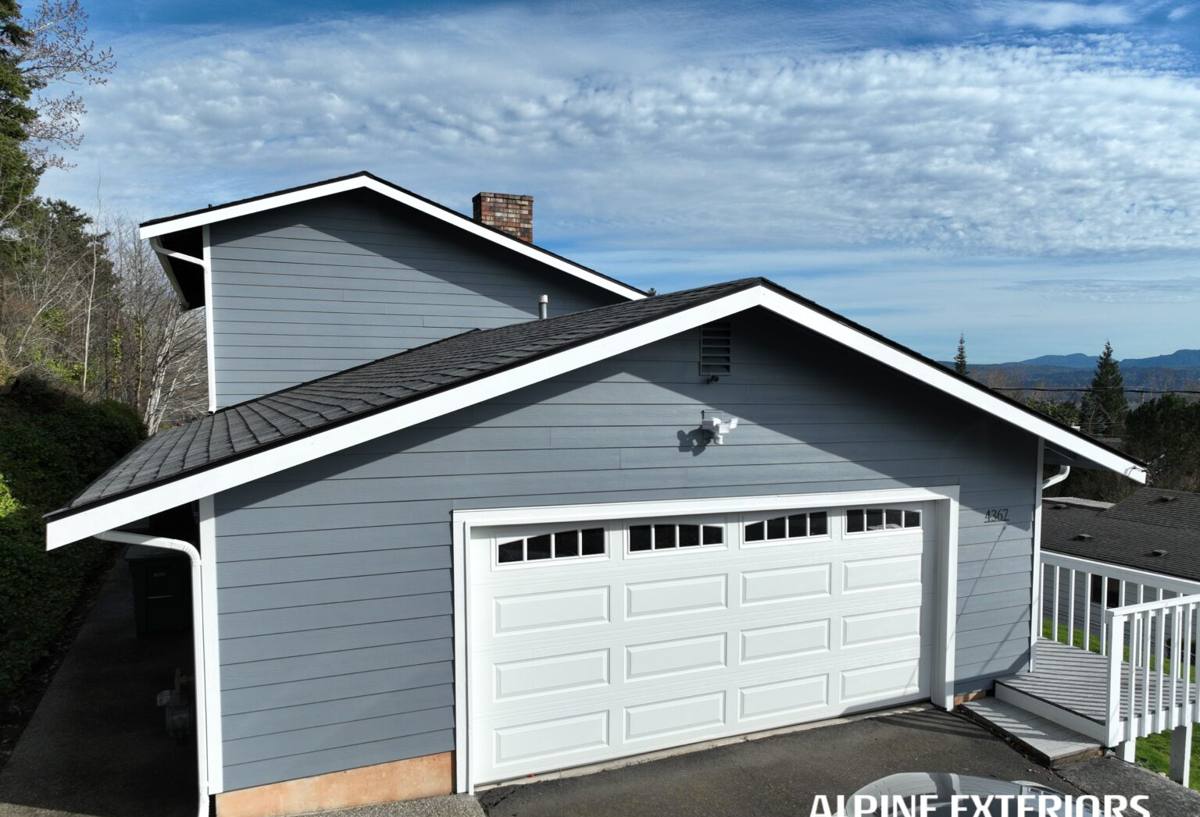
What Birch Bay's Climate Actually Does to a Roof
Salt Air and Metal Fatigue
Homes within a mile or two of the water deal with airborne salt that accelerates corrosion on anything metal — nail heads, flashing, vent caps, and gutter hardware. Standard electro-galvanized fasteners can start showing rust streaks well before the shingles around them are due for replacement. This is one of the most common "surprise" repairs we see: a roof that looks structurally fine but has fastener corrosion working loose at the surface.
Driving Rain, Not Just Rain
Bellingham and Whatcom County get plenty of rain in general, but Birch Bay's exposure to wind coming off the water means rain doesn't just fall straight down — it drives sideways under eaves, up under shingle tabs, and into any gap in the flashing. A roofing detail that would be adequate on a sheltered inland lot can fail here simply because the water is being pushed where gravity alone wouldn't take it.
Moss, Algae, and a Long Wet Season
Whatcom County's mild, damp climate gives moss and algae a long growing window with very few dry stretches to check their spread. On north-facing slopes and anywhere tree cover keeps a roof shaded, moss doesn't just sit on the surface — its root structure lifts shingle edges, holds moisture against the roof deck, and shortens the life of the material underneath it.
Signs a Birch Bay Roof Needs Replacement, Not Another Repair
- Granule loss heavy enough that you're finding grit in gutters every season, not just after a storm
- Shingle edges curling, cupping, or visibly lifting, especially on the side facing the water
- Rusted or backed-out fasteners visible at ridge caps, flashing, or vent boots
- Moss established at the shingle tabs rather than just on the surface — this usually means moisture is already past the shingle
- Soft spots or sagging in the decking when walked, which signals moisture has reached the sheathing
- Daylight visible through the attic or consistent staining on interior ceilings after wind-driven rain
- A roof approaching or past the manufacturer's expected service life for this climate, not just the national average
Any one of these on its own might be a repair. Several together, especially on an older roof, usually means repair costs are about to outpace what a full replacement would run over the next few years.
What a Correct Roof Replacement Looks Like Here
Tear-Off and Deck Inspection
We remove the existing roofing down to the deck rather than layering over it. This is the only way to actually see the condition of the sheathing — soft or delaminated decking has to be replaced before anything new goes down, and in a damp coastal climate like Birch Bay's, hidden deck rot is more common than homeowners expect on roofs past 20 years old.
Underlayment Suited to Wind-Driven Rain
Given the exposure, we don't treat underlayment as an afterthought. A synthetic underlayment with good water resistance, properly lapped in the direction that sheds wind-driven rain, is the difference between a roof that stays dry in a coastal storm and one that leaks around fasteners during the next big blow.
Ice-and-Water Shield Where It Actually Matters
Even without heavy snow loads, self-adhering ice-and-water membrane at eaves, valleys, and around penetrations gives an extra sealed layer exactly where driving rain and moss-related moisture cause the most damage over time.
Corrosion-Resistant Fasteners and Flashing
For homes with real salt-air exposure, we use fasteners and flashing rated for coastal corrosion resistance rather than standard-grade hardware. It costs a little more up front and saves the "why is my roof rusting from the inside" call five years later.
Ventilation That Matches the Home
Proper intake and exhaust ventilation keeps the underside of the deck dry and temperature-balanced, which matters for shingle life and helps limit the moisture buildup that feeds moss growth from below. A roof that looks right on top but is poorly vented underneath will underperform its warranty regardless of the shingle brand.
Material Choices for a Coastal Whatcom County Home
| Material | Coastal Suitability | Maintenance Considerations |
|---|---|---|
| Architectural asphalt shingles (algae-resistant) | Good — widely used, cost-effective, copper/zinc granules help resist moss | Periodic moss/algae checks; standard lifespan for the climate |
| Standing seam metal | Very good — sheds wind-driven rain well, long service life | Requires corrosion-resistant fastening system near salt air; higher upfront cost |
| Composite/synthetic shingle | Good — resists moisture absorption, consistent performance | Product-dependent; verify manufacturer's coastal/marine warranty terms |
| Wood shake | Fair — natural material, but moss and moisture retention are a bigger long-term concern here | Higher maintenance burden in a damp, mossy climate; shortened lifespan without diligent upkeep |
We're not going to tell you one material is "the best" in the abstract — it depends on your budget, your roof's exposure, and how much ongoing maintenance you want to take on. What we will say plainly: in a moss-heavy, salt-air environment like Birch Bay, algae-resistant shingles or metal roofing generally outperform wood shake with less upkeep, and that's a maintenance trade-off worth discussing honestly before you choose.
Our Process for Birch Bay Roof Replacements
- On-site inspection. We look at the deck condition, existing ventilation, flashing details, and the specific exposure of your roof — a home right on the water gets treated differently than one set back with tree cover.
- Written estimate. You get a clear breakdown of materials, scope, and cost — no vague allowances that turn into surprise change orders.
- Material selection. We walk through the trade-offs above so you're choosing based on your priorities, not a sales script.
- Tear-off and deck repair. Full removal, deck inspection, and replacement of any compromised sheathing before new material goes down.
- Installation. Underlayment, ice-and-water membrane at vulnerable points, flashing, ventilation, and final roofing material installed to manufacturer spec and adjusted for local exposure.
- Final walkthrough. We go over the finished roof with you, including what routine maintenance (like moss treatment) will actually be needed going forward.
Why Local Experience in Birch Bay Matters
A roofing crew that mostly works inland Bellingham jobs isn't necessarily wrong about roofing in general — but they may not default to corrosion-resistant fasteners, may under-detail wind-driven rain protection, or may not flag moss risk on a shaded, damp lot until it's already a problem. Working Birch Bay and the surrounding Whatcom County coastline regularly means we're not guessing at what this specific environment does to a roof over ten or twenty years — we're building for it from the first fastener.
Local knowledge also shows up in smaller ways: knowing which slopes on which lots tend to hold moss longest, understanding how wind exposure differs between a bluff-top home and one set back from the water, and having a track record of work that's held up through actual Whatcom County winters rather than just a manufacturer's lab testing.
Maintaining a New Roof in a Coastal Climate
- Have gutters cleaned at least twice a year — clogged gutters near the coast collect moisture-holding debris faster
- Schedule moss treatment or soft-washing on a regular interval rather than waiting until it's visibly established
- Check flashing and fastener condition every few years, especially after a significant windstorm off the water
- Trim back overhanging branches that keep sections of the roof shaded and damp longer than the rest
- Address any small leak or staining promptly — in this climate, small issues left alone tend to compound quickly
Getting Started
If your Birch Bay roof is showing its age, or you just want an honest read on how many years it realistically has left given the exposure it deals with, we're glad to take a look. We'll give you a straightforward assessment, walk you through material options suited to salt air and driving rain, and put together a written estimate with no pressure to decide on the spot. Use the form below to request your free estimate.