 Bellingham Siding
 Why Silver Beach Roofs Take a Different Kind of Beating
Silver Beach sits in one of Bellingham's more tree-covered, water-adjacent pockets, and that setting is exactly what makes roof maintenance here different from a roof out on open, sunny ground. Mature tree canopy keeps large sections of many roofs shaded for most of the day, which means moisture lingers on the surface long after a storm has passed. Add in the salt-laden air that drifts inland off Bellingham Bay and the Salish Sea, and you've got a slow, steady source of corrosion working on every metal component of the roof — nails, flashing, vent caps, gutter hangers — year after year. Whatcom County's long, wet fall-through-spring stretch means roofs here spend more months damp than dry, and that combination of shade, moisture, and salt air is what drives the repair calls we get from this neighborhood.
None of this means a well-built roof in Silver Beach is doomed to constant problems. It means the repair work has to account for these conditions specifically, rather than treating every roof like it sits in a dry, open subdivision. A patch that would hold up fine in a drier part of the county can fail here in a season or two if it doesn't account for how long moisture actually stays in contact with the roofing material.
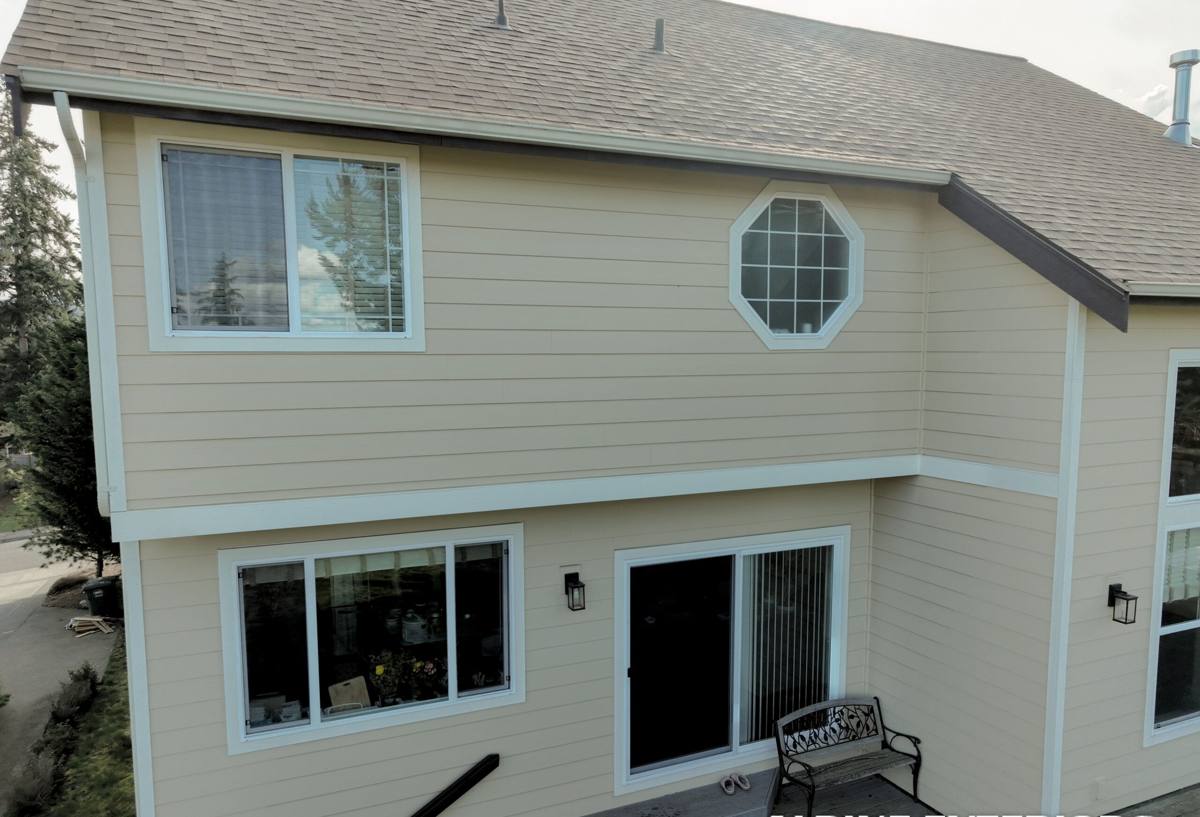
Signs Your Silver Beach Roof Needs Repair
Most roof problems don't announce themselves with a dramatic leak on day one — they show up as smaller signals first. Homeowners in this area should walk the exterior and check the attic a couple of times a year, especially heading into and coming out of moss season.
- Water stains or discoloration on interior ceilings, especially near exterior walls or chimneys
- Visible moss growth, particularly on north-facing or heavily shaded slopes
- Granules collecting in gutters or at the base of downspouts, a sign asphalt shingles are wearing thin
- Shingle edges that are curling, cupping, or lifting
- Rust streaks below flashing or vent stacks
- Soft or spongy decking felt underfoot near valleys or the chimney
- Daylight visible through the roof deck when viewed from inside the attic
- Gutters that overflow during moderate rain, suggesting blocked or damaged drainage
Any one of these on its own might not mean an urgent problem. Two or three together, or anything paired with an actual interior stain, is worth a professional look before the next wet season sets in.
The Repairs We See Most Often in This Neighborhood
Moss and Organic Growth Damage
Moss doesn't just look bad — it holds water against the roofing material and, on asphalt shingles, its root structure can lift the shingle edge over time, breaking the seal that keeps wind-driven rain out. On shaded slopes common throughout Silver Beach, moss can return within a year or two if it isn't removed correctly and the roof isn't set up to shed water and dry out faster afterward.
Flashing and Valley Leaks
Flashing — the metal or membrane material around chimneys, skylights, vent pipes, and roof valleys — is where the large majority of real leaks originate, not in the open field of shingles. Flashing takes the most movement, the most water volume, and in this area, the most exposure to salt-carrying air. When it corrodes, separates, or was installed with the wrong overlap in the first place, water finds its way in even though the shingles around it look fine.
Fastener and Flashing Corrosion from Salt Air
This is the repair category that's genuinely more common here than in inland parts of Whatcom County. Standard fasteners and lower-grade flashing metals corrode faster when they're regularly exposed to salt-influenced coastal air, even a few miles inland. Once a fastener corrodes and loses its grip, the shingle or panel it's holding can shift or lift, and that's when leaks start.
Wind-Driven Rain at Eaves and Penetrations
Bellingham storms often bring rain sideways off the water, not straight down. Roofs that were built or patched for a calmer climate sometimes lack adequate underlayment lap or drip edge protection at the eaves, which lets wind-driven rain work its way up and under the shingle line during a hard storm.
What a Correct Roof Repair Actually Involves
Diagnosis Before Anything Else
A repair is only as good as the diagnosis behind it. Water can travel along rafters or decking before it shows up as a stain, so the visible damage inside the house isn't always directly below the actual failure point on the roof. We trace the path before we touch a single shingle, because patching the wrong spot means the homeowner pays twice.
Matching Materials to the Climate, Not Just the Roof
For a roof exposed to salt air and long wet seasons, we favor corrosion-resistant fasteners and flashing metals over the cheapest available option, and we treat moss removal as a full job — physical removal plus a treatment approach that slows regrowth — rather than a quick scrape that looks clean for a month.
Workmanship Details That Actually Matter
Correct shingle nail placement and count, proper flashing overlap and step-flashing sequence at walls and chimneys, and underlayment that's lapped the right direction for water shedding are not optional extras — they're the difference between a repair that lasts and one that fails again in a year.
| Cost Factor | Why It Matters in Silver Beach |
|---|---|
| Roof pitch and access | Steeper slopes near tree cover take longer to work safely and often need more careful footing |
| Extent of moss and organic growth | Heavier growth means more removal time and sometimes decking inspection underneath |
| Flashing material and condition | Corroded flashing usually needs full replacement, not a patch, especially in salt-exposed areas |
| Decking condition once opened up | Soft or rotted decking found mid-repair adds material and labor beyond the original estimate |
| Roofing material type | Asphalt, cedar, and metal each require different repair techniques and matching materials |
Repair or Replace? How We Decide
Not every damaged roof needs a full replacement, and we don't default to recommending one. The decision comes down to how much of the roof's useful life is left and how widespread the problem actually is.
| Situation | Usual Recommendation |
|---|---|
| Isolated leak, roof under 12-15 years old, decking sound | Targeted repair |
| Moss confined to one or two shaded slopes, no interior damage | Moss removal and treatment, spot repair as needed |
| Multiple leak points, widespread granule loss, roof past expected lifespan | Replacement likely more cost-effective long term |
| Extensive rotted decking discovered during repair | Depends on square footage affected — sometimes repair, sometimes replacement |
We'll tell you honestly which category your roof falls into, including when a repair is the right call even if a replacement would be more profitable for us. A roof with a few good years left doesn't need to come off the house early.
Our Process, Start to Finish
Inspection and Estimate
We walk the roof, check the attic where accessible, and identify the actual source of the problem — not just the symptom. You get a written estimate that separates the repair scope from any additional work we'd only recommend if we find something once we open things up.
The Repair Plan
Before work starts, we tell you what materials we're using and why, particularly for flashing and fasteners given the salt-air exposure common in this part of Bellingham.
The Work Itself
Repairs are done to match the existing roof as closely as possible in material and color, with proper flashing technique and fastener placement rather than shortcuts that hold for a season and fail the next.
Cleanup and Walkthrough
We clear debris, check gutters and downspouts near the repair area, and walk the completed work with you before we consider the job done.
Why Local Experience in This Neighborhood Matters
A crew that regularly works in Silver Beach and elsewhere around Bellingham already knows which flashing details tend to fail on shaded, tree-adjacent roofs, and which fastener choices hold up against Whatcom County's salt air instead of corroding within a few years. That's not something a crew based well outside the area picks up on a single job — it comes from repeatedly seeing how roofs in this specific climate actually age and fail. It also means we're not guessing at typical roof ages, common construction styles, or how local permitting works — we already know.
Maintenance That Extends the Life of a Repair
A correct repair lasts longer when it's paired with basic seasonal upkeep, especially on a shaded, moss-prone roof.
- Clear gutters and downspouts before the heaviest fall rains arrive
- Trim back overhanging branches to reduce shade and debris buildup on the roof
- Have moss-prone slopes checked annually rather than waiting until growth is heavy
- Address small leaks immediately rather than waiting through a wet season
- Keep an eye on flashing around chimneys and vents, since it fails before the shingle field does
If your roof in Silver Beach or elsewhere in Bellingham is showing any of the signs above, we're happy to take a look and give you a straightforward, no-pressure estimate — just fill out the form below.