 Bellingham Siding
 Roof Repair Built for Lynden's Weather, Not a Generic Checklist
Lynden sits inland from Bellingham Bay, out in the Nooksack valley, which changes the roofing picture a little compared to homes right on the water. You get less direct salt air here than the waterfront neighborhoods closer to Bellingham, but you make up for it with long stretches of standing moisture, heavy fall and winter rain off the Sound, and a moss season that can run eight months or more in a wet year. A roof repair that only patches the visible problem without accounting for that pattern tends to fail again within a season or two. We've been doing this work across Whatcom County long enough to know the difference between a leak that's a five-year problem and one that's a five-week problem.
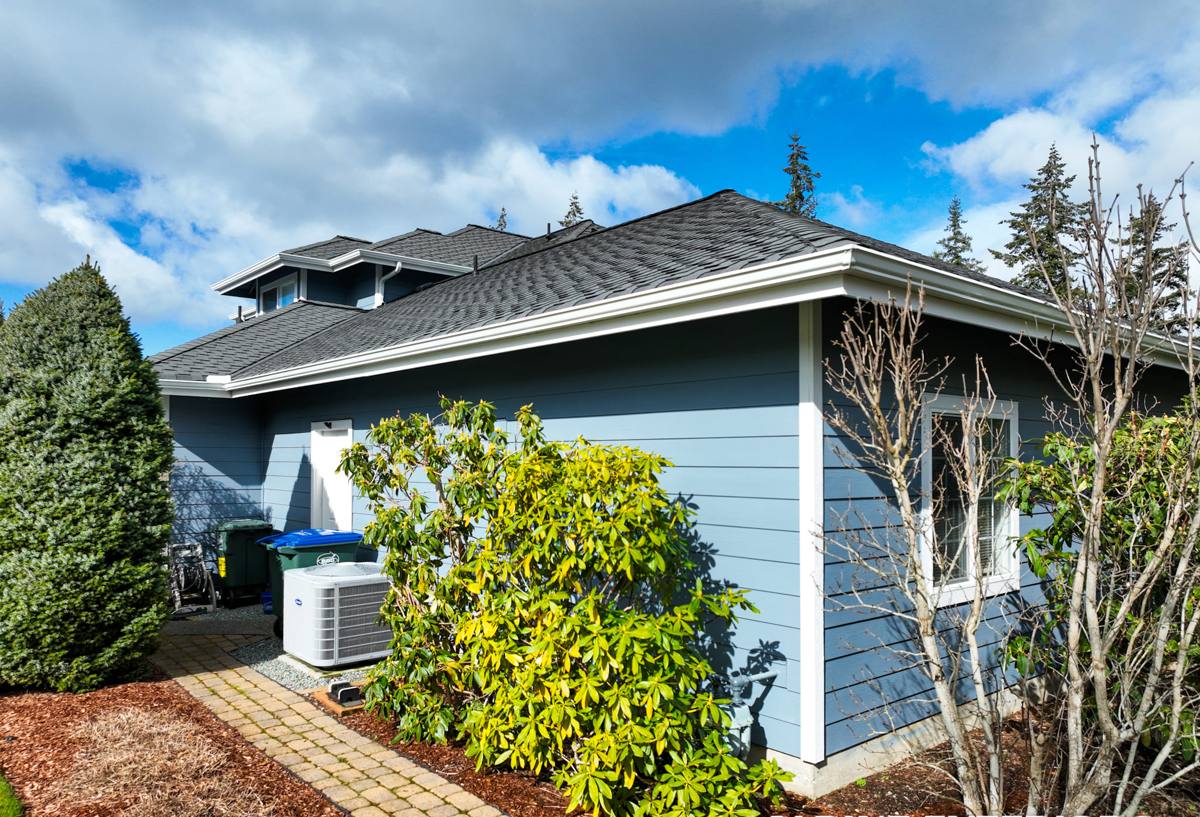
What Whatcom County Weather Actually Does to a Roof
Driving Rain and Wind-Driven Water
Pacific storms coming off the Strait don't just drop rain straight down — they push it sideways into flashing, vents, and the uphill side of any roof penetration. On a roof with tight, well-lapped flashing that's not a problem. On a roof where a previous repair used caulk instead of proper step flashing, or where nail heads were left exposed, wind-driven rain finds its way in during the first real storm of the season and keeps finding that same path every storm after.
Moss, Not Just an Appearance Issue
Moss on a Lynden roof isn't cosmetic. It holds moisture directly against the shingle surface for months, which accelerates granule loss on asphalt shingles and can lift shingle edges enough for wind and rain to get underneath. Moss growing in valleys and along the north-facing slopes (the parts of the roof that dry slowest) is usually the first place a roof starts leaking, and it's often the last place a homeowner thinks to check.
Temperature Swings and Freeze-Thaw
Whatcom County doesn't get brutal winters, but it gets enough freeze-thaw cycling — cold nights, wet days — to work water into small cracks in flashing sealant or aging pipe boots and expand them over a winter. A pipe boot that was fine in August can be split by February.
Signs a Repair (Not a Full Replacement) Is the Right Call
Most roofs don't need to be torn off just because they're leaking. Here's what we look for before recommending a repair versus a replacement:
- Isolated staining on one or two ceiling spots rather than spread across multiple rooms
- Missing or lifted shingles limited to one slope, often the side that takes the worst wind
- Cracked or dried-out pipe boots and vent flashing, even if the shingles around them are otherwise sound
- Moss concentrated in valleys or shaded areas rather than covering the whole roof uniformly
- Roof is under 15-20 years old (for asphalt) with no widespread granule loss visible in the gutters
- No soft or spongy decking felt when walked, which would point to rot underneath
If several of those don't apply — widespread granule loss, soft decking in multiple areas, a roof already past its expected lifespan — a repair is a short-term patch and we'll tell you that honestly instead of billing for a fix that won't hold.
What a Correct Roof Repair Actually Involves
Finding the Real Source, Not the Symptom
Water travels. A stain on a bedroom ceiling might come from a roof penetration ten feet uphill, not directly above the stain. We trace the path from the interior damage back to the actual entry point — usually flashing, a vent boot, a nail pop, or a valley — before opening anything up. Patching drywall without finding the source just hides the problem until it reappears somewhere else in the house.
Matching Materials, Not Just Covering the Hole
Shingles fade and weather over time, so a patch using brand-new material next to a 12-year-old roof will look different — that's just physics, not a workmanship issue, and we tell customers that upfront. What matters more than a perfect color match is that the repair uses compatible materials (same shingle weight and profile where possible) and proper layering technique so the patch sheds water the same way the surrounding roof does.
Flashing Gets Redone, Not Resealed
Our standard is to replace failed flashing rather than smear sealant over it. Caulk is a maintenance item, not a repair — it buys a season, maybe two, before it cracks again. Step flashing, counter-flashing at chimneys, and valley flashing get rebuilt to shed water correctly, with sealant used only where it belongs, not as the primary defense.
Ventilation Gets a Look, Even on a Repair Call
A surprising number of "leak" calls turn out to be condensation from poor attic ventilation, which mimics a roof leak but originates from moisture trapped inside the attic. On a repair visit we'll check for this because fixing the roof surface won't solve a ventilation problem, and vice versa.
Repair vs. Replacement: How We Help You Decide
| Factor | Leans Toward Repair | Leans Toward Replacement |
|---|---|---|
| Roof age | Under 15 years (asphalt) | 20+ years or original roof still in place |
| Extent of damage | One slope or isolated area | Multiple slopes, widespread granule loss |
| Decking condition | Solid, no soft spots | Soft, spongy, or visible rot |
| Number of past repairs | First or second repair | Third-plus patch on the same roof |
| Moss coverage | Localized to valleys/shade | Covers most of the roof surface |
| Upfront cost | Lower, targeted expense | Higher, but resets the clock |
Costs vary a lot based on what we actually find once we're up there, so we won't quote a number over the phone with any confidence. A straightforward flashing or vent boot repair is typically a modest, single-visit expense; a repair involving decking replacement or multiple problem areas runs higher. We give a firm number after inspection, not a range that changes once we start.
Our Process for a Lynden Roof Repair Call
- Phone or online request — tell us what you're seeing (stain location, water during storms, visible missing shingles) so we come prepared.
- On-site inspection — we get on the roof (weather permitting) and check the attic from inside, tracing the leak path rather than guessing from the ground.
- Written estimate — a clear explanation of what's causing the problem and what the fix involves, with a firm price before any work starts.
- Repair — most repairs are completed in a single day; larger jobs involving decking or multiple areas are scheduled and communicated in advance.
- Walkthrough — we show you what was done and what to watch for, especially if there's a cosmetic mismatch from new material next to weathered shingles.
Materials and Standards We Hold To
We use quality asphalt shingles and flashing materials suited to Pacific Northwest conditions, matched to what's already on your roof wherever possible. On some jobs a homeowner asks about specialty coatings or moss-preventive shingle products; we're upfront that these can help slow moss growth but don't replace regular maintenance, and that mixing shingle brands or product lines on the same roof can complicate manufacturer warranties. Our standard is to be straightforward about those trade-offs rather than upsell a product that doesn't fit the situation.
Why a Bellingham-Based Crew That Already Works Lynden Matters
Whatcom County covers a lot of ground, and roofing needs shift depending on how close you are to the water, how much tree cover surrounds the property, and local permitting requirements that can vary by jurisdiction. A crew that regularly works both Bellingham and outlying communities like Lynden already knows which roof problems are common in this specific stretch of county versus what shows up on a waterfront home twenty minutes away. That familiarity means less time spent diagnosing and more time spent fixing, and it means we're not learning the region's weather patterns on your roof.
Maintenance Between Repairs
A repair holds longer when it's not fighting the same conditions that caused the original problem. A few habits make a real difference in this climate:
- Clear moss from valleys and shaded slopes at least once a year, ideally before the wet season sets in
- Keep gutters clear so water doesn't back up under the shingle edge during heavy storms
- Trim overhanging branches that keep sections of roof shaded and slow to dry
- Have pipe boots and flashing checked every few years rather than waiting for a leak to show up inside
None of this requires a professional every time — most of it is homeowner-manageable — but a periodic professional check catches the small stuff before it becomes a ceiling stain.
If you're dealing with a leak, missing shingles, or just want an honest read on whether your roof needs a repair or something bigger, we're happy to take a look. The estimate is free, there's no pressure to move forward, and you'll get a straight answer either way — just fill out the form below.