 Bellingham Siding
 Why Fairhaven Roofs Wear Differently
Fairhaven sits close enough to Bellingham Bay that salt-laden air is a daily fact of life for anything on a roof — fasteners, flashing, vent boots, gutters. Add Whatcom County's long stretch of driving rain from fall through spring, and a moss season that can run eight or nine months out of the year, and you get a roof environment that's genuinely harder on materials than what you'd find twenty miles inland. Homes here don't fail because the roofing was bad when it went on. They fail because small, ordinary problems — a lifted shingle tab, a gap in flashing, a patch of moss holding water against the deck — get left alone through one too many wet seasons.
Roof repair in this neighborhood isn't a generic service. It's shaped by the specific combination of salt exposure, moisture volume, and moss pressure that Fairhaven roofs deal with every year. A repair that's correct for a dry-climate home can be the wrong repair here.
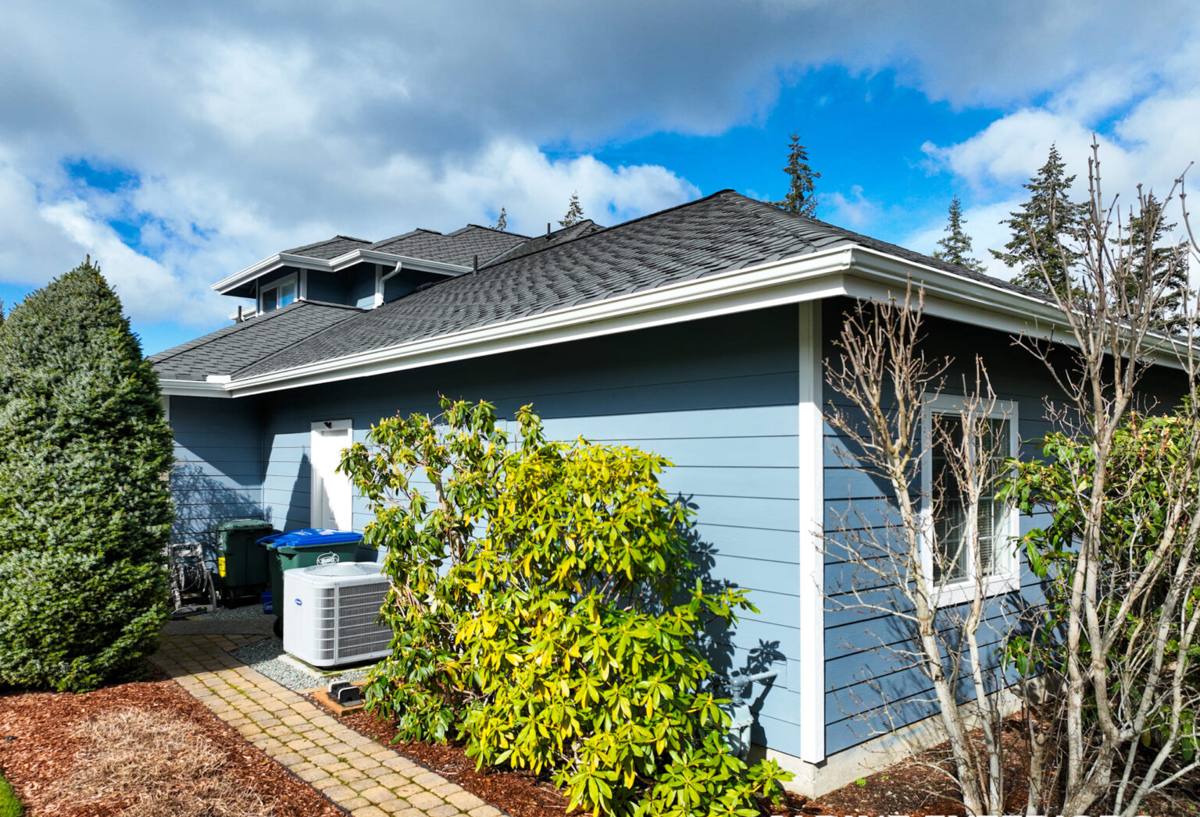
What Fairhaven's Climate Actually Does to a Roof
Salt Air and Corrosion
Airborne salt from the bay accelerates corrosion on exposed metal — nail heads, flashing, gutter hangers, and the metal components in older vent boots. Corrosion doesn't announce itself with a leak right away; it shows up first as rust streaking, pitted fasteners, or flashing that's gone soft and thin at the edges. By the time water is getting in, the metal underneath has usually been degrading for a while.
Driving Rain and Wind-Driven Moisture
Storms off the Sound don't just fall straight down — wind pushes rain sideways and up under laps, ridges, and flashing that would shed water fine in a calmer climate. This is why so many Fairhaven leaks trace back to horizontal joints: chimney step-flashing, dormer walls, skylight curbs, and valley intersections where wind-driven water finds the smallest gap.
Moss and Trapped Moisture
Moss doesn't just look bad. It holds water against the roofing surface long after a storm has passed, keeps the deck underneath damp, and works its rhizoids into shingle granules and shake grain over time. On north-facing slopes and anywhere tree cover blocks the sun, moss can establish itself within a couple of seasons and start lifting shingle edges enough to let wind-driven rain underneath.
Signs a Fairhaven Roof Needs Repair, Not Just Watching
- Granules collecting in gutters or at downspout outlets — a sign the shingle surface is wearing thin
- Moss growth thick enough that you can't see the shingle color underneath it
- Rust streaking below any metal flashing, vent, or valley
- Daylight visible through the roof deck from inside the attic
- Water stains on ceilings or upper walls, especially after a windy storm rather than a calm one
- Curling, cracked, or missing shingle tabs, particularly on the side of the roof that faces prevailing weather
- Soft or spongy spots underfoot near valleys, chimneys, or skylights
- Gutters pulling away from the fascia or overflowing during normal rain, not just downpours
What a Correct Repair Actually Involves
A roof repair that holds up in this climate goes further than swapping a shingle or squirting sealant at a stain. The steps that matter:
1. Find the Real Source
Water almost never shows up on the ceiling directly below where it entered. It travels along rafters, underlayment, and framing before it drips. A proper repair starts by tracing the path back to the actual entry point — usually a flashing gap, a fastener hole, or a moss-lifted shingle edge — rather than patching where the stain appears.
2. Check the Deck
Any area that's been leaking for more than a season or two needs the decking checked for soft spots, delamination, or rot. Patching shingles over a compromised deck is a short-term fix that fails again, usually at the worst possible time.
3. Match Flashing to the Actual Weather Exposure
Given how much wind-driven rain this area gets, flashing details matter more here than in calmer climates. Step flashing, counter-flashing, and valley metal all need to be sized and lapped correctly — not just caulked — because sealant alone degrades faster in salt air and UV than a properly lapped metal detail.
4. Address the Moss, Not Just the Symptom
Removing moss without treating the cause — usually shade, debris buildup, or slow drainage — means it's back within a year or two. A real repair includes physically clearing moss without damaging the shingle surface, treating to slow regrowth, and clearing any debris that's holding moisture against the roof plane.
5. Restore Ventilation and Drainage
Poor attic ventilation traps moisture from the inside, which compounds everything the weather is doing from the outside. Clogged or undersized gutters send water back up under the roof edge instead of away from it. Both get checked as part of a proper repair, not treated as a separate issue.
Our Repair Process
- On-site inspection — we walk the roof and the attic where accessible, checking deck condition, flashing, ventilation, and moss coverage, not just the spot where the leak showed up inside.
- Written scope and estimate — you get a clear explanation of what's actually wrong, what needs to be repaired versus what's just cosmetic, and a straightforward price before any work starts.
- Repair — deck replacement where needed, correct flashing details, matching shingle or shake replacement, and moss removal and treatment as part of the same visit when possible.
- Cleanup and check — gutters cleared, debris hauled off, and a final look to confirm the repair area sheds water the way the rest of the roof does.
Repair or Replace? What Actually Drives the Decision
Not every Fairhaven roof problem needs a full replacement — but some do, and the honest answer depends on a few concrete factors rather than the age of the roof alone.
| Factor | Favors Repair | Favors Replacement |
|---|---|---|
| Deck condition | Solid, dry decking outside the affected area | Soft, delaminated, or rotted decking in multiple spots |
| Extent of moss/algae | Localized to shaded slopes | Widespread across most of the roof |
| Age of roofing material | Well within expected service life | Near or past typical lifespan for the material |
| Number of past leak repairs | First or second repair in this area | Recurring leaks in different spots year over year |
| Flashing condition | Sound, just needs re-lapping or sealing | Corroded, undersized, or missing in multiple locations |
When the roof is fundamentally sound and the problem is contained, repair is the right call and the more cost-effective one. When the damage is spread across the roof or the deck itself is compromised, patching becomes a cycle of repeat visits rather than a real fix — and we'll tell you that plainly instead of stringing out repairs.
Why a Crew That Already Works Fairhaven Matters
Roof repair here rewards familiarity with the neighborhood's specific mix of housing stock, exposure, and tree cover. A crew that regularly works this part of Bellingham already knows which slopes tend to hold moss longest, how the local wind pattern off the bay tends to drive rain into valleys and dormers, and what flashing details actually hold up against salt air over years rather than just passing an initial inspection. That local pattern recognition shortens the diagnostic process and avoids repairs that look fine on day one but fail against the specific weather this neighborhood sees every winter.
It also means faster response. Roof leaks in Whatcom County rarely wait for convenient weather — they show up mid-storm, and a crew based nearby can get eyes on the problem and a tarp up faster than one traveling in from outside the area.
What to Ask Before You Hire
- Are you licensed and insured to do roofing work in Washington State?
- Will you inspect the deck and flashing, or just the visible shingle damage?
- What's included in the written estimate — materials, labor, cleanup, and any warranty on the repair work itself?
- How do you handle moss removal — do you clear it and treat the cause, or just spray and leave?
- Can you show me the actual point of water entry, not just where the stain appeared inside?
Getting an Estimate
If you're seeing granules in the gutters, moss thick enough to hide the shingle color, or a stain that shows up after windy storms, it's worth having someone look before another wet season adds to the damage. We offer free, no-pressure estimates for roof repair in Fairhaven and the surrounding Bellingham area — use the form below to get a straightforward look at what your roof actually needs.