 Bellingham Siding
 Windows in Puget Take a Different Kind of Beating
Homes in the Puget area sit close enough to the water and the weather patterns rolling off it that windows here age differently than they do ten miles inland. It's not one dramatic event that ruins a window — it's the slow, cumulative effect of salt-laden air, months of driving rain, and the shade and moisture that let moss and algae take hold on anything that stays damp too long. By the time a homeowner notices fogging between panes or a draft around the frame, that process has usually been underway for a while.
We replace windows for a living across Whatcom County, and the jobs we do in Puget get treated differently from the start — not because the install technique changes, but because the failure points we're guarding against are specific to this kind of exposure. A window system that holds up fine in a dry, sheltered lot inland can fail early here if it's not detailed for wind-driven rain and constant humidity.
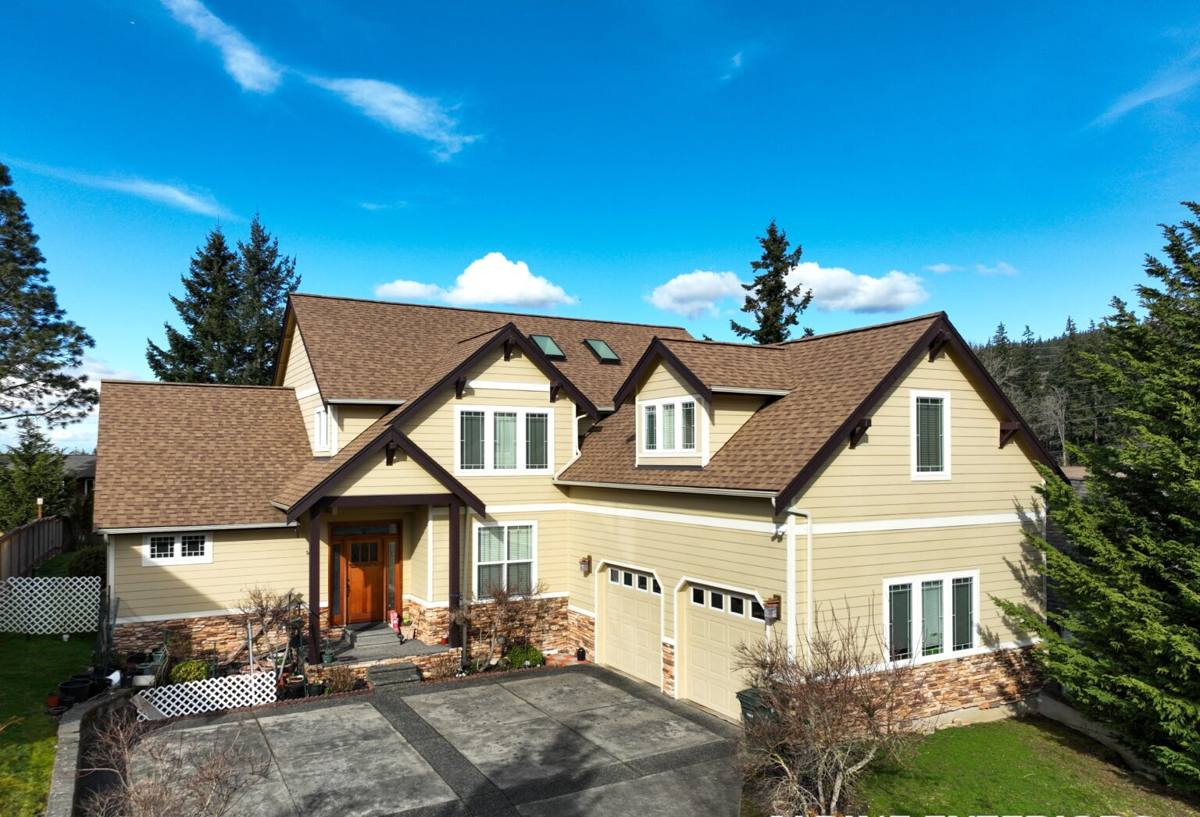
What Bellingham's Climate Actually Does to a Window Over Time
Salt Air
Proximity to the Sound means airborne salt settles on exterior surfaces, including window hardware, screens, and metal flashing. Over years, this accelerates corrosion on lower-quality hardware, pits aluminum components, and can degrade certain finishes faster than the manufacturer's inland warranty testing accounts for. It's rarely dramatic — it's a slow dulling and stiffening of hardware that eventually means a window that won't latch tight or lock true.
Driving Rain
Bellingham doesn't just get rain, it gets rain pushed sideways by wind off the water for weeks at a stretch. That matters because a window doesn't have to leak through the glass to cause damage — it can leak around the frame, through poorly lapped flashing, or through a nail fin that wasn't sealed correctly. Wind-driven rain finds every gap that a light, straight-down rain would never reach.
Moss and Algae Season
Whatcom County's long wet season keeps north-facing and shaded elevations damp for months. Moss and algae take hold on sills, tracks, and trim that don't get sun or airflow to dry out between storms. Beyond the cosmetic issue, sustained moisture at a sill or track is exactly where wood rot and seal failure start.
Signs a Puget Home's Windows Are Due for Replacement
- Fogging or a visible haze between the panes of a double-pane window — the seal has failed and the gas fill is gone
- Soft or discolored wood at the sill, especially on north- or west-facing exposures
- Windows that are hard to open, close, or lock, or that no longer sit flush in the frame
- Visible moss, algae, or persistent black streaking on the sill or lower sash that keeps returning after cleaning
- A noticeable draft or cold spot near the frame during windy, wet weather
- Condensation forming on the inside of the glass regularly, even with normal ventilation
- Paint or finish that's peeling or bubbling specifically around the window opening rather than the whole wall
Any one of these on its own isn't necessarily urgent. Several together, especially on the sides of the house that catch the worst weather, usually means the window and its surrounding flashing are past the point where sealant or hardware repair will hold.
What a Correct Window Replacement Actually Involves
Swapping the glass unit itself is the easy part. What actually determines whether a replacement window lasts in a climate like this is the work most homeowners never see:
Removal and Inspection
We pull the old window fully out of the opening rather than doing an insert-over-insert job, whenever the sheathing and framing allow it. That lets us actually look at the wall cavity, sill, and framing for hidden rot or water staining before it's covered back up. In a Puget-area home, this step matters more than most — hidden moisture damage from a slow leak is common enough that skipping the inspection is how small problems turn into expensive ones.
Flashing and Weather Barrier Integration
The window has to be integrated into the house's weather-resistive barrier correctly — flashing tape and building paper lapped in the right order, sill pan flashing sloped to shed any water that gets past the window back outside, and head flashing that directs rain away from the top of the opening rather than into it. This is the single most common place we find shortcuts on older or lower-cost replacement jobs, and it's the reason a window can look fine from outside while quietly rotting the framing behind it.
Sealing and Insulation
Low-expansion foam or backer rod and sealant around the frame, sized and applied correctly — not overfilled, not skipped. Done wrong, either extreme causes problems: too little and you get drafts and moisture intrusion, too much foam and you can bow the frame and throw off the window's operation.
Exterior Trim and Finish
Trim gets reinstalled or replaced with attention to drainage — no caulk lines that trap water against wood, and finish work that accounts for the fact that this exterior will spend months of the year wet.
Choosing Windows That Are Actually Right for This Exposure
There's no single "best" window material — the right choice depends on the specific exposure of each opening, the home's style, and budget. What we won't do is put a window on a heavily exposed, wind-driven-rain wall that's a poor match for that exposure just because it's the cheaper option. Here's how the common choices generally compare for a Puget-area home:
| Material | How It Handles This Climate | Maintenance |
|---|---|---|
| Vinyl | Good moisture and salt-air resistance; won't rot or corrode; performance depends heavily on frame quality and weld strength | Low — occasional cleaning, no painting |
| Fiberglass | Excellent dimensional stability in temperature and moisture swings; strong against wind-driven rain when installed correctly | Low — very stable finish, minimal upkeep |
| Wood or Wood-Clad | Best appearance for many home styles, but the exposed wood interior/exterior needs real upkeep in a wet climate; cladding protects the exterior face but sills and interior wood still need attention | Moderate to high — periodic finish maintenance |
| Aluminum | Strong and slim-profile, but more prone to condensation and, without a thermal break, cold transfer; hardware can be vulnerable to salt-air corrosion over time | Moderate — watch hardware and thermal break condition |
For most Puget homes, we lean toward vinyl or fiberglass on heavily exposed elevations for the corrosion and moisture resistance, and reserve wood or wood-clad for more sheltered walls or where the look is the priority and the owner is willing to keep up with finish maintenance. Glass package matters too — a good low-E, argon-filled double-pane unit is the baseline we'd recommend for this region; it isn't a luxury upgrade, it's what keeps energy bills and condensation in check through a long, wet, mild-temperature winter.
What Affects the Cost of a Window Replacement Here
| Factor | Why It Moves the Price |
|---|---|
| Full-frame vs. insert replacement | Full-frame allows inspection and repair of hidden damage but takes more labor |
| Hidden rot or framing damage | More common on long-neglected windows in wet-exposed walls; adds repair time before the new window can go in |
| Number and size of openings | Larger units and multi-window jobs affect both material and labor cost |
| Material choice | Vinyl is generally the most budget-friendly; fiberglass and wood-clad cost more up front |
| Trim and exterior finish work | Matching existing trim profiles or repainting/refinishing adds to the scope |
We don't quote window jobs off a flat per-window price list, because the condition behind the old window — not just the window itself — is often what determines the real scope. That's part of why we walk every opening in person before giving a number.
How We Work
- On-site walkthrough: We look at each window from both inside and outside, check for signs of moisture damage, and talk through what's actually needed versus what's optional.
- Written estimate: A clear scope and price before any work starts — no surprise add-ons sprung on you mid-job.
- Removal and inspection: Old windows come out, framing and sheathing get inspected, and we flag anything unexpected before proceeding.
- Correct installation: Proper flashing sequence, sealing, and insulation — not just setting a new window in the old hole.
- Finish and cleanup: Trim, paint or finish work, and a full cleanup of the work area.
- Final walkthrough: We check operation, sealing, and appearance with the homeowner before calling the job done.
Why It Matters to Hire a Crew That Already Works in Puget
A window installer who mostly works dry, sheltered inland properties can do a technically fine job and still get the details wrong for this exposure — because the failure modes that matter here (wind-driven rain intrusion, salt-air hardware wear, moss holding moisture against a sill) simply aren't things they deal with every week. A crew that regularly works Bellingham and the surrounding Whatcom County waterfront knows which elevations of a house need the most attention, which materials hold up and which don't, and what a poorly flashed window from a previous job looks like once it's finally failed and been opened back up. That's not a marketing point — it's the difference between a window that's sealed correctly the first time and one that needs revisiting in a few years.
Keeping New Windows Performing Long-Term
- Rinse sills and tracks periodically, especially on shaded or north-facing windows, to keep moss and algae from establishing
- Keep weep holes on vinyl and fiberglass frames clear of debris so water can drain out as designed
- Check exterior caulk lines annually, particularly after a hard winter, and have any cracked sealant redone before it lets water behind the trim
- Operate locks and hardware a few times a season even on windows you don't open often, so hardware doesn't seize from disuse and moisture
- Have any wood-clad or painted trim inspected on a normal repaint cycle rather than waiting until finish failure is visible
If you're weighing whether it's time to replace windows on a Puget-area home, we're happy to take a look and give you an honest read on what's actually going on — no pressure, no obligation. Fill out the form below and we'll set up a free estimate.