 Bellingham Siding
 Why Barkley's Weather Puts Real Demands on a Roof
Barkley sits close enough to Bellingham Bay that homes in this part of town deal with a specific combination of weather that most roofing materials were never really built for: salt-tinged air drifting in off the water, wind-driven rain that comes in sideways during fall and winter storms, and long stretches of gray, damp weather that never gives a roof surface a real chance to dry out. Mix in the mature tree cover common through this stretch of Bellingham and you get near-ideal conditions for moss, algae, and slow, steady corrosion on anything less than a properly built roofing system.
None of that is unique to one street or subdivision — it's Whatcom County weather in general — but Barkley's blend of tree cover, proximity to the water, and an aging housing stock means a lot of roofs here are overdue for an honest look at what's actually holding up under those conditions and what isn't.
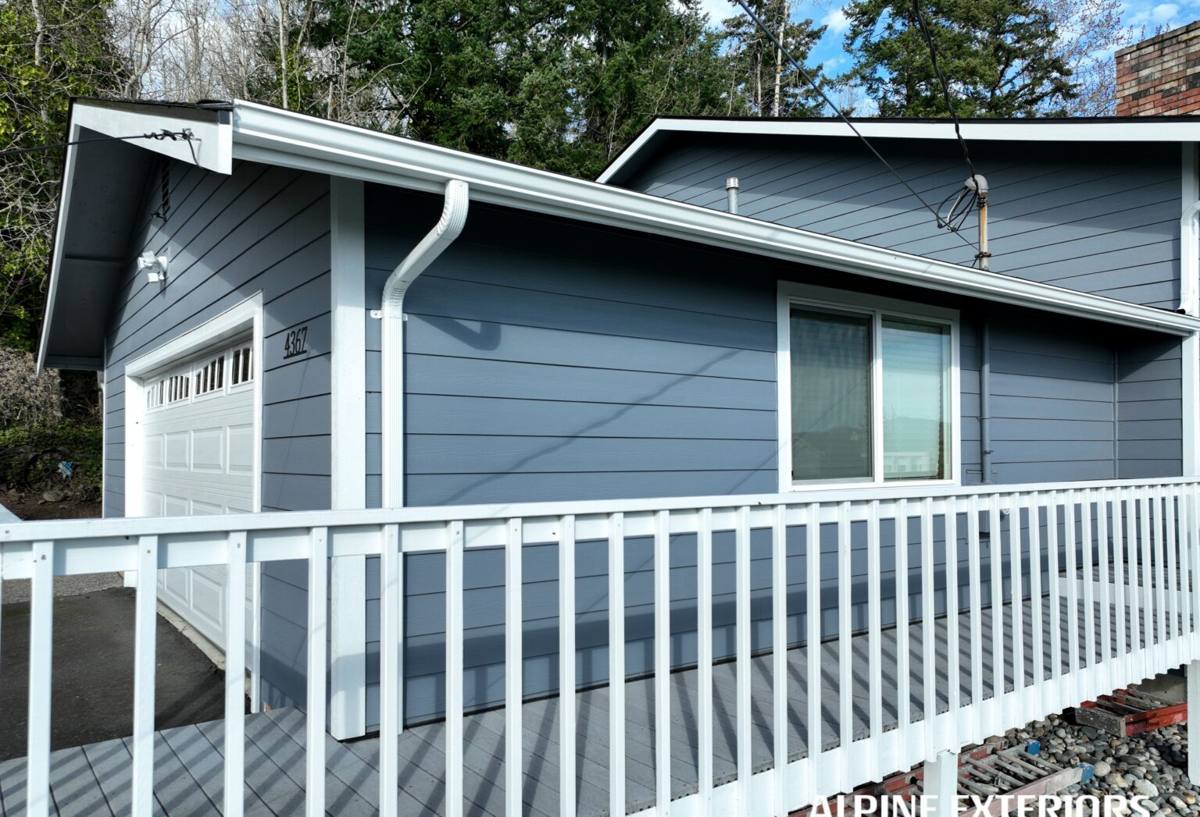
What Salt Air, Driving Rain, and Moss Season Actually Do to a Roof
Coastal moisture doesn't damage a roof all at once — it wears it down a little at a time, and the damage shows up in predictable places if you know what to look for:
- Exposed fasteners and cut metal edges corrode faster in salt-laden air, especially on the sides of a home facing the bay or open weather.
- Moss and lichen hold moisture against the roof surface long after the rain stops, working under shingle tabs and lifting them over time.
- Wind-driven rain finds any weak point in flashing or underlayment, especially around valleys, chimneys, and where a roof meets a wall.
- Granule loss on asphalt shingles speeds up under constant damp conditions, thinning the material's UV and weather protection years before it should.
- Fasteners on any roofing system can work loose over repeated wind-uplift cycles common to storms rolling in off the water.
A roof that's marginal in a drier climate often fails outright in a climate like this one. That's the honest starting point for any conversation about what roof makes sense for a Barkley home.
Why Metal Roofing Holds Up Well in This Climate
Metal isn't a fix for every roof or every budget, but it addresses several of the specific problems Barkley homes run into. A steep, slick metal surface gives moss spores far less to grip onto than a granulated shingle surface does, and water sheds off it quickly instead of sitting and soaking in. Concealed-fastener systems remove one of the most common failure points on a roof — exposed screws that corrode, back out, or lose their seal over years of salt exposure and freeze-thaw cycling. And a correctly installed metal roof's long service life means fewer trips up a wet, mossy roof for repairs, which matters as much for safety as it does for cost.
That said, metal roofing is only as good as its coating, its fasteners, and the detail work around penetrations and edges. A metal roof with the wrong flashing details or an under-spec finish for a coastal environment can still corrode or leak — the material alone isn't a guarantee.
Panel Types and Finishes: Matching the System to the Home
Not all metal roofing is built the same way, and the right choice depends on the home's style, budget, and how exposed it is to salt air and wind-driven rain.
| System | Fastener Exposure | Typical Lifespan (coastal climate) | Moss/Algae Resistance | Relative Upfront Cost |
|---|---|---|---|---|
| Standing seam (concealed fastener) | None — clips hidden under panel seams | 40–60+ years | Excellent | Higher |
| Exposed-fastener panel (5-V, corrugated, ribbed) | Screws through panel face, gasketed | 25–40 years | Good | Lower |
| Metal shingle/shake profile | Concealed or partially concealed | 30–50 years | Very good | Mid-to-higher |
Exposed-fastener panels cost less upfront and perform fine on many homes, but the gasketed screws are a maintenance item — they compress and need occasional attention over the life of the roof. Standing seam has no exposed fasteners to fail, which is a real advantage in a climate that's hard on hardware, but it costs more and requires more precise installation.
Steel, Aluminum, or Galvalume: An Honest Comparison
Galvalume-coated steel with a quality paint system offers a solid balance of cost and durability for most homes, but in areas with direct, sustained salt exposure, the cut edges and any scratches in the coating are where corrosion starts first — proper edge treatment and touch-up at install matter more here than in a drier inland climate. Aluminum doesn't rust at all, since it has no iron content, which makes it a strong option for homes closest to the bay, but it costs more and dents somewhat more easily than steel. Neither option is automatically "better" — the right call depends on the home's exposure, budget, and how long the owner plans to stay in the house.
What a Correct Metal Roof Installation Actually Involves
A metal roof is only as good as the details underneath it. The panels themselves get most of the attention, but the work that prevents leaks and corrosion happens before and around them:
- Full tear-off and deck inspection — any soft, rotted, or water-stained decking gets identified and replaced before anything new goes down.
- A synthetic underlayment across the full roof, with self-adhered ice-and-water shield at eaves, valleys, and around every penetration — the places wind-driven rain is most likely to find a way in.
- Correct fastening pattern and torque for exposed-fastener systems, or correctly spaced clips for standing seam, sized for the wind exposure of the specific roof.
- Properly formed and lapped flashing at every wall intersection, chimney, vent, and skylight — not caulk used as a substitute for flashing.
- Allowance for the panel's natural expansion and contraction with temperature swings, so seams and fasteners aren't fighting the metal over time.
- Continuous, unobstructed ventilation from soffit to ridge, so moisture from inside the house isn't trapped against the underside of the new roof.
Skip any one of these steps and the roof can still look right for a few years before a problem shows up — which is exactly why it's worth asking a contractor to walk through their process in this kind of detail before signing anything.
Our Process on a Barkley Roof
We start with an on-site assessment and measurement, not a phone estimate, because roof condition, pitch, and access vary house to house even on the same street. That includes a look at the decking and current flashing, not just the surface layer, since what's underneath often drives the real scope of the job. From there we go over material options honestly — including where a lower-cost exposed-fastener system makes sense versus when standing seam is worth the extra cost for a given home's exposure.
We tear off the old roofing rather than installing over it in nearly all cases; metal roofing performs best on a clean, inspected deck, and overlaying hides problems instead of solving them. Once the new roof is on, we do a full walk-through with the homeowner and a magnetic sweep of the property to pick up stray fasteners and debris before we consider the job finished.
Moss, Algae, and Ongoing Care in a Wet Climate
Even a well-built metal roof benefits from basic upkeep in a climate that stays damp for months at a stretch. The goal isn't constant maintenance — it's a short list of habits that prevent the slow buildup that causes problems down the road.
- Keep gutters and valleys clear of needles and leaf debris so water and moss spores don't sit and collect.
- Trim back branches that overhang the roof — falling debris and shade both contribute to moss growth.
- Rinse the roof periodically with low-pressure water rather than a pressure washer, which can strip or damage factory finishes.
- Have flashing and sealant points checked every few years, especially after major windstorms common to the area in fall and winter.
- Address any moss or algae growth early with the manufacturer-approved cleaning method for your panel's finish, rather than letting it establish.
What Affects the Cost of a Metal Roof in Barkley
| Factor | Why It Matters |
|---|---|
| Roof size and complexity | More valleys, dormers, and roof planes mean more flashing detail and labor time. |
| Panel system chosen | Standing seam costs more than exposed-fastener panels but has fewer long-term maintenance points. |
| Material (steel vs. aluminum) | Aluminum typically costs more but resists corrosion better in salt-exposed locations. |
| Current deck condition | Rot or water damage found during tear-off adds repair cost before the new roof goes on. |
| Roof pitch and access | Steep or hard-to-access roofs take longer and require more safety setup. |
| Tear-off vs. new construction | Removing and disposing of an old roof adds cost compared to new-build installation. |
Anyone quoting a metal roof without seeing the actual roof, discussing panel type, and accounting for deck condition is guessing. A real number comes after a real inspection.
Why a Crew That Already Works in Barkley Matters
Roofing crews that regularly work in and around Bellingham get to see, year after year, which details actually hold up against Whatcom County's rain, wind, and moss season — and which ones fail early no matter how good they look on install day. That kind of pattern recognition doesn't come from a manufacturer's install manual alone; it comes from being back on local roofs a few years later and seeing what needs attention. It also means familiarity with the area's mix of home ages and styles, and with the county's permitting process, so there are no surprises partway through the job.
Before hiring anyone for a metal roof in Barkley, it's worth confirming a few basics:
- They carry current Washington State contractor licensing and liability insurance.
- They'll put the panel type, gauge, finish, and warranty terms in writing before work starts.
- They inspect the deck in person rather than quoting from photos or a drive-by.
- They can explain their flashing and underlayment plan for valleys, chimneys, and wall intersections.
- They stand behind their workmanship separately from the manufacturer's material warranty.
If you're weighing a metal roof for a home in Barkley, we're happy to come take a look, walk the roof, and give you a straight assessment of what it needs — no pressure, no obligation. Fill out the form below to set up a free estimate.