 Bellingham Siding
 Why Siding in York Has to Work Harder Than Siding Inland
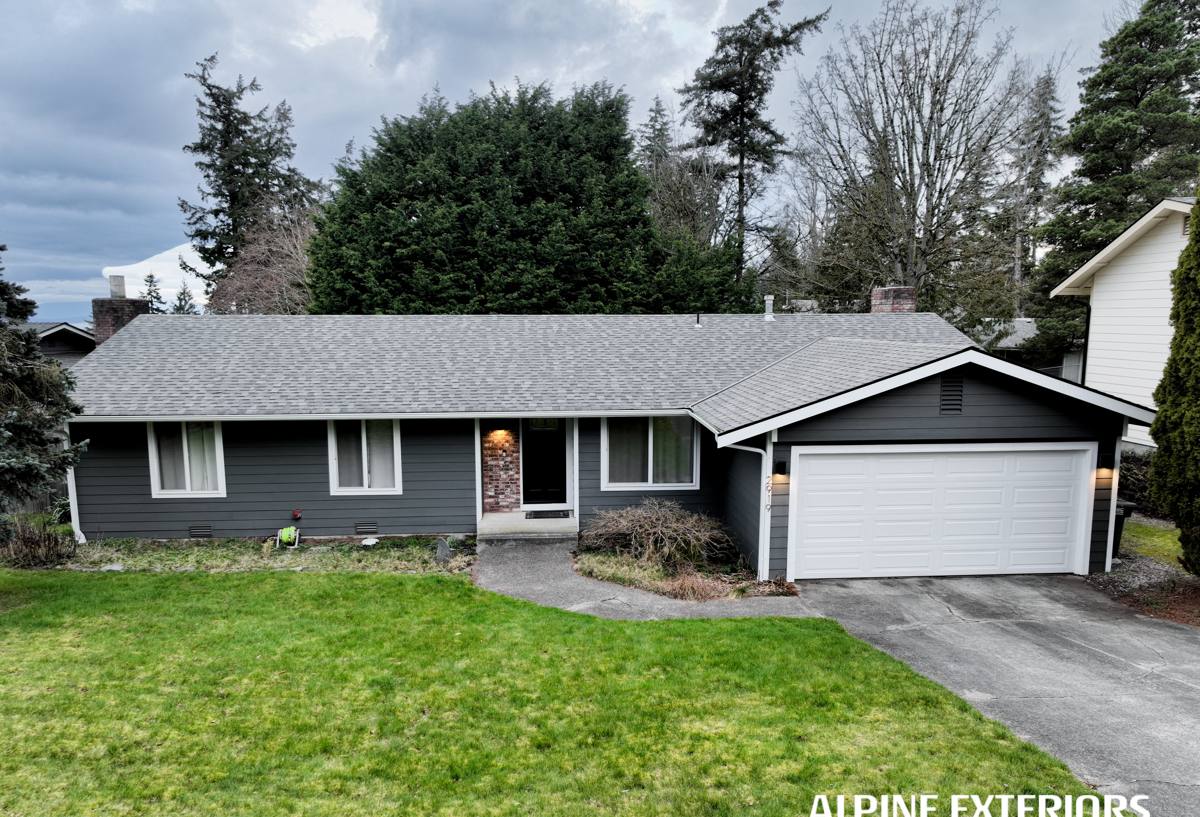
Homes in Bellingham's York neighborhood sit close enough to Bellingham Bay and the surrounding waterways that they take on a combination of weather stresses that inland Whatcom County properties simply don't see as often. Salt-laced air off the water, long stretches of wind-driven rain that comes in on marine weather systems, and heavy shade from mature trees all work together to shorten the life of siding that wasn't built with this environment in mind. We install James Hardie fiber cement siding exclusively, and this page walks through why that matters specifically for a York-area home, what a correct installation involves, and how our process works when we take on a project in this part of Bellingham.
The Climate Factors That Matter Most Here
Salt Air and Coastal Exposure
Proximity to Bellingham Bay means airborne salt is a real factor for siding, trim, and fasteners on York-area homes, even a few blocks back from the water. Salt-laden moisture accelerates corrosion on unprotected metal fasteners and trim, and it can degrade paint films and cheaper composite siding surfaces faster than a manufacturer's published warranty timeline would suggest. Any siding system installed here needs corrosion-resistant fasteners and a finish that isn't going to chalk, fade, or lift prematurely from salt exposure.
Driving, Wind-Blown Rain
Whatcom County gets a lot of rain, but the issue for siding isn't just total rainfall — it's rain that comes in sideways during storms. Wind-driven rain pushes moisture up and under siding laps, around window and door trim, and into any gap that wasn't properly flashed or lapped. A siding product that's only rated for straight-down rain, or a job that skips proper flashing details, will eventually let water behind the cladding. Once that happens, the problem usually isn't visible until the sheathing or framing underneath is already compromised.
Moss, Algae, and Extended Shade
York's tree cover and Bellingham's long damp season combine to create ideal conditions for moss and algae growth on north-facing and shaded walls. Porous or wood-based siding gives moss something to grip and grow into, holding moisture against the wall assembly for months at a time. Siding that resists moisture absorption at the surface, rather than just shedding water when it's dry, holds up dramatically better in these shaded, damp microclimates.
Why James Hardie Fits This Environment
Engineered for Wet, Marine Climates
James Hardie makes region-specific formulations of its fiber cement siding, and the HZ5 product line is engineered for climates with prolonged moisture exposure — which describes western Washington generally and a coastal-adjacent neighborhood like York specifically. Fiber cement itself doesn't rot, doesn't feed moss the way wood fiber can, and doesn't swell or delaminate the way some engineered wood products can when they take on water at a cut edge or fastener hole.
A Factory Finish, Not a Field-Applied One
Hardie's ColorPlus finish is baked on at the factory under controlled conditions, rather than sprayed or brushed on site. That matters in a salt-air environment because factory-cured finishes bond more consistently and resist fading, chalking, and peeling far longer than field-applied paint, which is exactly the kind of finish that struggles first under coastal exposure. It also means touch-up and caulk match are handled with manufacturer-matched products rather than guesswork.
Non-Combustible and Dimensionally Stable
Fiber cement is non-combustible, which is a real advantage regardless of climate, and it's also dimensionally stable across temperature and humidity swings. It won't expand and contract the way vinyl does in temperature shifts, and it won't take on water and swell at cut edges the way wood-based products can if a cut isn't sealed correctly during installation.
What a Correct Installation Actually Involves
Water Management Behind the Siding
The siding itself is only part of the system. A correct install includes a weather-resistant barrier, properly lapped and taped seams, and a drainage plane (often a rain screen or drainable house wrap) that lets any moisture that does get past the siding find its way back out rather than sitting against the sheathing. In a driving-rain climate like Bellingham's, this layer is arguably as important as the siding material itself.
Flashing and Fastening Details
Every window, door, and penetration needs correct head flashing, kick-out flashing at roof-to-wall intersections, and properly sealed fastener penetrations. Fasteners need to be corrosion-resistant and driven to the manufacturer's specified depth — overdriven or underdriven fasteners are one of the most common causes of early siding failure, and it's a detail that's easy to rush on a crew that isn't used to installing Hardie specifically.
Starter Strips, Clearances, and Butt Joints
Hardie's installation instructions specify minimum clearances from grade, roofing, and decks, plus how butt joints should be flashed or caulked and back-primed at cut ends. Skipping these details doesn't usually cause a visible problem on day one — it shows up two, five, or ten years later as moisture damage at the bottom courses or around trim, which is exactly where we see the most repair calls on older homes in this area.
What We Commonly Find on Older York-Area Homes
When we're called out to look at siding on an older home in this part of Bellingham, a handful of issues show up repeatedly. None of these are unique to York, but the combination of salt air, shade, and rain exposure here tends to accelerate them:
- Moss and algae staining concentrated on north- and west-facing walls with limited sun exposure
- Paint failure and chalking on older wood or composite siding, especially on walls closer to the water
- Soft or swollen siding at the bottom courses, near grade, or below downspouts and gutter overflow points
- Caulk failure and gaps opening up around trim and window flanges after repeated wet-dry cycles
- Rusted or bleeding fasteners staining the siding face, a sign of non-corrosion-resistant hardware
James Hardie vs. Other Siding Options for This Climate
| Factor | James Hardie Fiber Cement | Vinyl | LP SmartSide / Engineered Wood |
|---|---|---|---|
| Moisture and moss resistance | Does not absorb water or feed moss growth | Sheds water but can trap moisture behind panels if installed loosely | Wood-fiber core is vulnerable at cut edges and fastener holes if not sealed |
| Salt air / coastal durability | Factory finish resists chalking and fading; fiber cement doesn't corrode | Can become brittle and discolor faster under UV and salt exposure over time | Finish and substrate both more sensitive to prolonged moisture and salt exposure |
| Fire performance | Non-combustible | Combustible; can melt or deform near heat sources | Combustible |
| Typical lifespan when installed to spec | Multiple decades, often outlasting the original finish warranty period | Moderate; seams and fasteners are common failure points over time | Moderate; heavily dependent on maintaining sealed edges and finish |
| Maintenance burden | Occasional washing; factory finish reduces repainting needs | Low upfront, but cracking and fading show up over time | Requires diligent caulk and paint maintenance to prevent moisture entry |
This isn't a claim that other products are unusable everywhere — it's why, specifically for the conditions York-area homes face, we standardized on one system rather than offering several and hoping the homeowner picks the right one for their exposure.
Our Process, Start to Finish
A siding project on a York-area home generally follows the same sequence, adjusted for the specific exposure and condition of the house:
- On-site walk-through to assess current siding condition, moisture damage, trim, and drainage details specific to the home's exposure
- Written estimate that specifies the Hardie product line, profile, and color, along with any sheathing repair or water-management upgrades needed
- Removal of existing siding and inspection of the sheathing and framing underneath before anything new goes up
- Repair of any moisture-damaged sheathing or framing found during removal, documented and discussed before covering it back up
- Installation of a drainage plane and weather-resistant barrier, followed by correctly flashed windows, doors, and penetrations
- Installation of Hardie siding and trim to manufacturer specification, including fastener type, spacing, and clearances
- Final walk-through with the homeowner to review the finished work and care guidance for the specific product line installed
Why Hiring a Crew That Already Works in York Matters
A siding job in this neighborhood isn't the same job as one ten miles inland. Crews who already work in this part of Bellingham know to plan around the extra shade and moss pressure on tree-covered lots, they know what salt-air exposure does to fasteners and trim over time, and they've already seen what wind-driven rain does to a poorly flashed detail after a few Whatcom County winters. That familiarity shows up in the small decisions — fastener selection, flashing sequencing, where to add extra attention on a shaded wall — that don't show up on a proposal but do show up in how the siding performs ten years later. It also means a straighter process for permitting and inspection, since local requirements and typical construction in this area aren't new territory for us on day one.
If you're weighing options for a York-area home, we're happy to take a look and give you a straight answer on what your home actually needs — no pressure, no upsell to a product line we don't install. Use the form below to request a free estimate.