 Bellingham Siding
 Siding Built for Ferndale's Weather, Not Just Its Curb Appeal
Ferndale sits close enough to the water and open farmland that homes here take a different kind of beating than a house tucked into a sheltered Bellingham neighborhood. Wind-driven rain off the Strait, salt-laden air, and long stretches of gray, damp weather each year add up to one thing: siding that looks fine when it's installed needs to actually perform for decades, not just for the first summer. We install James Hardie fiber cement siding exclusively, and on Ferndale homes specifically, that choice is about managing moisture and organic growth better than the alternatives can.
This page focuses on one service, in one area: James Hardie siding installed correctly on Ferndale homes. Not a general siding overview, not a sales pitch — just what your house actually needs given where it sits.
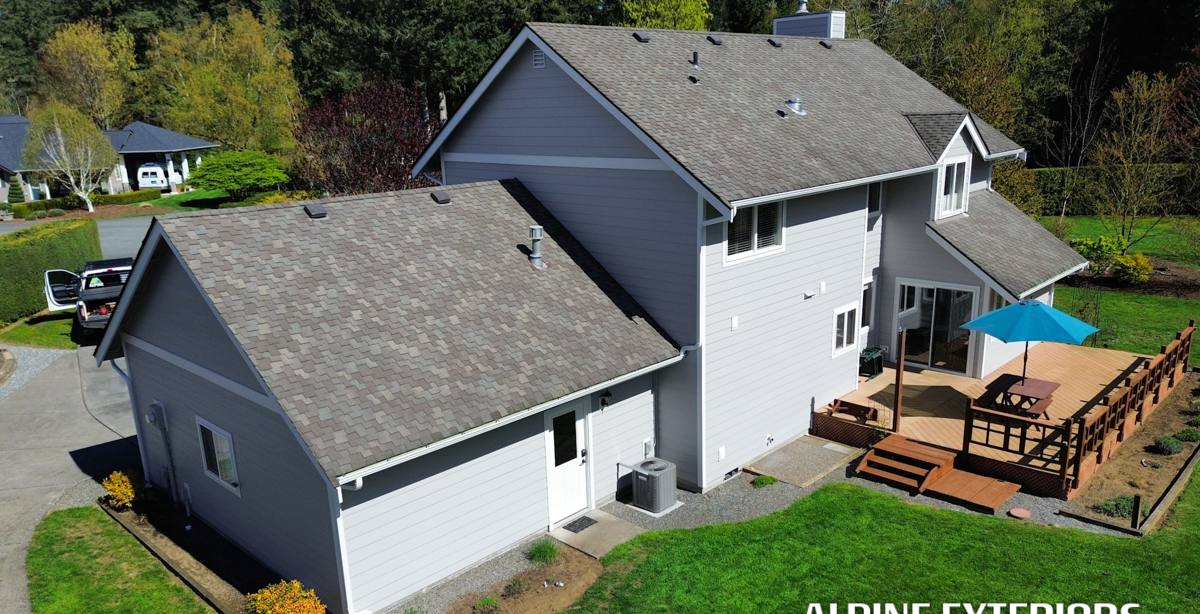
What Ferndale's Climate Does to Siding Over Time
Salt Air
Proximity to Bellingham Bay and the Strait of Juan de Fuca means airborne salt is part of daily life for many Ferndale properties, especially those closer to the water or exposed to prevailing westerly winds. Salt accelerates corrosion of fasteners and trim metal, and it degrades cheap paint finishes faster than inland exposure would. Siding material and hardware both need to tolerate that exposure without chalking, pitting, or losing adhesion.
Driving Rain
Whatcom County doesn't just get rain — it gets rain pushed sideways by wind off open fields and water. That matters because driving rain finds every weak seam, gap, or poorly lapped joint in a siding system. A product that handles vertical rain fine can still fail against wind-driven moisture if the installation details (flashing, caulking, lap sequencing) aren't right.
Moss Season
Ferndale's long wet season, shade from mature trees on many lots, and north-facing walls that rarely see direct sun create ideal conditions for moss and algae growth. Moss holds moisture against a wall surface for extended periods, which is exactly the condition that causes wood-based and poorly sealed siding products to swell, delaminate, or rot from the inside out.
Why We Install James Hardie Fiber Cement — and Only That
We don't offer LP SmartSide, vinyl, Cemplank, Allura, primed spruce, or cedar siding. That's a deliberate standard, not a limitation of what we know how to install. Each of those products asks a homeowner to accept a trade-off — vinyl warps and fades under UV and temperature swings, wood-based products need consistent maintenance to keep moisture out, cedar requires ongoing staining or sealing to resist the same moss and rot pressure described above. James Hardie fiber cement is cement, sand, and cellulose fiber — it doesn't feed moss, it doesn't absorb water the way wood does, and it's non-combustible, which also matters given the wildfire smoke seasons the Pacific Northwest now sees most summers.
Hardie's ColorPlus factory-applied finish is baked on and cured under controlled conditions, which gives it better UV and moisture resistance than field-applied paint. For a Ferndale home facing salt air and long damp stretches, that finish durability directly translates into fewer repaint cycles and less color fading on sun-exposed and salt-exposed elevations.
HZ5 vs. HZ10 — Which Matters Here
James Hardie makes climate-engineered product lines. HZ5 is engineered for regions with freeze-thaw cycling; HZ10 is engineered for warm, humid, high-moisture climates. Whatcom County sits in a mild, wet marine climate rather than a harsh freeze-thaw zone, so the correct product line selection for Ferndale leans toward what handles sustained moisture exposure well rather than repeated hard freezes. Getting this specification right at the ordering stage — not just installing "Hardie" generically — is part of what a locally experienced crew should be doing without being asked.
| Factor | James Hardie Fiber Cement | Vinyl / Wood-Based Alternatives |
|---|---|---|
| Moisture response | Cement-based, does not swell or rot | Can swell, delaminate, or rot with sustained moisture |
| Moss/algae resistance | Inorganic surface, doesn't feed growth | Organic surfaces can trap and feed moss |
| Salt air durability | Factory finish resists chalking/fading | Field-applied finishes degrade faster |
| Fire rating | Non-combustible | Combustible (wood) or melts (vinyl) |
| Maintenance cycle | Occasional wash, no repainting for years | Regular sealing, staining, or repainting |
| Warranty structure | Long-term, transferable manufacturer warranty | Varies, often shorter or non-transferable |
What a Correct James Hardie Installation Actually Involves
The material is only half the job. Most siding failures we get called to inspect on any fiber cement product trace back to installation shortcuts, not the product itself. On a Ferndale home, given the rain and wind exposure, these details matter more than average:
- Correct fastener spacing and type — stainless or coated fasteners rated for the coastal exposure, not standard interior-grade hardware
- Proper weather-resistive barrier and rain screen or drainage gap behind the siding, so any moisture that does get past the surface can drain and dry
- Correct flashing at every window, door, and roofline penetration — this is where wind-driven rain actually gets in
- Manufacturer-specified lap and joint sequencing, with joints caulked or flashed per Hardie's installation instructions, not just butted together
- Proper clearance between siding and grade, decks, and roof lines to avoid wicking ground moisture or trapping runoff
- Field-cut edges sealed or primed where required, since factory finish doesn't extend to cut edges automatically
James Hardie's warranty coverage assumes installation to their specification. A crew that skips these steps to save labor time isn't just risking cosmetic issues — they can be voiding the very warranty that was part of the reason to choose the product.
Our Process for Ferndale Homes
1. On-Site Assessment
We look at your home's specific exposure — which elevations face prevailing wind and rain, where moss growth is already visible, where existing siding shows signs of moisture damage or fastener corrosion. This isn't a generic estimate; it shapes product line selection and detailing.
2. Tear-Off and Substrate Check
Old siding comes off and we check the sheathing and framing underneath for hidden moisture damage before anything new goes up. Installing new siding over a compromised substrate just hides the problem.
3. Weather Barrier and Drainage Plane
We install or verify a proper weather-resistive barrier and drainage gap, which is what actually protects the wall assembly on a rain-heavy site like Ferndale — the siding is the first line of defense, not the only one.
4. Hardie Installation to Spec
Fastening, flashing, and joint detailing follow James Hardie's published installation instructions, which is what keeps your manufacturer warranty valid and what actually keeps water out over 20-plus years.
5. Final Walkthrough
We walk the exterior with you, elevation by elevation, before calling the job done.
Why a Crew That Already Works Ferndale Matters
Siding installation isn't one-size-fits-all across Whatcom County. A crew that regularly works Ferndale already knows which elevations tend to take the worst wind-driven rain, where moss pressure is typically heaviest given tree cover and sun exposure, and how salt air exposure varies depending on how close a property sits to open water versus inland. That local pattern recognition shows up in better product line selection and more attention to the flashing and drainage details that matter most for this specific area — not generic best practices pulled from a manual written for a different climate.
What to Check Before Hiring Anyone for Fiber Cement Work
- Ask whether they install to James Hardie's published specifications, or their own shortcuts
- Ask which HZ product line they'd specify for your home and why
- Confirm they carry proper insurance and are set up to pull the required local permits
- Ask how they handle flashing and drainage detailing, not just the visible siding install
- Get a written scope that specifies fastener type, house wrap/rain screen approach, and warranty registration
Cost Factors for Ferndale Siding Projects
| Factor | Why It Affects Cost |
|---|---|
| Home size and elevation count | More square footage and complex rooflines mean more material and labor |
| Existing substrate condition | Moisture damage found during tear-off may require sheathing repair |
| Product line (HZ5 vs. HZ10) | Climate-specific engineering affects material cost slightly |
| Trim and detail complexity | Corners, window trim, and architectural features add labor time |
| Color and finish selection | Standard ColorPlus colors vs. custom options |
We don't quote numbers on a page like this — every Ferndale home's exposure, size, and existing condition is different, and a real number only means something after we've actually looked at your walls.
If you're weighing a siding replacement in Ferndale, we're happy to come take a look and give you a straight, no-pressure estimate — including what we'd actually recommend for your home's exposure, not just a generic quote. Use the form below to get started.