 Bellingham Siding
 Storm Damage Roofing in Happy Valley: What Makes This Neighborhood Different
Happy Valley sits close to downtown Bellingham with a mix of older bungalows, mid-century homes, and newer infill construction, many shaded by mature trees. That combination matters when a storm rolls through. Big leaf maples and conifers that make the neighborhood attractive also drop limbs during high wind events, and dense tree cover keeps roofs shaded and damp long after a storm passes. A repair crew that doesn't know the neighborhood will treat every job the same way. A crew that works Happy Valley regularly knows to expect debris impact damage on tree-lined lots, moisture trapped under overhanging branches, and roof age that skews older on the neighborhood's original housing stock.
Storm damage here usually isn't one dramatic failure. It's a handful of smaller problems stacking up: a few lifted or cracked shingles, a dented vent cap, a gutter pulled loose, flashing knocked out of alignment. Left alone through Bellingham's wet season, those small problems become interior leaks. Our job on a storm damage call is to find everything the storm actually did, not just the obvious spot, and fix it correctly the first time.
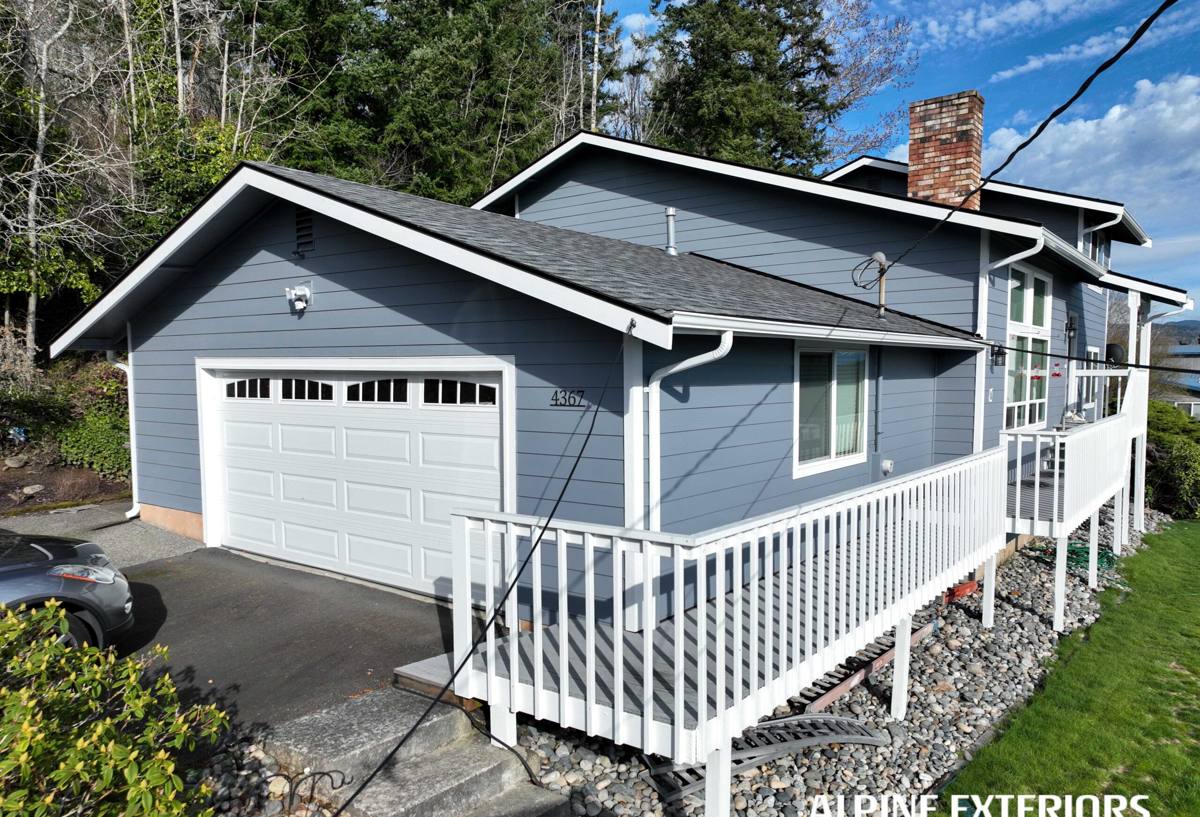
How Whatcom County Weather Drives Roof Damage
Bellingham's storm pattern is a specific combination that's harder on roofs than people expect. Understanding it is part of doing the repair right.
Salt Air and Coastal Wind
Even a few miles inland from Bellingham Bay, salt-laden air accelerates corrosion on exposed metal — nail heads, flashing, vent stacks, and gutter hardware. A storm that loosens a fastener doesn't just create a physical gap; it exposes bare metal that starts corroding faster once it's no longer sealed under a shingle or sealant bead.
Driving Rain
Pacific storms here often bring wind-driven rain rather than straight-down rainfall. Wind-driven rain finds every gap a storm creates and pushes water sideways and upward under shingles, around flashing, and into any seam that wouldn't leak in a calm rain. This is why storm damage that looks minor from the ground — a few shifted shingles — can already be letting water into the roof deck.
Long Moss and Moisture Season
Whatcom County's mild, wet climate supports moss and moisture growth for most of the year, especially on north-facing slopes and shaded sections like the tree-covered lots common in Happy Valley. Moss holds water against the roofing material, and on a section already stressed by storm damage, that trapped moisture speeds up rot and granule loss. A storm repair that doesn't account for existing moss buildup is treating the symptom, not the cause.
What a Correct Storm Damage Assessment Looks Like
An honest assessment starts on the roof, not from a photo or a drive-by. We check the obvious damage first, then work outward, because storm damage tends to have a pattern that spreads past where you'd expect.
- Wind-lifted, cracked, or missing shingles, including tab damage that isn't visible from the ground
- Impact marks from falling branches or debris, and soft spots that indicate deck damage underneath
- Flashing around chimneys, vents, and roof-to-wall transitions knocked loose or bent out of position
- Gutter and downspout attachment points pulled away from the fascia
- Vent caps, ridge caps, and pipe boots cracked or dislodged
- Signs of water intrusion already present in the attic — staining, damp insulation, or musty odor
- Existing moss or debris buildup that may be trapping moisture near the damaged area
We document what we find and explain it in plain terms — what's storm damage, what's pre-existing wear that the storm exposed, and what can reasonably wait. Not every issue on an older Happy Valley roof needs to be addressed on the same visit, and we'll say so.
Our Repair Process, Step by Step
1. Temporary Protection First
If a roof has active leaking or an open section, our first move is to stop water from getting further into the structure — tarping or covering the exposed area before we do anything else. This is a stopgap, not a fix, but it buys time to do the permanent repair correctly instead of rushing it.
2. Deck Inspection Before Re-Covering
Any storm-damaged section gets opened up enough to check the roof deck underneath. Replacing shingles over a deck that's already taking on water just hides the problem. If we find soft or rotted decking, we replace that section before any new roofing material goes down.
3. Matching Materials Where Possible
For partial repairs, we try to match existing shingle type, color, and exposure so the repaired section blends in rather than standing out as an obvious patch. On older roofs where exact matches aren't available, we'll tell you honestly what your options are — a close match, a slightly visible patch, or a broader section replacement — rather than overselling a perfect match that isn't realistic.
4. Flashing and Penetration Detail Work
Flashing failures cause a disproportionate share of the leaks we see after a storm. We re-set or replace bent and loosened flashing at chimneys, skylights, vents, and wall transitions, and reseal penetrations with materials rated for our climate rather than a generic caulk that will fail within a season or two of driving rain.
5. Final Water Test and Walkthrough
Once repairs are complete, we walk the roof and the attic access point with you if you'd like, and explain what was done and why. No repair leaves the property without us being confident it will hold up through the next storm, not just look finished from the ground.
Repair vs. Replacement: How We Decide
Storm damage doesn't automatically mean a new roof, and it doesn't automatically mean a quick patch either. The right call depends on a few honest factors.
| Factor | Leans Toward Repair | Leans Toward Replacement |
|---|---|---|
| Roof age | Under 15 years, otherwise sound | Nearing or past expected service life |
| Extent of damage | Isolated to one or two sections | Spread across multiple slopes |
| Deck condition | Solid, no rot found on inspection | Soft decking or rot in multiple areas |
| Prior moss/moisture history | Minimal, well-ventilated roof | Chronic moss and trapped moisture over years |
| Material availability | Matching shingles still available | Discontinued material, poor match likely |
We'll walk you through where your roof falls on this table before recommending anything, and we're not going to push a full replacement on a roof that a proper repair will genuinely fix.
Insurance and Documentation
Storm damage claims move faster and go smoother when the documentation is thorough from the first visit. We photograph damage before any repair work begins, note the likely cause (wind, impact, wind-driven rain intrusion), and provide a written scope that your insurance adjuster can use directly. If an adjuster's estimate misses damage we found during our own inspection — a common gap, especially on hard-to-see roof sections — we'll point out the discrepancy so you can raise it, rather than quietly working around it.
Preventing the Next Storm From Doing the Same Damage
Part of a proper storm repair is looking at why the damage happened in the first place. A few things we check and can address while we're already on the roof:
- Overhanging branches: limbs close enough to strike the roof in wind are a repeat-damage risk worth addressing, even if it means a referral to a tree service
- Gutter attachment: loose gutters fail faster in the next storm and can pull fascia boards with them
- Moss and debris buildup: left in place, it keeps sections of the roof damp between storms and weakens materials over time
- Ventilation: poor attic ventilation lets moisture linger after wind-driven rain gets past a damaged section, slowing drying and inviting rot
- Fastener condition: corroded or under-driven nails are often what let a section lift in the first place
None of this is upselling — it's the difference between fixing today's damage and setting the roof up to fail again in the next system that comes through Whatcom County.
Why a Local Crew Matters for This Kind of Repair
Storm damage repair rewards familiarity. A crew that already works in and around Happy Valley knows the local building stock, has already seen how the tree cover and terrain in this part of Bellingham affect roofs, and can usually respond faster after a storm than a company working from farther out. We're not learning Whatcom County's climate on your roof — driving rain, salt air, and the long moss season are things we plan for on every job, not surprises we react to.
We also understand that storm damage is stressful, and homeowners deserve a straight answer about what actually needs to happen — not the longest possible list of add-ons. If your roof needs a targeted repair, that's what we'll recommend. If it genuinely needs more, we'll explain exactly why before you commit to anything.
If your Happy Valley home has storm damage — or you're not sure whether recent weather caused damage worth addressing — we're glad to take a look. Reach out for a free, no-pressure estimate using the form below.