 Bellingham Siding
 Why Cordata Homes Need Siding Built for This Climate
Cordata sits on the north side of Bellingham, in a stretch of Whatcom County where the weather off the Salish Sea meets wooded, often shaded residential lots. That combination is tougher on exterior siding than most homeowners realize. You're dealing with salt-laden marine air moving in off the water, long stretches of driving rain pushed sideways by wind, and a moss and algae season that, in this part of Washington, barely takes a break. Siding here doesn't just get wet — it stays wet, for days at a time, on north- and west-facing walls that don't get much direct sun.
A lot of the housing stock in and around Cordata was built during periods of rapid growth from the 1990s through the 2000s, which means a wide mix of siding types is now reaching or past the age where problems show up: vinyl that's chalked and cracked, cedar that's been repainted more times than anyone can count, and hardboard products that were never rated for a climate this wet in the first place. When we get called out to a Cordata home, the siding failure almost always traces back to moisture — not a single bad storm, but years of slow, steady saturation the original material wasn't built to shed.
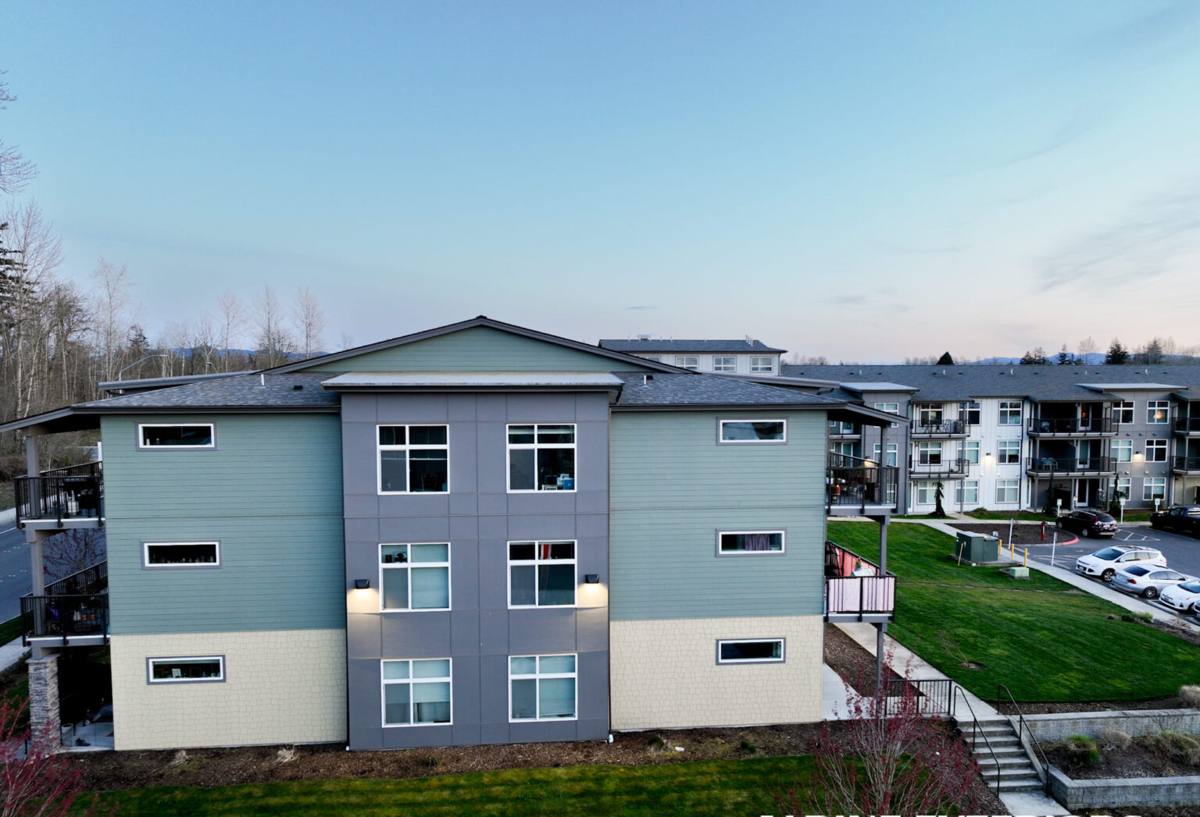
What Bellingham's Climate Actually Does to Siding
Driving Rain and Wind-Driven Moisture
Whatcom County doesn't get the heaviest rainfall totals in the state, but it gets a lot of wind-driven rain — moisture pushed horizontally into wall assemblies rather than just falling straight down. That matters because it finds every gap: unsealed laps, poorly flashed trim, nail holes that weren't caulked, and butt joints that were never meant to be watertight in the first place. Over time, wind-driven rain gets behind siding that looks fine from the curb and starts rotting the sheathing underneath.
Salt Air and Corrosion
Proximity to the Salish Sea means a steady low-level dose of salt in the air, even well inland. Salt air accelerates corrosion on fasteners, flashing, and any exposed metal trim, and it degrades certain coatings faster than they'd wear in a drier, inland climate. Siding materials and hardware that aren't rated for coastal exposure tend to show pitting, staining, and premature fastener failure years before a manufacturer's stated lifespan would suggest.
Moss, Algae, and Year-Round Dampness
Cordata's tree cover and cooler microclimate mean plenty of walls stay shaded and damp for much of the year. That's exactly the environment moss and algae need to take hold. On wood and wood-composite siding, moss isn't just cosmetic — it holds moisture directly against the material, which accelerates rot from the surface inward. On siding with a weak factory finish, algae staining alone can make a wall look aged and neglected within a few years of installation.
Why Fiber Cement Is the Right Material for This Neighborhood
Fiber cement was engineered specifically for climates like this one. It's a mix of cement, sand, and cellulose fibers, which means it doesn't absorb and swell with moisture the way wood and wood-composite products do, and it doesn't support rot in the way organic siding materials eventually will. It's also non-combustible, which matters more every year as wildfire smoke seasons stretch later into the Pacific Northwest calendar — fiber cement doesn't contribute fuel to a structure fire the way wood siding does.
We install James Hardie exclusively, and one reason is that Hardie engineers its HZ5 product line specifically for the wetter, harsher climate zones — the Pacific Northwest included. That's not a marketing detail; it changes the formulation to better resist moisture-related damage in exactly the conditions Cordata sees most: sustained dampness, freeze-thaw cycling in the shoulder seasons, and salt-influenced air. Combined with the factory-applied ColorPlus finish — baked on before the boards ever leave the plant — you get a surface that resists moss staining and fading far better than field-applied paint on wood or hardboard siding.
We've made a deliberate call not to install LP SmartSide, vinyl, Cemplank, Allura, primed spruce, or cedar. Each of those products has legitimate uses and reasonable people choose them, but none of them combine non-combustibility, factory-cured finish durability, and a climate-specific engineered product line the way Hardie does. Vinyl expands and contracts more than most homeowners expect and can distort in temperature swings; cedar and primed spruce require an ongoing maintenance commitment most homeowners don't keep up with once the "new house" feeling wears off; engineered wood products carry moisture-sensitivity trade-offs at the cut edges and seams that demand near-perfect installation discipline to avoid problems down the road. We'd rather install one product correctly, every time, than juggle the maintenance profiles of five.
What a Correct Fiber Cement Installation Actually Involves
The single biggest driver of siding failure in this climate isn't the material — it's the installation. Fiber cement is a forgiving, durable product when it's installed to spec, and a problem-prone one when it isn't. A correct install in a climate like Cordata's includes:
- A drainage plane and rainscreen gap behind the siding so any moisture that does get past the surface has somewhere to go, rather than sitting against the sheathing
- Manufacturer-specified clearances from grade, roof lines, decks, and other horizontal surfaces so water can't wick up into the bottom edge of the boards
- Correct flashing and kick-out details at every roof-to-wall intersection, window, and door — the places wind-driven rain finds first
- Proper fastener type, spacing, and depth per Hardie's published installation guide, since over-driven or under-driven nails are one of the most common causes of early failure
- Factory-cut and field-cut edges sealed per manufacturer specification, especially anywhere a cut edge will be exposed to weather
- Caulking only where Hardie's instructions call for it — over-caulking traps moisture just as effectively as under-caulking lets it in
Skipping any one of these doesn't usually cause an immediate, visible problem. It shows up two, five, or eight years later as staining, soft spots, or paint failure — long after the crew that installed it has moved on. That gap between installation shortcuts and visible consequences is exactly why manufacturer specification matters more than it might seem to at the time of the job.
Comparing Siding Options for a Cordata Home
| Material | Moisture Behavior in This Climate | Maintenance Burden | Typical Lifespan Here |
|---|---|---|---|
| James Hardie fiber cement | Doesn't absorb/swell; engineered HZ5 line for wet climates | Low — no repainting needed with ColorPlus finish | Multiple decades with correct install |
| Cedar | Absorbs moisture; prone to moss growth and rot in shaded areas | High — regular refinishing and moss treatment | Shorter without diligent upkeep |
| Vinyl | Doesn't rot, but can warp/crack with temperature swings and impact | Low, but limited repair options once damaged | Variable; UV and cold-snap sensitive |
| LP SmartSide / engineered wood | Moisture-sensitive at cut edges and seams if not sealed perfectly | Moderate — edge sealing and inspection needed | Depends heavily on installation quality |
| Primed spruce | Absorbs moisture readily; needs a finish coat to perform at all | High — ongoing painting cycle | Shorter without consistent maintenance |
Our Process for a Cordata Fiber Cement Project
Assessment First
We start by walking the exterior and identifying where moisture has already done damage — soft trim, stained corners, gaps at penetrations — before we ever talk about new siding. In a climate that hides moisture problems behind an otherwise decent-looking wall, this step catches issues a surface-level look would miss.
Removal and Sheathing Check
Once the old siding comes off, we check the sheathing and weather barrier underneath. Any rot or compromised sheathing gets addressed before a single new board goes up — installing new siding over damaged sheathing just hides the problem for a few more years.
Installation to Manufacturer Spec
We install per James Hardie's published guidelines for this climate zone: correct rainscreen, flashing, fastening, and clearances, all the way through trim and caulking. This is also where product choice and installation discipline meet — Hardie's climate-engineered HZ5 line only performs as designed if it goes on correctly.
Local Permitting and Site Considerations
Work in and around Cordata means working within City of Bellingham permitting requirements and, on many of the newer subdivisions in this area, HOA exterior guidelines around color and material. A crew that already works this neighborhood knows to check both before the first board is ordered, not after.
Maintenance Expectations Once It's Installed
Fiber cement's biggest advantage over wood and engineered wood in this climate is how little ongoing work it asks of you. That said, "low maintenance" isn't "no maintenance" — a short annual routine keeps it performing the way it's supposed to:
- Rinse the exterior once or twice a year to keep moss and algae from getting a foothold, especially on shaded north- and west-facing walls
- Walk the caulking lines around windows, doors, and trim annually and note any cracking or separation
- Check gutters and downspouts stay clear so water isn't sheeting down the siding during heavy rain events
- Keep an eye on any spot where siding meets grade, a deck, or a roofline — these are the highest-risk areas for trapped moisture
- Touch up any chips or scratches promptly, since exposed edges are the one place moisture can get a start even on a well-installed product
Why Hiring a Crew That Already Works Cordata Matters
Siding installation instructions look the same on paper everywhere. What changes is judgment calls in the field — how much rainscreen gap to use on a particularly exposed wall, where an extra kick-out flashing earns its keep, which walls in this neighborhood's tree-shaded lots need extra attention to moss-prone detailing. A crew that's worked other homes in this part of Bellingham has already seen how the local combination of rain, shade, and salt air plays out over time, and builds around it instead of finding out the hard way.
There's also the practical side: knowing the City of Bellingham's permitting process, understanding common HOA material and color requirements in Cordata's newer developments, and being able to register a Hardie warranty correctly from day one. None of that is complicated, but it's the kind of thing that goes smoothly when a crew has done it before and turns into delays when they haven't.
Get a Straight Answer for Your Home
If you're weighing a siding replacement in Cordata, we're happy to take a look, tell you honestly what condition your current siding is in, and walk through what a correct James Hardie installation would involve for your specific home. There's no pressure and no obligation — just a straight assessment from a crew that installs this product, and only this product, on homes in this climate every day. Use the form below to request a free estimate.