 Bellingham Siding
 Fairhaven sits close enough to the water that salt air, wind-driven rain, and a moss season that can run half the year all show up on a home's exterior faster than they do a few miles inland. Siding that works fine in a drier part of Whatcom County can fail early here — not because it's bad siding everywhere, but because it's the wrong siding for this microclimate. This page covers what fiber cement siding needs to do for a Fairhaven home, what a correct installation actually involves, and how our process works from first look to final walkaround.
Why Fairhaven Is Harder on Siding Than It Looks
Fairhaven's proximity to Bellingham Bay means homes take on a mix of stresses that don't always show up in a general Bellingham siding conversation. Salt-laden air accelerates corrosion on fasteners and trim metal. Driving rain off the water pushes moisture sideways into seams, laps, and butt joints that would stay dry in a calmer setting. And the region's long damp season — cool, shaded, and slow to dry out — is exactly the environment moss and algae favor. Put those three together and you get a set of demands that a siding material and an installation crew both need to be built for.
None of this is unique to Fairhaven, but it's more concentrated here than in drier pockets of Whatcom County. That's part of why we treat this as a local service, not a one-size-fits-all product pitch — the details of flashing, fastening, and finish matter more here than they do in a lot of places.
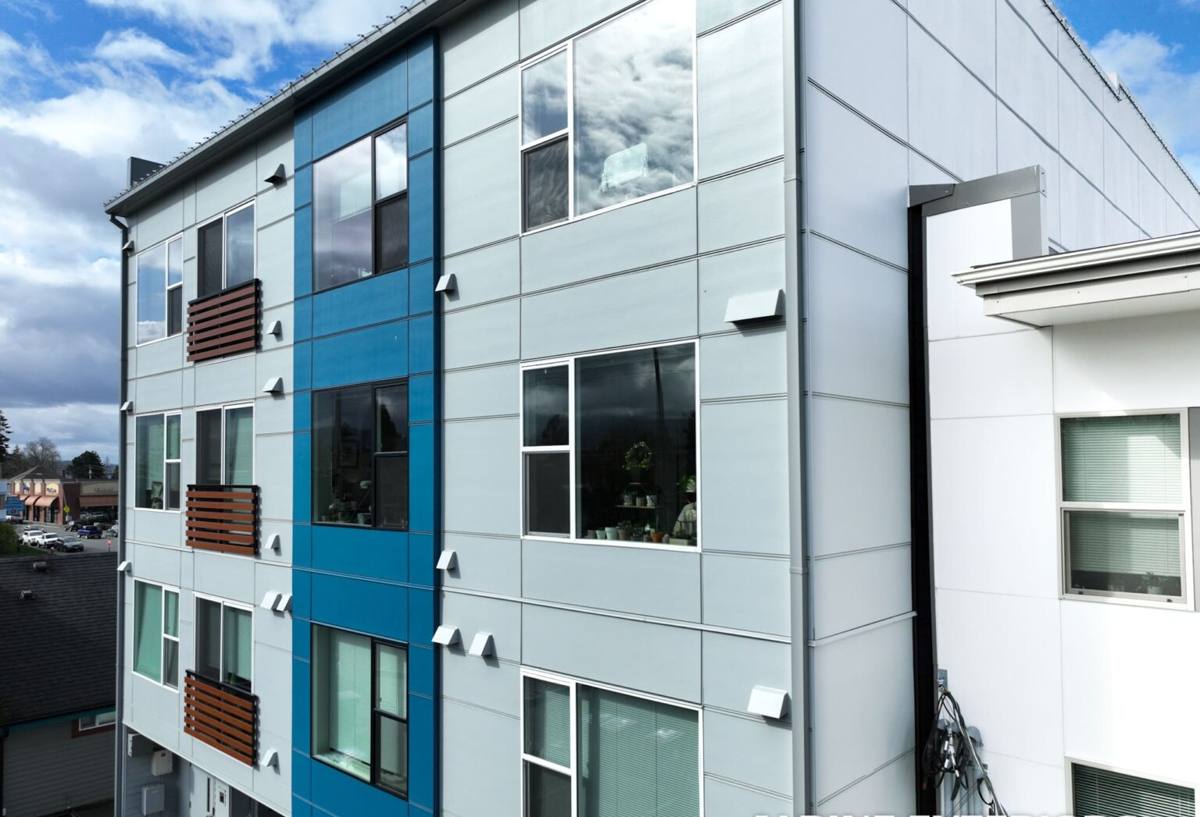
What Fairhaven Homes Actually Need From Their Siding
Moisture Management, Not Just Water Resistance
Wind-driven rain doesn't just land on siding — it gets pushed into it. A correct installation assumes water will reach the wall at some point and gives it a way out: proper rainscreen or drainage gap where called for, correctly lapped house wrap, and flashing at every window, door, and horizontal transition. Siding that's watertight in a lab test can still fail on a house if the water management behind it is an afterthought.
Resistance to Moss, Algae, and Mildew
Fiber cement itself doesn't feed mold and mildew the way wood-based products can, but any siding in a shaded, damp part of Fairhaven will collect moss and algae on the surface over time if the finish and detailing don't account for it. Factory-applied finishes that resist staining, combined with siding installed with the clearances the manufacturer specifies, go a long way toward keeping growth from taking hold in the first place.
Fasteners and Trim That Won't Corrode
Salt air is hard on standard fasteners and untreated metal trim. Corroding nails or trim pieces don't just look bad — they create small gaps and stains that let water in behind the siding. This is a detail that's easy to skip and expensive to fix later, so it's one we don't cut corners on near the water.
Why We Install James Hardie and Nothing Else
We install James Hardie fiber cement siding exclusively. We don't install LP SmartSide, vinyl, Cemplank, Allura, primed spruce, or cedar, and we're upfront about why. Each of those products has real strengths, but they also carry trade-offs — moisture sensitivity, shorter service life in a coastal-influenced climate, higher long-term maintenance, or warranty terms that don't hold up as well over time — that we've decided aren't worth carrying on a Fairhaven home.
James Hardie's fiber cement is non-combustible, dimensionally stable in wet-dry cycling, and available in HZ product lines engineered for specific climate zones, including the wetter Pacific Northwest profile. Its ColorPlus factory finish is baked on under controlled conditions rather than field-applied, which matters directly for algae and moss resistance and for how the color holds up against years of damp weather. The warranty is transferable, which protects resale value — a real consideration in a desirable neighborhood like Fairhaven.
We're not saying every other product is unusable everywhere. We're saying that for the conditions this neighborhood puts a house through, Hardie is what we're willing to put our name behind.
What a Correct Fiber Cement Installation Involves
- Inspection and repair of the existing wall sheathing before any new siding goes up — siding installed over compromised sheathing fails regardless of how good the material is
- Correctly lapped and sealed weather-resistant barrier (house wrap) as the primary drainage plane
- Proper flashing at every window, door, deck ledger, and horizontal siding transition
- Rainscreen or drainage gap installed where the wall assembly and manufacturer specs call for it, so incidental moisture can escape instead of sitting against the panel
- Fastener placement, spacing, and type matched to James Hardie's published installation guidelines — not a generic siding standard
- Correct clearances at grade, roofline, and other siding-to-material transitions to keep the bottom edge of the siding from sitting in standing water or debris
- Caulking and sealant only where Hardie's details call for it — over-caulking traps moisture just as often as under-caulking lets it in
Skipping any one of these doesn't usually cause an obvious problem in year one. It shows up in year five or eight as staining, soft trim, or premature paint failure — the kind of damage that's far more expensive to fix than it would have been to install correctly the first time.
Our Process for a Fairhaven Fiber Cement Project
1. On-Site Assessment
We walk the exterior, check the condition of existing siding and sheathing, and look specifically at the sides of the house most exposed to wind-driven rain and shade — the areas most likely to be carrying hidden moisture damage.
2. Scope and Product Selection
We go over which James Hardie lap, panel, or shingle profile fits the home, what ColorPlus color options are available, and where trim, soffit, and fascia need to be addressed alongside the siding itself.
3. Written Estimate
You get a clear, itemized estimate before any work starts — no vague allowances, no surprise change orders for water management details that should have been scoped from the beginning.
4. Installation to Manufacturer Spec
Every fastener, flashing detail, and clearance follows James Hardie's published installation requirements, which is also what keeps the manufacturer's warranty intact.
5. Final Walkthrough
We walk the finished job with you, point out what was done at key transitions and flashing points, and answer any questions before we consider the project complete.
Cost Factors for Fiber Cement in Fairhaven
Every home is different, and we won't quote a number without seeing the house, but the factors below are what typically move the price on a project in this area.
| Factor | Why It Affects Cost |
|---|---|
| Sheathing condition | Rot or moisture damage found during tear-off adds repair work before new siding can go on |
| Siding profile and finish | Lap, shingle, and panel styles, plus ColorPlus vs. field-painted, carry different material and labor costs |
| Trim and detail work | Homes with more corners, windows, and roofline transitions require more flashing and cutting time |
| Wall exposure | Sides facing prevailing wind and rain often need extra attention to drainage and flashing detail |
| Access and site conditions | Multi-story sections, tight lot lines, or landscaping close to the house affect staging and labor time |
Maintenance in a Moss-Prone Climate
Fiber cement with a factory finish needs far less upkeep than wood siding, but "low maintenance" doesn't mean "no maintenance" in a place like Fairhaven. A periodic rinse-down keeps moss and algae from getting a foothold, and it's worth checking caulking at trim joints every year or two, since that's the first place a small gap tends to show up. Keeping plantings and mulch pulled back a few inches from the base of the siding also helps — vegetation held tight against the wall keeps that area damp longer than it should be.
Signs Your Current Siding Is Losing the Battle
- Soft or spongy spots when you press on the siding, especially near the bottom courses or under windows
- Visible moss or algae that comes back quickly after cleaning
- Paint that's peeling or bubbling rather than just fading
- Warping, buckling, or gaps opening up at seams and corners
- A musty smell near exterior walls on the inside of the house
Any one of these is worth a look before it turns into a sheathing repair.
If you're in Fairhaven and dealing with aging siding, moisture concerns, or just want a straight answer on what your home actually needs, we're happy to take a look. Use the form below to request a free, no-pressure estimate.