 Bellingham Siding
 Building a Deck That Belongs on Chuckanut Bay's Doorstep
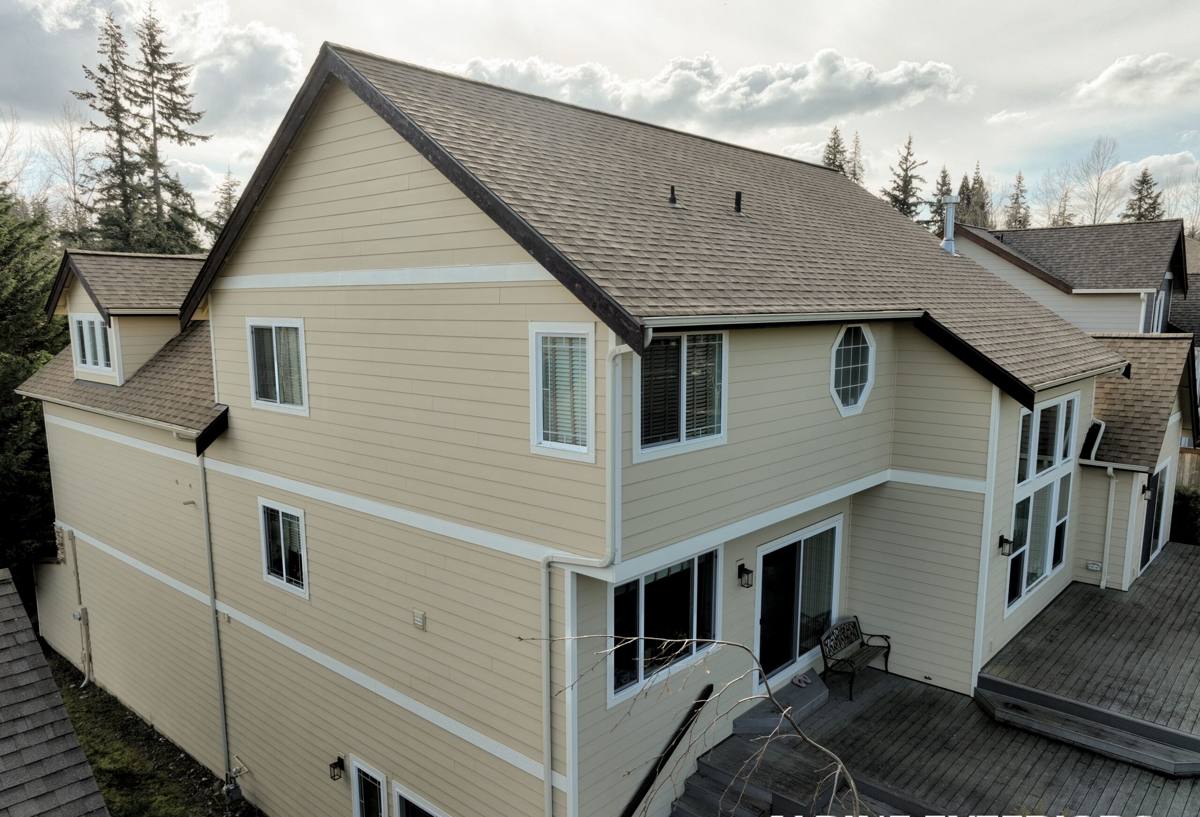
Edgemoor sits close to the water, with mature evergreen canopy overhead and a shoreline breeze that reaches yards well back from the bluff. That combination is beautiful and it's also hard on decks. Salt-tinged air accelerates corrosion on fasteners and hardware, the overhanging trees keep boards shaded and damp longer than they'd be in an open yard, and Whatcom County's wet season means a deck here spends months at a time absorbing moisture instead of drying out between rains. A deck built with generic, one-size-fits-all specs from a warmer or drier climate will show problems in Edgemoor years before it should — cupped boards, rusted fastener heads bleeding through the wood, slippery moss buildup on shaded sections, and ledger connections that were never detailed for this much sustained moisture.
None of that means you need an exotic build. It means the ordinary decisions — framing layout, fastener grade, decking material, ledger flashing, and joist protection — have to be made correctly for this specific site, not assumed. That's the whole difference between a deck that needs real work again in eight years and one that's still solid in twenty-five.
What Edgemoor's Site Conditions Actually Ask of a Deck
Salt Air and Metal Corrosion
Proximity to Bellingham Bay puts a fine layer of salt-laden moisture on exposed metal, especially on decks with any western or northern exposure toward the water. Standard electro-galvanized screws and joist hardware corrode faster near the shoreline than they would a few miles inland. We spec stainless steel or high-grade coated (ACQ-compatible, marine-rated) fasteners and connectors for any deck within reach of that salt air, because the framing is the one part of the deck you don't want to be replacing every decade.
Tree Cover and Moss
Many Edgemoor lots have mature fir and cedar overhead, which is part of the neighborhood's character but also means decks get less direct sun and more organic debris — needles, pollen, leaf litter — settling into board gaps and fastener heads. That debris holds moisture and feeds moss and algae growth on the deck surface, particularly on the shaded side of the house or under dense canopy. A deck built without attention to drainage and gap spacing in these spots will develop a moss problem within a year or two regardless of material.
Driving Rain and Sustained Wet Season
Whatcom County's rainy months aren't just wet, they're prolonged — weeks of low-intensity, wind-driven rain rather than isolated downpours. That pattern matters for two parts of a deck build most homeowners never think about: the ledger board connection to the house, and the top of every joist. Both are places where trapped water does slow, invisible damage over years. We treat both as non-negotiable details, not optional upgrades, on every deck we build in this area.
Ledger Attachment: The Detail That Protects the House
The ledger board — where the deck bolts to your house framing — is the single most common source of deck failure and water intrusion into the structure behind it, nationally and especially in wet climates like ours. A correct ledger installation includes flashing that sheds water away from the house sheathing, proper structural fasteners (not deck screws) rated for the load, and a gap or flashing detail that keeps water from wicking into the band joist. We also confirm the ledger is bolted into solid framing, not just sheathing, and that any existing siding or house wrap is properly integrated with the new flashing rather than just caulked over. Caulk is not a substitute for flashing; it's a backup, and it fails first.
Framing and Fasteners Built for This Site
| Component | What we spec in Edgemoor conditions | Why it matters here |
|---|---|---|
| Joist hardware | Stainless steel or heavy-duty coated hangers | Salt air and prolonged moisture corrode standard galvanized hardware faster near the bay |
| Fasteners | Stainless or ACQ-compatible coated screws, no mixed metals | Prevents galvanic corrosion and staining that shows up as black streaks on decking |
| Joist tops | Self-adhering flashing tape over every joist | Keeps standing rainwater from soaking into end grain and cut tops, the #1 cause of hidden rot |
| Post bases | Elevated, ventilated post bases off the concrete | Keeps posts from sitting in the puddled water that collects under shaded, low-airflow decks |
| Ledger flashing | Metal flashing plus self-adhering membrane, integrated with siding/house wrap | Sustained wet-season rain finds any gap in a caulk-only ledger over a few winters |
Choosing Decking Material for Shade, Moisture, and Moss
There's no single "best" decking material for Edgemoor — the right call depends on how much shade and moisture a given deck actually sees, and how much upkeep you want to take on.
Pressure-Treated Wood
Still the most affordable option and perfectly serviceable when properly detailed underneath (see the framing table above). Wood decks in shaded, damp spots need more frequent cleaning and periodic sealing to keep moss from taking hold in the grain, and boards should be installed with a consistent gap for drainage and airflow rather than tight-butted.
Cedar
Naturally more rot- and insect-resistant than most softwoods and a good regional fit, but it's a softer wood that shows scratches and requires its own maintenance schedule (cleaning, occasional oiling) to hold its color and resist surface mold in shaded areas.
Composite Decking
The lowest-maintenance option for shaded, moisture-heavy sites — no sealing, and better resistance to the kind of persistent damp that grows moss on wood. The trade-offs are a higher upfront cost and, on lower-quality composites, a tendency to stay damp on the surface longer than wood in deep shade, which can actually make algae film worse if the product and airflow underneath aren't right. We only recommend composite brands and profiles that perform well in shaded, wet Pacific Northwest conditions, not whatever has the lowest price point.
PVC Decking
Fully synthetic, doesn't absorb moisture at all, and holds up the best against moss and algae in heavy shade of anything we install. It costs more than composite and has a different look and feel underfoot, which is a personal preference call, not a durability one.
Our Deck Building Process
- Site walk and design conversation — we look at your sun/shade exposure, proximity to the water side of the property, drainage slope, and how you actually plan to use the space.
- Material and layout recommendation — matched to that specific site's shade and moisture profile, not a generic package.
- Permitting — most new decks and many deck replacements in Bellingham require a building permit; we handle that process so it's not left to you.
- Demo (if replacing) — we also check the ledger area and framing underneath for hidden rot before pricing is finalized, since that's often where the real story of an old deck's condition is.
- Framing — corrosion-appropriate hardware and fasteners, joist-top flashing, properly detailed ledger connection.
- Decking and railing installation — correct board spacing for drainage and airflow, consistent fastening pattern, code-compliant railing height and baluster spacing.
- Final walkthrough — we go over basic maintenance for whatever material you chose, including how to keep moss from getting a foothold in shaded corners.
Signs an Existing Edgemoor Deck Needs Attention
- Soft, spongy, or dark-stained boards near the house where the deck meets the ledger
- Rust streaks bleeding out from screw heads or joist hangers
- Persistent moss or green film that returns within weeks of cleaning
- Gaps or separation where the ledger board meets the siding
- Wobble at the railing posts or a spongy feel underfoot near support posts
- Standing water that doesn't drain off the deck surface within an hour or two of rain stopping
Any one of these is worth a look before it turns into a structural repair rather than routine maintenance.
What Correct Deck Building Costs, and What Drives the Range
Deck pricing depends on size, framing complexity (height, stairs, multiple levels), material choice, and site access — a deck built on a slope or with limited equipment access costs more than a straightforward flat-yard build. Rather than quote a number that won't match your specific project, we walk every site and give a written estimate based on what's actually there, including what the ledger and existing structure (on a replacement) require. What we won't do is quote a low number that skips corrosion-rated hardware or ledger flashing to win the bid — those are the two details that determine whether a deck lasts fifteen years or thirty-plus in this climate.
Why a Crew That Already Works Edgemoor Matters
A contractor who builds decks across a wide range of climates will default to standard specs unless someone tells them otherwise. A crew that regularly works Edgemoor and the Bellingham Bay shoreline already knows which yards get direct salt exposure, which lots hold shade and moisture long into summer, and which older homes have ledger and siding details that need extra care during tie-in. That local pattern recognition shows up in the small decisions — hardware grade, board gap, flashing detail — long before it shows up as a problem you'd notice from the surface. It's also why we can walk a site and tell you honestly what a deck in that specific spot actually needs, instead of selling you the same package we'd sell anywhere else in Whatcom County.
If you're planning a new deck or need an honest look at one that's showing its age, we're happy to walk the site with you. Fill out the form below for a free, no-pressure estimate — no obligation, just a straight assessment of what your deck needs and what it would cost to do right.