 Bellingham Siding
 Windows in Edgemoor Work Harder Than Windows Inland
Edgemoor sits close to Bellingham Bay, tucked under a heavy tree canopy on hilly, wooded lots. That combination — salt-tinged air off the water, wind-driven rain rolling in from the Strait, and shade that keeps surfaces damp for weeks at a stretch — puts more stress on window frames, seals, and sills than most homeowners realize until something starts to fail. A window that would last decades in a dry, open subdivision can show real wear in half that time here if it wasn't built or installed with this specific environment in mind.
That's the difference between a generic window swap and a job done right for this neighborhood. We're not just measuring an opening and dropping in a box. We're accounting for where the water goes, how much salt exposure the frame will see over its life, and how the house sits relative to sun, wind, and shade.
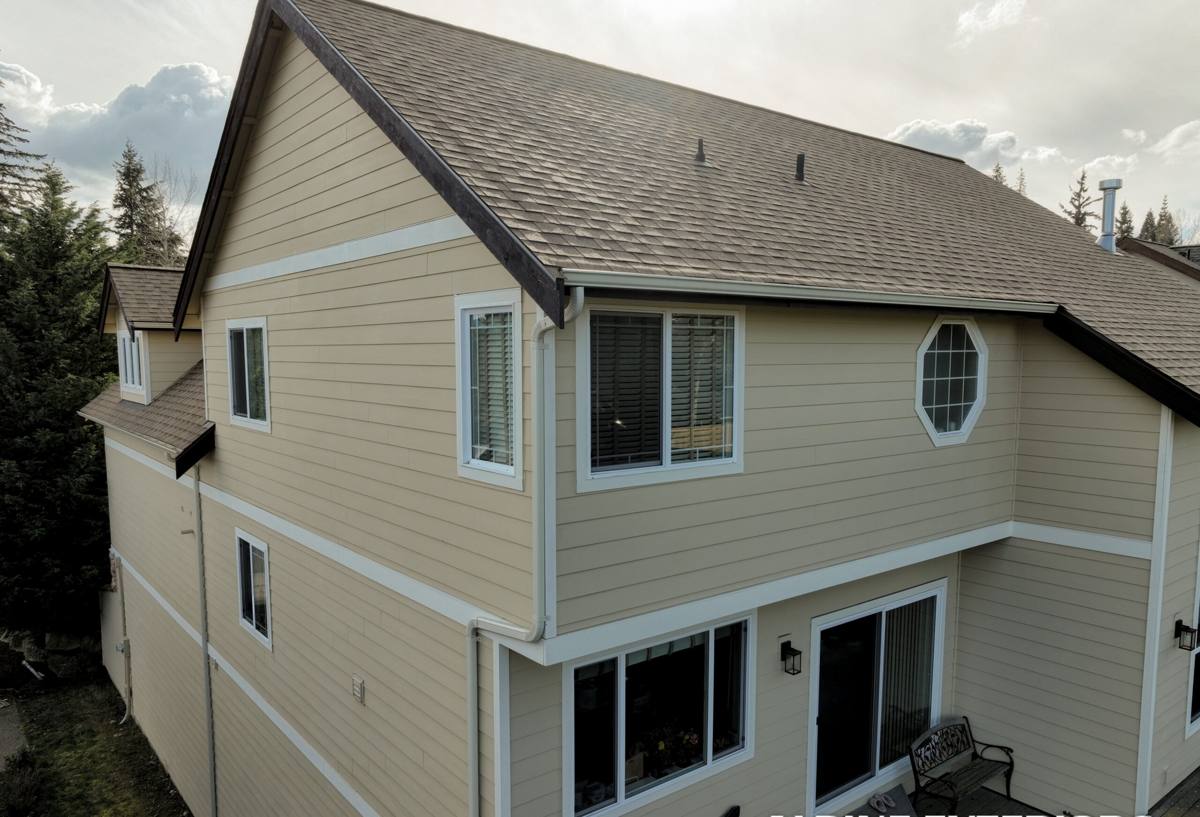
What Bellingham Bay's Climate Actually Does to a Window
Salt Air and Metal Fatigue
Homes closer to the water pick up airborne salt that settles on hardware, screens, and any exposed metal components — hinges, cranks, weep hole covers, and cladding fasteners. Over years, that accelerates corrosion on lower-grade hardware and can pit or discolor aluminum components that weren't specified for coastal exposure. It's rarely dramatic. It's a slow, cumulative wear that shows up as sticky cranks, rust streaks below hardware, or a lock that no longer seats cleanly.
Driving Rain and Wind Pressure
Storms coming off the water don't just drop rain straight down — wind pushes it sideways into every seam, sill, and corner. A window installed with weak flashing or a sloppy sealant job might hold up fine in a light drizzle and still leak the first time a real system rolls through with sideways rain. This is the single most common cause of window-related water intrusion we see in this part of Whatcom County, and it's almost always an installation issue, not a product defect.
Moss, Algae, and the Long Wet Season
Under Edgemoor's tree cover, north- and shade-facing walls stay damp far longer after a storm than a window on an open, sun-exposed lot. That extended dampness is exactly what moss and algae need to take hold on sills, trim, and frame joints. Left alone, organic growth holds moisture against wood and composite surfaces, which is how rot gets started even on a window that's otherwise sound.
Signs a Window Is Telling You It's Done
Most window failures don't happen all at once — they build up over a few wet seasons. Homeowners usually notice one or two of these before it becomes an obvious problem:
- Fogging or a permanent haze between panes (a sign the seal has failed and the gas fill is gone)
- Soft, spongy, or discolored wood at the sill or bottom corners of the frame
- Drafts you can feel even with the window fully latched
- Difficulty opening, closing, or locking — swelling or hardware corrosion is often the cause
- Visible moss, dark streaking, or paint failure concentrated on shaded or bay-facing elevations
- A noticeable jump in heating costs without any other explanation
- Condensation forming on the interior glass regularly, even in normal weather
Any one of these on its own isn't necessarily an emergency. A few of them together, especially on the same window, usually means the frame or seal has been compromised and repair won't buy you much more time.
What a Correct Custom Window Installation Actually Involves
Precise Measuring and Sizing
"Custom" starts before the window is even ordered. Older homes in wooded, established neighborhoods often have openings that have shifted slightly over the decades, or trim details that don't match modern standard sizes. We measure each opening individually rather than assuming uniformity across a house, because a window that's even slightly out of square is much harder to seal properly against wind-driven rain.
Flashing and Water Management
This is the part of the job nobody sees once it's finished, and it's the part that determines whether the window leaks in five years. Proper flashing directs any water that gets past the outer seal back out and away from the wall assembly instead of letting it pool behind the trim. Given how much sideways rain this area gets off the bay, we treat flashing detail as non-negotiable, not an optional upgrade.
Integration With Existing Siding and Trim
Edgemoor has a lot of older, custom-built homes with distinct architectural character. A window replacement should tie back into the existing siding and trim cleanly, not leave a visible seam or mismatched reveal. We treat the window and the surrounding cladding as one system, because a gap or poor transition there is a direct path for moisture.
Sealing and Insulation
Low-expansion foam and the right sealant at the right points — not just a bead of caulk around the outside — keep conditioned air in and damp air out. Over-filling or under-filling either one causes problems, so this step gets done to spec rather than rushed.
Choosing the Right Frame Material for This Setting
There's no single "best" window material for every home — it depends on sun exposure, proximity to the water, budget, and how the house is built. Here's how the common options actually compare for a bay-adjacent, wooded property like the ones in Edgemoor:
| Frame Material | Salt Air / Moisture Resistance | Maintenance | Typical Fit |
|---|---|---|---|
| Vinyl | Good — won't rust or rot, but can discolor over many years in constant damp shade | Low | Budget-conscious replacements, rear or less-visible elevations |
| Fiberglass | Excellent — dimensionally stable, doesn't corrode or absorb moisture | Low | Bay-facing walls, homes wanting long service life with minimal upkeep |
| Wood-Clad | Good on the exterior (clad protects the wood), but interior wood needs monitoring | Moderate | Homes prioritizing a traditional interior look |
| Aluminum | Fair — prone to corrosion near salt air unless marine-grade hardware is specified | Moderate | Modern architectural styles, sheltered locations |
For most Edgemoor homes, especially anything with direct bay exposure or heavy shade, we lean toward fiberglass or a quality vinyl with corrosion-resistant hardware. We'll walk through what fits your specific house and budget rather than pushing one product across every job.
Our Process, Start to Finish
1. On-Site Assessment
We look at each window opening individually, check for existing water damage or rot, and note anything about the site — tree cover, sun exposure, proximity to the water — that should factor into product selection.
2. Straightforward Estimate
You get a clear, itemized estimate with no pressure to decide on the spot. If a window doesn't need full replacement and a repair will genuinely hold, we'll say so.
3. Precise Ordering
Custom sizing is measured and confirmed before anything is ordered, so the windows that arrive actually fit the openings they're going into.
4. Installation With Proper Flashing and Sealing
Old windows come out carefully to protect surrounding siding and trim; new ones go in with correct flashing, insulation, and sealant, then are tested for smooth operation and a tight seal.
5. Site Cleanup and Walkthrough
We clear debris and old materials, and walk the finished work with you before we consider the job done.
Why Hiring a Crew That Already Works in Edgemoor Matters
A window installer who mostly works dry, open subdivisions inland doesn't necessarily think about salt exposure, wind-driven rain angles, or moss buildup as design considerations — because they rarely have to. A crew that regularly works properties near Bellingham Bay treats those factors as standard practice, not an afterthought.
There's also the practical side: older, custom-built homes in established wooded neighborhoods often have non-standard openings, mature landscaping that limits equipment access, and trim details worth matching rather than covering over. Experience with this kind of housing stock means fewer surprises once the old window comes out and fewer change orders mid-project.
And timing matters here in a way it doesn't everywhere. Scheduling installation with an eye on Whatcom County's wet season and the shaded, slow-drying nature of tree-covered lots helps avoid trapping moisture behind new trim before it's had a chance to dry and cure properly.
Keeping New Windows Performing for the Long Haul
A correctly installed window in this climate still benefits from a little seasonal attention:
- Rinse sills and tracks periodically to keep salt residue from building up on hardware
- Clear moss or algae from sills and trim promptly, especially on shaded, bay-facing walls
- Check weep holes each fall to make sure they're not blocked by debris before the rainy season
- Lubricate cranks and locks annually to prevent salt-related sticking
- Have caulking and sealant inspected every couple of years — it's cheaper to refresh a bead of caulk than to repair water damage later
None of this is heavy maintenance, but skipping it in a climate like this shortens the window's service life faster than most homeowners expect.
Get a Straight Answer on Your Windows
If you're dealing with drafts, fogged glass, sticking hardware, or you're just planning ahead for a wooded, bay-adjacent property in Edgemoor, we're glad to take a look. The estimate is free, there's no pressure, and you'll get an honest read on what your windows actually need — whether that's full replacement or something less. Use the form below to get started.