 Bellingham Siding
 Fairhaven Decks Take a Different Kind of Beating
Fairhaven sits close enough to Bellingham Bay that salt-laden air is a daily fact of life for anything built outside, and decks feel it more than almost any other part of a house. Add Whatcom County's long wet season, where driving rain off the water can hit a deck sideways for days at a stretch, and you get a structure that's under constant moisture pressure for eight or nine months of the year. Then comes moss. Northwest moss doesn't just make boards slippery — it holds water against the surface, works into seams and fastener holes, and quietly rots wood from the inside long before the top of the board looks bad.
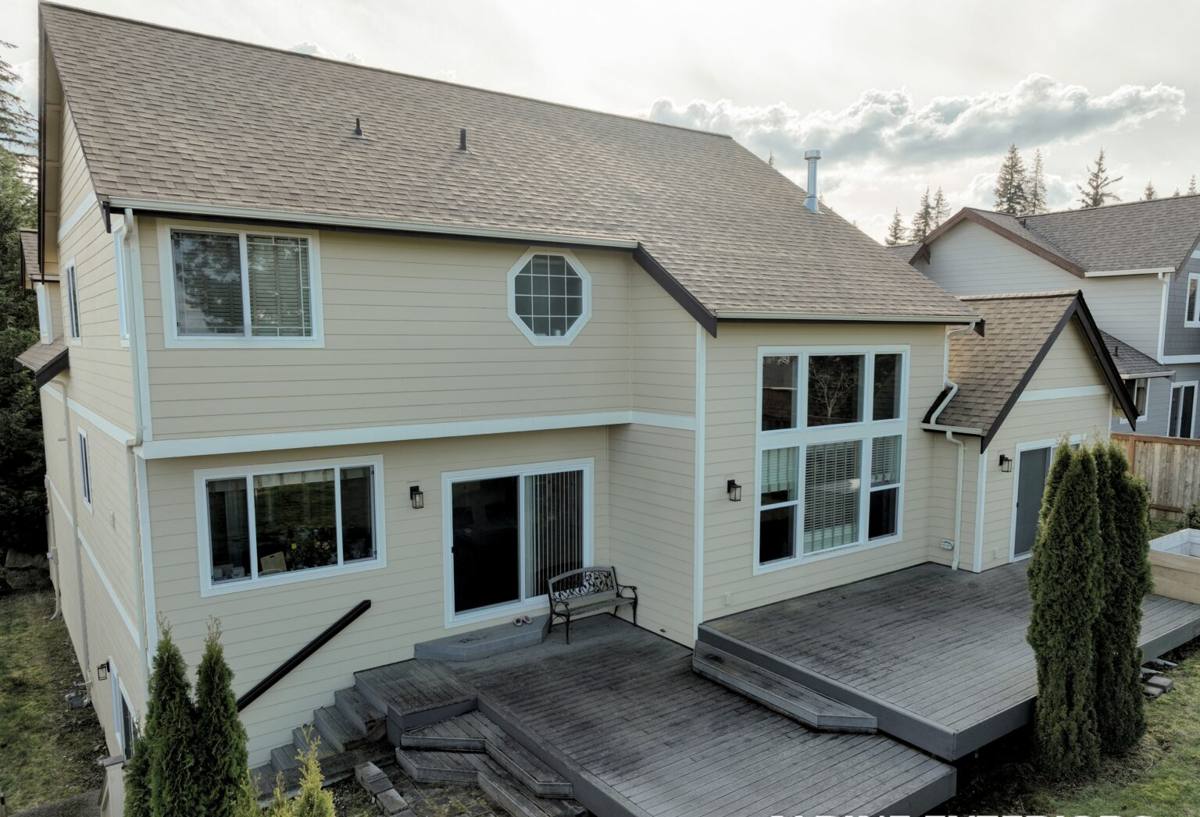
We see the same failure pattern on Fairhaven decks over and over: the surface boards look tired but survivable, while the framing underneath — joists, ledger board, posts — has been absorbing moisture for years with nowhere to dry out. A deck built without that climate in mind, or one that's simply reached the end of its service life, needs more than a fresh coat of stain. It needs a real replacement, done in a way that accounts for what this specific stretch of Bellingham throws at it.
How to Tell It's Replacement Time, Not Repair Time
Homeowners often ask us to "fix a few boards" and are surprised when the honest answer is that the deck needs to come off. Here's how we tell the difference on a Fairhaven property:
- Soft or spongy decking in more than a couple of spots usually means moisture has already reached the joists below, not just the board surface.
- A screwdriver sinks easily into the ledger board, posts, or joists — this is the structural test we use on-site, and it's the most reliable one.
- Persistent moss or algae staining that returns within weeks of cleaning, which tells us the deck isn't drying out between rain events.
- Fasteners that have backed out, rusted, or split the wood around them, common on older decks built before corrosion-resistant hardware was standard.
- Visible gaps or separation at the ledger-to-house connection, which is both a rot risk and a safety issue.
- Age — most untreated or basic pressure-treated decks in this climate are due for a full rebuild somewhere in the 20-25 year range, sooner if it's shaded or gets heavy salt exposure.
If a deck shows one or two of these signs, targeted repair can sometimes buy time. If it shows several, or the structural framing is compromised, patching individual boards just delays a bigger problem and spends money that should go toward a proper rebuild.
What a Correct Deck Replacement Actually Involves
A deck replacement isn't just pulling up old boards and screwing down new ones. Done right, it starts below the surface:
Structural Assessment First
Before any demolition, we check the ledger board attachment, post footings, and joist spacing against current code — a lot of older Fairhaven decks were built to standards that have since been tightened, especially around ledger flashing and guard rail attachment.
Demolition and Disposal
We remove the old decking, railing, and framing down to whatever is being reused (usually the footings, if they're sound and properly sized) and haul away the debris. This is also when hidden rot or water damage against the house itself sometimes turns up, which we'll flag before moving forward.
Ledger Flashing — the Detail That Matters Most Here
The ledger board is where the deck attaches to the house, and it's the single most common failure point in this climate. A correctly installed ledger uses proper flashing that sheds water away from the house sheathing rather than trapping it — a detail that's easy to get wrong and expensive to fix later once siding or interior framing is affected.
Framing and Footings
New joists, beams, and posts get sized to current code for the deck's actual use (furniture, hot tub, entertaining space), and footings are checked or re-poured to the correct depth for our frost line and soil conditions.
Decking, Railing, and Fasteners
Surface material goes down last, along with code-compliant railing and stainless or coated fasteners rated for coastal exposure — standard hardware corrodes faster here than it would further inland.
Choosing the Right Decking Material for Fairhaven's Climate
There's no single "best" decking material — the right choice depends on how much upkeep you want to do and how the deck will be used. Here's how the common options actually perform in a salt-air, high-moisture environment:
| Material | Moisture Performance | Maintenance | Typical Lifespan Here |
|---|---|---|---|
| Pressure-treated wood | Good if sealed regularly; end grain and fastener holes are the weak points | Annual cleaning, re-sealing every 2-3 years | 15-20 years |
| Cedar | Naturally rot-resistant but softer surface; still needs sealing near the water | Sealing every 1-2 years to hold color and resist moisture | 15-20 years |
| Composite decking | Excellent — doesn't absorb water or support moss growth the way wood does | Occasional washing, no sealing or staining | 25-30+ years |
| PVC decking | Excellent — fully non-absorbent surface | Low; occasional washing | 25-30+ years |
We install all of these depending on budget and homeowner preference, but for Fairhaven specifically — where moss and standing moisture are the enemy — we steer most conversations toward composite or PVC for the walking surface, with wood framing underneath (properly treated and flashed) doing the structural work. It's not that wood decking is a bad product; it's that in this exposure, the maintenance burden to keep it performing well is higher than most homeowners want to keep up with.
Railing, Fasteners, and the Small Decisions That Add Up
The decking surface gets all the attention, but a deck's long-term durability is decided by the parts people don't look at closely. Stainless steel or coated deck screws resist the corrosion that salt air accelerates. Post bases and joist hangers rated for coastal or treated-lumber contact prevent the galvanic corrosion that happens when the wrong metal touches treated wood. Railing posts need solid blocking, not just surface-mounted brackets, to pass inspection and actually hold up to leaning weight over time. None of this is visible once the deck is finished, which is exactly why it matters to get it right the first time rather than discovering a shortcut five years in.
Permits and Code in Whatcom County
Most deck replacements that involve new framing, footings, or a change in size require a building permit through the City of Bellingham or Whatcom County, depending on the property's location. Permitted work means an inspector checks the footings, framing, and railing before it's covered up or considered final — which is a good thing for a homeowner, since it's independent verification the structure was built correctly. We handle the permit process as part of the job rather than leaving it to the homeowner to navigate.
Our Process, Start to Finish
- On-site assessment — we inspect the existing deck's framing, footings, and ledger connection, not just the surface, and give you a straight answer on repair versus replacement.
- Design and material selection — we walk through decking, railing, and layout options based on how you actually use the space and your maintenance preferences.
- Permit and planning — we pull the necessary permits and schedule inspections so the work is fully compliant.
- Demolition — old structure comes down and is hauled away.
- Framing, flashing, and footings — the structural work that determines how long the deck lasts.
- Decking, railing, and finish work — the visible part, installed to manufacturer specs for warranty coverage.
- Final walkthrough — we go over the finished deck with you before calling the job done.
Keeping a New Fairhaven Deck Performing
Even a well-built deck needs some seasonal attention in this climate. A short checklist we give every homeowner after a replacement:
- Sweep debris and standing leaves off the surface regularly through fall — trapped organic matter is what feeds moss.
- Rinse off salt residue and grime a few times a year, especially after storms blowing in off the bay.
- Check that gaps between boards stay clear so water drains through rather than pooling.
- Inspect railing connections and fasteners annually for any looseness or corrosion.
- For wood decking, plan on resealing on the schedule recommended for the product — skipping a cycle in this climate shows up fast.
- Keep gutters and downspouts near the deck clear so roof runoff isn't dumping extra water onto the structure.
Why Local Experience in Fairhaven Matters
A crew that's replaced decks throughout Fairhaven and the wider Bellingham area already knows which ledger details fail first in this exposure, how deep footings need to go for our soil and frost conditions, and what the local permitting process actually requires. That's different from general deck-building experience — it's familiarity with this specific stretch of coastline and how it ages a structure. It also means we're not guessing at material choices; we're recommending what we've seen actually hold up a few blocks from the water versus what looks fine on a spec sheet but struggles here in practice.
Get a Straight Answer on Your Deck
If your Fairhaven deck is showing soft spots, persistent moss, or just isn't holding up the way it used to, we're glad to take a look and give you an honest read on repair versus replacement — no pressure, no upsell. Fill out the form below for a free estimate, and we'll walk the deck with you before recommending anything.