 Bellingham Siding
 Deck Repair in Sudden Valley: A Different Kind of Wear
Sudden Valley sits along Lake Whatcom, tucked into heavy tree cover on a hillside community southeast of Bellingham, and that setting shapes exactly how a deck ages here. Between the lake's humidity, the dense forest canopy over much of the neighborhood, and Whatcom County's long stretch of wet, overcast months, decks in Sudden Valley carry a moisture load that a deck in a more open, sun-exposed part of the county simply doesn't deal with. We repair decks throughout Sudden Valley and the surrounding lake area, and the approach we take is built around that specific combination of shade, dampness, and moss — not a generic repair checklist pulled from a drier climate.
A deck repair done right in this neighborhood isn't just about replacing a rotten board and calling it finished. It's about understanding why that board failed in the first place, checking whether the same conditions are affecting the framing underneath, and fixing the actual cause so the repair holds for years instead of needing to be redone in another season or two.
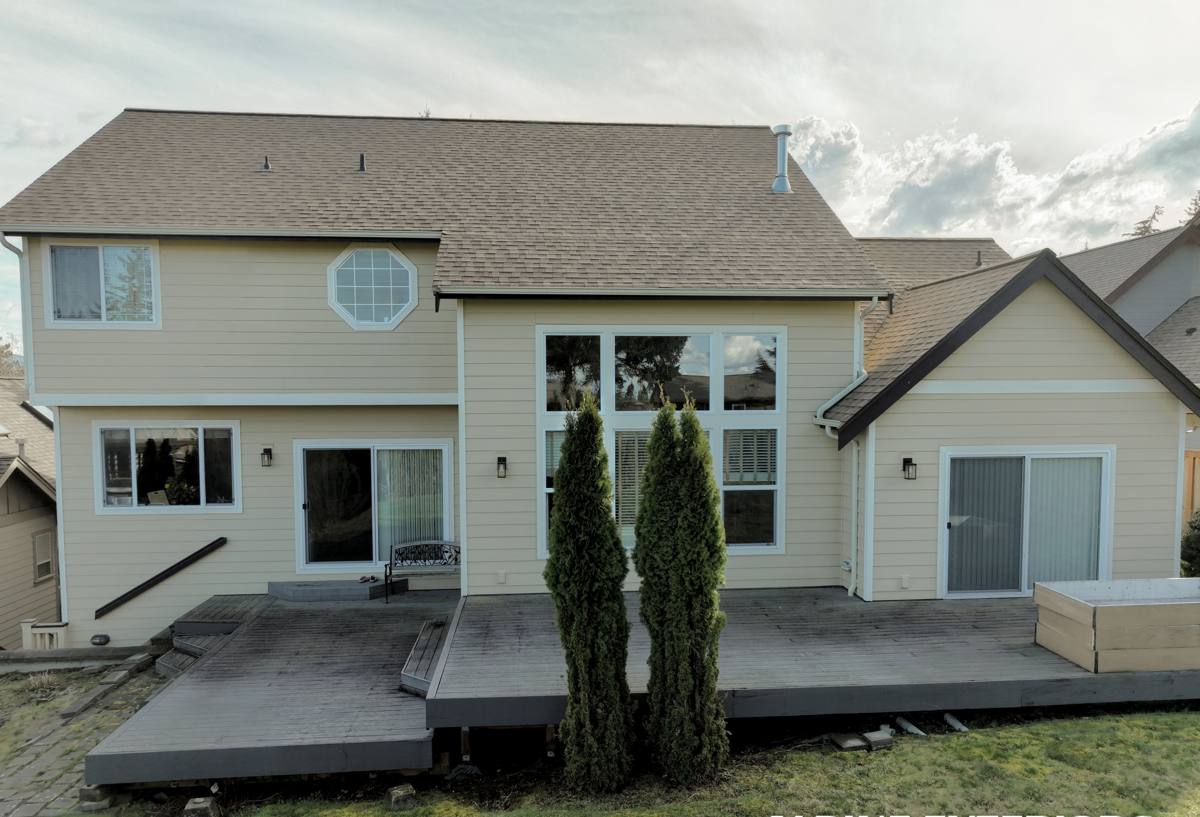
What Salt Air, Driving Rain, and a Long Moss Season Do to a Deck
Whatcom County's weather pattern is hard on any exterior wood structure, and a deck takes the brunt of it because it's horizontal, exposed on top, and often shaded from below. Driving rain that gets pushed sideways by wind doesn't just wet the surface of a deck board — it works into fastener holes, the gaps between boards, and the joints where ledger boards meet a house, areas that a calmer, drier climate wouldn't stress nearly as hard.
Lake proximity adds another layer. Homes closer to the water tend to hold ambient humidity longer through the day, which means deck surfaces and the framing underneath stay damp longer after a rain event than they would further inland. And in Sudden Valley specifically, the amount of mature tree cover over many properties means a lot of decks sit in partial or full shade for much of the day, especially through fall, winter, and spring. Shade plus moisture is exactly the condition moss needs, and moss on a deck isn't only a slippery, unsightly problem — it holds water against the wood surface, which accelerates rot at the board level and, left long enough, works its way into the structural framing below.
Why This Matters More Underneath Than on Top
Homeowners usually notice deck problems on the surface first — graying boards, moss, a soft spot underfoot. But the more serious damage in this climate tends to happen out of sight, in the ledger board connection to the house, the joists, and the posts and footings. A deck can look rough on top and still be structurally sound, or it can look fine on top while the framing underneath has been quietly failing for years. A correct repair always checks both.
Signs Your Deck Needs Repair, Not Just a Cleaning
A pressure wash and a fresh coat of sealant can make an aging deck look better for a season, but it doesn't fix underlying problems, and in a climate like this one, ignoring the underlying problems tends to catch up with a homeowner faster than they'd expect. Here's what we look for, and what you can check yourself before calling anyone:
- Soft, spongy, or springy spots when you walk across the deck, especially near the house or at board seams
- Boards that are cupping, splitting, or visibly separating from the joists underneath
- Persistent moss or dark staining that comes back within weeks of cleaning it off
- Rust streaks running down from fasteners, or fastener heads that have popped up above the board surface
- Any gap, daylight, or movement where the ledger board meets the house
- Wobble or give in the railing when you lean on it
- Visible rot, discoloration, or a screwdriver that sinks in easily when pressed into a post near ground level
Any single item on that list doesn't necessarily mean the whole deck needs to come apart. But in this climate, moisture-related damage compounds rather than staying static, and a soft board today is often a framing problem in another year or two if it's not addressed at the source.
What a Correct Deck Repair Actually Involves
A repair that's done right starts below the decking boards, not on top of them. We check the ledger board flashing where the deck ties into the house first, because a failed or missing flashing detail there is one of the most common sources of hidden rot in this climate — water gets behind the ledger and works into the house's rim joist, which is a bigger problem than the deck itself. From there, we check joists, beams, and posts for soft spots, checking fastener corrosion and connection hardware along the way, since hardware in a damp, shaded environment corrodes faster than it would in a drier part of the county.
Only after the structure underneath is confirmed sound — or repaired where it isn't — does the visible decking work happen: replacing individual boards, resurfacing the whole deck, or rebuilding sections where damage is concentrated. Railings, stairs, and any built-in benches or planters get the same structural check, since those are frequently overlooked in a surface-level repair and are just as exposed to the same moisture and shade conditions as the decking itself.
Fasteners and Hardware Matter More Here
Standard fasteners corrode faster in a consistently damp, shaded environment, and corroding fasteners are one of the more common reasons a "repaired" deck starts failing again within a couple of years. We use corrosion-resistant, code-rated fasteners and connectors sized for the actual load they're carrying, not whatever happens to match the existing holes. It costs a little more up front and it's not visible once the job is done, but it's the difference between a repair that holds and one that needs to be revisited.
Repair or Rebuild: How We Help You Decide
Not every deck problem calls for a full rebuild, and not every deck problem can be solved with a partial repair. The right call depends on how much of the structure is affected and how old the deck already is relative to its expected service life in this climate.
| Factor | Leans Toward Repair | Leans Toward Rebuild |
|---|---|---|
| Extent of rot or damage | Isolated to a few boards or one section | Present in multiple framing members or spread across the deck |
| Ledger board and flashing | Intact, properly flashed | Missing flashing or active water intrusion into the house |
| Posts and footings | Solid, no movement or soft spots | Soft, shifting, or undersized for current code |
| Age of the deck | Under roughly 10-15 years, built to a reasonable standard | Original construction is old, undersized, or was never built to current code |
| Railing and stair condition | Structurally sound, cosmetic wear only | Loose, undersized, or non-compliant with current safety standards |
We'll give you a straightforward read on which side of that line your deck actually falls on, rather than defaulting to whichever option is more profitable for us. A repair that's done honestly, on a deck where a repair is the right call, saves a homeowner real money. Recommending a rebuild on a deck that only needed a repair doesn't build the kind of long-term trust a local crew depends on.
Decking Material Considerations for a Shaded, Wet Property
When boards need to be replaced, or when a repair turns into a resurfacing project, the material choice matters more in Sudden Valley's shaded, humid conditions than it would on a more open, sun-exposed lot. We walk homeowners through the real trade-offs rather than pushing whatever's easiest to install.
| Material | Moisture & Moss Behavior | Maintenance | Typical Fit |
|---|---|---|---|
| Cedar | Naturally rot-resistant but still absorbs moisture; needs regular sealing to stay ahead of shaded, damp conditions | Annual cleaning and periodic re-sealing or staining | Homeowners who want a natural wood look and are committed to upkeep |
| Pressure-treated wood | Treated to resist rot, but end cuts, fastener holes, and long-term shade exposure still invite moisture and moss over time | Regular cleaning, periodic sealing, more frequent board-level replacement | Budget-conscious repairs and framing members not meant to be seen |
| Composite decking | Doesn't absorb moisture the way wood does and resists moss better in sustained shade, though algae can still form on the surface | Occasional washing; no sealing or staining required | Homeowners who want to minimize upkeep on a heavily shaded deck |
We don't push one material as the only acceptable option the way we do with some other exterior products, because deck boards see different exposure conditions than siding does and the right call genuinely depends on the homeowner's budget and how much upkeep they're willing to commit to. What we won't do is install any material without correctly spacing, fastening, and ventilating it for a shaded, damp property — that's where most of the early failures we see actually start.
Our Process for Sudden Valley Deck Repair Projects
Every repair starts with a full inspection, not just a look at whatever prompted the call. We check the decking surface, the framing underneath, the ledger connection to the house, posts and footings, and railings and stairs, since a problem in one area is often connected to something happening in another.
- Inspection: We walk the entire deck and, where needed, get underneath it to check framing, flashing, and fastener condition directly rather than guessing from the surface.
- Honest assessment: We tell you what's actually failing, what's still sound, and whether a targeted repair or a larger rebuild is the right call for your budget and timeline.
- Written scope and estimate: You get a clear breakdown of what's being repaired, what materials are being used, and what it costs before any work begins.
- Repair work: Structural issues are addressed first — ledger flashing, joists, posts, hardware — followed by decking, railing, and stair work.
- Final walkthrough: We go over the completed work with you, including basic guidance on cleaning and maintenance specific to your deck's material and sun exposure.
Why Hiring a Crew That Already Works in Sudden Valley Matters
Sudden Valley is a somewhat self-contained community, and a number of properties there fall under community association guidelines that can affect exterior projects, so it's worth having a contractor who's familiar with that process rather than learning it for the first time on your job. Access can also be a factor on hillside lots with limited driveway space or decks positioned over a slope down toward the lake — knowing that in advance changes how a crew stages material and equipment, and it's the kind of thing a contractor who hasn't worked in the neighborhood before has to figure out on the fly.
More importantly, a crew that's repaired decks throughout this specific neighborhood has already seen how the lake's humidity and the tree canopy affect different lots depending on their orientation and how much direct sun they get through the year. That's not something you can fully substitute with general deck repair experience from a drier or more open part of the county — it comes from actually having worked on homes dealing with the same conditions yours are.
Keeping a Repaired Deck From Needing Repair Again
A repair is only worth what it holds up to afterward. In a shaded, humid environment like much of Sudden Valley, a little regular maintenance goes a long way toward protecting the work:
- Clean moss and debris off the deck surface at least once or twice a year, more often on heavily shaded sections
- Keep gutters and downspouts clear so water isn't dumping directly onto or near the deck
- Re-seal or re-stain wood decking on the schedule appropriate to the product, rather than waiting until it visibly needs it
- Trim back overhanging branches where practical to cut down on shade and falling debris
- Check the ledger board area and any visible fasteners once a year for early signs of moisture or corrosion
None of this requires a lot of time, but skipping it in this climate tends to shorten a deck's life more than homeowners expect, and it's a lot cheaper than another repair.
If your deck in Sudden Valley is showing soft spots, moss that won't stay gone, or just feels like it's not aging the way it should, we're glad to come take an honest look. Reach out using the form below to schedule a free, no-pressure estimate.