 Bellingham Siding
 Windows Built for Happy Valley's Climate
Happy Valley sits close enough to Bellingham Bay and the surrounding wetlands that homes here take a different kind of weathering than houses further inland. Salt-tinged air off the water, driving rain that comes in sideways during winter storms, and long stretches of gray, damp months all work on window frames, sills, and seals year-round. A window that's a good fit for a dry inland climate can struggle here — swelling, sticking, or letting moisture creep behind the trim within a few winters. Custom windows sized and detailed for this specific neighborhood, not a generic catalog fit, hold up better and perform better from day one.
When we talk about "custom" windows, we don't mean expensive for its own sake. We mean windows sized to your actual rough openings, detailed to match your home's architecture, and specified with the glass, frame material, and flashing approach that make sense for a Whatcom County exterior. That's a different job than swapping in a stock size and caulking around the gaps.
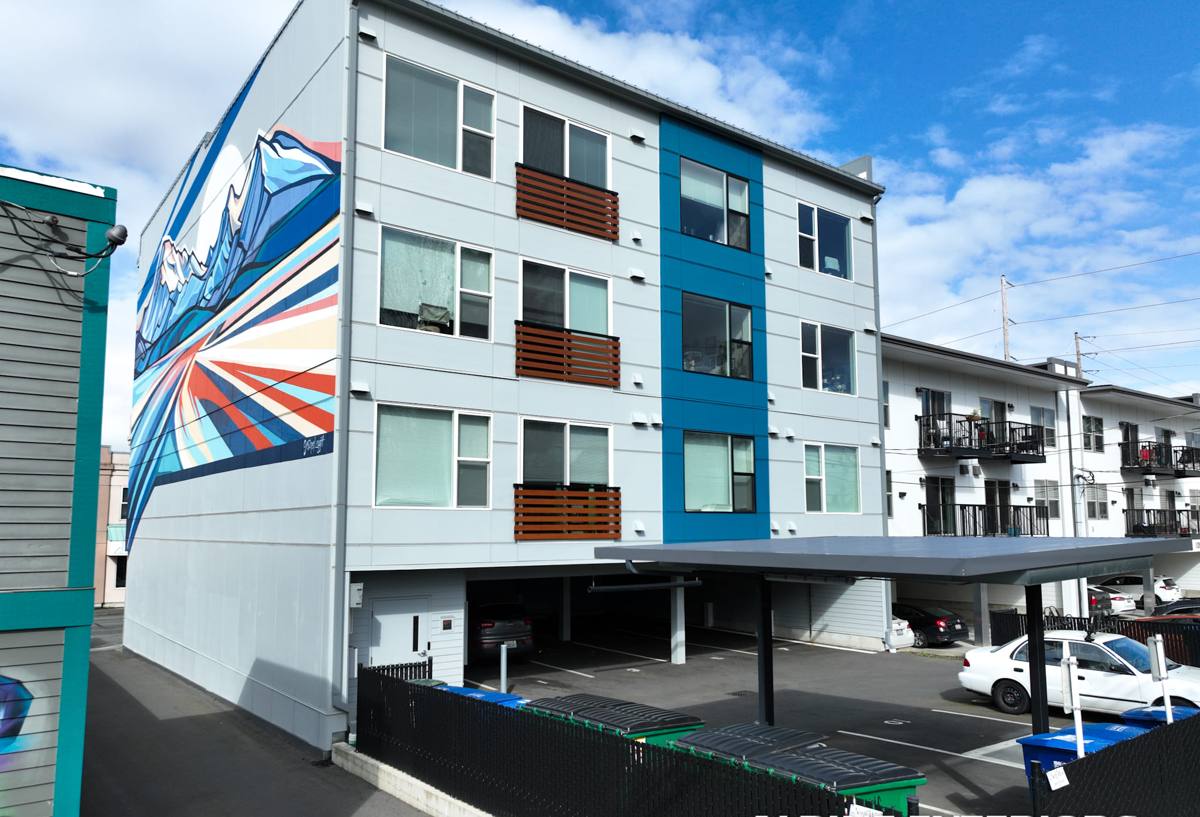
What Bellingham's Climate Does to Windows Over Time
A few climate factors show up again and again when we inspect older windows in this area:
- Moisture intrusion: Extended damp seasons mean any gap in flashing or sealant has months, not days, to do damage before things dry out.
- Wood rot at sills and corners: Wood-frame windows without proper flashing or drainage paths are the most common failure point we find, especially on west- and south-facing walls that catch driving rain.
- Moss and algae staining: Long moss season means anything with a horizontal ledge — sills, mulled window stacks, header trim — collects organic growth that holds moisture against the frame.
- Salt-air corrosion: Proximity to the bay means metal hardware, screens, and some vinyl/aluminum components see accelerated wear compared to homes further from the water.
- Condensation and fogging: Older double-pane units with failed seals fog up between the panes — a sign the insulated glass unit has lost its argon fill and needs replacing, not just cleaning.
None of this means windows in Happy Valley need to be exotic or over-built. It means the details — flashing, drainage, sealant choice, frame material — need to actually account for the environment instead of being an afterthought.
What a Correct Custom Window Job Actually Involves
Accurate Measurement and Sizing
Older homes in this area often have rough openings that have shifted slightly over decades of settling, or that were never perfectly square to begin with. Custom sizing means we measure each opening individually rather than assuming they match, and we account for out-of-square conditions before ordering. This avoids the shim-and-caulk approach that leaves gaps for water to find later.
Flashing and Drainage, Not Just Caulk
Caulk is a backup, not a strategy. A correct install uses house wrap integration, sill pan flashing, and proper head flashing so that any water that gets past the window sheds down and out instead of pooling behind the trim. This is the single biggest difference between a window that lasts 20+ years here and one that causes rot within five.
Frame Material Suited to the Exposure
We match frame material to the wall's actual sun and rain exposure rather than defaulting to one product for the whole house. A wall that takes the brunt of winter storms off the water may call for a different frame material or finish than a sheltered wall on the lee side of the house.
Glass Package for Both Insulation and Condensation Control
Double-pane, Low-E, argon-filled units are standard for this climate. On rooms with high humidity — bathrooms, kitchens, laundry areas — glass and frame choices that resist interior condensation matter as much as exterior weather resistance.
Our Process, Start to Finish
- On-site assessment: We look at every opening individually, check for existing rot or moisture damage, and note sun/rain exposure per wall.
- Measurement and specification: Exact rough-opening measurements, frame material selection, and glass package chosen for each window's location and use.
- Removal and inspection: Old windows come out carefully so we can inspect the framing and sheathing underneath before anything new goes in. This is where hidden rot from years of moisture gets caught.
- Repair as needed: Any damaged framing or sheathing gets repaired before the new window goes in — installing a new window over a compromised opening just hides the problem.
- Flashing and installation: Sill pan, house wrap integration, and head flashing installed per manufacturer specs and best practice for this climate, then the window is set, shimmed plumb and square, and fastened.
- Sealing and trim: Interior and exterior sealant, insulation around the frame, and trim work matched to your home's existing style.
- Final check: We test operation, check for square and smooth function, and walk the job with you before we call it done.
Comparing Common Frame Materials for This Area
| Material | How It Handles Salt Air & Rain | Maintenance | Typical Lifespan Here |
|---|---|---|---|
| Vinyl | Good resistance to salt-air corrosion; won't rot | Low — occasional cleaning | 20–30+ years |
| Fiberglass | Very stable in temperature swings and moisture; strong against warping | Low | 30+ years |
| Wood | Needs proper flashing and finish upkeep to resist rot in this rainfall | Higher — repainting/sealing on a schedule | Varies widely with maintenance |
| Wood-clad (wood interior, exterior cladding) | Cladding protects exterior from rain and moss; interior keeps traditional look | Moderate | 25–30+ years with good install |
| Aluminum | Can corrode faster in salt air unless properly finished/anodized | Moderate | Varies; less common as primary choice here |
There's no single "best" material for every home — it depends on your architecture, budget, and how much upkeep you want to take on. We'll walk through the honest trade-offs for your specific house rather than pushing one product line across every job.
Signs Your Windows Need Attention
- Fogging or haze between the panes (failed seal on double-pane glass)
- Soft or spongy wood at the sill or corners when pressed
- Visible moss or dark staining building up on horizontal trim or sills
- Drafts you can feel near the frame even when the window is fully closed
- Windows that stick, won't stay open, or are hard to lock
- Paint or finish peeling specifically around the window opening, not the wider wall
- Rising energy bills without another clear cause
Any one of these on its own might not mean full replacement is needed. But rot at the sill combined with fogged glass usually means the window and the framing behind it both need attention, not just a caulk touch-up.
Cost Factors to Understand Before You Get Quotes
We won't quote a specific number here since every home and opening is different, but these are the factors that actually move the price:
| Factor | Why It Matters |
|---|---|
| Frame material | Vinyl, fiberglass, wood, and wood-clad all carry different material costs |
| Number and size of openings | Larger and custom-shaped windows cost more to manufacture and install |
| Hidden repair needs | Rot or damage found once the old window is removed adds labor and material |
| Glass package | Standard double-pane Low-E vs. upgraded options for high-exposure walls |
| Access and site conditions | Second-story or hard-to-access windows take more time and equipment |
| New construction vs. replacement | Replacement into existing openings is generally more straightforward than resizing openings |
The honest answer to "what will this cost" almost always requires a site visit — anyone quoting a firm number over the phone for a whole-house window job is guessing.
Why Local Experience in Happy Valley Matters
A crew that regularly works this specific area already knows which wall orientations catch the worst of the winter storms, how much moss buildup to expect on horizontal trim, and how salt air in the mix affects hardware and finish choices over time. That's not something you get from a manufacturer's install manual — it comes from doing the work here, on homes like yours, season after season.
We're a Bellingham-based crew serving Whatcom County, and Happy Valley is part of our regular service area. That means when we spec a window for your home, we're accounting for the actual conditions your walls face, not a generic climate zone average.
Get a Straightforward Estimate
If your windows are showing their age, fogging, sticking, or you're just planning ahead for a remodel, we're happy to take a look and give you an honest read on what your home actually needs. Reach out for a free, no-pressure estimate using the form below — we'll walk your home's openings with you and explain what we find in plain terms.