 Bellingham Siding
 Windows Built for What Columbia's Weather Actually Does
Columbia sits close enough to the water that salt air is a daily fact of life, not an occasional nuisance. Add Bellingham's long stretch of driving rain each fall and winter, plus the moss season that follows, and you've got a combination that's hard on window frames, sills, and seals year after year. Windows that were fine when a house was built in a drier climate, or installed with corner-cutting flashing, tend to show it here first — soft sills, fogged glass, sticky sashes, or a slow trickle of air around the frame every time the wind kicks up off the Salish Sea.
Custom windows done right for a Columbia home aren't just about picking a style you like. It's about matching the frame material, the glazing, and the installation detailing to a climate that stays wet more months than it's dry, and that pushes salt-laden moisture into every gap that isn't properly sealed.
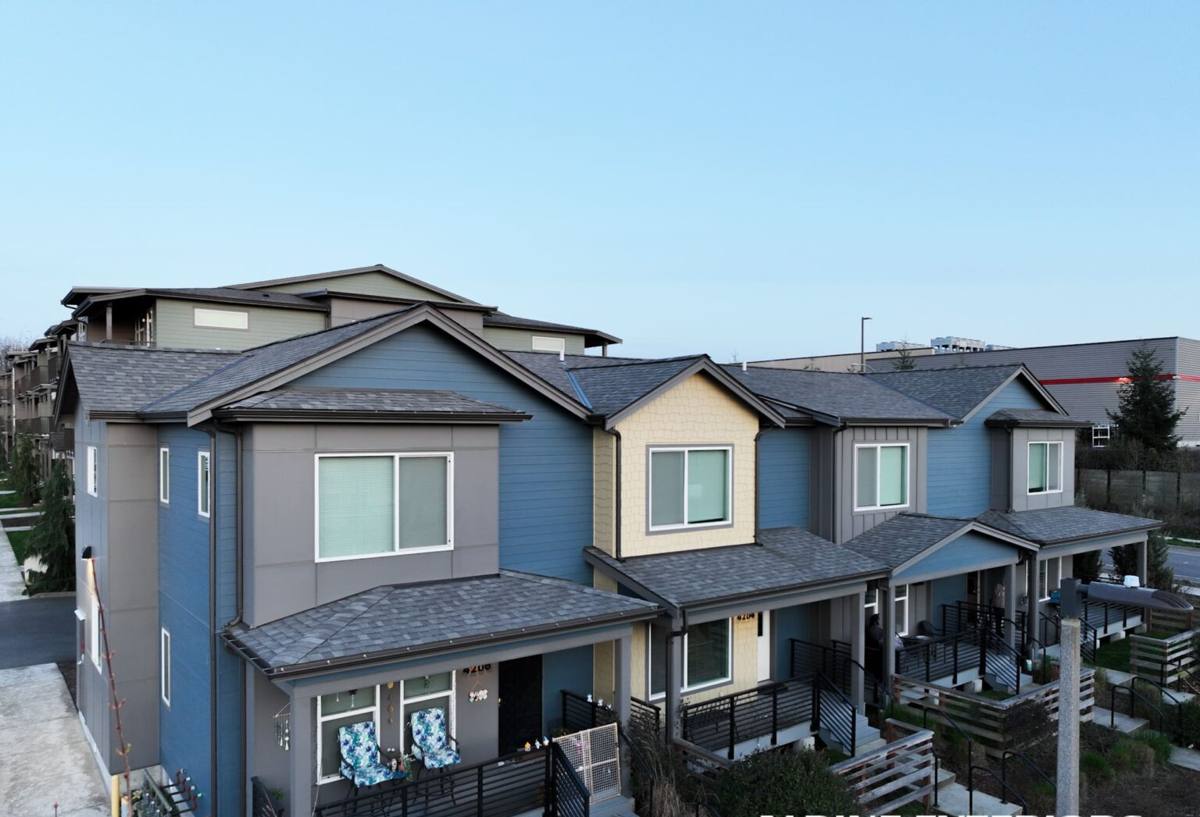
What "Correct" Actually Means for Window Installation Here
It's Rarely the Glass That Fails First
Most window problems we see in this part of Whatcom County aren't glass failures — they're installation failures. A window can have excellent glazing and still leak, rot the surrounding framing, or fog prematurely if the flashing, sealants, and drainage weren't handled correctly around the rough opening.
The Details That Matter in a Wet, Salty Climate
- Proper window flashing tape and pan flashing at the sill, so any water that gets past the exterior finish drains back out instead of pooling against the framing
- A continuous weather-resistive barrier that laps correctly over the flashing, shingle-style, so water always moves downward and outward
- Backer rod and quality exterior sealant at the trim joints — not just a bead of caulk smeared over a gap
- Corrosion-resistant fasteners and hardware, since salt air accelerates rust on standard steel screws and cheaper hinge/lock hardware
- Adequate weep holes and clear drainage paths that aren't painted or caulked shut during finishing
Skip any one of these and you're not looking at an "if," you're looking at a "when" — when the sill goes soft, when the drywall below the window stains, when the moss and mildew start creeping up the exterior trim.
Choosing a Frame Material for Salt Air and Driving Rain
There's no single "best" window material for every home — it depends on your budget, your home's age and style, and how much upkeep you want to take on. Here's how the common options actually perform in a Columbia setting:
| Material | Salt Air / Moisture Behavior | Maintenance | Typical Fit |
|---|---|---|---|
| Vinyl | Won't rust or rot; performs well in salt air | Low — occasional cleaning | Most home styles, budget-friendly replacements |
| Fiberglass | Very stable, resists moisture and corrosion, holds paint well | Low to moderate | Homes wanting a wood look with less upkeep |
| Wood (clad exterior) | Exterior clad protects from weather; interior wood needs care against condensation | Higher — finish and seals need periodic attention | Older or character homes where interior wood trim matters |
| Aluminum | Conducts cold and can condense/sweat in our damp winters; coastal-grade finishes resist corrosion better than standard | Moderate | Modern designs, larger glass spans |
We steer most Columbia homeowners toward vinyl or fiberglass for straightforward replacements, simply because they hold up to salt air and rain with the least amount of long-term maintenance. Wood-clad windows still make sense on homes where the interior trim and character matter, as long as you go in knowing they need more attention over time.
Energy Performance and Condensation Control
Bellingham's climate isn't extreme cold, but it is consistently damp, and that changes what matters in a window. Two things to pay attention to:
U-Factor Over Solar Heat Gain
In our climate, keeping heat in matters more than blocking solar heat gain — we don't get the brutal summer sun that drives that priority in other regions. A lower U-factor window will keep your home more comfortable and your heating bills more predictable through our long rainy stretch.
Condensation Is a Warning Sign, Not Just an Annoyance
If your current windows fog up on the inside every cold, damp morning, that's not just cosmetic — it means warm indoor air is hitting a cold surface, and over time that moisture works its way into the surrounding wood and drywall. Quality double or triple-pane units with a warm-edge spacer system resist this far better than older single-pane or early-generation double-pane windows common in older Columbia homes.
Matching Windows to Columbia's Older Housing Stock
Columbia has a good number of established homes with real character — original trim profiles, specific window proportions, and details that a generic vinyl replacement can flatten out if it's not chosen carefully. A custom window job for a home like this should account for:
- Matching sightlines and grille patterns so the new windows don't look out of place next to original trim
- Reproducing sash proportions rather than defaulting to whatever's cheapest to stock
- Deciding between full-frame replacement and insert (pocket) replacement based on how sound the existing framing is
- Addressing any rot or moisture damage in the opening before the new window goes in — never installing a new window into a bad opening
Full-frame replacement costs more and takes longer, but it's the right call whenever there's evidence of water intrusion, soft framing, or a home that's had one too many caulk-over-caulk "fixes" in the past. Insert replacement is faster and less invasive when the existing frame is still structurally sound.
Our Process for Custom Window Projects in Columbia
- On-site assessment — we check the existing frames, sills, and flashing for hidden moisture damage before we ever talk product selection
- Material and style selection — matched to your home's age, exposure to weather, and your maintenance preferences
- Accurate measurement and ordering — custom sizing so the finished install fits tight, without gaps that get papered over with extra caulk
- Removal and opening prep — including repair of any rot or damaged framing found underneath the old window
- Installation with full flashing and drainage detailing — pan flashing, weather barrier integration, and sealed, corrosion-resistant hardware
- Interior and exterior finish work — trim, caulking, and a final check for square, level, and smooth operation
What Drives the Cost of a Custom Window Project
| Factor | Why It Matters |
|---|---|
| Frame material | Vinyl is typically the most economical; fiberglass and wood-clad cost more upfront |
| Replacement type | Insert replacement is generally less expensive than full-frame |
| Hidden damage | Rotted framing or water damage found during removal adds repair cost, but skipping it just delays a bigger bill |
| Window size and configuration | Large picture windows, bays, or custom shapes cost more than standard double-hung units |
| Glazing package | Triple-pane and upgraded low-E coatings add cost but improve comfort and reduce condensation |
| Number of openings | Whole-house projects typically bring a better per-window cost than one-off replacements |
We give straightforward, itemized estimates so you can see exactly where the money's going — no vague lump-sum numbers that hide what you're actually paying for.
What to Ask Before You Hire
Whatcom County has plenty of contractors who'll sell you a window. Fewer will install it correctly for our climate. Before signing anything, ask:
- Will you inspect and, if needed, repair the framing before installing new windows — not just install over what's there?
- What flashing and weather barrier method do you use, specifically?
- Are you licensed and insured to work in Washington State, and can you provide proof?
- Do you pull permits when the project requires it, or leave that to me?
- What's the manufacturer's warranty, and what's your own workmanship warranty on the installation itself?
- Can you walk me through why you're recommending a specific frame material for my home?
A contractor who can't answer these clearly is a contractor who's guessing on your house.
Why Local Experience in Columbia Matters
A crew that's worked windows across Bellingham and Whatcom County knows how differently a house behaves depending on how exposed it is to wind and salt spray, and how much moss and moisture buildup to expect on north-facing walls versus more sheltered ones. That's not something you learn from a spec sheet — it's learned from doing the work here, season after season, and seeing which installation details hold up and which ones don't.
If you're weighing custom windows for a home in Columbia, we're happy to take a look, walk you through what your specific house needs, and give you a straightforward, no-pressure estimate — just fill out the form below to get started.