 Bellingham Siding
 Custom Decks in Cordata: Built for How This Climate Actually Behaves
A deck in Cordata doesn't fail the way a deck in Phoenix or Denver fails. It doesn't crack from heat or dry out from low humidity. It fails from the slow, patient work of Pacific Northwest weather — months of driving rain, salt-laden air drifting in off Bellingham Bay, and a moss season that can stretch from October through May. If you're planning a custom deck for a home in this part of Bellingham, the design and build decisions that matter most aren't about style. They're about how the structure sheds water, resists moss and rot, and holds up its hardware year after year in Whatcom County's wet marine climate.
This page is specifically about custom deck building for the Cordata area of north Bellingham — not a general overview of decks everywhere. The framing details, material choices, and maintenance habits below reflect what actually holds up here, not generic advice pulled from a national decking brand's brochure.
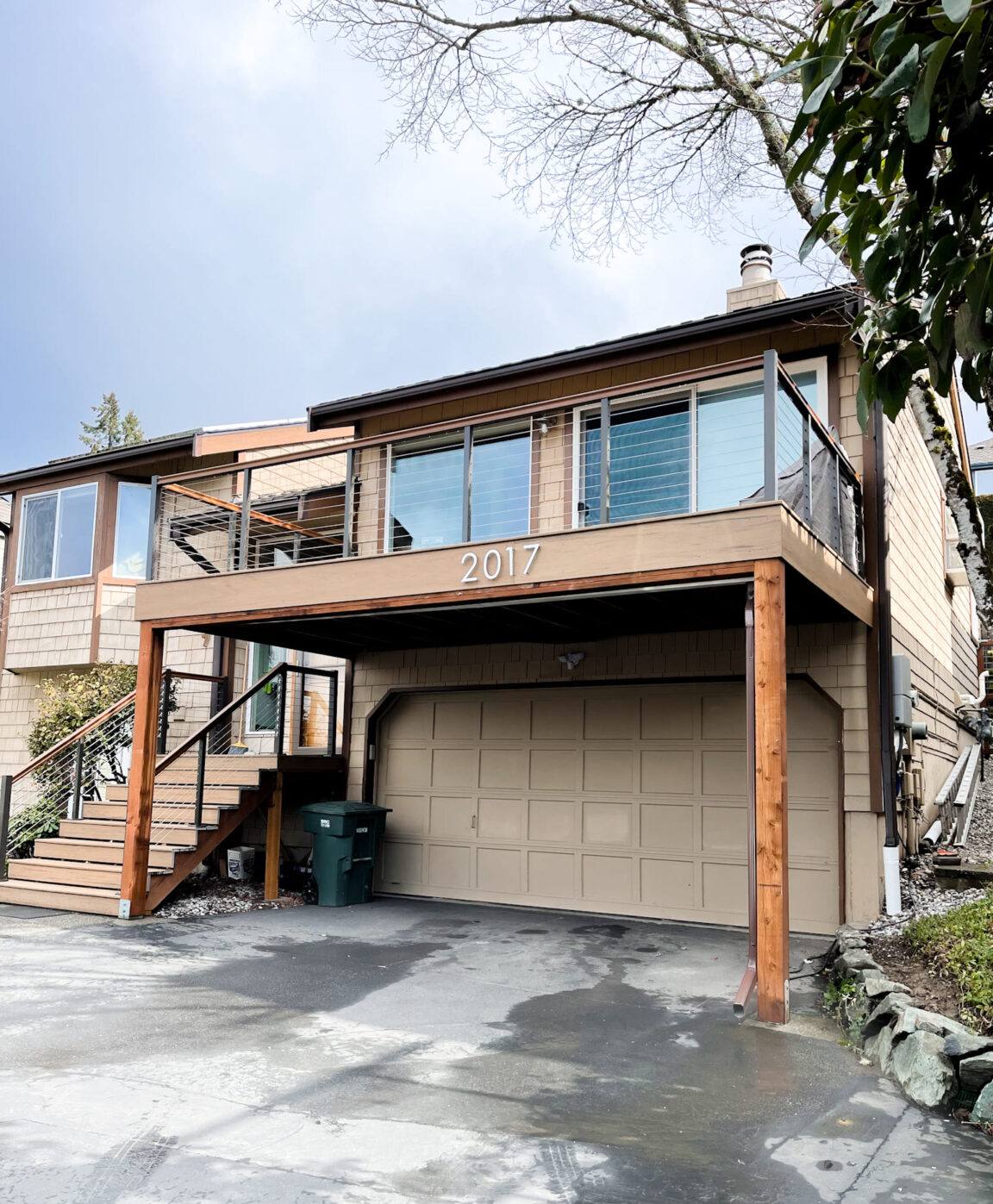
What Cordata Homes Actually Need From a Deck
Most of the problems we get called out to fix on older decks in this area trace back to the same handful of issues, all tied directly to the local climate.
Standing Water and Poor Drainage
Bellingham gets a lot of rain spread across a lot of months, not a few intense storms. That means any spot on a deck where water can sit — a low board, a clogged gap, a ledger board with poor flashing — stays wet for days instead of drying out between storms. Over a few seasons, that constant dampness is what actually rots wood, not any single rainstorm.
Moss and Algae Buildup
Shaded decks, decks under mature trees, and decks on the north or east side of a house grow moss fast here. Moss holds moisture against the deck surface and becomes slick and dangerous underfoot. The right board spacing, surface texture, and sun exposure planning at the design stage make a real difference in how much moss growth you'll be fighting later.
Salt Air and Corrosion
Cordata sits inland of Bellingham Bay, but the marine air that moves through Whatcom County still carries enough salt to accelerate corrosion on cheap fasteners, connectors, and hardware over time. A deck built with the wrong grade of screws or joist hangers will show rust streaks and weakened connections well before the wood itself is a problem.
Choosing the Right Decking Material for This Area
There's no single "best" decking material — there's a best material for your budget, your sun exposure, and how much upkeep you're willing to do. Here's how the common options actually perform in a wet, mossy, salt-influenced climate like ours.
| Material | Moisture & Moss Resistance | Maintenance | Typical Lifespan Here | Relative Cost |
|---|---|---|---|---|
| Pressure-treated wood | Good if sealed and maintained; poor if neglected | Annual cleaning, re-sealing every 1-2 years | 15-20 years with upkeep | Lowest upfront |
| Cedar | Naturally rot- and insect-resistant; still needs sealing | Regular cleaning and oiling to keep color and resistance | 15-25 years with upkeep | Mid-range |
| Composite decking | Very good; won't rot, but surface can still grow moss if shaded | Periodic washing, no sealing or staining | 25-30+ years | Higher upfront |
| PVC decking | Excellent moisture resistance; least affected by standing water | Low; occasional washing | 25-30+ years | Highest upfront |
In practice, most Cordata homeowners land in one of two places: pressure-treated or cedar for a warmer, natural look with a real maintenance commitment, or composite for a lower-maintenance deck that shrugs off the wet season. We'll walk through the honest trade-offs for your specific site — sun exposure, tree cover, and how the deck connects to your house — rather than push whatever's easiest for us to install.
Framing and Substructure Details That Matter in Wet Climates
A deck's surface material gets all the attention, but the framing underneath is what determines whether it's still solid in fifteen years. In a climate like Whatcom County's, a few details separate a deck that lasts from one that doesn't:
- Ledger board flashing: Where the deck attaches to the house is the single most common failure point on decks we inspect. Proper flashing keeps water from wicking into the house's rim joist and wall framing.
- Joist tape and hardware grade: Covering the tops of joists with a moisture barrier before decking goes down, and using corrosion-resistant fasteners and connectors rated for ground contact and coastal exposure, both matter more here than in drier climates.
- Footing depth and drainage: Footings need to be set below frost depth and away from areas where water pools, with gravel or drainage consideration so the posts aren't sitting in saturated soil after a wet winter.
- Airflow underneath: Decks built too close to grade, or with skirting that blocks airflow, trap moisture underneath and speed up rot from below — often before you'd ever notice a problem on the surface.
- Board spacing and orientation: Slightly wider gaps and a layout that lets water and debris fall through instead of collecting reduce both rot risk and moss growth.
Our Process, From First Look to Finished Deck
We keep the process straightforward because a deck project shouldn't feel like a mystery to the homeowner paying for it.
- On-site assessment: We look at your yard's sun exposure, drainage, existing structure (if replacing a deck), and how the space connects to your home's entry points and grade.
- Design and material selection: We talk through layout, size, and material trade-offs honestly — including what each option will actually cost you in upkeep over the years you'll own the house.
- Permitting: Most attached decks and many freestanding ones require a permit, either through the City of Bellingham or Whatcom County depending on your exact location. We handle that process rather than leaving it to you.
- Demolition and site prep: If we're replacing an old deck, we remove it and inspect the ledger area and framing underneath for hidden rot before building anything new.
- Framing and structure: Footings, posts, beams, and joists go in first, built to the loads and spans your design requires — not the minimum the code allows.
- Decking, railing, and finish work: Surface material, railings, stairs, and any lighting or built-ins go on last, with clean fastening and finish details.
- Final walkthrough: We go over the finished deck with you, including a basic maintenance rundown specific to the material you chose.
Permits and Local Considerations
Deck permitting depends on size, height above grade, and whether the structure attaches to your house — and whether your property falls under City of Bellingham or unincorporated Whatcom County jurisdiction. Rules and review timelines vary between the two, and we've built decks under both. Rather than guess at your specific requirements here, we confirm them for your address as part of the design phase and handle the permit application and inspections directly, so you're not the one tracking down requirements or scheduling inspectors.
Maintenance That Actually Keeps a Deck Alive Here
The single biggest factor in how long a deck lasts in this climate isn't the material — it's whether anyone keeps up with basic seasonal maintenance. A modest checklist, done consistently, prevents most of the expensive problems we get called to fix.
- Sweep leaves and debris off the deck surface regularly in fall, especially between boards where they trap moisture
- Wash the surface at least once a year to remove moss, algae, and grime before it takes hold
- Check and clear any gaps or drainage paths so water isn't pooling anywhere on the surface
- Inspect the ledger board area and any flashing once a year for signs of water staining or separation
- Re-seal or re-stain wood decking on the schedule the product actually requires, not just when it looks faded
- Look underneath the deck occasionally for standing water, soft framing, or blocked airflow
- Tighten or replace any hardware showing early rust before it compromises a connection
Why Hire a Crew That Already Works in Cordata
A deck built to a generic national spec sheet often underperforms here — not because the materials are bad, but because the details that matter in a marine, high-rainfall climate like Bellingham's aren't the same details that matter in a dry climate. A crew that regularly builds and repairs decks in this specific area already knows which framing shortcuts show up as rot in five years instead of twenty, which decking products actually shed moss with minimal upkeep in shaded Cordata yards, and how permitting works locally without added delay. That local pattern recognition is worth more than a lower bid from a crew that's never built here before.
If you're planning a new deck or replacing an aging one in Cordata, we'll walk your property, talk through what your yard and home actually need, and give you a straightforward, no-pressure estimate — use the form below to get started.