 Bellingham Siding
 Why Edgemoor Decks Take More Punishment Than Most
Edgemoor sits close to the water, and that proximity is exactly why decks here wear out faster than decks a few miles inland. Salt-laden air off Bellingham Bay works on fasteners, flashing, and any exposed wood grain year-round, not just during storms. Add Whatcom County's long wet season — months of driving rain followed by a heavy moss season on anything that stays shaded or damp — and you've got a set of conditions that will find every weak point in a deck's design within a few years, not decades.
Traditional wood decking struggles in this environment because it's constantly cycling between wet and dry, swelling and shrinking, which loosens fasteners and opens up the joints where moss and rot get started. Composite decking was developed to break that cycle: it doesn't absorb water the way wood fibers do, so it isn't feeding the moisture cycle that makes moss and decay possible in the first place. That's the core reason composite makes sense for a property like yours — not because it's trendy, but because it's a better material match for what this specific location does to a deck.
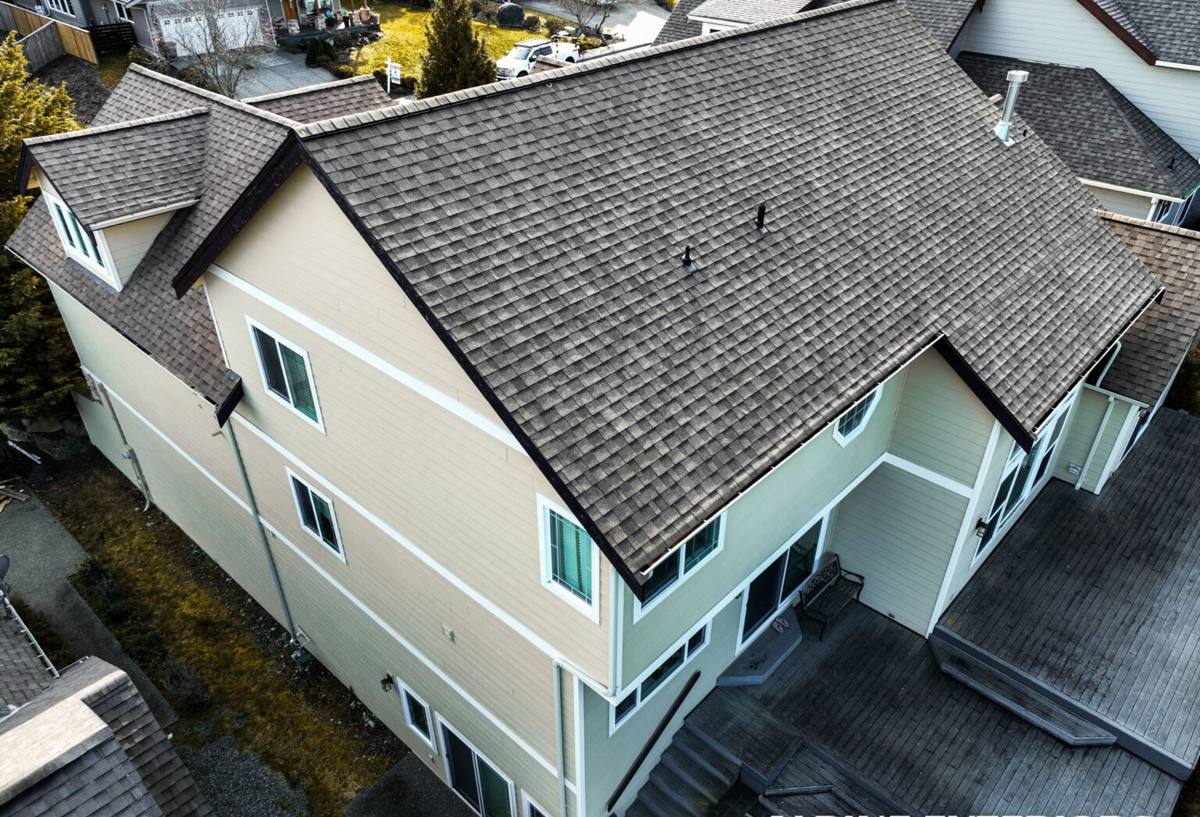
What Composite Decking Actually Solves — and What It Doesn't
It's worth being straight about this, because composite isn't magic. Modern capped composite boards resist moisture absorption, won't splinter or rot, and hold their color better than wood under UV exposure. That's a real advantage against salt air and rain. What composite doesn't do is eliminate the need for good substructure design, proper drainage, and periodic cleaning. A composite deck built on a poorly ventilated frame, or one where water is allowed to pool against the house, will still develop problems — just different ones than a wood deck would (moisture trapped under boards, mildew growth, hardware corrosion). The material upgrade only pays off if the structure underneath and the drainage plan are done correctly.
Where Homeowners Get Surprised
The most common misconception we run into is that composite decking is "maintenance-free." It's low-maintenance compared to wood, but in a climate like ours it still needs periodic cleaning to keep organic growth from taking hold in the grain texture, especially on shaded, north-facing sections that never fully dry out between rains — which describes a lot of tree-covered lots in this neighborhood.
Choosing the Right Composite for a Bay-Facing Deck
Not all composite decking performs the same in a wet, salt-exposed environment. The differences that matter most for a property near the water are the cap technology, the core material, and how the board handles moisture at the cut ends and fastener points.
| Factor | What to Look For | Why It Matters Here |
|---|---|---|
| Cap type | Full four-side capped composite (not just top-capped) | Protects cut ends and edges from moisture wicking, which is where rot-prone failures start on wood-core boards |
| Core material | PVC or fully encapsulated wood-composite core | Solid PVC resists moisture absorption almost entirely; encapsulated wood-composite is a solid mid-tier option if properly capped |
| Fastener system | Hidden, stainless or coated composite-rated clips | Salt air corrodes standard steel screws over a few seasons; hidden clip systems also reduce moisture entry points on the board face |
| Surface texture | Low-gloss, textured finish | Textured boards shed moss spores less than smooth, glossy caps, which stay damp longer in shaded areas |
| Warranty structure | Manufacturer warranty covering fade, stain, and structural integrity separately | Read what's actually covered — some warranties exclude coastal/marine environments unless installation specs were followed exactly |
We don't push wood-core, minimally-capped composite for waterfront-adjacent jobs like Edgemoor. It's a cost-effective product in the right setting, but the exposed cut ends and lower moisture resistance make it a poor match for this specific climate. That's a professional judgment call based on how the material behaves here over years, not a knock on the product in general — it's simply the wrong tool for this particular job.
The Substructure Is Where Deck Failures Actually Start
Most composite deck problems we get called out to inspect trace back to what's underneath the boards, not the boards themselves. A few things we check and build around on every job:
- Joist spacing and material — composite boards typically require tighter joist spacing than wood decking; using wood-decking spacing under composite is a common shortcut that leads to bounce and premature sagging.
- Ledger board flashing — the connection where the deck meets the house is the single most common point of hidden water intrusion; proper flashing here is non-negotiable in a high-rainfall area.
- Joist protection tape — a waterproof membrane over each joist top keeps water from wicking into the wood substructure through fastener penetrations.
- Airflow underneath — decks built low to grade or against solid skirting trap humid air, which is exactly the condition moss and mildew need to establish themselves.
- Drainage slope — a slight pitch away from the house keeps standing water from collecting on the deck surface after our longer rain systems.
Our Installation Process for Edgemoor Properties
Every property is different, but the sequence we follow doesn't change, because each step protects the one after it:
- Site assessment and drainage evaluation — we look at how water currently moves across the site, grade, and existing structure before designing anything.
- Substructure inspection or build — on a replacement, we evaluate the existing frame for rot or corrosion rather than just deck over it; on new builds, we frame to composite-rated spacing from the start.
- Ledger and flashing work — the house connection gets properly flashed and sealed before any decking goes down.
- Joist protection — membrane tape over every joist top.
- Composite board installation — hidden fastener system, correct expansion gaps (composite moves with temperature more than people expect), and manufacturer-spec spacing at butt joints.
- Edge and fascia detailing — trim and picture-frame borders, where used, get sealed at end cuts to prevent moisture wicking.
- Final walk-through — we go over drainage, maintenance expectations, and warranty registration with you directly.
Timeline Expectations
A straightforward composite deck replacement typically runs from a few days to a couple of weeks depending on size, substructure condition, and weather windows — and in Whatcom County, weather windows matter. We schedule around the wetter stretches of the year when we can, because installing composite decking on a wet or freshly rained-on substructure risks trapping moisture before the frame ever gets covered.
Living With a Moss Season: Maintenance That Actually Works
Composite decking cuts down on maintenance, it doesn't eliminate it — especially with the amount of tree cover and shade many Edgemoor lots have. A simple seasonal routine keeps a composite deck looking and performing the way it should:
- Sweep debris — leaves, needles, and seed pods — off the deck regularly rather than letting it pile up and hold moisture against the board surface.
- Clean with a soft-bristle brush and mild soap-and-water solution once or twice a year, more often on heavily shaded sections.
- Avoid pressure washers on high settings directly against the grain; they can etch some composite surface textures over time.
- Check and clear gaps between boards each fall, before the heaviest rain sets in, so water has a clear path to drain rather than pooling in debris-clogged seams.
- Inspect fasteners and clips annually near the deck edges and stair connections, where salt air exposure is highest.
- Trim back overhanging branches where possible to reduce the shade and leaf litter that feed moss growth.
Permits and Local Considerations
Deck work in Bellingham and unincorporated Whatcom County generally requires a permit once you're past a certain size or height threshold, and waterfront-proximate properties can carry additional setback or shoreline considerations depending on the specific parcel. We handle the permit process as part of the job rather than leaving it to you to sort out, and we'll flag early on if your property's location triggers anything beyond a standard building permit so there are no surprises mid-project.
Why Local Experience on This Specific Terrain Matters
A composite deck installed correctly in a dry inland climate can still fail early near the water if the crew didn't build for salt exposure, sustained rain, and shade-driven moss growth. We work this coastline regularly, which means we already know which fastener systems hold up, which cap types actually resist this area's moss pressure, and where drainage tends to go wrong on the lot layouts common around the bay. That local pattern recognition is the difference between a deck that needs attention again in five years and one that's still performing well in fifteen.
It also means we're not learning on your project. We know what Whatcom County inspectors look for, what the typical grade and drainage challenges look like on bay-adjacent lots, and how to sequence a build around our wet season instead of fighting it.
What a Correct Job Looks Like, Start to Finish
Whether you're replacing an aging wood deck or building new, the standard we hold ourselves to on every Edgemoor project comes down to a short list: capped composite rated for the coastal exposure your home sees, a substructure built to correct spacing with proper joist protection, flashing at every water-entry point, drainage that moves water away from the house rather than trapping it, and fasteners that won't corrode in salt air within a few seasons. Skip any one of those and you're relying on the composite boards alone to carry a job they were never designed to do by themselves.
If you're weighing a deck replacement or a new build in Edgemoor, we're happy to walk the property, look at your drainage and sun exposure, and give you a straight assessment of what the job actually needs — no pressure, no upsell. Reach out for a free estimate using the form below.