 Bellingham Siding
 Board & Batten Siding Built for Blaine's Coastal Exposure
Blaine sits about as close to open water and the Canadian border as a Whatcom County home can get, and that location comes with a specific mix of weather stress: salt-laden air off Semiahmoo Bay and the Strait of Georgia, wind-driven rain that hits walls at an angle instead of falling straight down, and a wet season that stretches long enough for moss and algae to get a real foothold on anything that stays damp. Board and batten siding — with its vertical boards and raised battens covering the seams — is a look a lot of Blaine homeowners want, whether they're matching a farmhouse style, a modern build, or a waterfront cottage. Done right, in the right material, it holds up to that exposure for decades. Done in the wrong material or with the wrong detailing, it becomes a maintenance headache within a few years.
This page is specifically about board and batten siding for homes in the Blaine area, not board and batten in general. The install considerations below — fastening, flashing, gapping, and finish — are shaped directly by what this stretch of Whatcom County throws at a house.
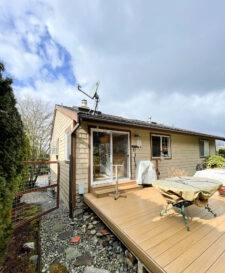
Why Blaine's Climate Is Harder on Board & Batten Than Inland Siding
Salt Air
Homes within a mile or two of the water in Blaine take on airborne salt that settles on siding, trim, and fasteners. Salt accelerates corrosion in anything ferrous and slowly breaks down cheaper paint films and coatings faster than the same product would wear inland. Board and batten has more exposed vertical seams and more fastener points than lap siding, so the choice of fastener and finish matters more here than it does on a house in, say, Sumas or Deming.
Driving Rain
Wind off the water doesn't let rain run straight down a wall — it pushes it sideways and up under laps, battens, and trim. Board and batten depends on correctly lapped or properly gapped seams and a sound water-resistive barrier behind the siding to keep that wind-driven moisture out of the wall assembly. A batten that's face-nailed straight through into the board beneath it, rather than blind-nailed or nailed to hit framing on each side, gives wind-driven rain a direct path to trapped moisture.
Long Moss Season
Whatcom County's wet stretch runs long, and Blaine's proximity to the water keeps humidity up even on days without rain. North-facing walls, shaded elevations near trees, and anywhere airflow is restricted are where moss and algae take hold first. On real wood or wood-composite siding, that biological growth holds moisture against the substrate and speeds up rot. A siding material and finish that resist moss growth — and that can be power-washed without damaging the surface — matter more here than in a drier part of the state.
Why We Install Board & Batten Only in James Hardie Fiber Cement
We don't install board and batten in primed spruce, cedar, LP SmartSide, vinyl, Cemplank, or Allura. That's not a knock on every homeowner who has one of those products on their house — it's a standard we set because of what we've seen happen to vertical siding specifically in coastal Whatcom County conditions over time.
- Wood and wood-composite boards absorb moisture at cut ends and seams; in a salt-air, high-moisture environment that means faster rot risk unless every edge is sealed perfectly and stays that way, which is hard to guarantee over a 20+ year lifespan.
- Vinyl board and batten is lightweight and can flex or rattle in the wind gusts that come off the water, and its factory color is baked in — no repainting to refresh it as it fades, and it can become brittle over decades of UV and temperature cycling.
- James Hardie fiber cement is non-combustible, doesn't swell or rot from moisture the way wood-based products can, and holds its factory ColorPlus finish for years without the recoating a wood product needs. Hardie's engineering also accounts for climate zones, which matters in a place that sees both wet Pacific weather and real temperature swings.
We put Hardie board and batten on Blaine homes because it's the product we're willing to warranty and stand behind in this specific climate — not because it's the cheapest option on the shelf.
What Correct Board & Batten Installation Involves
Board and batten looks simple from the street, but the installation details are what determine whether it lasts 10 years or 40 in a coastal environment. A correct install includes:
- A properly lapped or sealed water-resistive barrier behind the siding, with all penetrations and seams taped or flashed before the first board goes up.
- Correct fastener spacing and fastener material — stainless or hot-dip galvanized fasteners rated for the salt-air exposure this close to the water, not standard fasteners that can bleed rust streaks or corrode over time.
- Proper gapping between boards per Hardie's published installation instructions, so the panels have room to expand and contract without buckling or cracking the caulk joints.
- Battens fastened to land on framing or blocking behind them, not face-nailed randomly through the board beneath — this is one of the most common shortcuts that leads to water intrusion.
- Flashing at every horizontal transition — window and door heads, belly bands, roof-to-wall intersections — detailed to shed water outward, not into the wall.
- Correct clearance at the bottom of the siding from grade, decks, and roof lines, so board and batten doesn't sit in standing water or splash-back zones.
- Factory-finished ColorPlus boards and battens where possible, so the finish is baked on under controlled conditions rather than field-painted, which holds up better to Blaine's salt air and UV exposure.
Skipping any one of these doesn't usually cause a visible problem on day one — it shows up two, five, or ten years later as staining, soft spots, or paint failure at the seams.
Our Process for Blaine Board & Batten Projects
1. On-Site Assessment
We look at the home's exposure — how close it sits to the water, which elevations take the most wind-driven rain, where moss has already established itself, and the condition of the existing wall assembly underneath any siding coming off.
2. Product and Layout Plan
We work out board width, batten spacing, and color with the homeowner, matched to the home's style and to Hardie's HZ product engineering for this climate zone.
3. Tear-Off and Wall Prep
Old siding comes off, sheathing is inspected for hidden moisture damage — which is common on older Blaine homes near the water — and the water-resistive barrier and flashing are installed or corrected before a single new board goes up.
4. Installation to Spec
Boards and battens go up following Hardie's fastening and gapping specifications, with attention to every flashing detail around openings and transitions.
5. Final Walkthrough
We walk the finished job with the homeowner, checking seams, caulk lines, and trim before calling it done.
Cost Factors for Board & Batten in Blaine
Every project is different, but the factors that most often move the price on a Blaine board and batten job are below. We give firm numbers only after seeing the house in person.
| Factor | Why It Matters Here |
|---|---|
| Tear-off and wall condition | Homes near the water more often have hidden moisture or rot behind old siding that needs repair before new siding goes on |
| Wind exposure of the site | More exposed elevations need more careful flashing and fastening, which adds labor time |
| Board width and batten spacing | Narrower boards and tighter batten spacing mean more material and more fastening points |
| Trim and transition complexity | Multiple roof lines, dormers, and window/door counts all add flashing and cutting time |
| Access and site conditions | Waterfront lots, slopes, or tight setbacks can affect scaffolding and staging |
Signs Existing Siding in Blaine Needs Attention
- Soft or spongy boards, especially near the base of walls or under windows
- Persistent moss or dark streaking that comes back soon after cleaning
- Peeling or bubbling paint concentrated on the sides of the house facing the water
- Visible gaps opening up at batten seams or corner trim
- Rust staining running down from fastener heads
- A musty smell or visible staining on interior walls that share an exterior wall with damaged siding
Any of these on a Blaine home is worth a look before it turns into a sheathing or framing repair, which costs considerably more than a siding job alone.
Working with a Crew That Already Knows Blaine
A contractor who works Whatcom County regularly already knows which elevations in Blaine take the worst of the weather, what the local building department expects for flashing and clearances, and how differently a wall assembly ages a mile from the water versus ten miles inland. That local pattern recognition shows up in fewer callbacks and fewer surprises once the old siding comes off.
If you're weighing board and batten siding for a home in Blaine, we're happy to walk the property, look at what's there now, and put together a straightforward, no-pressure estimate — use the form below to get started.