 Bellingham Siding
 Siding Installation in York, Bellingham
York is one of Bellingham's established, close-in neighborhoods, with homes spanning a wide range of building eras and siding conditions. Whether a house still has its original wood siding, a decades-old vinyl job that's starting to bow and fade, or fiber cement that was installed incorrectly the first time, the exterior on a York home is doing constant work against Whatcom County's marine climate. Getting a siding installation right here isn't just about appearance — it's about keeping water, salt air, and moss from working their way into the wall assembly year after year.
This page covers what siding installation actually involves for homes in York specifically: what the climate demands, what a correct install looks like underneath the surface, how our process runs from estimate to final walkthrough, and why a crew that already works in this neighborhood is worth choosing over a traveling installer.
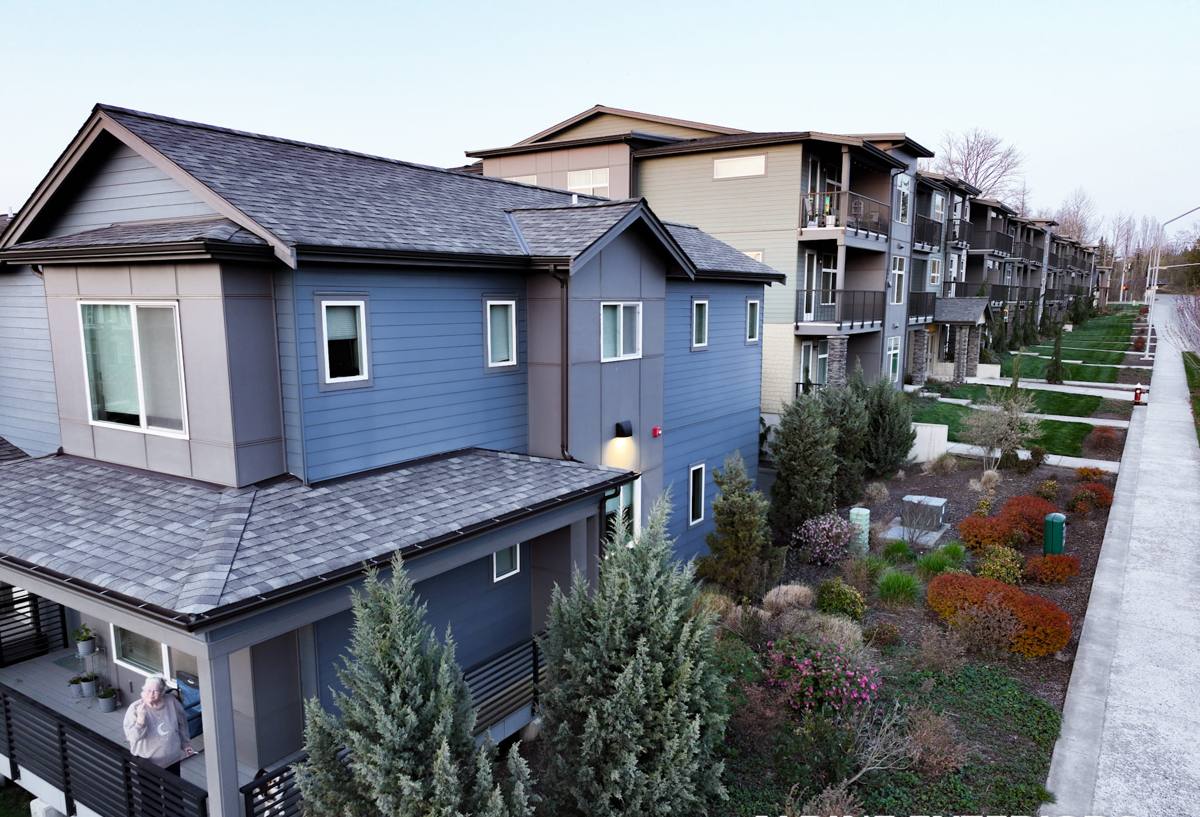
What Bellingham's Climate Does to Siding in York
Whatcom County sits close enough to Bellingham Bay and the Salish Sea that salt-laden air is a real factor on exterior materials, even a few miles inland. Combine that with the region's long stretch of driving rain each fall and winter, plus an extended moss season that can run from early fall through late spring, and you have three separate stresses acting on a home's siding at the same time.
Salt Air and Corrosion
Salt air accelerates corrosion on exposed fasteners, flashing, and metal trim. Siding materials and installation hardware that aren't rated for coastal exposure tend to show rust streaks, fastener pop, and premature finish breakdown well before their expected lifespan.
Driving Rain and Wind-Driven Moisture
Bellingham's rain rarely falls straight down. Wind off the water pushes moisture sideways into wall systems, which means siding here has to perform as a drainage plane, not just a weather shell. Laps, flashing details, and the water-resistive barrier behind the siding matter as much as the siding itself.
Moss and Sustained Dampness
Shaded lots, mature tree cover, and long stretches of overcast, damp weather give moss and algae plenty of time to establish on north-facing walls, under eaves, and anywhere airflow is restricted. Moss holds moisture against the surface far longer than open air would, which is hard on any siding material that isn't dimensionally stable or that absorbs water at the surface.
Why We Install Only James Hardie Fiber Cement in York
We install one siding product across every job we take on: James Hardie fiber cement, in the HZ product lines engineered for climates like this one. That's a deliberate standard, not a limitation on customer choice, and it's worth explaining why.
Vinyl siding softens, warps, and can pull away from fastening points when it's exposed to prolonged damp-and-dry cycling, and its seams give moss and grime plenty of places to take hold. LP SmartSide, Cemplank, Allura, primed spruce, and raw cedar all have real strengths, but each comes with a trade-off — moisture sensitivity, coating maintenance, dimensional movement, or a shorter track record in wet coastal climates — that we're not willing to install and then stand behind on a York home that's going to see forty-plus years of Whatcom County weather.
James Hardie fiber cement is non-combustible, doesn't absorb moisture the way wood-based products do, and holds its shape and finish through the wet-dry cycling that defines a Pacific Northwest coastal climate. The ColorPlus factory finish is baked on under controlled conditions rather than field-applied, which matters directly for moss and mildew resistance — a factory finish resists the surface staining that shows up fast on painted or raw wood-based siding in shaded, damp yards.
What a Correct Siding Installation Involves
The siding itself is only part of the system. Most siding failures we get called out to inspect in this region trace back to what's underneath the panels, not the panels themselves.
Water-Resistive Barrier and Drainage
A correctly installed weather-resistive barrier, lapped shingle-style from the bottom up, is the first line of defense. In a driving-rain climate, we also install a drainage gap behind the siding so any moisture that does get past the surface has somewhere to go instead of sitting against the sheathing.
Flashing at Every Penetration
Windows, doors, hose bibs, vents, and deck ledgers are the places water finds a way in. Each one needs proper head flashing and end-dam details — not just a bead of caulk — because caulk is a maintenance item and flashing is a permanent water management strategy.
Fastening and Clearances
Fiber cement has to be fastened per the manufacturer's specification for the exposure and siding profile, with corrosion-resistant fasteners suited to a coastal environment. Bottom clearance from grade, decks, roofs, and other horizontal surfaces has to meet minimum standards, or the siding will wick moisture from below regardless of how well the field installation was done.
Joints, Caulking, and Paint Lines
Butt joints need to be flashed or fitted correctly, not just butted and caulked. Cut ends of Hardie board should be sealed and touched up with matching paint before installation, since an unsealed cut edge is the one place factory-finished siding can absorb moisture.
Our Installation Process for York Homes
- On-site assessment — we look at existing siding, wall sheathing condition where accessible, moisture staining, moss patterns, and any deck or roof intersections that need special flashing attention.
- Scope and product selection — we specify the appropriate Hardie panel or lap profile, exposure, and trim system for the home's style and the site's exposure to wind and moisture.
- Tear-off and substrate check — old siding comes off and we check the sheathing and framing underneath for rot or damage before anything new goes up, since covering a hidden problem defeats the purpose of a new install.
- Weather barrier and flashing installation — this is the step that determines how the siding performs in ten years, not just how it looks on day one.
- Hardie installation to manufacturer spec — correct fastening, clearances, joint treatment, and trim detailing throughout.
- Final finish and walkthrough — caulking, touch-up paint on cut edges, cleanup, and a walkthrough so the homeowner understands what was done and how to maintain it.
Cost Factors for Siding Installation in York
Every home is different, and we don't quote sight-unseen, but these are the variables that most often move a siding installation estimate up or down.
| Factor | Why It Matters |
|---|---|
| Home size and wall complexity | More corners, gables, and dormers mean more cutting, flashing, and labor time. |
| Existing siding removal | Tear-off of old wood, vinyl, or aluminum adds labor and disposal cost versus installing over new sheathing. |
| Substrate repair | Rotted sheathing or framing found during tear-off has to be repaired before new siding goes on. |
| Siding profile and trim level | Lap siding, panel siding, and detailed trim packages carry different material and labor costs. |
| Site access and exposure | Steep lots, tight setbacks, and heavy shade or moss conditions can affect scaffolding and prep time. |
Signs a York Home May Need New Siding
Some of these show up gradually enough that homeowners don't notice until the damage is well established. A quick self-check before calling for an estimate:
- Persistent moss or algae staining that returns soon after cleaning, especially on north- or shade-facing walls
- Soft spots, bubbling, or visible warping in wood or engineered wood siding
- Cracking or splitting at butt joints and corners
- Paint that's peeling or blistering rather than just fading
- Visible gaps at trim, window, or door edges where caulk has failed
- Rust streaking from fasteners or metal flashing
- Rising energy bills that suggest air or moisture infiltration through the wall
Why a Crew That Already Works in York Matters
A siding contractor who regularly works in this neighborhood already knows how York's lot sizes, tree cover, and building ages tend to interact with Bellingham Bay's marine exposure. That familiarity shows up in small but real ways — knowing which wall orientations need extra flashing attention, recognizing early moss patterns before they become moisture problems, and understanding how older York homes were typically built so tear-off doesn't turn into guesswork. It also means a shorter, more predictable timeline: a local crew isn't relearning Whatcom County's weather patterns and permitting expectations on your project.
If your York home's siding is showing its age, or you're planning a renovation and want it done with a product built for this exact climate, we'd like to take a look. Reach out for a free, no-pressure estimate — we'll walk the exterior, answer questions honestly, and give you a straightforward scope and price before anything is decided.