 Bellingham Siding
 Blaine's Climate Is Tougher on Windows Than Most of Whatcom County
Blaine sits right on the water at the top of Whatcom County, and that location changes what a window has to survive. Homes near Drayton Harbor and Semiahmoo Bay take on salt-laden air that Bellingham homes a few miles inland simply don't deal with as much. Salt air accelerates corrosion on window hardware, weep hole screens, and unprotected fasteners. Combine that with the driving rain that comes off the Strait of Georgia in fall and winter storms, and you get wind-driven water pressure testing every seal on the house, not just the windows facing the weather.
Then there's the moss season, which in this part of Whatcom County isn't really a season at all — it's most of the year. Constant damp shade keeps moisture sitting against siding, trim, and window frames longer than in drier climates. Wood-framed windows and painted trim around openings are especially vulnerable, because moss and algae hold water against the surface and slow drying between rain events. Over years, that's what turns a small caulking gap into a soft sill or a rotted jamb.
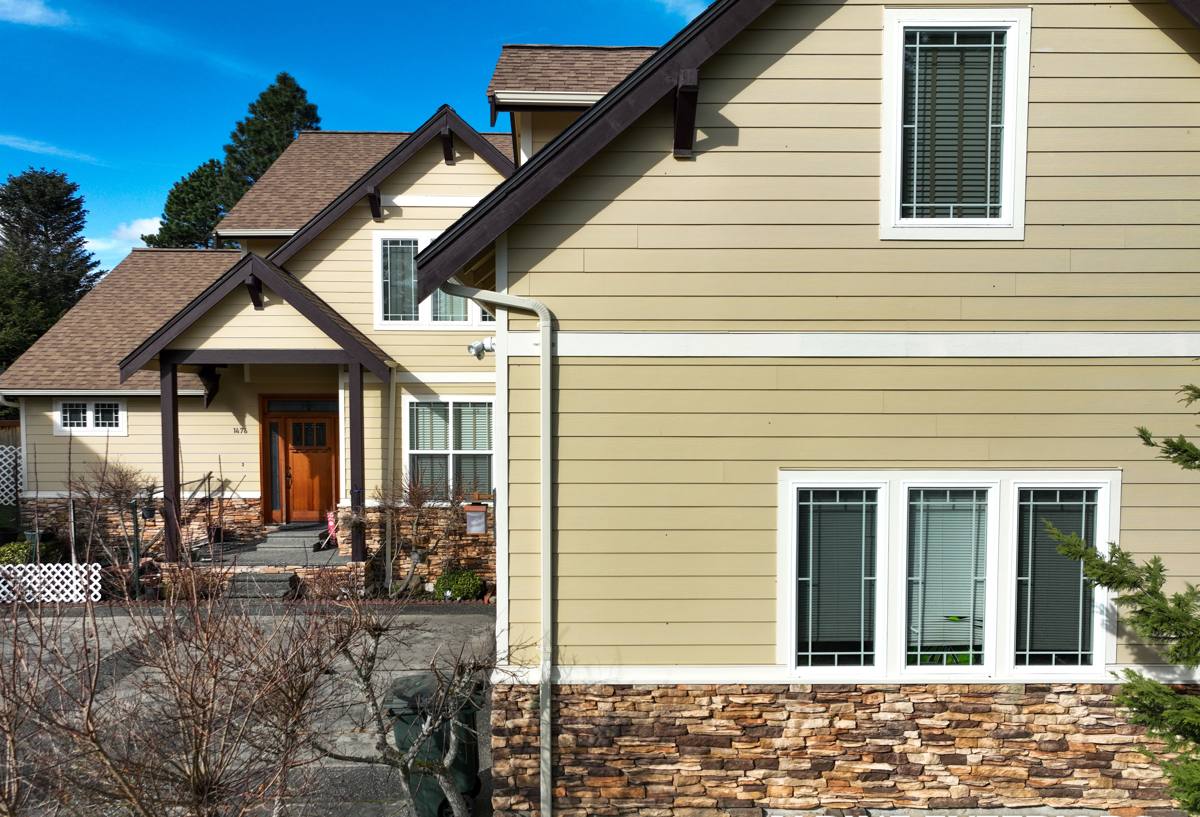
Signs Your Windows Are Losing the Fight
Most homeowners don't replace windows because they woke up and decided to remodel — they replace them because something started going wrong. In Blaine's climate, the usual warning signs show up earlier than they would in a drier inland town.
- Fogging or a milky haze between panes (failed seal on a double-pane unit)
- Soft, spongy, or darkened wood at the sill or lower corners of the frame
- Visible rust or corrosion on hinges, cranks, or locking hardware
- Drafts you can feel with your hand near the frame on a windy day
- Paint that keeps bubbling or peeling in the same spot every year
- Difficulty opening, closing, or latching a window that used to work fine
- Green or black growth building up in the corners of the frame or track
Any one of these on its own might just need a repair. Several of them together, especially on windows facing the prevailing weather, usually mean the window itself has reached the end of its useful life.
What a Correct Window Replacement Involves
A window replacement done right isn't just swapping glass and frame — it's rebuilding the water management system around that opening. That matters more in Blaine than almost anywhere else in the county, because the margin for error with flashing and sealant is smaller when the house is taking direct salt spray and sideways rain.
At minimum, a proper job includes removing the old unit down to the rough opening, inspecting the sheathing and framing underneath for rot or hidden water damage, correcting anything found before the new window goes in, and installing flashing that actually sheds water down and out rather than trapping it. The new window gets set level and plumb, shimmed correctly so it isn't relying on the frame to hold its shape, insulated around the perimeter without overpacking (which can bow the frame), and sealed with the right sealant for the surface and exposure. Interior and exterior trim gets reinstalled or replaced so the whole assembly looks finished and stays weathertight.
Skipping any of those steps is how you end up with a brand-new window that still leaks, fogs, or rots the wall around it within a few years — the window itself wasn't the problem, the installation was.
Frame Material Comparison for Blaine's Coastal Exposure
Every frame material has trade-offs. In a salt-air, high-moisture environment like Blaine's, some hold up with a lot less maintenance than others.
| Material | How It Handles Salt Air & Moisture | Maintenance | Typical Lifespan |
|---|---|---|---|
| Vinyl | Won't rust or rot; handles salt spray well | Occasional cleaning; no painting | 20–30+ years |
| Fiberglass | Very stable, resists moisture and expansion/contraction | Low; holds paint well if painted | 30+ years |
| Aluminum | Can corrode over time if not properly coated; conducts cold | Moderate; hardware needs checking | 15–25 years |
| Wood (unclad) | Most vulnerable to rot and moss growth in this climate | High; regular painting/sealing required | Varies widely with upkeep |
| Wood-clad | Exterior protected by cladding; interior still wood | Moderate; clad side low-maintenance | 20–30 years if clad seals hold |
We don't push one brand or material on every homeowner, but we're honest that unclad wood frames are a tougher sell this close to the water — the maintenance schedule needed to keep them ahead of rot and moss is more than most people want to keep up with. Vinyl and fiberglass tend to be the lower-hassle long-term choice for Blaine's exposure, and we'll walk through the real trade-offs for your specific home rather than steering you toward whatever's easiest for us to install.
Full-Frame vs. Insert Replacement: Which Fits Your Home
There are two basic approaches to replacing a window, and the right one depends on the condition of what's already there.
Insert (Pocket) Replacement
A new window unit is fitted into the existing frame, which stays in place. This works well when the existing frame is still structurally sound and dry — no rot, no hidden water damage. It's less invasive and usually faster, but it only makes sense if we've actually confirmed the old frame is healthy first.
Full-Frame Replacement
The old window and its frame come out entirely, exposing the rough opening down to the framing. This is the right call whenever there's any sign of moisture damage, rot, or a frame that's out of square — which, given Blaine's exposure, is more common here than in drier parts of the county. It costs more and takes longer, but it's the only way to actually fix a water problem instead of sealing a new window over the top of one.
We won't recommend an insert replacement over a home we haven't inspected closely, because guessing wrong on this decision is exactly how homeowners end up with rot problems hidden behind new glass.
Cost Factors to Expect
We don't post fixed prices because every home and every opening is different, but the main things that move the number are consistent from job to job.
| Factor | Why It Affects Cost |
|---|---|
| Insert vs. full-frame replacement | Full-frame requires more labor, materials, and often carpentry repair |
| Frame material | Vinyl is generally most affordable; fiberglass and wood-clad cost more upfront |
| Number and size of openings | More or larger windows mean more labor and material |
| Existing rot or water damage | Framing repair adds cost but is not optional once found |
| Access and location on the house | Second-story or hard-to-reach openings take longer |
| Glass package | Upgraded glazing for energy performance or sound adds cost per unit |
The honest answer for most Blaine homes: budget for full-frame replacement on anything facing the water or prevailing weather, even if you're hoping for a simpler insert job. It's better to plan for it and be pleasantly surprised than to be quoted low and find rot once the old window comes out.
Our Process, Start to Finish
- Walkthrough and assessment — we look at every window you're considering, check for soft spots, drafts, and hardware condition, and talk through what you actually need versus what you don't.
- Honest recommendation — insert or full-frame, which material fits your budget and exposure, and a real range for cost before we ask for a commitment.
- Scheduling around the weather — we plan install days to minimize how long an opening sits exposed, which matters more here than in drier climates.
- Removal and inspection — old units come out and we check the rough opening before anything new goes in.
- Correct installation — proper flashing, shimming, insulation, and sealant suited to salt air and driving rain exposure.
- Trim and cleanup — interior and exterior finish work completed and the site left clean.
- Final walkthrough — we check operation on every window with you before we consider the job done.
Why a Bellingham Crew That Already Works Blaine Matters
Window replacement isn't a one-size-fits-all trade. A crew that mostly works dry, inland jobs can do fine work and still underestimate what salt air and near-constant coastal moisture do to sealant life, hardware, and untreated wood. Working Blaine regularly as part of our Whatcom County service area means we've seen how these specific conditions play out over years, not just at the moment of installation — which sills fail first, which materials hold up, and where builders sometimes cut corners on flashing details that don't show up as a problem until the second or third winter.
It also means we're not learning the area's building patterns on your job. Coastal Whatcom County homes, whether in Blaine, Birch Bay, or along the water toward Bellingham, tend to share certain vulnerabilities, and knowing what to check for going in saves time and prevents surprises.
Keeping New Windows Performing Long-Term
A correctly installed window in Blaine's climate should need very little from you, but a few habits extend its life. Rinse salt residue off frames and glass periodically, especially after storms, since dried salt film can be mildly abrasive to hardware and finishes over time. Keep gutters and downspouts clear so runoff isn't sheeting directly across window heads. Check exterior caulking annually for cracking or separation, particularly on south- and west-facing openings that take the brunt of wind-driven rain. And don't let moss or algae buildup sit against frame corners — a soft brush and rinse a couple of times a year keeps it from holding moisture against the surface.
If you're seeing drafts, fogged glass, soft wood, or hardware that's stopped working smoothly, it's worth getting a straight answer on whether you're looking at a repair or a replacement. We're happy to take a look, tell you honestly what we find, and put together a free, no-pressure estimate for your Blaine home — no obligation, just a clear picture of your options.