 Bellingham Siding
 Why Window Installation in Lynden Is Different From a Standard Retrofit
Lynden sits in the open, agricultural stretch of Whatcom County, close enough to Bellingham Bay and the Salish Sea to pick up salt-tinged air, but exposed enough across its fields and flat land to take wind and driving rain head-on with little to break it up. That combination shows up in the windows before it shows up anywhere else on a house. A window that would last two decades in a sheltered city lot can start failing in half that time out here if it wasn't installed with this specific exposure in mind.
We work on a mix of older farmhouses with original wood sash windows, mid-century homes with tired aluminum frames, and newer construction where the windows are fine but the flashing behind them wasn't done right. Each of those calls for a different approach, and getting it right the first time matters more here than in a lot of places because of how much moisture this region pushes at a house every winter.
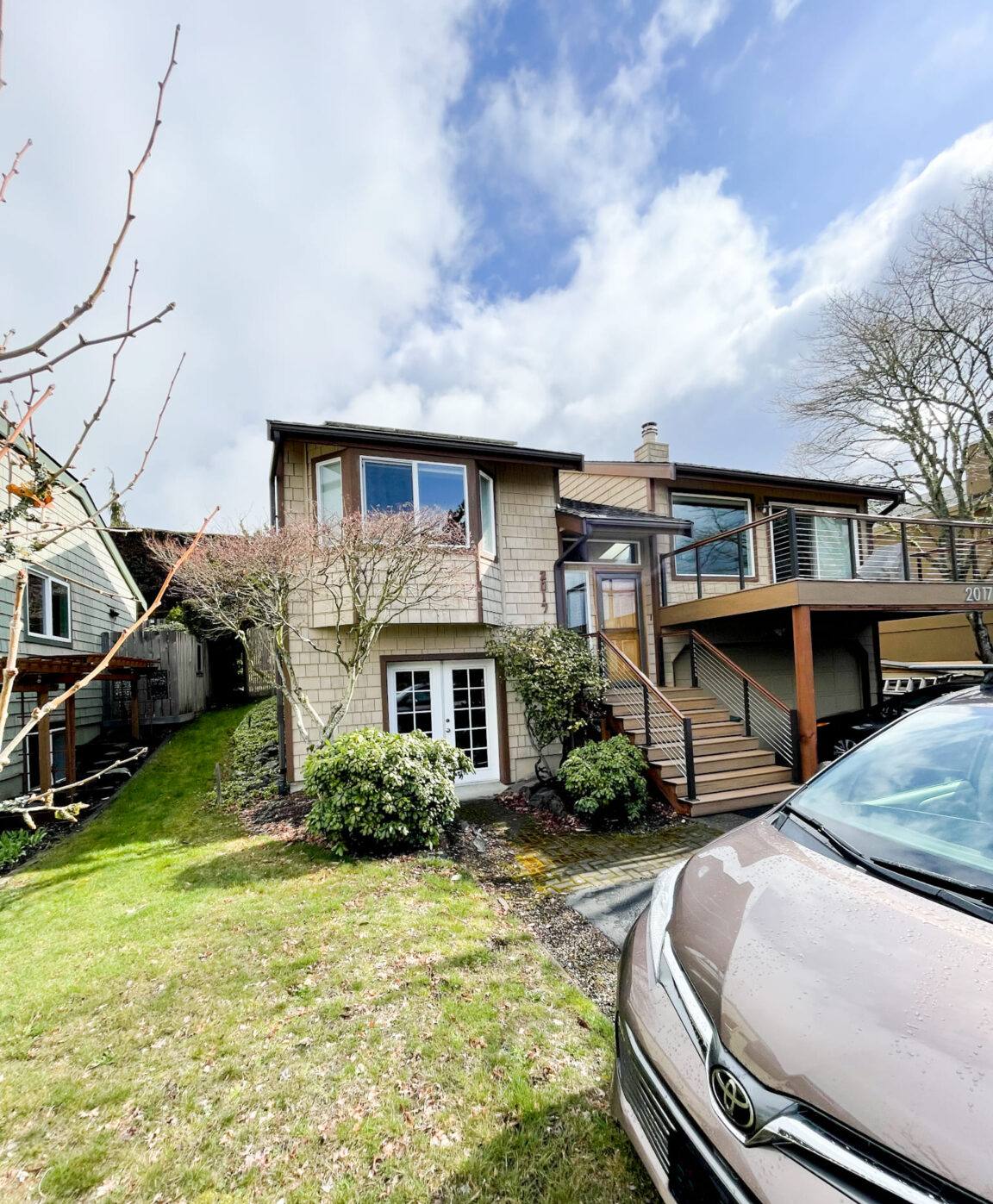
What Whatcom County's Climate Does to Windows Over Time
Driving rain and wind-driven water
Standard window flashing assumes rain falls mostly straight down. In Lynden's open exposure, rain regularly comes in at an angle, driven by wind off the fields, and it finds any gap in the flashing or sealant around a window opening. Once water gets behind the frame, it doesn't dry out quickly in our climate — it sits, and it starts rotting sheathing and framing from the inside where you can't see it until the damage is significant.
Salt air and hardware corrosion
Homes closer to Bellingham Bay deal with airborne salt that accelerates corrosion on window hardware, screen frames, and especially older aluminum sashes. It's a slower process than the rain damage, but it's why hinges, locks, and rollers on older windows in this area often seize up or crumble well before the glass itself fails.
Moss, mildew, and constant dampness
Whatcom County's wet season runs long, and anywhere moisture lingers — window sills, trim boards, the bottom corners of frames — you'll see moss or mildew take hold. On wood-trimmed windows this isn't cosmetic; it's a sign that water is sitting somewhere it shouldn't, and it's usually the first visible clue that flashing or caulking has failed.
Signs Your Lynden Home's Windows Need Replacing
- Fogging or a hazy film between panes of double-pane glass — the seal has failed and the insulating gas is gone
- Visible moss, black mildew, or soft, spongy wood at the sill or lower frame corners
- Windows that are hard to open, close, or lock, or that no longer sit flush in the frame
- Noticeable drafts or cold spots near the window even when it's fully closed
- Condensation forming on the inside of the glass regularly through fall and winter
- A jump in heating costs that isn't explained by anything else in the house
- Single-pane glass still in place — common in older Lynden farmhouses and a significant energy loss point
Choosing the Right Window for a Marine Pacific Northwest Climate
Every frame material handles this climate differently. There's no single "best" choice for every home — it depends on your budget, how exposed the home is, and how long you want to go between any maintenance.
| Frame Material | Moisture & Salt-Air Performance | Maintenance | Typical Lifespan |
|---|---|---|---|
| Vinyl | Good — won't rot or corrode; seams and welds are the weak point in driving rain | Low — no painting, occasional cleaning | 20-30 years |
| Fiberglass | Excellent — very stable in temperature swings and damp exposure, low expansion/contraction | Low | 30-40+ years |
| Wood-clad | Fair to good — the cladding protects the wood, but any breach in the cladding lets moisture reach wood underneath | Moderate — cladding needs to stay sealed at joints | 20-30 years, dependent on maintenance |
| Aluminum | Poor to fair — conducts cold and is prone to corrosion near the bay without a quality finish | Low to moderate | 15-25 years in this climate |
Glass packages worth the upgrade
In this climate, we steer most homeowners toward double-pane glass with a low-E coating and argon gas fill as the baseline, not the upgrade. It cuts winter heat loss and reduces the interior condensation that's so common in damp Whatcom County winters. Triple-pane glass adds real value for rooms facing prevailing wind and weather, but it's a heavier, pricier unit, so we usually reserve it for homes with unusually high exposure rather than specifying it across the board.
Full-Frame Replacement vs. Insert Replacement
This decision affects both cost and how well the new window will hold up to Lynden's weather, so it's worth understanding before you get quotes.
| Factor | Insert (Pocket) Replacement | Full-Frame Replacement |
|---|---|---|
| Best for | Sound existing frame and sill, no rot or water damage | Any sign of rot, water intrusion, or frame damage |
| Access to flashing | Limited — existing flashing stays in place | Full — flashing and weather barrier can be inspected and redone |
| Disruption | Lower — faster, less exterior trim work | Higher — exterior trim and siding tie-in are removed and rebuilt |
| Recommended here when | Newer home, no moisture history | Older farmhouse, any visible moss/mildew at the opening, or a home in a highly exposed spot |
Given how much water this area pushes at a house, we lean toward full-frame replacement whenever there's any doubt about the condition of the existing opening. It costs more up front, but it's the only method that lets us actually inspect and correct what's behind the old frame instead of trusting it.
The Part Most Installers Get Wrong: Flashing and Water Management
The window unit itself is rarely what fails first — it's the integration between the window and the wall around it. Because we do siding work throughout the day, we treat every window opening as part of the wall's whole water-management system, not an isolated box.
- Sloped sill pan flashing so any water that gets past the window drains back out, not into the wall
- Flashing tape integrated with the house wrap in the correct shingle-lap order, so water sheds downward and outward
- Head flashing sized and installed to shed wind-driven rain, not just vertical rain
- Sealant used only where it belongs — as a backup to mechanical flashing, never as the only line of defense
- Proper tie-in to the siding so there's no gap or reverse lap that channels water toward the frame
This is the step that determines whether a window lasts thirty years or starts leaking in five, and it's also the step that's invisible once the trim goes back on — which is exactly why it needs to be done right the first time.
Our Window Installation Process for Lynden Homes
- On-site assessment — we check the condition of the existing frame, sill, and surrounding siding, not just measure the glass opening
- Product selection — we walk through frame material and glass package options based on your home's exposure and budget, honestly, without pushing whatever has the highest margin
- Removal — old units and, if needed, surrounding trim or siding are removed carefully to expose the full opening
- Inspection and repair — any rot, damaged sheathing, or failed weather barrier found during removal is repaired before anything new goes in
- Flashing and waterproofing — sill pan, flashing tape, and house wrap integration installed per the sequence above
- Window installation and shimming — set plumb, level, and square, fastened per manufacturer spec so the warranty stays valid
- Insulation and air sealing — gaps around the frame are filled with low-expansion foam or backer rod, not just caulk
- Trim, siding tie-in, and cleanup — exterior trim and siding are rebuilt to match, interior trim reinstalled or finished
Permits, Codes, and Local Considerations
Window replacement in bedrooms and other habitable rooms has to meet current egress requirements for opening size and sill height if the opening is being enlarged or the structure altered — this comes up more often than homeowners expect on older Lynden farmhouses where the original windows were never sized to modern code. Whatcom County and the City of Lynden have their own permit processes for exterior work of this kind, and we handle that paperwork as part of the job rather than leaving it for the homeowner to sort out.
A quick honest note on cost factors
Pricing on window installation varies a lot based on frame material, glass package, and whether it's an insert or full-frame job — homeowners should expect a real range rather than a flat per-window number, and be cautious of any quote given without someone actually looking at the openings first.
Why Hire a Crew That Already Works in Lynden
A lot of window problems in this area trace back to installers who treat every job the same regardless of climate — using standard flashing details that work fine in a drier region but aren't built for wind-driven rain and long wet winters. Because we work on siding and exteriors across Whatcom County, we see what actually fails here over time, not just what looks fine on install day. That matters for a farmhouse with decades of settling and old trim as much as it does for a newer build where the original flashing was never quite right. We also know the local permit process and typical lead times for materials, so there are fewer surprises once a project starts.
If your windows are drafty, fogged, or showing moss and soft wood at the sill, or you're just planning ahead for a home in an exposed part of Lynden, we're happy to take a look. Reach out for a free, no-pressure estimate — someone will walk your windows with you, explain what we find, and give you options without any pressure to decide on the spot.