 Bellingham Siding
 Why Siding Replacement in Sunnyland Isn't a One-Size-Fits-All Job
Sunnyland sits close enough to Bellingham Bay that salt-laden air is a daily fact of life for the siding on these homes, not an occasional nuisance. Add in Whatcom County's driving winter rain, which tends to come in sideways off the water rather than straight down, and a moss season that can stretch from October well into spring, and you have three separate forces working against whatever is nailed to the outside of a house. Siding that might last three decades in a drier inland climate can fail in half that time here if it was installed without those specifics in mind. When we replace siding in Sunnyland, we're not just swapping old material for new — we're correcting for a climate that punishes shortcuts.
Salt air accelerates corrosion on fasteners and trim hardware, and it slowly breaks down finishes that weren't engineered to handle it. Driving rain finds every gap in flashing and caulking and pushes water sideways into seams that would stay dry in a calmer climate. And moss doesn't just grow on roofs — it takes hold on north-facing siding, in shaded side yards, and anywhere moisture sits against a wall for days at a time, holding water against the surface long after the rain has stopped. A correct siding replacement plans for all three from the first day of the job.
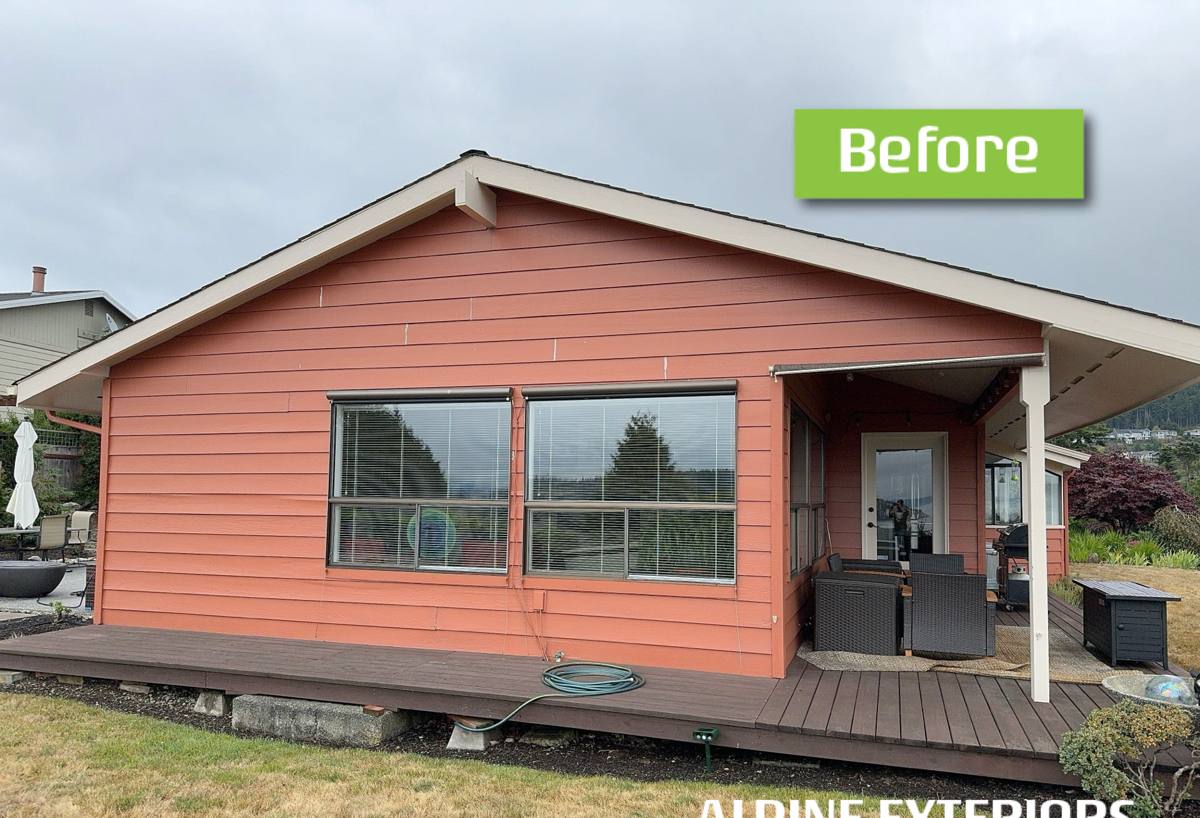
Signs a Sunnyland Home Needs Replacement, Not Another Repair
Most homeowners call us after noticing one obvious problem, but the siding is often further along than it looks from the ground. Here's what we check for before recommending full replacement over a patch job:
- Soft or spongy spots when you press on the siding, especially near the bottom courses and around window and door trim
- Visible cracking, buckling, or warping across multiple sections rather than one isolated board
- Paint that won't hold anymore — it's peeling, bubbling, or needs repainting every couple of years
- Persistent moss or dark staining that comes back within a season of being cleaned off
- Gaps opening up at seams, corners, or where siding meets trim, roofline, or foundation
- Rising energy bills that point to a wall assembly no longer doing its job
- Interior signs — musty smells, peeling interior paint, or stains on inside walls near exterior corners
One or two of these on their own might be a repair. Several at once, especially soft spots combined with recurring moss or staining, usually mean moisture has been getting behind the siding for a while — and at that point, patching the visible symptom without addressing the water intrusion behind it is a short-term fix at best.
What a Correct Siding Replacement Actually Involves
Replacing siding is not just removing old boards and nailing up new ones. The work that happens underneath the visible surface is what determines whether the new siding lasts 10 years or 40, and it's the part that's easiest for a rushed crew to skip.
Tear-off and inspection
Once the old siding comes off, we inspect the sheathing underneath for rot, soft spots, or prior water damage. Any compromised sheathing gets replaced before anything new goes up — installing new siding over damaged sheathing just hides the problem for a while longer.
Water-resistive barrier and flashing
A correctly lapped weather-resistive barrier, paired with properly integrated flashing at every window, door, and roofline intersection, is what actually keeps driving rain out of the wall assembly. This is the step that matters most in a climate like ours, and it's also the step that's invisible once the job is finished — which is exactly why it has to be done right the first time.
Installation to manufacturer spec
Fiber cement siding has specific requirements for fastener spacing, clearances from grade and rooflines, and joint treatment. Installing it outside those specs doesn't just risk cosmetic problems — it can void the manufacturer's warranty entirely. We install to spec on every job, not just the ones where someone's watching.
Trim, caulking, and finish details
The joints, corners, and trim details are where most siding failures start. Careful caulking with the right products, correct overlaps, and attention to how water sheds off the wall are what separate a job that looks good on day one from one that still looks good in year fifteen.
Material Comparison for a Salt-Air, High-Moisture Climate
We install James Hardie fiber cement siding exclusively, and the reasons come down to how different materials actually perform in conditions like Sunnyland's, not just how they look going up.
| Factor | James Hardie Fiber Cement | Vinyl | Wood / LP SmartSide |
|---|---|---|---|
| Moisture resistance | Non-combustible cement composite; engineered HZ product lines for wet climates | Resists water itself but seams and gaps can trap moisture behind it | Engineered wood or solid wood; vulnerable to moisture absorption if finish fails |
| Salt air / coastal exposure | Formulated to hold up to coastal conditions when installed correctly | Can become brittle and discolored faster near salt air over time | More prone to swelling and finish breakdown in salt-humid air |
| Finish durability | Factory-applied ColorPlus finish, warrantied against fading and peeling | Color is through-body but can chalk and fade; no factory paint warranty in the same sense | Field-applied paint or primer wears faster and needs more frequent recoating |
| Moss and organic growth | Dense cement composition doesn't feed organic growth the way wood-based products can | Doesn't feed growth but seams and J-channels can trap debris and moisture | Wood fiber content can be more susceptible to sustained moss and mildew |
| Fire resistance | Non-combustible | Combustible, can melt or deform near heat sources | Combustible |
| Long-term maintenance | Low — occasional washing and caulk checks | Low but can crack or warp with age and temperature swings | Higher — repainting and moisture monitoring on a regular cycle |
None of these are bad products in every situation. Vinyl is inexpensive and easy to install, and engineered wood siding has genuinely improved over the years. But given what Sunnyland's siding is up against — salt air, sideways rain, and months of damp shade — we made the call to standardize on James Hardie and stand behind that one system rather than offer several we'd have to caveat.
Our Siding Replacement Process
- On-site assessment. We walk the home, check sheathing condition where accessible, and identify moisture entry points before quoting anything.
- Written proposal. A clear scope of work, product selection, and price — no vague allowances that turn into surprises later.
- Site preparation. Landscaping, windows, and fixtures get protected before tear-off begins.
- Tear-off and sheathing repair. Old siding comes off, sheathing is inspected, and any damaged sections are replaced.
- Water barrier and flashing install. This step gets done before a single piece of new siding goes up.
- Siding installation. James Hardie panels or lap siding installed to manufacturer spec, with attention to fastener placement and clearances.
- Trim, caulking, and finish work. Joints sealed, trim installed, touch-up paint applied where needed.
- Final walk-through. We review the finished work with you before calling the job done.
Why It Matters to Hire a Crew That Already Works in Sunnyland
Bellingham's neighborhoods aren't all exposed the same way. A home a few blocks from the bay deals with a different combination of wind, salt, and shade than one further inland, and a crew that's replaced siding across Sunnyland specifically knows what to expect before the first piece of old siding comes down — where moss tends to collect, which sides of a house take the worst of the driving rain, and how the permitting process works with the City of Bellingham. That familiarity shows up in small decisions throughout the job: how flashing gets detailed at a specific roofline, where extra attention to drainage is worth the time, and what finish will actually hold up on a shaded north wall versus one that gets afternoon sun. A crew learning the neighborhood on your dime is a different experience than one that already knows it.
Living With Your Siding Through Moss Season
Even correctly installed Hardie siding benefits from a little seasonal attention in a climate like ours. A yearly rinse-down before the wet season sets in — plain water, low pressure, no need for harsh chemicals — keeps organic buildup from getting a foothold on shaded walls. Keeping gutters clear and downspouts directed away from the foundation reduces the amount of standing moisture along the base of the walls, which is where moss and staining tend to start first. None of this is heavy maintenance; it's the kind of upkeep that takes an afternoon and meaningfully extends how long the siding looks the way it did on install day.
What Affects the Cost of a Sunnyland Siding Replacement
| Cost Factor | Why It Matters |
|---|---|
| Home size and wall complexity | More square footage and more corners, dormers, or angles mean more material and labor |
| Sheathing condition | Rot or water damage discovered during tear-off adds repair work before new siding can go up |
| Siding profile and finish | Lap siding, panel systems, and specialty trim colors vary in material cost |
| Trim and detail work | Homes with more window and door trim, fascia, or architectural detail take more labor to finish correctly |
| Access and site conditions | Tight lots, slopes, or limited equipment access can add time to the job |
We walk through these factors on-site so an estimate reflects your actual home, not a generic per-square-foot number that doesn't hold up once tear-off starts.
Ready to Talk About Your Sunnyland Home
If your siding is showing its age, holding onto moisture, or just due for an honest assessment, we're glad to take a look and walk you through what we find — no pressure, no obligation. Use the form below to request a free estimate and we'll get back to you to schedule a time to come out.