 Bellingham Siding
 Roofing Built for Sudden Valley's Climate
Sudden Valley sits in a pocket of Whatcom County where the weather works against a roof from every direction at once. The moist, marine air that moves through this part of Washington keeps roof surfaces damp far longer than homeowners moving here from drier climates expect. Add the tree cover around Lake Whatcom, long stretches of driving rain off the water, and salt-laden air that reaches inland from Bellingham Bay and the Sound, and you have a roofing environment that punishes shortcuts. A roof that would hold up fine in eastern Washington can fail here in half the time if it wasn't built for this specific climate.
New roof installation in this area isn't just about swapping old shingles for new ones. It's about choosing materials and installation details that account for near-constant humidity, heavy moss growth, and wind-driven rain that finds its way under poorly sealed edges. We've installed roofs throughout Sudden Valley and the surrounding Lake Whatcom neighborhoods long enough to know which shortcuts show up as leaks two winters later, and which details actually matter.
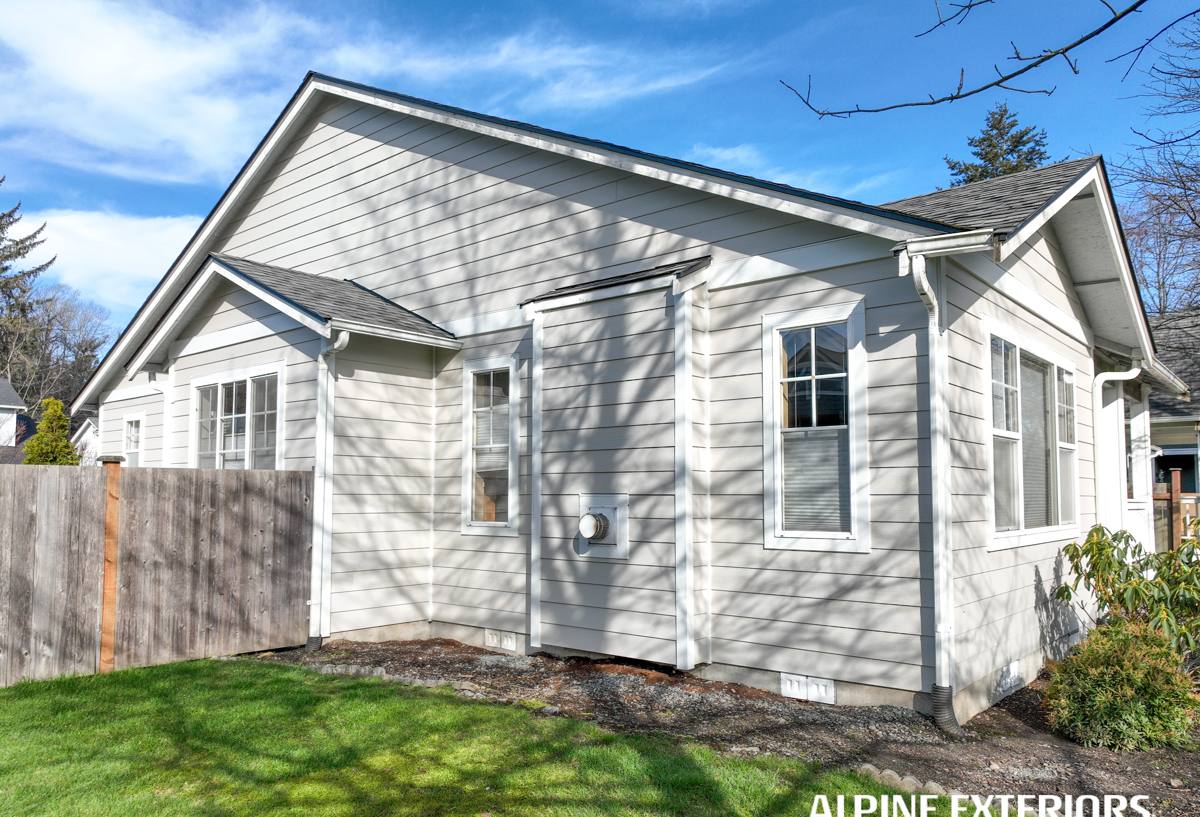
Signs a Sudden Valley Roof Needs Replacement, Not a Repair
Not every roofing problem calls for a full tear-off. But in a climate this wet, small issues compound quickly, and knowing the difference saves homeowners from either overpaying for premature replacement or under-fixing a roof that's already failing underneath.
- Shingles that are cupping, curling at the edges, or losing granules in visible patches, not just a few isolated spots
- Thick moss or algae growth across large sections rather than just the shaded north-facing slopes
- Soft spots or sagging when walked on, which usually means the decking underneath has taken on moisture
- Daylight visible through the attic roof boards, or damp insulation after a heavy rain event
- Flashing around chimneys, vents, or skylights that's rusted, lifted, or was never properly stepped in
- A roof that's 18-25+ years old (for asphalt) and has never had a full underlayment upgrade
- Recurring leaks in the same spot despite prior patch repairs
If a roof shows two or more of these signs, patching usually just delays the inevitable and can waste money that would be better put toward a proper replacement.
What a Correct Roof Installation Actually Involves
It Starts Below the Shingles
Most of what determines whether a roof survives a Whatcom County winter isn't the visible shingle layer — it's what's underneath. A synthetic underlayment resists moisture absorption far better than older felt products, which matters when a roof deck can stay damp for days after a storm system moves through. Along eaves, valleys, and any low-slope transitions, we install an ice-and-water shield membrane that self-seals around nail penetrations, giving a second line of defense exactly where wind-driven rain and standing water cause the most damage.
Deck Inspection and Repair
Once the old roofing is stripped off, the decking gets inspected board by board. Any wood that's soft, delaminated, or water-stained gets replaced before anything new goes down. Installing a new roof over a compromised deck is one of the most common mistakes we see from past work in this area — it hides a problem that will resurface as a sag or leak within a few years.
Flashing Details
Flashing failures cause more leaks than worn-out shingles do. Step flashing at wall intersections, counter-flashing at chimneys, and properly sealed pipe boots all need to be done correctly the first time, since a poorly flashed roof can look fine from the ground for years before it fails.
Ventilation
A roof system needs balanced intake and exhaust ventilation to let moisture escape the attic space. In a climate this humid, poor ventilation traps warm, moist air against the underside of the roof deck, which accelerates rot and can void material warranties. We check existing soffit and ridge ventilation on every replacement and correct it when it's inadequate, rather than just reinstalling whatever was there before.
Choosing the Right Roofing Material for Sudden Valley
There's no single "best" roofing material — the right choice depends on budget, how much moss and shade the property deals with, and how long the homeowner plans to stay in the house. Here's how the common options compare for this specific climate:
| Material | Typical Lifespan | Moss/Moisture Resistance | Relative Cost |
|---|---|---|---|
| 3-Tab Asphalt Shingle | 15-20 years | Fair — needs regular moss treatment | Lowest |
| Architectural (Laminate) Shingle | 25-30 years | Good, especially with algae-resistant granules | Moderate |
| Standing Seam Metal | 40-50+ years | Excellent — sheds moss and moisture well | Highest upfront |
| Cedar Shake | 20-30 years with upkeep | Poor without diligent maintenance | High, plus ongoing maintenance |
For most Sudden Valley properties, especially those under heavier tree canopy near the lake, we steer homeowners toward architectural shingles with algae-resistant granules or standing seam metal. Cedar shake can look great, but it holds moisture against its own surface in a climate this wet, and staying ahead of moss and rot on cedar takes a maintenance commitment a lot of homeowners underestimate when they choose it. We're upfront about that trade-off before anyone commits to a material, rather than letting a homeowner find out the hard way.
Our New Roof Installation Process
- On-site inspection and estimate. We walk the roof, check the attic from the inside, note the pitch, access, and any problem areas, and give a written estimate with no pressure to decide on the spot.
- Material selection. We go over the trade-offs above in plain terms so the choice fits the budget and the property, not just what's easiest to sell.
- Tear-off. Old roofing is fully removed rather than layered over. Layering over old shingles hides problems and shortens the life of the new roof.
- Deck inspection and repair. Any compromised sheathing gets replaced before new materials go down.
- Underlayment and ice-and-water shield installation. Applied at eaves, valleys, and any vulnerable transitions.
- New roofing installation. Installed to manufacturer specification, including proper nailing patterns, which affects both wind resistance and warranty validity.
- Flashing and ventilation work. All flashing points are redone or verified, and ventilation is corrected where needed.
- Cleanup and magnetic nail sweep. The property is cleared of debris and swept for stray fasteners before we consider the job done.
- Final walkthrough and warranty paperwork. We review the finished work with the homeowner and provide documentation for both material and workmanship warranties.
What Affects the Cost of a New Roof
Every roof is priced individually, but the same handful of factors drive most of the variation from one Sudden Valley home to the next:
| Cost Factor | Why It Matters |
|---|---|
| Roof size and pitch | Steeper roofs take longer to work safely and use more material overlap |
| Number of existing layers | Multiple old layers add tear-off labor and disposal cost |
| Decking condition | Rotted sheathing found during tear-off adds material and labor to repair |
| Material choice | Asphalt, metal, and cedar carry very different price points, as shown above |
| Roof complexity | Valleys, dormers, skylights, and chimneys all add flashing work |
| Access and terrain | Steep lots or limited driveway access near the lake can affect staging and disposal logistics |
Because of this range, a homeowner should be skeptical of any quote given without an in-person inspection. Broad remote estimates almost never survive contact with what's actually found on the roof and in the attic.
Permits, HOA Review, and Local Considerations
Sudden Valley is unincorporated Whatcom County, and depending on the scope of work, a roofing permit may be required through the county rather than the City of Bellingham. Many properties in the community are also part of a homeowners' association, and some associations require review of exterior changes, including roofing material or color, before work begins. We recommend confirming with your association ahead of time if you're not sure whether your property falls under design guidelines — it's a lot easier to check before ordering material than after.
Maintenance That Extends the Life of a New Roof
A properly installed roof still needs some upkeep in this climate to reach its full lifespan. This matters more here than in drier parts of the state because of how quickly moss and moisture can take hold under tree cover near the lake.
- Have moss treated or removed at the first sign of growth rather than letting it spread across a full slope
- Keep gutters clear so water isn't backing up under the roof edge, especially during fall leaf drop
- Trim back tree limbs that overhang the roof to reduce shade, debris buildup, and physical abrasion on the surface
- Schedule a visual inspection every year or two, particularly after major windstorms
- Address small flashing or sealant issues right away rather than waiting for a visible leak
Why Local Experience in Sudden Valley Matters
A roofing crew that already works in this community understands things that don't show up on a spec sheet: which slopes tend to hold moss longest because of shade patterns around the lake, how to stage a tear-off on the tighter, sloped driveways common in the area, and what the county's permitting process actually looks like day to day. That local familiarity translates into fewer surprises during the job and a roof that's installed with this specific climate in mind, not a generic checklist. We've built our process around the realities of Whatcom County weather, and we stand behind the work with clear warranty terms rather than vague promises.
If your roof is showing its age or you just want an honest opinion on whether repair or replacement makes more sense, we're happy to take a look. Reach out for a free, no-pressure estimate using the form below.