 Bellingham Siding
 Storm Damage Roof Repair Built for Sudden Valley's Conditions
Sudden Valley sits in a pocket of Whatcom County that takes weather differently than a lot of the rest of Bellingham. The heavy tree canopy around Lake Whatcom, the elevation changes, and the shade that keeps roofs damp longer after a storm all add up to a specific set of problems. When wind and rain move through the wider Whatcom County corridor, the same system that brings driving rain and salt-laden marine air off the Salish Sea into Bellingham proper hits Sudden Valley as wind gusts funneling through the trees and heavy, sustained rainfall pooling in low-slope valleys and shaded roof sections. A repair crew that only knows town roofs can miss what's actually going on up here.
This page is about one thing: storm damage roof repair for homes in Sudden Valley, done correctly, by a crew that already understands what this neighborhood's roofs go through every winter.
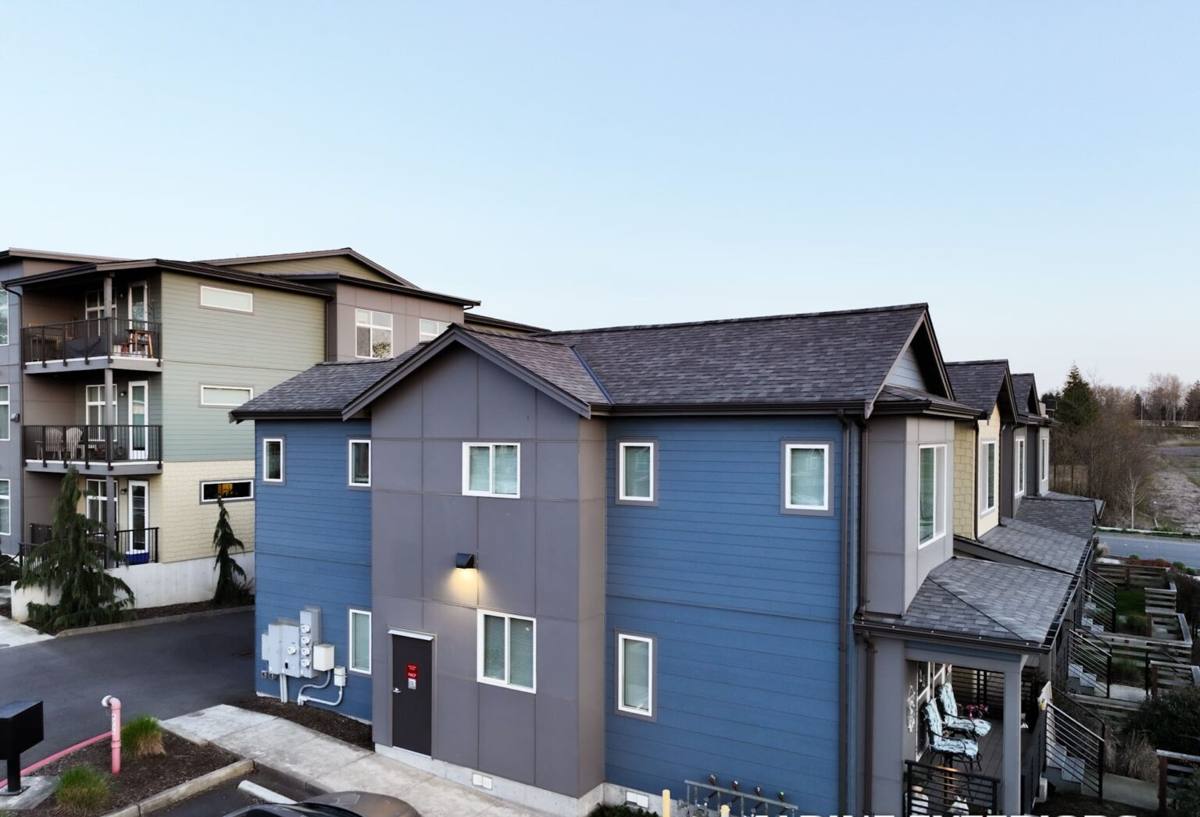
Common Storm Damage We See on Sudden Valley Roofs
Wind, Falling Limbs, and Windthrow
Sudden Valley's tree cover is one of its best features and one of its bigger roofing risks. Douglas fir and cedar limbs come down in windstorms, and even a glancing hit can crack shingles, punch through underlayment, or knock flashing loose around a chimney or vent. Sometimes the damage is obvious — a hole or a missing section. Just as often it's a bruised or fractured shingle that looks fine from the ground but is already letting water in underneath.
Driving Rain and Wind-Driven Leaks
Standard shingle installation assumes rain falls mostly straight down. Wind-driven rain doesn't cooperate — it gets pushed sideways and upward under shingle tabs, around step flashing, and through nail penetrations that were never sealed with a storm in mind. On homes with valleys, dormers, or multiple roof planes (common in Sudden Valley's mix of hillside and lakeside lots), wind-driven rain finds every weak seam.
Moss, Needle Buildup, and Trapped Moisture
Shade from the surrounding trees means roofs here stay wet longer after every storm, which is exactly what moss needs to take hold. Moss and trapped needle debris hold water against the shingle surface, work into laps and fasteners, and accelerate granule loss. A roof that's already thin from moss damage is far more likely to fail during the next windstorm than a clean one — this is why storm repair and moss management aren't really separate issues out here.
What a Correct Storm Damage Repair Actually Involves
A lot of storm repairs get done fast and shallow — patch the visible hole, call it done. That approach tends to leave the underlying problem in place. A repair done right includes:
Full-Slope Assessment, Not Just the Damaged Spot
We check the entire roof plane the damage occurred on, not just the impact point. Wind and falling debris rarely cause a single isolated injury — nearby shingles are often loosened, lifted, or cracked even if they still look sealed.
Underlayment and Decking Check
If water has been getting in for any length of time, the underlayment and the decking beneath it need to be checked for saturation or soft spots before anything gets nailed back down. Covering over wet decking just traps the problem.
Matching Materials, Not Just Compatible Ones
Shingle color and profile shift between manufacturing runs. We try to match existing material as closely as possible, and where an exact match isn't available, we'll be upfront about that rather than surprise you with a patch that stands out.
Flashing and Penetration Detail
Most storm leaks that come back are flashing failures, not shingle failures — around chimneys, skylights, vents, and valleys. Any storm repair worth doing includes checking and, where needed, replacing the flashing detail, not just the shingles around it.
Our Process, Start to Finish
- Initial call and triage. We ask what happened, when, and whether there's active leaking. Active leaks get prioritized.
- On-site inspection. We walk the roof (or use a drone/ladder inspection where the pitch or access calls for it) and document the damage with photos.
- Written scope and estimate. You get a clear explanation of what's damaged, what needs to be repaired versus what can be safely left alone, and an honest cost range.
- Temporary protection if needed. If there's an active leak or exposed decking, we get a tarp or temporary seal in place before the full repair is scheduled, so the damage doesn't get worse waiting on parts or scheduling.
- The repair itself. Damaged material removed, decking checked, underlayment and flashing addressed, new material installed and sealed to match the surrounding roof.
- Cleanup and walkthrough. Debris and old material hauled off, nails swept from the yard and driveway, and we walk the repair with you before we consider the job done.
Repair vs. Replacement: How We Help You Decide
Not every storm-damaged roof needs a full replacement, and not every roof that looks fine after a storm should just get a spot patch. The right call depends on the roof's age, how much of it is affected, and how far along the moss and moisture damage already was before the storm hit.
| Factor | Leans toward repair | Leans toward replacement |
|---|---|---|
| Roof age | Under 12–15 years, otherwise sound | Nearing or past expected lifespan |
| Extent of damage | Localized to one slope or area | Scattered across multiple slopes |
| Moss/moisture history | Minimal prior moss or granule loss | Significant moss damage predating the storm |
| Decking condition | Dry, solid decking under the damage | Soft spots or rot found during inspection |
| Material availability | Close match available | Discontinued product, poor match likely |
We'll always tell you honestly which side of that table your roof falls on. If a repair is the right call, that's what we'll recommend — a bigger job isn't automatically the better one for your situation or your budget.
Insurance Claims and Storm Damage
Most storm damage repairs in Sudden Valley involve a homeowner's insurance claim, and the way the repair is documented matters for how smoothly that claim goes. We photograph the damage before any repair work starts, note the likely cause (wind, falling limb, wind-driven rain), and provide a written estimate that itemizes materials and labor separately. That paperwork is what your adjuster needs to see — vague invoices or undocumented "we fixed it" jobs are a common reason claims get delayed or partially denied.
We're not a public adjuster and we won't promise a claim outcome, but we'll give you the documentation and the straight answers you need to have that conversation with your insurer on solid footing.
Why Local Experience in Sudden Valley Matters
A crew that mostly works flatter, more open lots in town doesn't necessarily know how to safely stage a repair on a steep Sudden Valley driveway, how tree cover changes drying time and moss growth, or how wind actually behaves coming off the lake and through the trees on a given lot. Access alone is often the first challenge — narrow roads, limited staging space, and mature trees close to the roofline change how a repair gets set up and how debris gets removed safely.
Working this neighborhood regularly also means we've seen how these roofs age under these specific conditions — which parts of a roof tend to fail first here, which flashing details hold up and which don't, and how much lead time moss buildup usually gives before it turns into a real problem. That's the kind of judgment that only comes from doing the work here, not from a general storm-repair checklist.
Preventive Steps That Reduce Future Storm Damage
Storm damage repair is also a good moment to address the conditions that make the next storm worse. A few things worth doing while a repair is already underway or shortly after:
- Trim back limbs that overhang the roofline, especially anything already showing storm stress or die-back
- Clear moss and needle debris from valleys, gutters, and shaded slopes before the wet season sets in
- Check and clean gutters and downspouts so wind-driven rain has somewhere to go instead of backing up under the roof edge
- Have flashing around chimneys, skylights, and vents inspected annually, not just after a storm
- Keep an eye on granule accumulation in gutters — heavy granule loss is an early warning sign, not just cosmetic wear
- Address minor moss growth early with proper treatment rather than waiting until it's established and holding moisture
None of this eliminates storm risk — Whatcom County's weather is what it is — but it narrows the gap between a minor repair and a much bigger one.
Get an Honest Look at Your Roof
If a recent windstorm or heavy rain has left you wondering whether your roof took damage, it's worth getting it looked at before a small problem turns into water damage inside the house. We'll give you a straightforward, no-pressure estimate and tell you plainly what we find — repair, replacement, or nothing urgent at all. Fill out the form below to get started.