 Bellingham Siding
 Siding Built for the Way South Hill Actually Weathers
South Hill sits up in the elevation and exposure that make Bellingham siding decisions harder than they look from the street. The combination of marine air off Bellingham Bay, wind-driven rain that comes in sideways during fall and winter storms, and a shaded, moisture-holding tree canopy on many lots means siding here works harder than siding on a dry inland lot ever will. We install James Hardie fiber cement on South Hill homes because it is the one product system we trust to hold up to that combination year after year without babysitting.
This page is specifically about installing new siding on a South Hill home — not a general overview of siding options. If you live in this neighborhood and you're looking at a siding replacement or a new addition, here's what actually matters for your project.
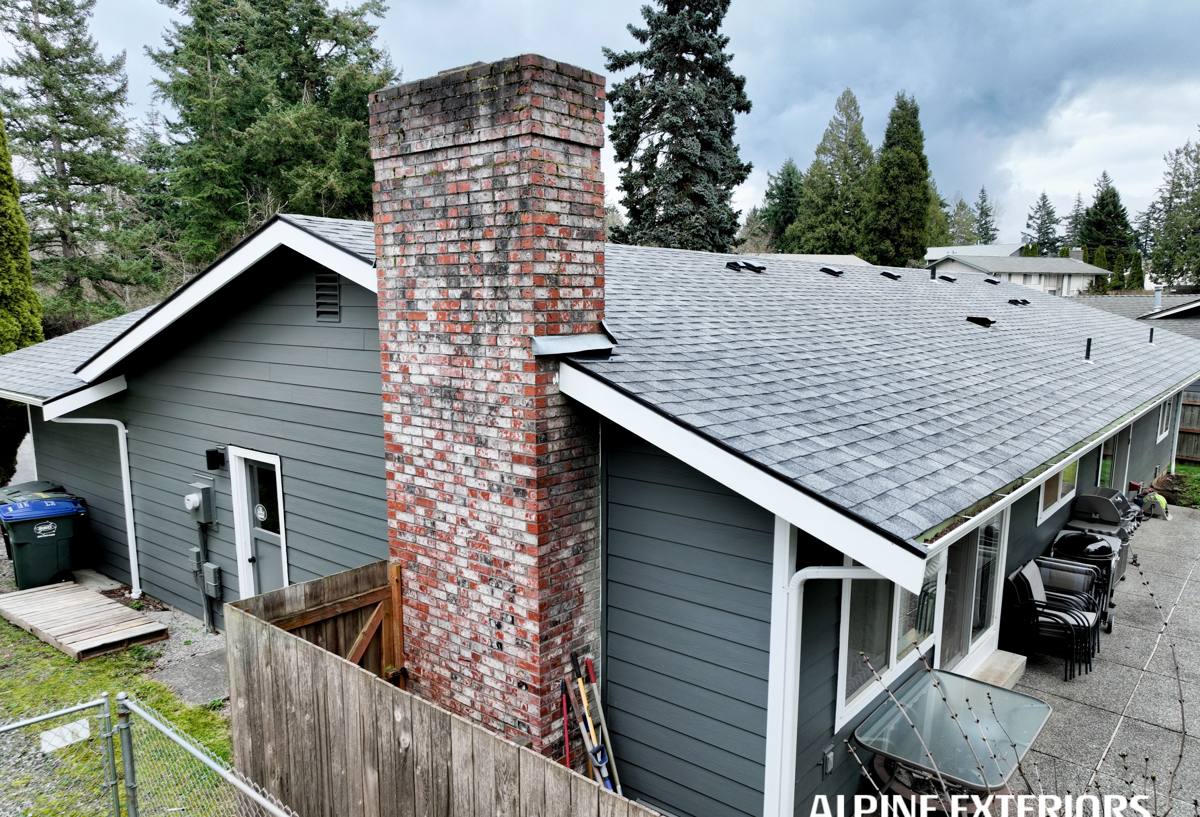
What South Hill's Climate Does to Siding
Salt Air and Metal Fasteners
Homes closer to the water pick up airborne salt that accelerates corrosion on fasteners, flashing, and any exposed metal trim. Cheap or improperly coated fasteners will rust and streak the siding face within a few years. Every Hardie installation we do on South Hill uses corrosion-resistant fasteners rated for the exposure, not whatever came in the cheapest box.
Driving Rain and Wall Assembly Behind the Siding
Whatcom County gets a lot of rain, and on South Hill's more exposed elevations it often arrives at an angle instead of falling straight down. That means water gets pushed against the wall, not just onto it. Siding that isn't installed with a proper drainage plane and correctly lapped house wrap will trap moisture behind it, and that's where rot starts — invisibly, until it isn't.
Moss, Shade, and Prolonged Dampness
South Hill's tree cover is a selling point for the neighborhood and a liability for siding that isn't up to it. Shaded north-facing walls and areas near mature trees stay damp longer after every rain, which is exactly the environment moss and mildew need to take hold. Siding that absorbs moisture — like untreated wood products — will feed that growth. Fiber cement doesn't give moss the organic material it needs to root into the surface the way wood-based sidings do.
Why We Only Install James Hardie Here
We don't install LP SmartSide, vinyl, Cemplank, Allura, or bare cedar or spruce siding, and South Hill's climate is a big part of why. Each of those products has real strengths, but none of them holds up to salt air, driving rain, and constant shade as consistently as Hardie fiber cement does when installed to spec.
- Vinyl can warp and buckle with temperature swings and doesn't hold paint if a homeowner ever wants to change color.
- Wood-based composite siding (like LP SmartSide) uses engineered wood strand substrate — if water gets past the finish, especially at cut edges or fastener points, it can swell and degrade faster than fiber cement in a wet climate.
- Bare cedar or spruce looks great new but demands ongoing sealing, staining, and moisture vigilance that most homeowners underestimate — especially on shaded South Hill lots where wood stays damp longer.
- Other fiber cement brands (Cemplank, Allura) are legitimate fiber cement products, but we've standardized on Hardie for its factory-applied ColorPlus finish, its HZ5 climate-engineered formulation, and its transferable warranty structure — consistency we can stand behind on every job.
James Hardie fiber cement is non-combustible, dimensionally stable, and doesn't feed mold or moss growth the way organic materials do. The ColorPlus factory finish is baked on under controlled conditions, which holds color and resists the chipping and peeling that field-applied paint is prone to in a wet climate. That's the whole reason we standardized on one product line instead of offering several — we'd rather install one thing extremely well than install five things adequately.
What Correct Installation Actually Involves
Siding is a system, not just a face material. A quality installation on a South Hill home includes:
- Tear-off and substrate inspection — removing old siding and checking the sheathing underneath for rot, soft spots, or prior water damage before anything new goes up.
- Repair of any damaged sheathing or framing — covering over a compromised wall just locks the problem in.
- Weather-resistant barrier installed and lapped correctly — house wrap or building paper installed shingle-style, top over bottom, so water sheds outward instead of behind the siding.
- Flashing at every penetration — windows, doors, vents, hose bibs, and any wall penetration get proper flashing so water can't work its way in at the edges.
- Correct fastening per Hardie's installation specs — proper fastener type, spacing, and depth, which is what keeps the warranty valid and the siding performing as designed.
- Proper clearance at grade, decks, and roof lines — siding installed too close to soil, concrete, or roofing traps moisture against the bottom edge, which is one of the most common failure points we see on older installs.
- Caulking and trim detailing at joints — done correctly, not as an afterthought to hide gaps.
Skipping or rushing any one of these steps is how a siding job that looks fine on installation day turns into a moisture problem three or five years later — often invisible from the outside until the damage has spread into the wall assembly.
Our Process for South Hill Projects
| Step | What Happens |
|---|---|
| 1. On-site assessment | We walk the home, check current siding and substrate condition, note exposure (sun, shade, wind-driven rain sides), and identify any moisture concerns already present. |
| 2. Written estimate | Clear scope, product selection (Hardie plank, panel, or shingle style depending on the home), and pricing — no vague allowances. |
| 3. Tear-off and substrate check | Old siding comes off, sheathing is inspected, and any needed repairs are addressed before new material goes up. |
| 4. Weather barrier and flashing | House wrap and flashing installed and lapped correctly at every penetration and transition. |
| 5. Hardie installation to spec | Installed per James Hardie's fastening and clearance requirements — the details that keep the warranty intact. |
| 6. Final walkthrough | We review the finished work with you and address anything before we consider the job done. |
Cost Factors for South Hill Homes
Every home is different, but the variables that move the price on a South Hill siding job are fairly consistent:
| Factor | Why It Matters |
|---|---|
| Home size and wall complexity | More corners, gables, and dormers mean more cutting, flashing, and labor time. |
| Substrate condition | Rotted or damaged sheathing found during tear-off adds repair cost but is not optional to fix. |
| Product selection | Hardie plank, shingle, and panel styles carry different material costs; trim and accent choices add up too. |
| Access and site conditions | Steep lots, mature landscaping, or limited access on some South Hill properties can affect labor time. |
| Existing siding removal | Tear-off and disposal of old material is part of the scope, not an add-on. |
We'd rather give you a realistic number after seeing the home than a broad estimate that doesn't hold up once we're on-site.
Signs Your South Hill Home May Need New Siding Soon
- Visible warping, buckling, or gaps between siding boards
- Soft or spongy spots when you press on the siding, especially near the bottom edge
- Persistent moss or dark staining that keeps coming back after cleaning
- Peeling or bubbling paint that returns within a year or two of repainting
- Rising energy bills that suggest air and moisture are getting past the wall assembly
- Visible rot or damage around window and door trim
Any one of these can be minor on its own, but on a shaded or exposed South Hill lot they tend to compound quickly. Catching them early usually means a straightforward siding replacement instead of structural repair.
Why Local Experience on South Hill Matters
A crew that already works this neighborhood knows which walls take the worst of the driving rain, which lots hold shade and moisture longest, and how to sequence a tear-off around Whatcom County's wetter months. That's not something you get from a general contractor working from a spec sheet — it comes from doing the work here repeatedly and paying attention to how these specific homes actually perform after the fact.
If you're considering new siding for a South Hill home, we're glad to come take a look and give you a straight, no-pressure estimate — no obligation, just an honest read on what your home needs.