 Bellingham Siding
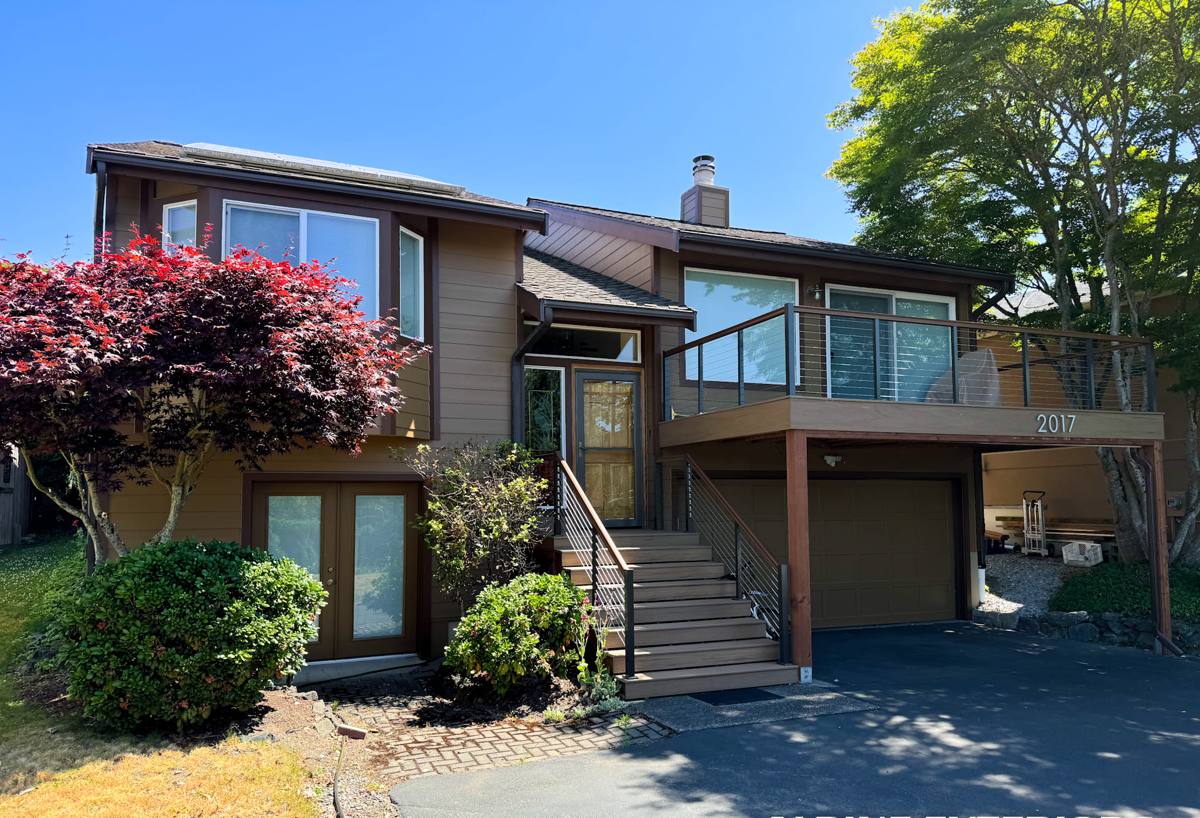
 Why Silver Beach Homes Take a Different Kind of Beating
Silver Beach is one of Bellingham's older, tree-shaded neighborhoods, and that shade is a mixed blessing for exterior siding. Like the rest of Whatcom County, the area sits inside a marine climate zone that brings driving rain off Bellingham Bay, salt-carrying air that moves inland on the wind, and a moss and mildew season that can run eight or nine months out of the year under a full tree canopy. None of that is unusual for this part of the Pacific Northwest, but it does mean siding here works harder than siding in a drier, sunnier climate, and it fails faster when it was never built for these conditions in the first place.
Wood-based products absorb that moisture and swell, crack, and rot from the inside out. Vinyl gets brittle and fades under the freeze-thaw cycles and UV exposure. Under-engineered fiber cement, installed without the right water management details, traps moisture behind the cladding instead of shedding it. The result on a lot of Silver Beach homes is the same pattern: paint failing years ahead of schedule, dark streaking and moss colonizing north-facing walls and anything under a tree, and soft or delaminating panels at the bottom courses where splashback and standing moisture do the most damage.
What Correct Siding Installation Actually Involves Here
Siding installation in a climate like this is not just nailing panels to a wall. The siding itself is only one layer of a water management system, and if any of the other layers are done wrong, the best cladding on the market will still fail.
Water Management Comes First
Before a single piece of siding goes up, the wall needs a continuous weather-resistive barrier, correctly lapped so water sheds down and out rather than behind the barrier. Every window, door, vent, and penetration needs proper flashing, integrated into that barrier in the right sequence, not caulked over as an afterthought. On a wall that's going to see this much driving rain over its lifetime, skipping or rushing this step is the single biggest cause of hidden rot behind otherwise fine-looking siding.
The Rainscreen Gap
A drainage gap between the weather barrier and the back of the siding lets any water that does get past the cladding drain and dry out instead of sitting against the sheathing. In a climate with this much sustained rainfall and shade-driven humidity, that gap is not optional. It's the difference between siding that dries out between storms and siding that stays damp long enough to grow mold and rot the wall behind it.
Fastening, Trim, and Caulking
Fiber cement siding has manufacturer-specified nailing patterns, fastener types, and clearances from grade, decks, and roof lines, all of which matter more in a wet climate where any gap becomes a water entry point. Trim and caulking need to use products rated for sustained UV and moisture exposure, not the cheapest tube on the shelf, because a bead of caulk that fails in year three undoes years of otherwise correct work.
Why We Install Only James Hardie Fiber Cement
We don't install LP SmartSide, vinyl, Cemplank, Allura, primed spruce, or cedar, and that's a deliberate standard, not an oversight. Each of those products has real strengths, but each also comes with a trade-off, whether it's moisture sensitivity, a shorter finish life, more demanding maintenance, or a warranty structure that leaves the homeowner exposed, that we're not willing to build a Silver Beach home's exterior around.
James Hardie fiber cement is non-combustible, dimensionally stable, and built specifically for climates like this one. Hardie's HZ5 product line is engineered for the freeze-thaw, high-moisture conditions common in the Pacific Northwest, and the ColorPlus factory finish is baked on under controlled conditions rather than field-painted, which means better adhesion and a longer color life than a job-site paint job can match. It's backed by a strong, transferable product warranty, and when it's installed to spec, with the water management details above done correctly, it holds up to exactly the kind of weather Silver Beach sees for most of the year.
The Value of a Crew That Already Works This Neighborhood
A lot of what makes a Silver Beach siding job go right happens before the first panel is hung. A crew that's already worked the older, tree-covered lots common in this part of Bellingham knows what to expect: mature landscaping and limited access that changes how tear-off and staging get planned, north-facing walls that need extra attention to moss and moisture, and homes old enough that the sheathing underneath the existing siding is often the real story, not just the surface.
Local experience also means knowing the practical side: how Whatcom County permitting and inspection typically runs for a re-side, what setback and access issues tend to come up on Bellingham's older residential lots, and how to sequence a project around this region's rain patterns instead of getting caught mid-job with panels exposed to a soaking. None of that is glamorous, but it's the difference between a smooth project and a stalled one.
Our Installation Process, Step by Step
- On-site assessment. We look at the existing siding, trim, and, where accessible, the sheathing condition, and walk the property for drainage, grading, and moisture issues that need to be addressed before new siding goes up, not after.
- Tear-off and substrate check. Old siding comes off and the sheathing gets inspected. Any soft, rotted, or water-damaged sheathing gets repaired or replaced. Covering it up with new siding is how homeowners end up with the same problem again in a few years.
- Weather-resistive barrier and flashing. A continuous, correctly lapped barrier goes on, with proper flashing integrated at every window, door, and penetration.
- Rainscreen installation. A drainage gap is installed behind the siding so any incidental moisture can drain and dry rather than sit against the wall.
- Hardie panel or plank installation. Siding goes up to manufacturer nailing and clearance specifications, with attention to consistent reveal lines and tight, correctly staggered joints.
- Trim, caulking, and touch-up. Trim is installed and sealed with a moisture- and UV-rated caulk, and any factory-finish touch-up is done with matched ColorPlus product.
- Final walkthrough and cleanup. We walk the finished job with the homeowner, and the site gets cleared of debris and old material.
Cost Factors for a Silver Beach Siding Project
Every home is different, and we won't quote a number without seeing the property, but these are the variables that move the price on most Silver Beach jobs:
| Factor | Why It Matters |
|---|---|
| Home size and wall complexity | More square footage and more corners, dormers, and trim details mean more material and labor. |
| Existing siding removal | Multiple layers of old siding, or siding with hazardous materials, add tear-off time and disposal cost. |
| Sheathing repair | Rot found once the old siding is off has to be fixed before new siding goes on; this is the most common source of a project changing scope mid-job. |
| Access and site conditions | Mature trees, sloped lots, and limited staging area, common on older Silver Beach properties, can affect labor time and scaffolding needs. |
| Product line and finish | Lap plank versus panel siding, trim detail level, and color selection within the Hardie ColorPlus lineup all affect material cost. |
Signs Your Current Siding Is Already Losing the Battle
Because moss, rot, and moisture damage build slowly and quietly, a lot of homeowners don't realize how far along the problem is until it shows up as a much bigger repair. Worth checking for:
- Paint that's peeling, chalking, or fading noticeably faster than it used to
- Moss or dark streaking building up on north-facing or shaded walls
- Soft spots, warping, or visible cracking in the siding itself
- Caulk that's cracked, shrunk, or pulled away from trim and joints
- Musty smells or higher humidity in rooms along an exterior wall
- Visible gaps or separation where siding meets windows, doors, or corners
Any one of these on its own might just mean it's time for maintenance. Several at once, especially paired with soft spots, usually means moisture has already gotten behind the siding and it's worth having someone look at the sheathing, not just the surface.
Caring for Hardie Siding After Installation
Correctly installed Hardie siding is low-maintenance, not zero-maintenance. A yearly rinse-down helps keep moss and mildew from taking hold, especially on shaded walls typical of a tree-covered lot. It's worth walking the exterior once a year to check caulk joints and trim for early cracking, and keeping gutters clear so water isn't sheeting down the wall or splashing back up onto the lower courses. Both are common contributors to premature wear in a climate that already delivers plenty of rain on its own.
Choosing a Contractor for Coastal Whatcom County Conditions
Not every contractor who installs siding installs it correctly for this climate. Before hiring anyone for a Silver Beach project, it's worth asking:
- Are they licensed and insured to work in Washington, and can they show proof?
- Do they carry manufacturer certification or training specific to the product they're installing?
- Will they put the water-resistive barrier, flashing, and rainscreen details in writing as part of the scope, not just "siding installation" as a line item?
- Can they explain how they'll handle sheathing repair if it's found once old siding comes off?
- Do they have experience working on the tree-covered, older residential lots common in this part of Bellingham?
A contractor who can't answer those clearly is asking you to take the installation quality on faith, in a climate that doesn't forgive shortcuts.
If you're weighing a siding project for a Silver Beach home, we're happy to take a look and give you a straightforward, no-pressure estimate. Fill out the form below to get started.