 Bellingham Siding
 Windows Built for the Puget Stretch of Whatcom County
Puget sits close enough to the water that homes here take a different kind of weather beating than houses further inland. Salt-laden air moves through window hardware and seals faster than most manufacturers' warranty language accounts for. Driving rain off the Sound doesn't fall straight down — it hits window assemblies at an angle, which means flashing and sealing details matter more here than in a drier climate. And the long moss season that Whatcom County is known for isn't just a roof problem; moss and algae growth around window sills and trim traps moisture against wood and vinyl surfaces for months at a stretch. Windows that aren't installed with this specific climate in mind don't fail because the glass was bad — they fail at the seams, the sills, and the flashing, usually within a handful of years.
This page covers what we actually do when we replace or upgrade windows for a Puget-area home: what the local climate demands, what a correct installation looks like, and why hiring a crew that already knows this stretch of coastline saves you money over the life of the windows.
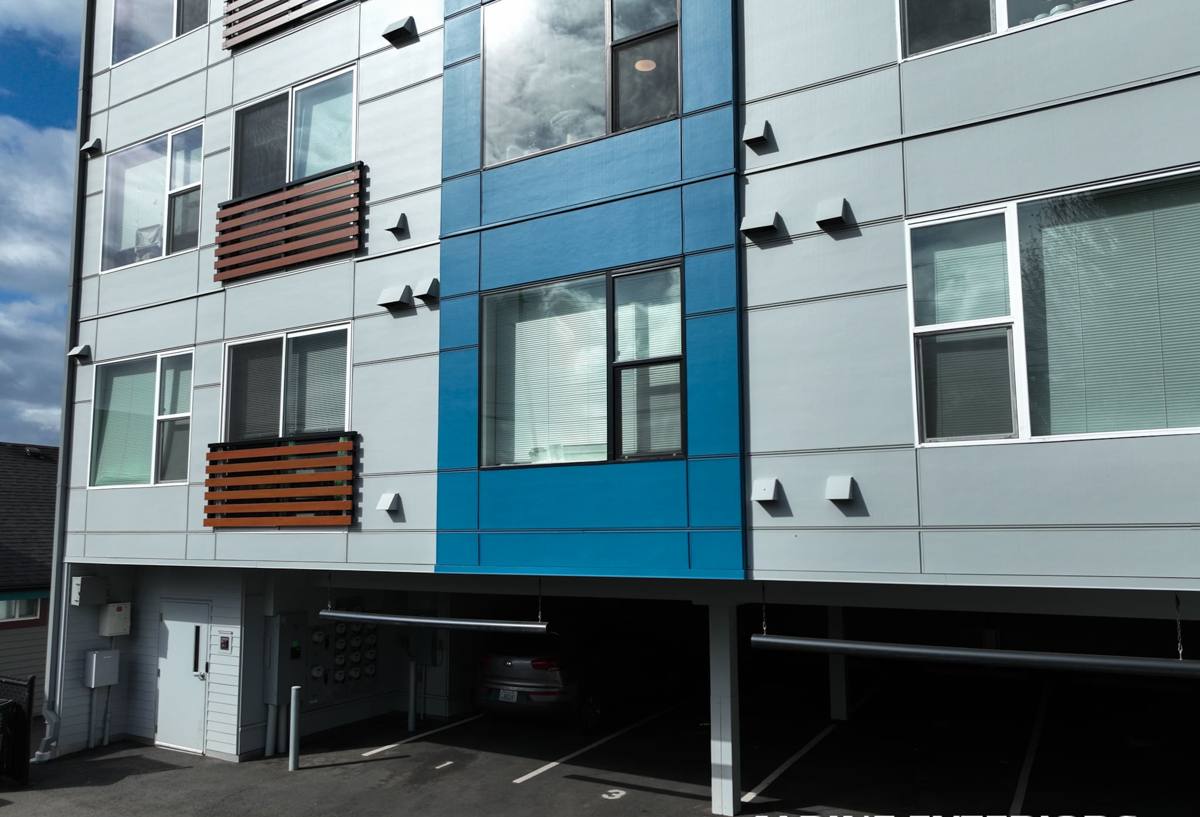
What "Energy-Efficient" Really Means Here
Energy-efficient windows get marketed with numbers most homeowners never see explained. In a marine climate like ours, three of those numbers matter more than the rest:
- U-factor — how well the window resists heat loss. Lower is better. This is the number that keeps your heating bill down through our long, wet, mild-but-chilly winters.
- SHGC (Solar Heat Gain Coefficient) — how much solar heat passes through the glass. Puget doesn't get the intense summer sun that inland Washington does, so this matters less here than U-factor, but orientation still plays a role on south- and west-facing walls.
- Condensation resistance — arguably the number Bellingham homeowners should pay closest attention to. High humidity, cool indoor-outdoor temperature swings, and long stretches of damp weather make condensation on window interiors a real and common issue. A window with poor condensation resistance will fog, drip, and eventually feed mold growth on sills and trim.
A window that's efficient on paper but poorly sealed against wind-driven rain will still cost you money — just in rot repair instead of energy bills. We treat the glazing package and the installation as one job, not two separate line items.
Frame Materials for a Marine Climate
Frame material choice changes how a window ages in salt air and constant moisture. None of these are wrong choices — they're trade-offs, and the right one depends on your home, your budget, and how much upkeep you want to sign up for.
| Frame Material | Moisture/Salt Air Behavior | Maintenance | Typical Fit |
|---|---|---|---|
| Vinyl | Won't rot or corrode; UV can chalk cheaper vinyl over time | Low — occasional cleaning | Most Puget replacements; best value |
| Fiberglass | Excellent salt-air and moisture tolerance, minimal expansion/contraction | Low | Homes wanting longer service life, willing to pay more upfront |
| Wood-clad | Interior wood needs protection from condensation; exterior cladding shields from rain | Higher — interior finish upkeep | Homeowners prioritizing a wood interior look |
| Aluminum | Conducts cold, prone to condensation and corrosion near salt air | Moderate | Rarely our recommendation for this area |
We don't push one brand or material on every job. What we do insist on is that whatever frame you choose gets installed with flashing and sealing details suited to wind-driven rain — that's where most window failures in this area actually start.
Signs Your Current Windows Are Costing You Money
Homeowners often live with early warning signs for years before calling anyone, mostly because none of them look like an emergency on their own. Here's what we look for during an assessment:
- Condensation or fogging between the panes (a failed seal on double- or triple-pane glass)
- Soft or discolored wood at the sill or lower corners of the frame
- Visible gaps or drafts you can feel with a hand near the frame on a windy day
- Moss or algae staining building up on the exterior sill or trim
- Windows that are difficult to open, close, or lock — often a sign the frame has shifted
- Noticeably higher heating bills compared to similar-sized homes nearby
- Paint or caulking that's cracked and pulling away from the frame edge
Any one of these on its own isn't cause for panic. Several at once, or any sign of soft wood, usually means moisture has already gotten past the seal and is working on the structure behind the window — which is a siding and moisture-barrier issue as much as a window issue.
What a Correct Installation Actually Involves
Window replacement gets treated as a simple swap far too often. In a climate that throws driving rain at a wall for months of the year, the installation details are what separate a window that lasts twenty-plus years from one that starts leaking in five.
The Details That Matter Most Locally
- Flashing integration — the window's flashing has to tie into the home's existing weather-resistive barrier correctly, shingled so water sheds outward and down, never trapped behind the siding.
- Sill pan protection — a sloped, sealed sill pan under the window gives any water that does get past the exterior seal somewhere to drain instead of soaking into the framing.
- Proper sealant, not just caulk everywhere — the right sealant in the right location; over-sealing can trap moisture just as badly as under-sealing.
- Shimming and squaring — an out-of-square window stresses seals and hardware from day one, leading to premature failure regardless of how good the glass unit is.
- Interior air sealing — insulation and air sealing around the frame from the inside, which affects both energy performance and condensation risk.
Skipping any one of these doesn't usually show up as a problem on install day. It shows up two or three wet seasons later, as a soft spot in the wall or a window that won't close right anymore.
Our Process, Start to Finish
- On-site assessment — we look at your current windows, siding condition, and any existing moisture damage before quoting anything.
- Honest scope and options — we walk through frame material, glazing package, and cost trade-offs in plain terms, no pressure toward the most expensive option.
- Scheduling around weather — we plan install windows to minimize the home's exposure to open wall or window openings during wet stretches.
- Removal and inspection — once old windows come out, we check the framing underneath for rot or moisture damage before anything new goes in.
- Correct installation — flashing, sill pans, shimming, and sealing done to hold up against wind-driven rain, not just pass a quick visual check.
- Interior and exterior finish work — trim, caulking, and touch-up so the finished job looks intentional, not patched.
- Walkthrough and cleanup — we show you the finished work and clear the site before we consider the job done.
Why a Crew That Already Works This Area Matters
A window contractor who mostly works drier inland areas can still do competent work — but they're often applying general best practices to a climate that punishes shortcuts faster than most places in the state. A crew that regularly works Puget and the broader Bellingham area already knows how far wind-driven rain travels up a wall, which sill details actually hold up through a Whatcom County winter, and which frame materials are worth the upfront cost given how long our wet season runs. That local pattern recognition is the difference between a warranty claim in year four and a window that's still tight in year twenty.
It also means we're not guessing about permitting, typical framing conventions in older versus newer Bellingham-area homes, or how local siding systems should tie into new window flashing — all of which affect how the job gets done correctly the first time.
Cost Factors to Understand Before You Get a Quote
We don't publish flat pricing because window jobs vary too much house to house, but these are the factors that actually move the number, so you know what you're paying for when you compare quotes:
| Factor | Why It Affects Cost |
|---|---|
| Number of windows | Per-window labor and material cost scales directly; larger jobs often see modest per-unit savings |
| Frame material | Vinyl is typically the most budget-friendly; fiberglass and wood-clad cost more upfront |
| Glazing package | Double vs. triple pane, and coatings for condensation/solar performance, add cost but affect long-term energy bills |
| Existing damage | Rot or moisture damage found during removal adds repair scope before new windows can go in |
| Access and window size | Second-story, oversized, or hard-to-access windows take more labor time |
| Disposal and haul-away | Old window and material removal is part of a complete quote, not always included in low-ball estimates |
When you're comparing quotes, ask specifically what flashing and sealing method each contractor uses. A lower number that skips sill pan protection or proper flashing integration isn't actually a better deal — it's a deferred repair bill.
Living With New Windows in a Marine Climate
Even a correctly installed window benefits from a little seasonal attention here. Keep exterior sills clear of built-up moss and debris, especially heading into fall when the wet season ramps up. Check that weep holes (small drainage openings along the bottom of the frame) stay clear — they're an easy thing to overlook and an easy thing to clean out. Wipe down interior sills if you notice condensation building up on cold mornings, since standing moisture there is what eventually leads to soft trim. None of this is heavy maintenance — it's the kind of five-minute check that keeps a well-installed window performing for its full service life instead of quietly degrading behind the scenes.
If you're noticing drafts, fogged glass, or moisture damage around your windows, or you're just ready to stop paying to heat the outdoors, we're happy to come take a look. The estimate is free, there's no pressure to commit on the spot, and you'll get a straight answer about what your windows actually need — use the form below to get started.