 Bellingham Siding
 Why Silver Beach Asks More of Its Siding
Silver Beach sits in one of the more demanding micro-climates in the Bellingham area. Homes here deal with the same driving rain and long, gray moisture season as the rest of Whatcom County, but the neighborhood's mix of mature tree cover, lake-adjacent humidity, and salt-tinged air drifting in off Bellingham Bay adds up to a harder job for exterior cladding than a lot of homeowners realize. Siding that would hold up fine in a drier inland town can start showing problems here years earlier — soft spots at the bottom courses, streaking and green growth in shaded sections, paint that chalks and fades faster than it should.
That's the case for choosing a fiber cement product that's actually engineered for this kind of exposure, and for making sure it goes on correctly. Material and installation both matter. A great product installed poorly fails the same way a mediocre product does — usually starting at the seams, the bottom edge, and anywhere two surfaces meet.
The Moisture Cycle Specific to This Area
Whatcom County doesn't get the heaviest rainfall totals in Western Washington, but it gets a long duration of damp, low-intensity weather punctuated by wind-driven storms off the water. That combination — sustained dampness plus occasional wind-driven rain — is harder on siding than an equivalent amount of rain falling straight down. Wind pushes water sideways into laps, seams, and butt joints, which is exactly where poorly installed siding fails first.
Moss, Shade, and Tree Cover
Silver Beach's tree canopy is part of what makes the neighborhood attractive, but it also means longer shaded periods on north- and east-facing walls, slower drying times after rain, and a moss season that can stretch across most of the year. Moss and algae don't just look bad — sustained organic growth holds moisture against the siding surface and, over years, that constant dampness accelerates wear on anything that isn't inherently rot-resistant.
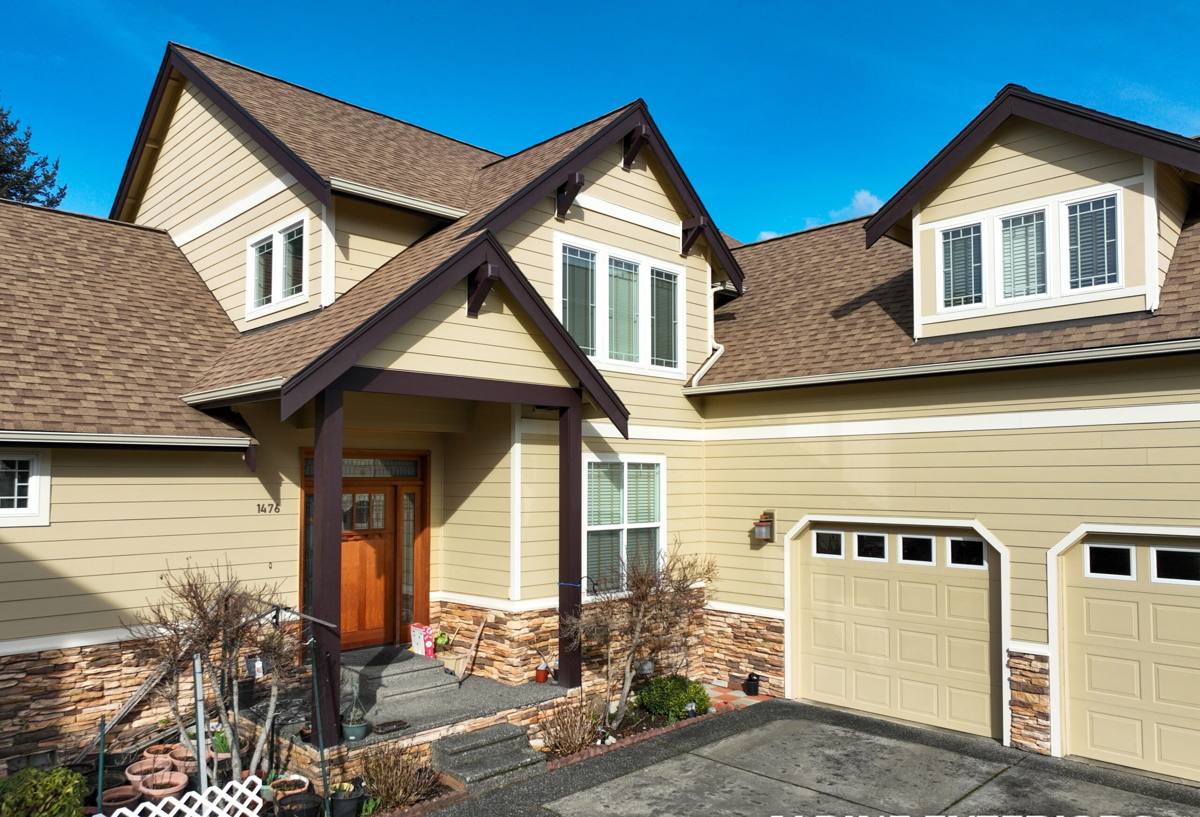
What Correct James Hardie Installation Involves
James Hardie fiber cement is non-combustible, dimensionally stable, and holds paint far longer than wood-based alternatives — but none of that matters if it's hung wrong. Correct installation in a climate like this comes down to a handful of details that are easy to skip and expensive to fix later.
- Proper clearance: siding held at least the manufacturer-specified distance above roof lines, decks, and grade so splashback and standing moisture don't sit against the bottom edge.
- Correct fastening pattern: nails placed and spaced to spec, driven flush (not overdriven), into framing — not just sheathing — so panels stay locked down through wind and seasonal movement.
- Rain-screen or drainable house wrap behind the siding: a water-resistive barrier that lets any moisture that gets behind the cladding drain and dry out instead of getting trapped.
- Flashed penetrations: every window, vent, hose bib, and light fixture properly flashed and sealed before siding closes over it.
- Factory-cut, factory-primed edges wherever possible: field cuts sealed per manufacturer instructions so raw edges aren't left exposed to moisture.
- Correct caulking, not over-caulking: sealant at true joints, not smeared over gaps that should be shingled or flashed instead.
Every one of these is invisible once the job is finished and the paint looks good. That's precisely why so many siding failures we get called out to inspect trace back to shortcuts made during installation, not a flaw in the material itself.
HZ5 Engineering and Why It Matters Here
James Hardie manufactures its siding in climate-specific "HZ" formulations. The Pacific Northwest falls under the HZ5 engineering zone, which is formulated for the freeze-thaw cycling and sustained moisture exposure typical of our region. Using the zone-correct product isn't a marketing detail — it affects how the panel handles moisture absorption and dimensional movement over decades of Whatcom County winters.
Comparing Siding Options for Silver Beach's Conditions
Homeowners in this neighborhood often ask us to weigh in on alternatives before committing to fiber cement. Here's an honest look at how the common options hold up against the specific stresses this location produces.
| Factor | James Hardie Fiber Cement | Vinyl | Wood / Cedar |
|---|---|---|---|
| Moisture resistance | Engineered for sustained damp exposure; won't rot | Won't rot, but can warp and gap, letting water track behind it | Absorbs moisture; prone to rot without diligent upkeep |
| Moss/algae resistance | ColorPlus factory finish resists staining and holds up to cleaning | Surface can stain and is harder to refinish once faded | Porous surface holds moisture, feeding growth faster |
| Wind-driven rain performance | Rigid panel, tight laps when correctly installed | Can flex and rattle in wind, opening gaps over time | Performs well only with consistent, frequent maintenance |
| Fire resistance | Non-combustible | Combustible, can melt or deform near heat sources | Combustible |
| Long-term upkeep | Repaint every 10-15+ years depending on color choice; wash periodically | Low maintenance but limited repair options once damaged | Frequent staining/sealing and rot inspection required |
We install James Hardie exclusively, so we won't quote or install vinyl, cedar, or other fiber cement brands. That's a standard we've set because we've seen how this neighborhood's conditions expose the weak points in lower-spec materials over time, and we'd rather stand behind one system we know performs than offer a menu of options with different failure modes.
Our Process for a Silver Beach Project
Every project follows the same sequence, adjusted for the specific house:
- On-site assessment: we look at existing siding condition, moisture damage, tree cover and shading patterns, and drainage around the foundation before writing a scope.
- Tear-off and sheathing inspection: once old siding is off, we check the sheathing and framing underneath for rot or water damage that needs to be addressed before new siding goes on — this is often where problems from the old system surface.
- Water-resistive barrier and flashing: house wrap and flashing details are installed and inspected before any siding panel goes up.
- James Hardie installation: panels, trim, and accessories installed to manufacturer specification, with attention to fastening, clearances, and joint treatment.
- Final walk-through: we review the finished work with the homeowner and point out anything they should know for long-term care.
Why a Crew That Already Works This Neighborhood Matters
Silver Beach's older housing stock, tree-shaded lots, and lake-influenced humidity aren't unique to one address — they're patterns we see across the neighborhood. A crew that has already worked several homes here knows what to check for on tear-off before it becomes a surprise: sheathing that's been quietly absorbing moisture for years, undersized roof overhangs that put more water load on the walls below, or shaded sections that need extra attention to drainage detailing. That familiarity shortens the assessment phase and reduces the odds of change orders once the old siding comes off.
It also means we're not guessing at how the local climate will treat a given color or finish. Darker ColorPlus finishes hold up fine here, but placement matters on walls that get long shade exposure and slow drying — something that's easier to advise on when you've already seen how a dozen similar homes in the same conditions have aged.
Signs Your Current Siding Needs Attention
Before scheduling a full replacement, it's worth knowing what to look for. Any of these are worth a professional look:
- Soft, spongy, or crumbling spots, especially near the bottom courses or below windows
- Paint that's peeling, bubbling, or chalking heavily, particularly on shaded walls
- Visible gaps at seams, corners, or trim that weren't there when the siding was new
- Persistent moss or algae staining that returns quickly after cleaning
- Warping, buckling, or panels that have pulled away from the wall
- Rising energy bills that suggest air and moisture are getting past the exterior wall assembly
- Visible rot or staining on interior walls near exterior corners, which often points to a failure outside
What to Ask Before Hiring Anyone for This Kind of Work
Because so much of what determines whether siding performs for 20-plus years happens behind the panel — flashing, fastening, water barrier — the contractor you choose matters as much as the product. Before hiring, it's reasonable to ask:
- Are you a certified or factory-trained James Hardie installer, and can you explain your fastening and flashing approach in plain terms?
- Will you inspect and address sheathing or framing damage found during tear-off, and how is that priced?
- What water-resistive barrier system do you use behind the siding?
- Can you walk me through what happens at windows, corners, and the bottom clearance line?
- What does the warranty actually cover — material, labor, or both — and for how long?
A contractor who can answer these clearly, without hand-waving, is the one worth trusting with a job that's supposed to last decades.
Longevity and Upkeep After Installation
A correctly installed James Hardie system in this climate needs relatively little from a homeowner, but "little" isn't "nothing." Periodic washing to keep moss and mildew from taking hold, especially on shaded sides, keeps the ColorPlus finish looking good and prevents organic growth from becoming a long-term staining problem. Keeping gutters clear and grade sloped away from the foundation reduces the moisture load on the lower courses. Beyond that, the product is built to go a long time between repaints — often 10 to 15 years or more depending on color and exposure — which is a meaningful difference from wood siding's yearly maintenance cycle in a climate this damp.
If your Silver Beach home's siding is showing its age, or you're planning ahead for a replacement, we're happy to take a look and give you a straight, no-pressure estimate. There's no obligation — just an honest read on what your home needs and what it would take to do the job right.