 Bellingham Siding
 Happy Valley's Climate Is Harder on Siding Than It Looks
Happy Valley sits close enough to Bellingham Bay that salt-laden air is a constant, low-grade stressor on exterior building materials, even on homes that never get a direct view of the water. Add Whatcom County's marine-layer humidity, months of driving rain off the Sound, and a moss and algae season that can run from October well into spring, and you have a set of conditions that will find every weak point in a siding system. It's not one big storm that wrecks siding here — it's the slow, repeated cycle of saturation and drying that swells seams, lifts paint, and feeds organic growth in shaded, north-facing wall sections.
Homes in this neighborhood also tend to sit on sloped lots with mature tree cover, which is great for privacy and shade but means more standing moisture at grade, more debris in gutters, and more shaded wall area that never fully dries out between rain events. Any siding replacement plan for this area has to account for that reality, not just swap old material for new in the same configuration.
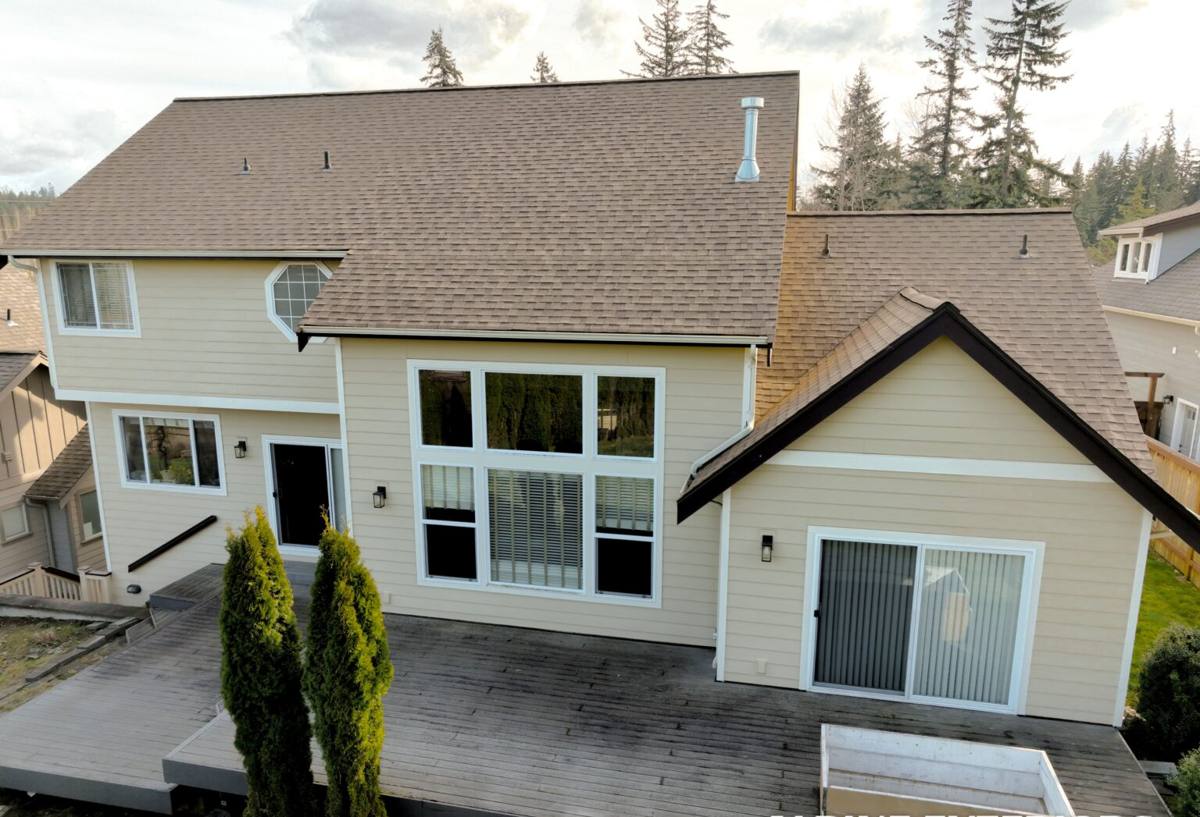
What Local Homes Actually Need From Replacement Siding
Moisture Management, Not Just a New Face
The visible siding is the last line of defense, not the only one. A proper replacement addresses the water-resistive barrier behind the cladding, the flashing details at windows, doors, and roof-to-wall intersections, and the drainage gap that lets incidental moisture escape instead of pooling behind the panels. Skip any of that and the new siding will fail years before it should, regardless of what material it's made from.
A Material That Doesn't Feed Moss
Organic wood-based products give moss and algae something to grip and feed on, especially in the shaded, low-airflow spots common on wooded Happy Valley lots. The right siding choice, combined with a factory finish that resists moisture absorption at the surface, makes a real difference in how much moss treatment and pressure washing a homeowner ends up doing every year.
Signs Your Siding Has Reached the End of Its Service Life
Because damage here develops gradually, many homeowners live with failing siding longer than they realize. Watch for:
- Paint that's chalking, peeling, or needing repainting more often than every 7-10 years
- Soft or spongy spots when you press on the siding, especially near the bottom courses
- Persistent moss, algae, or black streaking that returns within months of cleaning
- Visible warping, cupping, or buckling boards, particularly on north- and west-facing walls
- Gaps opening up at seams, corners, or trim where caulking has failed repeatedly
- Rising heating bills or noticeably cold interior walls in winter
- Any sign of moisture inside the wall cavity — musty smell, staining, or soft drywall near exterior walls
One or two of these on their own might be a spot-repair situation. Several together, especially on a home more than 20-25 years old, usually mean the siding system as a whole is past the point where patching makes financial sense.
What a Correct Siding Replacement Involves
Full Tear-Off, Not Overlay
We remove the existing siding rather than installing over it. Overlaying traps moisture that's already gotten behind the old material and hides problems that need to be fixed, not covered up. Tear-off also lets us actually inspect the sheathing underneath.
Sheathing and Framing Inspection
Once the old siding is off, we check the sheathing, framing, and any existing water damage before anything new goes up. Rot or soft sheathing gets replaced at this stage — installing new siding over compromised sheathing just resets the clock on the same problem.
Water-Resistive Barrier and Flashing
A new weather-resistive barrier goes on correctly lapped, and flashing is installed or corrected at every penetration — windows, doors, hose bibs, light fixtures, and the roof-to-wall lines where most leaks in this region actually originate.
Fastening and Clearances to Spec
Fastener type, spacing, and placement follow the manufacturer's installation instructions, not a generic approach. We also maintain proper clearance between the siding's bottom edge and grade, decks, and roof lines — a detail that's routinely skipped and is one of the most common causes of premature rot in this climate.
Why We Install Only James Hardie Fiber Cement
We standardized on James Hardie siding for every job we take on, and we don't install vinyl, LP SmartSide, or other fiber cement or engineered wood alternatives. That's a deliberate call, not a sales preference:
Non-Combustible and Dimensionally Stable
Fiber cement doesn't expand and contract with moisture and temperature the way wood-based products do, and it's non-combustible — a material property that matters to insurers and homeowners alike, independent of any specific fire risk in this area.
ColorPlus Factory Finish
Hardie's ColorPlus finish is baked on at the factory under controlled conditions, which gives more consistent, longer-lasting color than field-applied paint and holds up better against the UV exposure and moisture cycling common to western Washington.
Climate-Engineered Product Lines
Hardie makes region-specific HZ formulations engineered for different moisture and freeze-thaw conditions. Installing the correct HZ line for the Pacific Northwest, rather than a generic version, is part of getting the long-term performance the product is capable of.
A Warranty Worth Something
Hardie's transferable product warranty is meaningful because the company has a long track record of standing behind it. A warranty is only as good as the manufacturer's staying power and the quality of the installation behind it — which is why we also stand behind our own workmanship separately.
Our Siding Replacement Process
- On-site assessment — we walk the exterior, check for moisture and rot risk, and note the specific exposure conditions on your lot (shade, slope, tree cover, prevailing wind).
- Written estimate and product selection — you get a clear scope of work and Hardie profile/color options suited to the home and neighborhood.
- Tear-off and inspection — old siding comes off, sheathing and framing are inspected and repaired as needed.
- Weather barrier and flashing installation — the moisture management layer goes in correctly before any new siding is hung.
- Hardie installation to manufacturer spec — fastening, spacing, and clearances follow the installation manual, not shortcuts.
- Trim, caulking, and final finish details — the small details that determine how the job looks and performs over the next 20-30 years.
- Final walkthrough — we go over the finished work with you before calling the job complete.
Cost Factors for Siding Replacement in Happy Valley
Every home is different, but the same variables drive cost on nearly every job in this area:
| Factor | Why It Matters Locally |
|---|---|
| Extent of hidden moisture damage | Homes with long-standing moss or leaks often need sheathing or framing repair once old siding comes off |
| Home size and wall complexity | Multiple stories, dormers, and cut-up wall lines on sloped Happy Valley lots add labor time |
| Siding profile and trim selection | Lap width, shingle-style accents, and trim detailing affect material and labor cost |
| Access and site conditions | Tree cover, slope, and limited driveway access common on wooded lots can affect staging and scaffolding needs |
| Existing exterior condition | Full tear-off vs. straightforward removal changes labor scope |
We give a firm, itemized number after seeing the home in person — not a phone estimate — because so much of the real cost depends on what's actually happening behind the existing siding.
What Changes (and What Doesn't) After Replacement
Correctly installed Hardie siding with a factory finish significantly reduces the repainting cycle homeowners are used to with wood-based siding, and its resistance to moisture absorption means less feeding ground for moss and algae. It does not mean zero maintenance: gutters still need clearing, especially under mature trees, and periodic gentle washing keeps the finish looking its best. What it does mean is fewer emergency repairs and a much longer runway before the next full siding project.
Why Local Experience on This Job Matters
A crew that already works in Happy Valley and the surrounding Bellingham neighborhoods has already seen how these specific lot conditions — shade, slope, tree cover, proximity to the bay — play out on real houses. That matters for practical reasons: knowing which wall orientations need extra attention to flashing, understanding Whatcom County permitting and inspection expectations, and having a realistic sense of how weather windows here affect scheduling a multi-day tear-off. It also means a crew that isn't guessing at the right Hardie HZ configuration for this climate zone, because they've installed it here before.
If your siding is showing its age, we're happy to take a look and give you a straight, no-pressure assessment of what's going on and what it would take to fix it right. Reach out through the form below for a free estimate.