 Bellingham Siding
 Why Silver Beach Siding Takes a Different Kind of Beating
Silver Beach sits in one of the wetter, greener pockets of Whatcom County, and that combination is hard on exterior siding in ways that don't show up the same way on a dry, open lot across town. Homes here deal with a mix of moisture that lingers under mature tree canopy, driving rain that comes in sideways off exposure to open water, and salt-laden air that speeds up corrosion on fasteners, flashing, and anything with exposed metal. Add a moss season that, in this part of Washington, can run eight months or more, and you get siding that's under near-constant assault from the elements even when the weather looks calm.
None of that means Silver Beach homes need exotic materials or an unusual repair approach. It means the repair has to be done correctly, with the right materials and the right sequencing, or the same failure comes back in a year or two. We've repaired enough siding in this neighborhood to know which failure patterns show up here specifically, and that's the difference between a patch that lasts and one that doesn't.
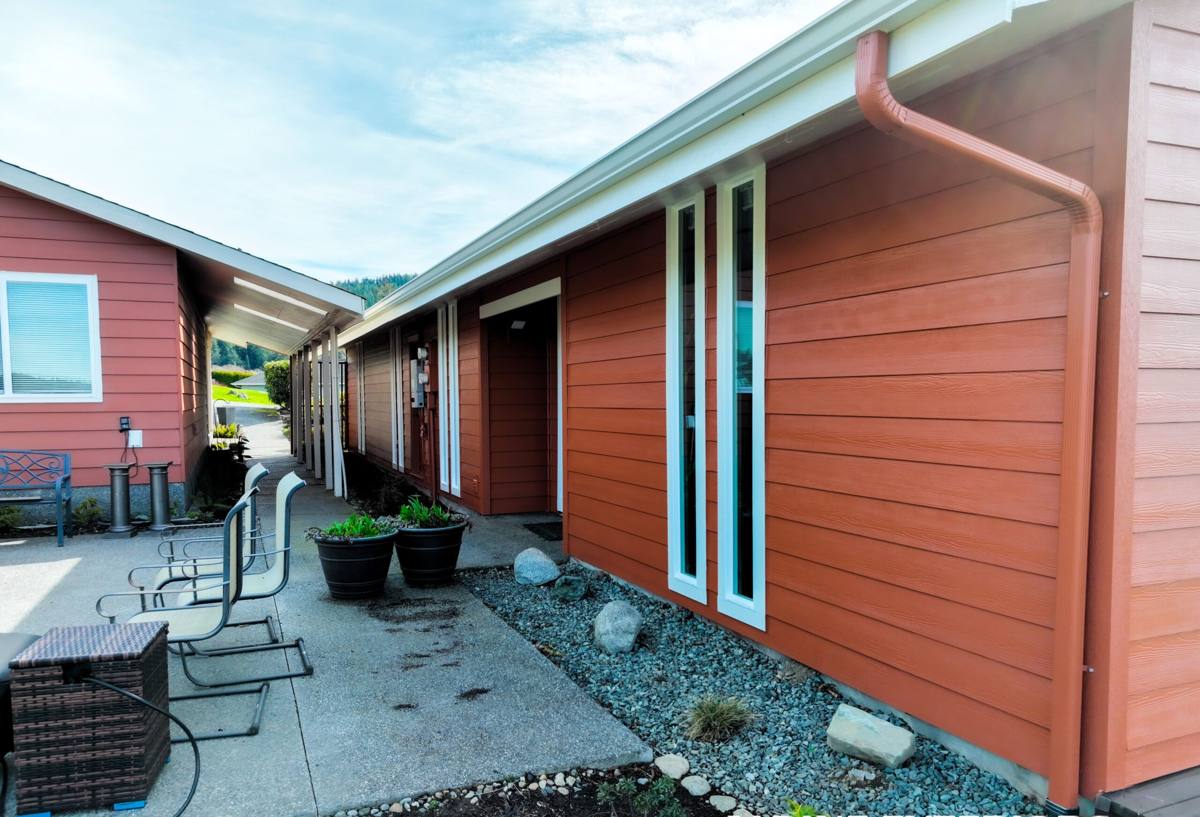
The Failure Patterns We Actually See Here
Not all siding damage is created equal, and where a home sits in Silver Beach changes what we expect to find when we get up close.
Moisture-driven rot at the base of walls
Homes with heavy landscaping, sloped lots, or limited roof overhang tend to hold moisture against the lower few feet of siding longer than homes with better drainage and airflow. That constant dampness is what breaks down old wood-based siding and lets water track behind panels that were never properly flashed to begin with.
Moss and algae staining that hides real damage
A long moss season doesn't just look bad — it holds moisture against the siding surface for weeks at a time. Homeowners often call about staining and discover, once we're up on a ladder, that the moss was sitting on top of a joint that had already opened up or a panel that had already started to delaminate.
Corroded or failing fasteners and flashing
Salt-influenced air accelerates rust on nails, screws, and metal flashing faster than most homeowners expect. A fastener that's corroding below the surface can let a panel work loose long before there's any visible sign of a problem from the ground.
Impact and settling damage
Wind-driven debris, falling branches from the tree cover common in this area, and normal home settling all cause cracks, gaps, and popped panels that need more than caulk to fix correctly.
What a Correct Siding Repair Actually Involves
A lot of "siding repair" in this region amounts to caulking a crack and calling it done. That approach hides a problem instead of fixing it, and in a wet climate like ours, trapped moisture behind a caulked-over joint usually causes more damage than the original crack did. A repair done right always starts with finding out why the damage happened, not just patching what's visible.
- Remove damaged material fully, not just the visibly cracked or stained section
- Inspect the water-resistive barrier and flashing underneath before closing anything back up
- Replace any compromised sheathing or framing, not just the siding itself
- Correct the water path — flashing, kick-out details, and drainage gaps — so the same failure doesn't repeat
- Match new material properly so the repair doesn't leave a visible patch years later
- Re-fasten with corrosion-resistant hardware suited to this area's air and moisture conditions
Skipping any one of those steps is how a $400 repair turns into a $4,000 wall rebuild two years later.
Repair or Replace? How We Help You Decide
Not every damaged section needs a full re-side, and not every "small" repair should be treated as small. We walk every job through the same honest framework before quoting anything.
| Situation | Usually Repair | Usually Replace |
|---|---|---|
| Damage limited to one or two panels, framing is dry | Yes | No |
| Rot or water damage traced back to the sheathing | Sometimes — depends on extent | Often, for that section or wall |
| Siding is an older wood or hardboard product nearing end of life | Short-term only | Yes, long-term |
| Existing siding is James Hardie fiber cement | Yes, matches cleanly | Rarely necessary |
| Damage is widespread across multiple walls | No | Yes |
The honest answer is that a well-installed, intact James Hardie wall almost never needs more than a targeted repair. Older wood, hardboard, or poorly installed vinyl siding is where we more often end up recommending replacement of the affected section, because patching a product that's already failing on its own doesn't hold up.
Our Process for a Silver Beach Repair Call
- On-site assessment. We inspect the damaged area and the surrounding wall assembly, not just the spot you called about.
- Moisture and structural check. We check for soft sheathing, trapped water, and fastener condition before quoting anything.
- Written scope and honest quote. You get a clear explanation of what's damaged, why, and what fixing it correctly involves — no vague line items.
- Repair, matched and flashed correctly. We remove, repair the water path, and replace material with proper flashing and fastening.
- Finish check. Color and profile match, joints sealed correctly, and the area cleaned up before we call it done.
Why James Hardie Is the Only Siding We Repair To
We're a James Hardie-only crew — we don't install LP SmartSide, vinyl, Cemplank, Allura, primed spruce, or cedar, and that standard carries into repair work too. When we're patching or extending an existing Hardie wall, the material match is straightforward because Hardie's HZ5 product line and factory-applied ColorPlus finish are built for exactly this kind of wet, coastal-influenced climate: non-combustible fiber cement that doesn't absorb moisture the way wood-based products do, and a finish that's baked on rather than field-painted, so a well-matched repair blends in rather than standing out.
When we're called to a home with a different siding product, we'll still do the repair honestly and correctly. But if that home is heading toward a bigger re-side down the road, we'll tell you plainly why we'd recommend switching to Hardie at that point rather than replacing failing material with more of the same — less moisture absorption, a stronger transferable warranty, and a track record that holds up to the kind of climate Silver Beach sees most of the year.
Where Other Products Tend to Struggle Here
| Product | Common Issue in This Climate |
|---|---|
| Vinyl siding | Warps under heat/cold swings, cracks with age, doesn't stop moisture intrusion behind it |
| Primed wood or cedar | Absorbs moisture, rots without diligent repainting, feeds moss growth |
| Engineered wood (LP-type products) | Vulnerable to swelling and edge failure if moisture gets past the coating |
| James Hardie fiber cement | Resists moisture absorption, factory finish holds up without repainting on the same schedule |
Why Hiring a Crew That Already Works Silver Beach Matters
Siding repair looks the same on paper everywhere, but the details that make a repair last are local. A crew that already works this neighborhood knows what kind of damage shows up on lots with heavy tree cover versus lots with more direct exposure, knows how aggressive the moss growth gets by late fall, and doesn't have to guess at how far to open up a wall before they've found the real extent of water damage. That local pattern recognition is what keeps a repair from being a guess.
It also means we're not learning on your house. We know what corrosion-resistant fastening looks like in this air, what flashing details actually hold up through a Whatcom County winter, and where the recurring trouble spots are on homes built in the styles and eras common to this part of Bellingham.
A Quick Checklist Before You Call Anyone
- Note where the damage is on the house — sun side, shade side, near a downspout or roofline
- Check for soft spots by pressing gently on the siding near the damage (don't force it)
- Look for staining patterns above or below the damaged area, which can indicate water tracking
- Ask any contractor exactly how far they plan to open up the wall before quoting a fix
- Ask what siding material they're matching to, and whether it's rated for coastal moisture exposure
- Get the scope of work in writing before repairs start, not just a verbal price
If you're seeing damage, staining, or soft spots on your Silver Beach home's siding, we're happy to take a look and give you a straight answer — what's actually wrong, what it takes to fix it correctly, and what it costs. Use the form below to request a free, no-pressure estimate.