 Bellingham Siding
 Why Birch Bay Siding Takes a Different Approach
Birch Bay sits right on the water, and that changes what siding has to survive. Homes here don't just deal with Pacific Northwest rain — they deal with rain carried sideways by wind off the bay, salt-laden air that settles on every exterior surface, and a shoulder season that stays damp long enough for moss and algae to get established on anything that holds moisture. A siding product that performs fine twenty miles inland in Bellingham can struggle on a waterfront lot in Birch Bay, and we plan installations differently once a home is close to the shoreline.
We install James Hardie fiber cement siding exclusively. We don't offer vinyl, LP SmartSide, Cemplank, Allura, primed spruce, or cedar as alternatives, and on a page like this it's worth explaining why that matters specifically for a coastal Whatcom County property rather than just repeating a general pitch.
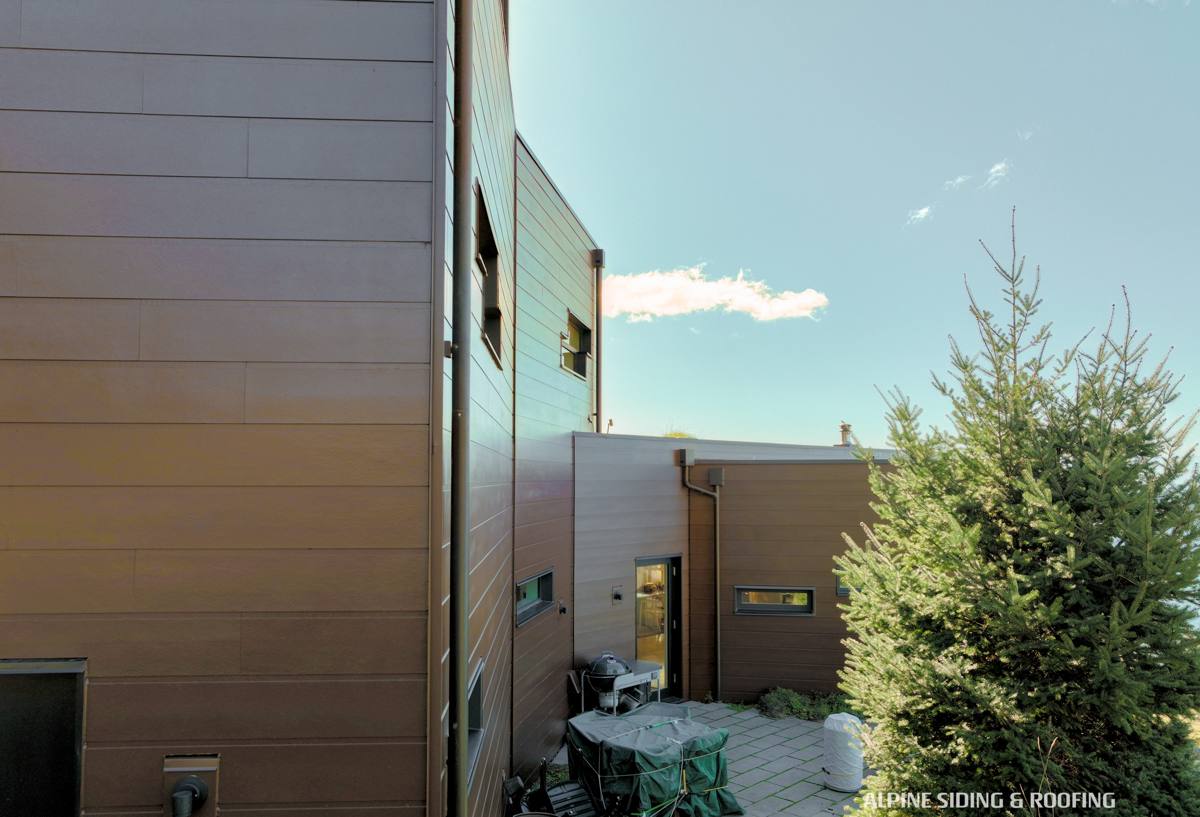
What Salt Air Actually Does to Siding
Salt air doesn't just sit on a surface — it's hygroscopic, meaning it pulls moisture out of the atmosphere and holds it against whatever it lands on. On metal fasteners and trim, that accelerates corrosion. On wood-based siding products, including engineered wood, it keeps the surface damp longer than a comparable home a few miles inland, which speeds up finish breakdown and gives mold and mildew a head start. Vinyl doesn't corrode, but salt residue builds up on its surface and in its seams, and repeated wet-dry cycling near the water is exactly the condition that makes vinyl panels warp and become brittle faster over time.
Fiber cement doesn't solve every problem automatically — it's cement, sand, and cellulose fiber, and it's genuinely durable in coastal conditions. But durability still depends on correct fastener choice (we use fasteners rated for the exposure, not whatever's cheapest), correct clearances, and a factory finish that's actually engineered to hold color and seal out moisture rather than relying on a field-applied coat.
Driving Rain and Wind-Driven Water
Birch Bay's exposure means wind-driven rain hits walls at an angle instead of just running down them, which pushes water into laps, seams, and penetrations that a calmer site would never test. That's a water-management problem more than a material problem — but the material still has to tolerate the water that gets through the first line of defense without swelling, delaminating, or losing its bond to the substrate.
Moss and Algae Season
Whatcom County's wet season runs long, and on shaded or north-facing walls near the water, siding can stay damp for weeks at a stretch. That's the environment moss and algae need. James Hardie's ColorPlus factory finish is baked on and more resistant to the kind of surface staining that gives moss and algae a foothold than field-applied paint, though nothing eliminates the need to keep gutters clear and vegetation trimmed back from walls.
What Correct Siding Installation Involves
The siding itself is maybe half of what determines how a job holds up. The rest is what's happening behind it and around every edge.
- Weather-resistive barrier: A continuous, properly lapped water/air barrier behind the siding, sealed at every penetration.
- Rainscreen gap: A drainage space between the barrier and the siding so any water that gets past the surface can drain and the wall can dry, rather than staying trapped against sheathing.
- Flashing at every transition: Windows, doors, deck ledgers, roof-to-wall intersections, and any wall penetration need flashing detailed to shed water outward, not just caulk relying on a perfect seal that never fails.
- Correct fastening: Fastener type, spacing, and embedment per the manufacturer's installation instructions — not "close enough," since fastener failure is one of the more common causes of premature siding problems.
- Proper clearances: Siding held up off decks, patios, and grade so it isn't sitting in standing water or snow, and gapped correctly at trim and inside/outside corners.
- Caulking and sealant at joints: Applied where the manufacturer specifies, with the right product, not skipped to save time.
Skip or rush any one of these on a normal inland home and you might get away with it for a while. Skip one on a Birch Bay waterfront lot, where wind and salt exposure are testing every weak point constantly, and the failure shows up sooner.
Why We Only Install James Hardie
We made a decision to standardize on one product system rather than offer a menu of options, and it comes down to consistency and accountability. When every job uses the same engineered material, our crews build deep, repeatable expertise with its specific installation requirements instead of splitting attention across several products, each with different fastening rules, clearances, and finish behavior.
James Hardie fiber cement is non-combustible, which matters in Whatcom County where wildfire smoke seasons have become a more regular summer concern even on the coast. It holds paint and factory finish differently than wood-based products because it doesn't expand and contract with moisture the way wood fiber does, and the ColorPlus finish system is backed by its own dedicated finish warranty separate from the substrate warranty. Hardie also offers HZ5 products engineered for harsher climate zones, which is a relevant option for a home taking direct exposure off the bay.
None of that means other products are junk — LP SmartSide, vinyl, and cedar all have legitimate uses and plenty of homes wear them fine. It means we looked at maintenance burden, moisture behavior, installation sensitivity, and long-term warranty structure, and decided we'd rather install one product very well than several products adequately.
Comparing Siding Options for a Coastal Whatcom County Home
| Factor | James Hardie Fiber Cement | Vinyl | Engineered Wood (LP) | Cedar |
|---|---|---|---|---|
| Salt air / moisture tolerance | Strong when installed to spec | Moderate — brittle over time near coast | Moderate — moisture-sensitive edges | Requires regular maintenance to hold up |
| Combustibility | Non-combustible | Combustible | Combustible | Combustible |
| Finish durability | Factory ColorPlus, dedicated finish warranty | Color molded in, can fade/chalk | Factory or field finish, needs upkeep | Needs periodic refinishing |
| Typical upkeep | Low — occasional wash, caulk checks | Low but limited repair options | Moderate — watch for edge swelling | Higher — staining/sealing cycle |
| Our stance | What we install | Not installed by us | Not installed by us | Not installed by us |
Our Process for a Birch Bay Installation
Assessment
We start by walking the exterior and looking specifically at exposure — which walls take the most direct wind and rain, where the existing weather barrier and flashing stand, and whether there's any sign of moisture already trapped behind the current siding. Waterfront and near-waterfront lots get extra attention to wall assemblies facing open water.
Tear-off and Wall Prep
We remove the existing siding and inspect the sheathing underneath. Any soft or water-damaged sheathing gets addressed before anything new goes back on — covering over a compromised wall is how small problems turn into structural ones.
Weather Barrier and Rainscreen
A new, continuous weather-resistive barrier goes on, lapped correctly and sealed at penetrations, followed by a rainscreen gap so the wall assembly can actually drain and dry.
Flashing and Trim
Windows, doors, and every roof-to-wall or deck-to-wall transition get flashed before siding installation begins, not patched afterward with caulk.
Hardie Installation
Panels or planks go on per James Hardie's fastening schedule and clearance requirements, with fasteners chosen for the coastal exposure.
Final Inspection
We walk the finished job checking caulking, clearances, and trim details before calling it complete.
Signs a Birch Bay Home Needs New Siding Now
- Soft spots, bubbling, or visible warping anywhere on the siding surface
- Persistent moss or algae growth that returns quickly after cleaning
- Paint that's peeling or failing faster than a normal repaint cycle would suggest
- Visible gaps, cracking, or separation at seams and corners
- Rusted or failing fasteners visible on the siding face
- Rising energy bills that suggest the wall assembly is no longer performing
- Interior signs like musty smells or staining on walls that back up to the exterior
Why Local Experience in This Area Matters
Birch Bay's exposure isn't uniform — a home set back from the water behind a rise of trees deals with a different wind and moisture load than one directly facing open water. A crew that's worked coastal Whatcom County properties knows to adjust fastening, flashing, and even orientation of details based on that exposure, rather than installing every job the same way regardless of site conditions. That judgment comes from doing the work in this specific environment repeatedly, not from a general installation manual.
If you're planning a siding project for a Birch Bay home, we're happy to walk the property, look at your specific exposure, and give you a straight answer on what the job actually needs. Reach out for a free, no-pressure estimate using the form below.