 Bellingham Siding
 Roof Repair Built for Puget's Weather
Homes in the Puget area near Bellingham sit close enough to the water that salt air becomes part of daily wear on a roof, and far enough into the Pacific Northwest storm track that driving rain and long wet winters are simply normal. Add in a moss season that can run from fall through spring, and a roof here ages differently than one thirty miles inland. A repair that doesn't account for that combination tends to fail again within a year or two.
We work on roofs in this neighborhood regularly, which means we're not guessing at what Whatcom County weather does to shingles, flashing, and underlayment over time. We've seen how moss works its way under tab edges, how wind-driven rain finds the smallest gap in flashing, and how a roof that looks fine from the ground can already be losing granules or lifting at the eaves.
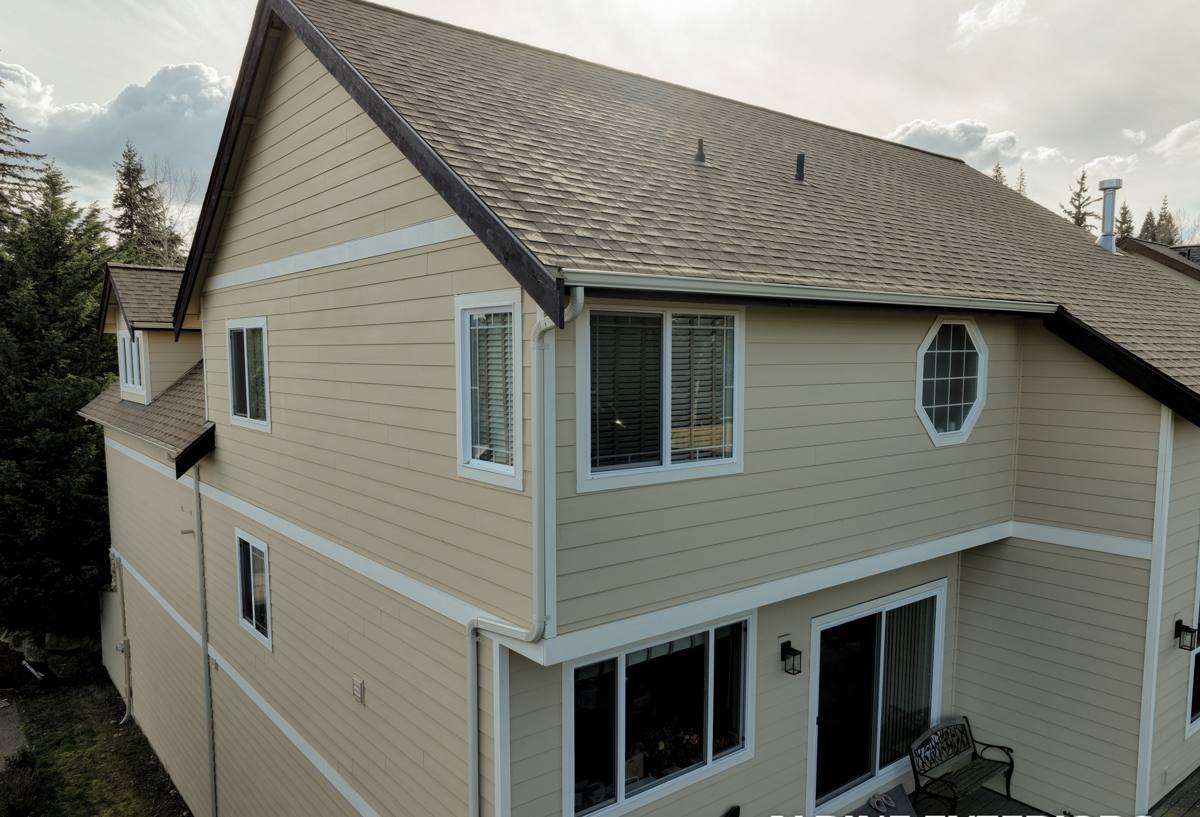
What Puget's Climate Does to a Roof
Understanding the damage pattern is the first step to repairing it correctly instead of just patching the symptom.
Salt Air and Metal Components
Proximity to the Sound means airborne salt settles on roofing metal over time — flashing, vent boots, gutter hardware, and fasteners. This accelerates corrosion, especially on lower-grade or improperly coated metal. Corroded flashing is one of the most common leak sources we find on repair calls in this area, and it's often the actual cause behind a "mystery" ceiling stain that a homeowner assumed was a shingle problem.
Driving Rain
Storms here don't just fall straight down — wind pushes rain sideways and up under roof edges, ridge caps, and anywhere flashing meets a wall or chimney. A roof that would stay dry in a calm rain can leak under wind-driven conditions if flashing laps or fastening are even slightly off. This is why so many leaks in Puget homes show up specifically during windstorms rather than steady rain.
Moss Season
Shade, moisture, and moderate temperatures make this region ideal for moss growth on north-facing slopes and anywhere debris collects. Moss holds water against the roofing surface far longer than the surface would otherwise stay wet, which softens shingle mat, degrades adhesive strip bonding, and works into seams. Left long enough, moss growth lifts shingle edges and creates channels for water to travel sideways instead of shedding off the roof.
Common Repair Issues We Find in Puget Homes
- Corroded or improperly lapped flashing around chimneys, skylights, and roof-to-wall transitions
- Moss-related shingle lifting and granule loss on shaded, north-facing slopes
- Wind-driven rain intrusion at ridge caps and hip lines after storms
- Clogged or undersized gutters causing water backup at the eaves
- Cracked or deteriorated pipe boots and vent seals
- Soft or delaminated decking discovered once shingles are pulled back
- Nail pops and fastener corrosion from long-term moisture exposure
What a Correct Repair Actually Involves
A roof repair is only as good as the diagnosis behind it. We start by tracing water intrusion to its actual source rather than the spot where a stain shows up indoors — water often travels along rafters or decking before it drips somewhere visible. Once we know the real entry point, the repair itself typically involves:
- Inspection of the affected area and surrounding roof plane, including flashing, underlayment condition, and decking where accessible
- Removal of damaged materials — shingles, flashing, or decking that's compromised, not just the piece directly over the leak
- Moss and debris clearing from the work area and adjoining slopes so the repair isn't undermined by growth that's already present nearby
- Flashing correction or replacement using proper lap sequencing so water sheds over each layer correctly, especially at wall and chimney transitions
- Underlayment and decking repair if moisture has reached the sheathing, since shingles alone can't compensate for a compromised deck
- Matched shingle or component replacement, fastened to manufacturer spec for wind exposure typical of this area
- Final water test or close inspection at the repaired area before we consider the job done
Repair vs. Replacement: How We Decide
Not every roof problem in Puget needs a full replacement, but not every leak is a simple patch either. We look at the age of the roofing, how widespread the damage is, and whether the underlying decking is still sound.
| Factor | Favors Repair | Favors Replacement |
|---|---|---|
| Roof age | Under 15 years, otherwise in good condition | Nearing or past expected service life |
| Damage extent | Isolated to one area (flashing, one slope) | Widespread moss damage or granule loss across multiple slopes |
| Decking condition | Solid, no soft spots found | Soft, delaminated, or rotted in multiple areas |
| Leak history | First occurrence or single known cause | Recurring leaks in different spots over time |
| Shingle match | Matching shingles still available or close enough | Discontinued product, visible patchwork unavoidable |
We'll tell you honestly which category your roof falls into. If a repair will hold up through another Whatcom County winter, we'll say so. If we think you're a year or two from needing full replacement anyway, we'll tell you that too rather than talk you into a patch that won't last.
Flashing and Metal Work: Why We Don't Cut Corners Here
Given how much salt-air corrosion and wind-driven rain factor into Puget's roofing failures, flashing work is where we spend the most care on any repair. Our standard is to use corrosion-resistant flashing material and to rebuild the lap sequence properly rather than caulk over an old flashing joint. Caulk-only fixes are common shortcuts in this trade, but sealant degrades with UV and temperature cycling, and once it fails, the leak returns — often worse, because the underlying flashing issue was never actually corrected. We treat sealant as a supplement to correct flashing geometry, not a substitute for it.
Moss Treatment as Part of the Repair
Because moss is such a consistent driver of shingle damage in this area, we don't consider a repair complete if we leave active moss growth on or near the work area. That typically means gentle removal (not aggressive scraping that damages granule surfaces), clearing debris from valleys and gutters that feeds regrowth, and discussing zinc or copper strip options with you if moss has been a recurring problem on a particular slope. This isn't an upsell — it's addressing the actual cause so the repair we just did doesn't get undermined by the same growth pattern within a season or two.
Our Process for Puget Roof Repairs
- Contact and scheduling — tell us what you're seeing (stain, drip, visible damage) and we'll get a time on the calendar
- On-site inspection — we get on the roof, trace the actual source, and check surrounding areas for related issues
- Clear explanation — we walk you through what we found, what caused it, and what the repair involves before any work starts
- Written estimate — a clear scope and cost, no vague line items
- The repair itself — done to manufacturer specs, not just sealed and hoped for
- Follow-up — if something doesn't hold, we want to hear about it
Why Local Experience Matters for This Kind of Work
A roofing crew that mostly works dry-climate regions can miss things that are obvious to anyone who's repaired roofs through a full Bellingham winter. Knowing which slopes on a typical Puget home hold moss longest, how far salt air travels inland to still affect metal components, and how wind direction during a given storm system pushes rain into specific flashing points — that's knowledge built from doing this work in this exact area, not from a general roofing checklist. It affects where we look first during an inspection and what we prioritize in the repair itself.
Simple Maintenance Checklist Between Repairs
- Clear gutters and downspouts before the fall rains start
- Remove moss and debris from valleys and north-facing slopes each year
- Trim back overhanging branches that keep roof sections shaded and damp
- Check attic spaces occasionally for staining, dampness, or daylight gaps
- Have flashing points inspected after any major windstorm
- Don't ignore small ceiling stains — they rarely stay small
Get an Honest Look at Your Roof
If you're dealing with a leak, moss buildup, or storm damage on a home in the Puget area, we're happy to come take a look and give you a straightforward assessment — no pressure, no upsell, just what we actually find and what it would take to fix it right. Use the form below to request a free estimate.