 Bellingham Siding
 Building a Deck That Actually Holds Up in Puget
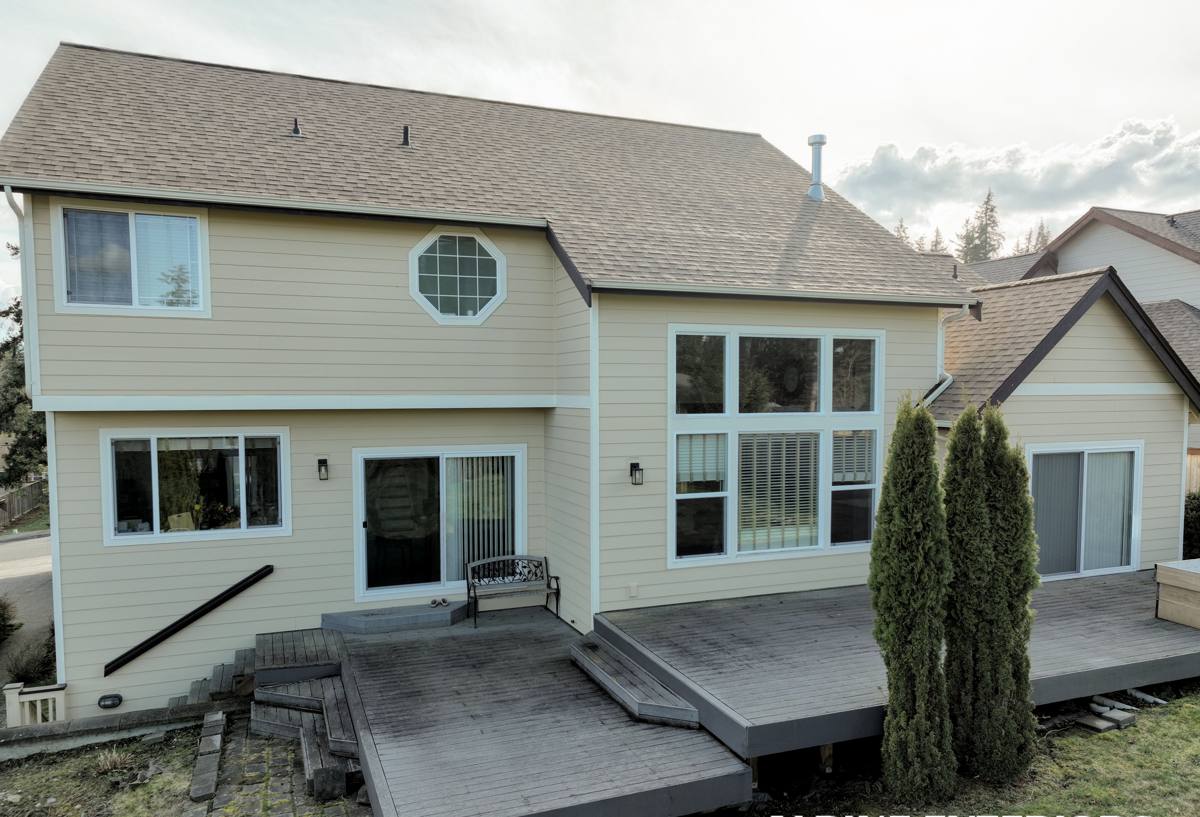
Puget sits close enough to the water that salt-laden air is part of daily life, and close enough to Bellingham's marine weather pattern that a deck here works through a lot more moisture than one built inland. Add in Whatcom County's long, wet shoulder seasons and the moss growth that comes with them, and you've got a set of conditions that punishes a deck built to a generic spec. A custom deck for a Puget property isn't about fancy add-ons — it's about choosing materials, fasteners, and a structure that were actually selected for this climate, not just for looks in a showroom.
We build decks all over the Bellingham area, and the ones that last are the ones where every decision — from the footings up to the railing caps — accounted for salt air, driving rain, and moss from day one. This page covers what that actually looks like for a Puget property.
What Puget's Climate Does to an Ordinary Deck
Salt Air and Corrosion
Homes closer to Puget Sound deal with airborne salt that settles on every exposed surface. Over time it accelerates corrosion in fasteners, hardware, and any metal connector that wasn't rated for a marine or coastal environment. A deck built with standard interior-grade screws and generic joist hangers will show rust streaks and weakened connections years before a properly specified deck will.
Driving Rain
Bellingham's rain doesn't always fall straight down — wind off the water pushes it sideways into ledger boards, under railing posts, and into any gap where water can collect instead of shed. A deck design that assumes calm, vertical rainfall will trap moisture in exactly the spots where rot and mold get started.
The Long Moss Season
Shade, moisture, and mild temperatures give moss a long growing window here — often most of the year on a deck that doesn't get much direct sun. Moss holds water against decking boards, stains surfaces, and makes footing dangerously slick. A deck built without moss in mind turns into a maintenance headache within a couple of seasons.
Choosing the Right Decking Material for This Location
There's no single "best" decking material — the right choice depends on how much sun and shade the site gets, how close it is to the water, and how much upkeep the homeowner wants to take on. Here's how the common options actually perform under Puget's conditions:
| Material | Salt Air Resistance | Moss/Moisture Behavior | Maintenance |
|---|---|---|---|
| Pressure-treated wood | Fair — hardware and fasteners are the weak point | Absorbs moisture; needs gaps and airflow to avoid staying wet | Annual cleaning and periodic sealing |
| Cedar | Good natural resistance, but finish wears in salt air | Still needs proper spacing to shed water and resist moss | Regular refinishing to keep it from graying and holding moisture |
| Composite decking | Very good — non-porous, won't corrode | Sheds water well; moss still grows on the surface without cleaning | Occasional washing, no sealing or staining |
| PVC decking | Excellent — fully synthetic, no organic material to break down | Best moisture shedding of the group; moss doesn't take hold as easily | Lowest — periodic rinsing |
Composite and PVC decking have become the practical default for homes near the water because they don't give salt or moisture anything to corrode or rot. That said, real wood still has a place when the homeowner wants a specific look and is willing to keep up with sealing and cleaning on a regular schedule. We'll walk through the honest trade-offs for your specific site rather than push one product across the board.
What's Underneath Matters More Than What's On Top
A deck's surface gets all the attention, but the framing underneath is what determines whether it's still solid in ten years. In a climate like Puget's, that means:
- Ledger board flashing that actually directs water away from the house band joist, not just a bead of caulk behind the ledger
- Joist tape or flashing on the top of every joist so screw penetrations don't become entry points for water
- Footings sized and set to local frost and soil conditions, not just the minimum code number
- Post bases and hardware rated for exterior or coastal exposure, set up off the deck surface so they're not sitting in standing water
- Proper joist spacing and blocking so the structure doesn't flex and open gaps in the decking over time
We've seen decks that looked fine on the surface but had ledger flashing done wrong, and by the time the rot showed up it had already spread into the house's rim joist. Getting the framing right the first time is the difference between a deck that needs a board replaced occasionally and one that needs to be torn out early.
Railings, Fasteners, and Hardware for a Marine Climate
Hardware is where a lot of decks near Puget Sound fail first, because it's the easiest thing to under-spec. Standard zinc-coated screws and brackets look fine going in, but salt air works through that coating faster than people expect. We use fasteners and connectors rated for coastal or marine exposure — typically stainless steel or a heavier-duty coated option depending on the application — because replacing a deck board is a lot cheaper than replacing the structural hardware holding it up.
Railings get the same consideration. Composite and metal railing systems generally hold up better in salt air than raw wood balusters, which need regular refinishing to keep moisture and salt from working into the grain. Whatever railing style fits the house, the posts and connection points are where we spend the extra attention, since that's the part carrying structural load and taking the brunt of wind-driven rain.
Choosing Fasteners: A Quick Comparison
| Hardware Type | Coastal Performance | Notes |
|---|---|---|
| Standard galvanized | Weak — coating breaks down under repeated salt exposure | Common in inland builds, not ideal this close to the water |
| Hot-dip galvanized | Better — thicker coating, longer service life | Reasonable mid-range option |
| Stainless steel | Best — resists corrosion even under sustained salt exposure | Higher upfront cost, lowest long-term maintenance |
Drainage and Design to Keep Moss From Taking Over
Moss needs shade and standing moisture, and a poorly designed deck gives it both. A few design choices make a real difference in how much moss and algae growth you'll deal with over the years:
- Proper board spacing so water drains through instead of pooling on the surface
- Grading and drainage underneath the deck so runoff doesn't sit in the crawlspace below
- Avoiding low, boxed-in skirting that blocks airflow and traps humidity under the deck
- Positioning and orienting the deck, where the site allows, to get whatever direct sun is available
- Choosing a decking surface with a texture and finish that doesn't hold water in fine grooves
None of this eliminates moss entirely — this is Whatcom County, and shade and rain are part of the deal — but the right design cuts down how often it needs to be cleaned and how slick the surface gets between cleanings.
How We Approach a Custom Deck Project in Puget
Every property is different, but the process holds the same shape from job to job:
- Site visit and assessment — we look at sun exposure, drainage, proximity to the water, existing structure if there's a deck to replace, and how the space will actually be used
- Design and material selection — we lay out layout, railing style, and decking material options with the real trade-offs for this climate, not a one-size pitch
- Permitting — decks over a certain size or height typically need a permit through the City of Bellingham or Whatcom County depending on the property's location; we handle that process as part of the job
- Framing and structural work — footings, ledger attachment and flashing, joists, and blocking, built to hold up under this area's rain and wind exposure
- Decking, railing, and finish work — installed with fastener spacing and hardware suited to salt air exposure
- Final walkthrough — we go over the finished deck and what maintenance, if any, it'll need going forward
Maintenance in a Salt Air, High-Moisture Environment
Even a well-built deck needs some seasonal attention in this climate. A simple maintenance routine keeps a Puget deck looking good and structurally sound far longer than neglect will:
- Sweep debris and standing leaves off the surface regularly, especially through fall and winter
- Rinse off salt residue and grime a few times a year, particularly after storms with wind off the water
- Check railing posts and stair connections annually for movement or loosening hardware
- Clean moss and algae buildup before it gets thick enough to stain the decking or create a slip hazard
- For wood decks, plan on refinishing on a regular cycle rather than waiting until the finish has already failed
- Keep gutters and downspouts near the deck clear so runoff isn't dumping extra water onto or under the structure
Why It Matters to Hire a Crew That Already Works in Puget
A contractor who mostly builds inland, in a drier microclimate, can still build a structurally sound deck — but they may not default to marine-rated hardware, may not think through moss-prone shading, or may not be familiar with how the City of Bellingham or Whatcom County handles permitting for a property this close to the water. Those details matter more here than in most parts of the country.
We work in this climate every day, which means the material choices, fastener specs, and drainage details in this page aren't theoretical — they're the standard we build to on every deck in this area, because we've seen what happens when they're skipped.
Get an Estimate for Your Puget Deck Project
If you're planning a new deck or replacing one that's showing its age, we're glad to come take a look, walk through material options suited to your site, and put together a straightforward estimate — no pressure, no obligation. Use the form below to get started.