 Bellingham Siding
 Why Puget Homes Need a Roof Built for This Climate
Puget sits close enough to the water that salt air is a daily fact of life, not an occasional nuisance. Add Whatcom County's long wet season, frequent wind-driven rain, and a moss season that can stretch from late fall into spring, and you have one of the more demanding roofing environments in the state. A roof that would hold up fine in a dry inland climate can fail early here if it wasn't installed with these specific conditions in mind. That's not a knock on any particular product — it's just the reality of building on the water side of Whatcom County.
A correctly installed roof in this area has to do three jobs at once: shed heavy, sideways-driven rain instead of just vertical rainfall, resist the slow corrosive and organic effects of salt-laden, moisture-heavy air, and stay clean enough, long enough, that moss and algae don't get a foothold in the shaded, damp sections of the roof plane. Get any one of those wrong and you're looking at a shortened roof life, not a slow failure decades from now.
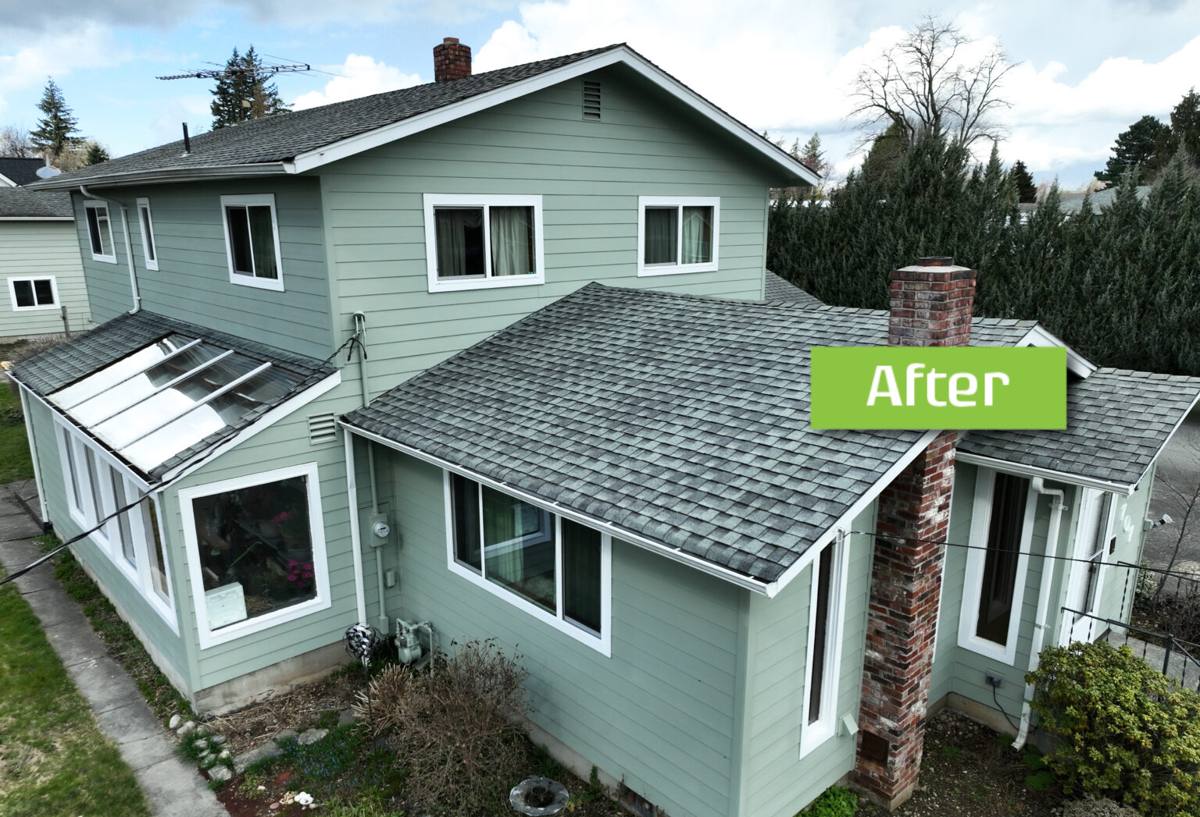
What Driving Rain and Salt Air Do to a Roof Over Time
Most roofing failures we see in this part of Whatcom County aren't dramatic leaks — they're slow water intrusion at the details: valleys, chimney flashing, low-slope transitions, and roof-to-wall junctions. Driving rain doesn't just fall on a roof, it pushes sideways and upward under wind pressure, which means underlayment laps, flashing overlaps, and fastener patterns all matter more here than in calmer climates.
Salt air adds a second, slower problem: accelerated corrosion of exposed metal fasteners, flashing, and any hardware that isn't rated for coastal exposure. Over years, standard fasteners can begin to rust and stain, and lower-grade flashing can pit and thin. None of this shows up on day one — it shows up five or ten years in, which is exactly why the choice of fastener and flashing material matters more here than the shingle brand printed on the invoice.
Where We See the Most Wear
- North- and shade-facing slopes, where moss and moisture linger longest
- Valleys and roof-to-wall transitions exposed to wind-driven rain
- Chimney and vent flashing, especially on older roofs with reused flashing
- Fasteners and exposed metal on roofs closer to open water or exposed ridgelines
- Gutters and eaves overwhelmed during heavy rain events
Moss Season and Roof Longevity in Bellingham
Moss isn't just a cosmetic issue. In shaded, north-facing sections common on Puget-area lots with mature tree cover, moss holds moisture directly against the roofing surface for months at a time. On asphalt shingles, that shortens granule life and accelerates wear. On any roof, sustained moss growth traps organic debris in valleys and against flashing, which is where slow leaks tend to start.
A new roof installation is the right time to address this at the design level — not just with a one-time treatment, but by improving airflow, reducing debris traps, and selecting materials and colors that handle sustained moisture better. A roof that's designed with Bellingham's moss season in mind will need far less maintenance over its life than one that wasn't.
What a Correct New Roof Installation Involves
A roof is only as good as what's underneath the visible surface. On every full replacement, the work that actually determines how the roof performs in Puget's climate happens in these layers:
Tear-Off and Deck Inspection
We remove the old roofing down to the deck and inspect the sheathing for soft spots, delamination, or water staining — common on older roofs that have taken on moisture through failed flashing over the years. Any damaged decking gets replaced before anything new goes down; installing new roofing over a compromised deck just hides the problem.
Underlayment Selection
Given how much wind-driven rain this area gets, we use underlayment systems suited to that exposure, with synthetic underlayment as the standard base layer and self-adhered, waterproof membrane at the vulnerable spots — eaves, valleys, and around every roof penetration. This is one of the most important, least visible decisions in the whole job.
Flashing and Metal Work
Flashing is where most leaks originate, and it's also where salt-air corrosion does the most damage over time. We use flashing and fasteners rated for coastal/marine exposure rather than standard-grade hardware, and we fabricate step flashing, valley flashing, and counter-flashing to fit the actual roof rather than reusing old pieces.
Ventilation
Proper intake and exhaust ventilation keeps the attic and roof deck at a consistent temperature and moisture level, which matters enormously in a climate this wet. Under-ventilated roofs trap moisture, which shortens shingle life and can lead to deck rot that isn't visible from the ground or even the attic floor.
Final Roofing Material
The visible roofing layer — shingles, metal, or another system — goes on last, but it's only as durable as everything beneath it. We install per manufacturer specification for wind and moisture exposure, since warranty coverage is often voided by shortcuts in fastening pattern or underlayment that a homeowner would never see.
Roofing Material Options for Puget-Area Homes
There's no single "best" material for every home — the right choice depends on roof slope, tree cover, budget, and how much long-term maintenance a homeowner wants to take on. Here's how the common options compare for this specific climate:
| Material | Moss/Moisture Resistance | Salt-Air Durability | Typical Lifespan Here |
|---|---|---|---|
| Architectural asphalt shingle | Good with proper ventilation and algae-resistant granules | Good with coastal-rated fasteners and flashing | 25–30 years |
| Standing seam metal | Excellent — sheds moisture, little surface for moss to grip | Very good with marine-grade coatings and fasteners | 40–50+ years |
| Composite/synthetic shake | Good, low water absorption | Good, corrosion mainly a fastener-level concern | 30–40 years |
| Wood shake/shingle | Poor without diligent upkeep — highest moss/moisture maintenance burden | Moderate; requires ongoing treatment | 20–30 years with maintenance |
We'll walk through which of these fits your roof's slope, sun exposure, and budget honestly during the estimate — including the maintenance trade-offs, not just the upfront cost.
Our Installation Process, Step by Step
- On-site assessment — we inspect the existing roof, attic ventilation, and any signs of past water intrusion before quoting anything.
- Written estimate — a clear scope of work covering materials, flashing details, and ventilation changes, not just a single bottom-line number.
- Tear-off and deck repair — old roofing removed, deck inspected and repaired as needed.
- Underlayment and flashing installation — the moisture-management layer, built for this area's wind and rain exposure.
- Roofing material installation — installed to manufacturer spec so your warranty is fully valid.
- Ventilation check and final walkthrough — we confirm intake/exhaust balance and walk the property with you before calling the job done.
- Cleanup — full site and gutter cleanup, including a magnetic sweep for stray fasteners.
Ventilation and Moisture Control Matter More Here Than Most Places
Because Bellingham's wet season runs so long, an attic or roof deck that can't dry out between storms stays damp for months rather than days. That extended moisture exposure is what leads to premature shingle failure, deck rot, and interior mold issues that have nothing to do with a visible leak. Balanced ventilation — enough intake at the eaves and exhaust at the ridge — is one of the cheapest, most overlooked upgrades on a roof replacement, and it's something we check and correct on every job in this area, not just when a homeowner asks about it.
Checklist: What to Ask Before Hiring a Roofing Crew in Puget
- Do they inspect and document deck condition before quoting, not just estimate from the ground?
- Do they specify underlayment and flashing materials in writing, or just the shingle brand?
- Are fasteners and flashing rated for coastal/salt-air exposure, or standard-grade?
- Do they address attic ventilation as part of the scope, not as an upsell afterward?
- Can they explain how the roof design handles moss-prone, shaded sections of your specific property?
- Are they licensed and insured to work in Whatcom County, with proof available on request?
Why a Crew That Already Works in Puget Makes a Difference
Roofing crews that work primarily inland or in drier parts of Washington don't always default to coastal-grade fasteners, flashing details, or moss-conscious ventilation planning — because they don't need to where they usually work. A crew that already does regular roofing work around Bellingham and the Puget area treats those details as standard practice, not an upgrade, because we see what happens to roofs here when they're skipped. That local, repeated exposure to this exact climate is the difference between a roof that looks right on installation day and one that's still performing correctly ten and twenty years later.
If you're planning a new roof installation for a Puget-area home, we're happy to walk your property, look at your current roof's wear patterns, and give you a straightforward assessment of what it actually needs — no pressure, no inflated scope. Fill out the form below for a free estimate.