 Bellingham Siding
 Roofing in Happy Valley: A Neighborhood With Its Own Weather Habits
Happy Valley sits close enough to Bellingham Bay and the surrounding hillside tree cover that its roofs deal with a specific combination of stresses: salt-laden air drifting in off the water, long stretches of driving rain through fall and winter, and heavy shade from mature conifers that keeps roof surfaces damp well after a storm has passed. None of that is dramatic on its own. But stacked together, year after year, it's exactly the kind of slow wear that shortens the life of a roof that wasn't built or installed with those conditions in mind.
We install new roofs throughout Bellingham and Whatcom County, and Happy Valley's mix of older homes, tree-shaded lots, and proximity to the water means a roofing job here needs the same attention to detail as a job on a more exposed hillside, just applied differently. A roof that would hold up fine in a dry, sunny neighborhood can fail early in Happy Valley if the underlayment, ventilation, and edge details weren't chosen with moss, moisture, and salt air in mind.
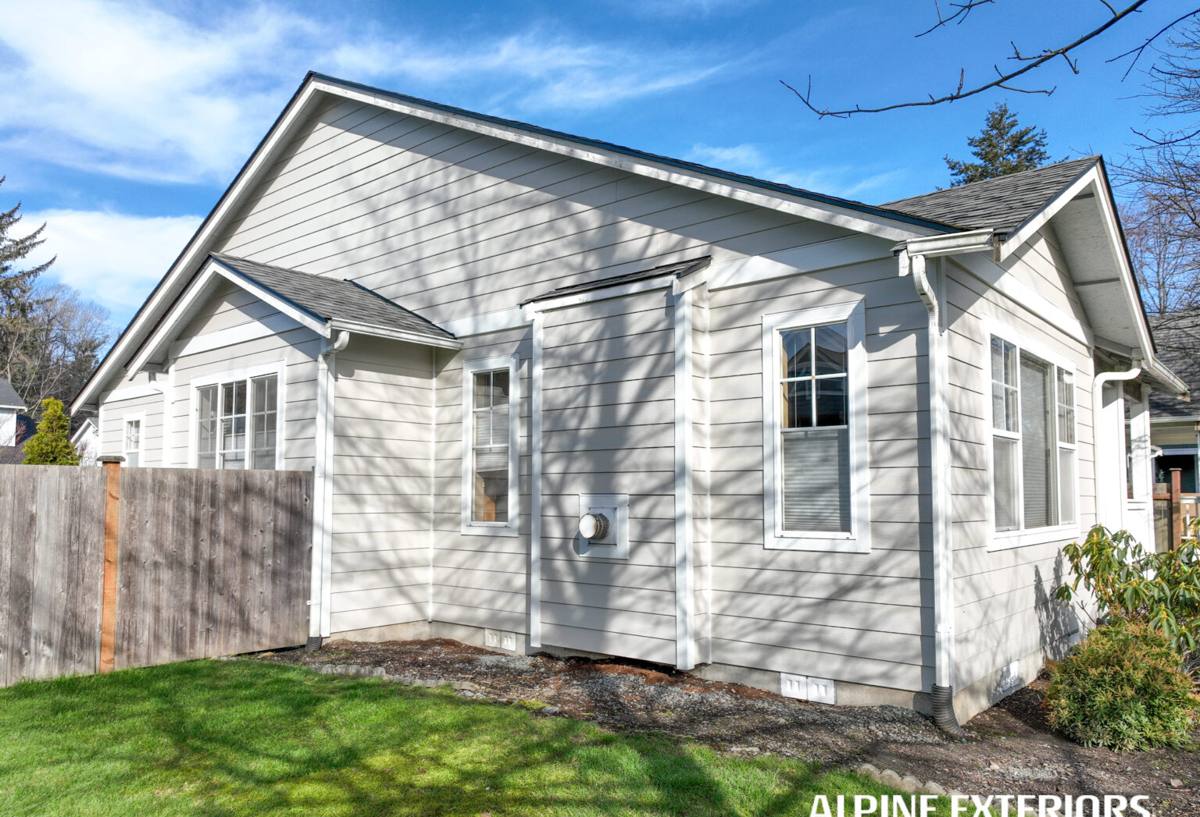
What Happy Valley's Climate Actually Does to a Roof
Salt Air and Metal Fasteners
Bellingham's proximity to the bay means airborne salt reaches further inland than most homeowners assume, especially on days with onshore wind. Salt air accelerates corrosion on exposed metal — flashing, fasteners, gutter hardware, and drip edge. Standard galvanized fasteners can start showing rust streaks and pitting years before they would in a drier, inland climate. This is why fastener and flashing material selection matters more here than it does in many parts of the state.
Driving Rain and Wind-Driven Water
Rain that comes in at an angle, pushed by wind off the water, doesn't behave like straight-down rain. It can work its way under poorly lapped shingles, around under-flashed penetrations, and into any gap where the roof deck isn't fully sealed. A roof built for a milder rain pattern can develop slow leaks at valleys, chimneys, and skylights that go unnoticed for months because the water finds its way in gradually rather than all at once.
Moss and Shade
Many Happy Valley lots have mature trees close to the house, which is great for shade and privacy but keeps roof surfaces cooler and damper for longer after rain. That's the exact environment moss needs to establish. Moss holds moisture against the roofing material, lifts shingle edges as it grows, and adds weight over time. Left unchecked, it shortens the service life of almost any roofing product, and it's one of the most common things we get called out to inspect on older Bellingham roofs.
Signs a Happy Valley Roof Needs Replacing, Not Patching
- Moss growth that returns within a season or two of cleaning, even after treatment
- Granule buildup in gutters and downspouts, or shingles that look thin and bald in spots
- Daylight visible through the roof deck from the attic, or damp insulation near the eaves
- Soft or spongy spots when walking the roof (a sign the deck itself may be compromised)
- Repeated leaks around the same chimney, valley, or skylight despite prior repairs
- Curling, cracking, or lifted shingle edges, especially on north-facing or shaded slopes
- Roof is 20+ years old and has never had a full tear-off, only repairs
A repair can buy time for one or two of these issues in isolation. When several show up together, it usually means the underlying deck and underlayment have been absorbing moisture for a while, and patching the surface won't address what's happening underneath.
What a Correct New Roof Installation Involves Here
Full Tear-Off, Not Overlay
We don't install new shingles over old ones. A tear-off lets us actually see the roof deck, replace any wood that's soft or delaminated from years of trapped moisture, and start the new roof system on a solid, dry base. In a damp, shaded neighborhood like Happy Valley, skipping this step and layering over existing material just seals moisture problems in rather than solving them.
Underlayment Built for Wet Climates
We use synthetic or self-adhered underlayment products rated for high-moisture conditions, with extra attention to valleys, eaves, and any low-slope transitions where water lingers longest. In a region with Bellingham's rain totals, underlayment isn't a formality — it's the roof's real waterproofing layer, with the shingles or panels as the wear surface on top.
Flashing and Fasteners Suited to Salt Air
Around chimneys, skylights, dormers, and roof-to-wall junctions, we use corrosion-resistant flashing and fastener materials appropriate for a coastal-influenced climate, rather than the minimum-grade hardware that's fine further inland. This is a small line-item difference in cost that has an outsized effect on how the roof edges hold up over 10-plus years.
Ventilation That Matches the Attic
Proper intake and exhaust ventilation keeps the underside of the roof deck dry and helps prevent condensation buildup, which matters even more under a shaded, moisture-prone tree canopy. We check existing ventilation as part of every replacement and correct it where it's inadequate, rather than just reusing whatever venting was there before.
Moss-Resistant Details
Where roof design allows, we install zinc or copper strips near the ridge, which release trace metal ions in rain runoff that inhibit moss and algae growth down-slope. It's not a substitute for regular maintenance, but it meaningfully reduces how fast moss re-establishes on shaded roof sections.
Choosing Roofing Material for a Happy Valley Home
| Material | How It Handles Local Conditions | Maintenance Considerations |
|---|---|---|
| Architectural asphalt shingles | Reliable, cost-effective performance in wet climates when properly underlaid and ventilated | Benefits from moss treatment and periodic gutter/valley cleaning |
| Metal roofing | Sheds driving rain efficiently and resists moss better than shingles on shaded slopes | Requires corrosion-resistant fasteners and coatings given salt air exposure |
| Cedar shake | Traditional look, but holds moisture longer under tree cover, which shortens lifespan in shaded yards | Higher maintenance burden in damp, low-sun areas; needs diligent treatment |
| Synthetic/composite shingles | Good moisture resistance with a lighter maintenance profile than wood | Product-specific installation requirements; matters more than the material itself |
There's no single "right" material for every Happy Valley home — it depends on how much tree shade the roof sits under, the slope, and what the homeowner wants to maintain long-term. We walk through these trade-offs honestly during the estimate rather than steering toward whatever's easiest to install.
Our Process for a Happy Valley Roof Replacement
- On-site inspection — we assess the current roof, deck condition, ventilation, tree exposure, and any moisture history before recommending a system
- Written estimate — clear scope, material options, and timeline, with no pressure to decide on the spot
- Tear-off and deck repair — full removal of old roofing, replacement of any compromised sheathing
- Underlayment and flashing installation — moisture barrier and metal work matched to Bellingham's rain and salt-air exposure
- Roofing material installation — installed to manufacturer specification, including proper nailing pattern and exposure
- Ventilation check and correction — intake/exhaust balance verified before close-out
- Final walkthrough — cleanup, gutter check, and a review of the completed work with the homeowner
Why It Matters to Hire a Crew That Already Works This Neighborhood
Happy Valley's combination of mature tree cover, older housing stock, and proximity to the bay isn't unique to this one neighborhood, but it's different enough from a dry, open-lot subdivision that a generic roofing approach can leave gaps. A crew that regularly works Whatcom County's wetter, shadier neighborhoods knows to check ventilation more carefully, to spec corrosion-resistant hardware without being asked, and to recognize early moss and moisture patterns before they become structural problems. That local familiarity shows up less in the sales pitch and more in the details that don't get skipped.
Maintenance After Installation
A new roof still needs some upkeep in a climate like this. Keep gutters clear of needles and debris, especially where overhanging branches drop material year-round. Have moss growth addressed at the first sign of it rather than waiting for a full covering to develop. And keep an eye on any spot where two roof planes meet or where a chimney or vent penetrates the surface — these are the first places a driving-rain climate will find a weakness if one exists.
If your roof in Happy Valley is showing its age, or you're just not sure whether what you're looking at is a repair situation or a replacement situation, we're happy to take a look. Reach out for a free, no-pressure estimate using the form below.