 Bellingham Siding
 Metal Roofing for York Homes in Bellingham
York is one of Bellingham's older, tree-shaded neighborhoods, and that combination of mature canopy, close-set lots, and proximity to the water creates a specific set of roofing problems. Homes here deal with heavy leaf and needle litter, shaded roof planes that never fully dry out, and the salt-tinged, moisture-loaded air that rolls in off Bellingham Bay. A roof that would hold up fine in a drier inland part of Whatcom County can struggle here. Metal roofing has become a popular answer for York homeowners who are tired of replacing shingles every 15-20 years and dealing with moss scrubbing every spring.
This page covers what metal roofing actually involves for a York property specifically — not a generic overview of metal roofing everywhere — including the climate factors that matter most, what a correct installation looks like, and what to ask before you hire anyone to do it.
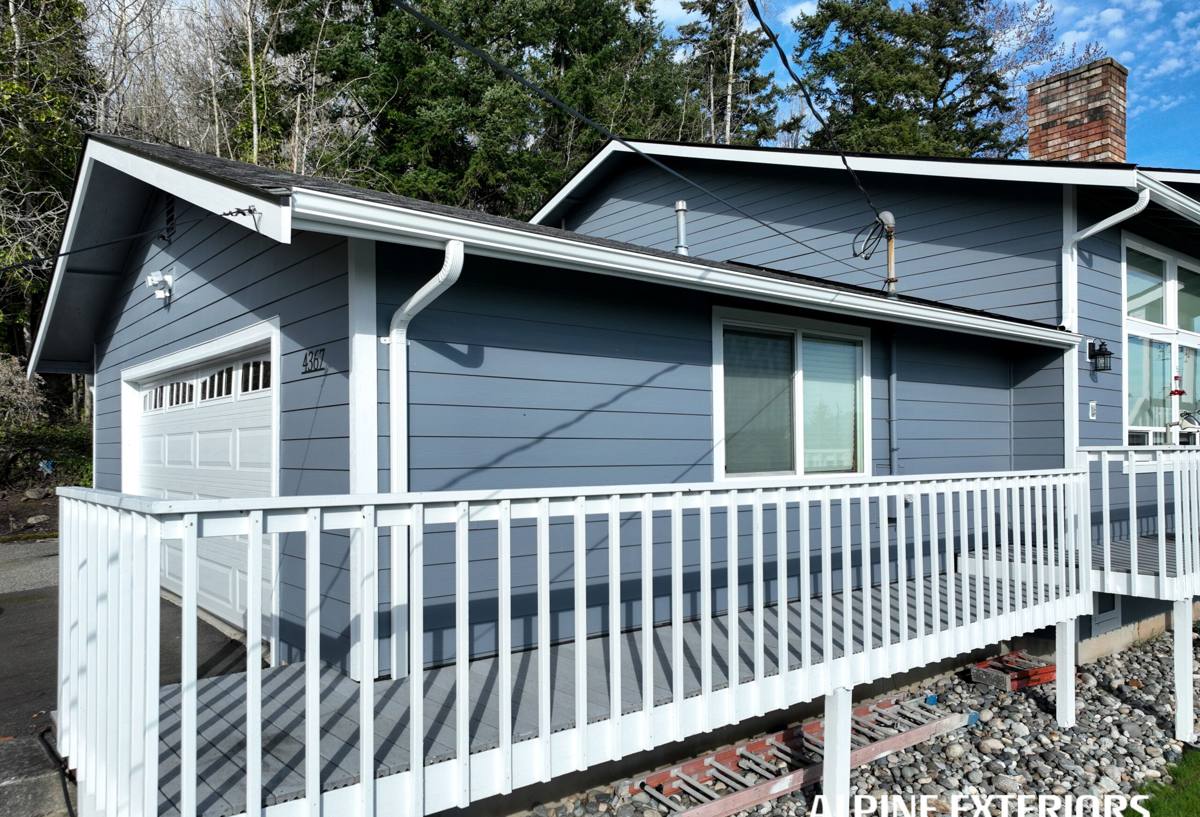
Why York's Climate Is Hard on Roofs
Three things define roofing conditions in this part of Bellingham, and they compound each other.
Salt Air
York sits close enough to the bay that airborne salt is a real factor, especially on west- and north-facing roof planes. Salt-laden moisture accelerates corrosion on exposed metal fasteners, flashing, and any coating that isn't rated for a marine or near-marine environment. Fasteners and trim that would be fine 30 miles inland can start showing rust streaks within a few years here if the wrong hardware was used.
Driving Rain
Whatcom County doesn't just get a lot of rain — a good portion of it comes in sideways off wind events moving through the Strait of Georgia and the bay. Wind-driven rain finds gaps that a straight-down downpour never would: under lifted shingle tabs, around poorly lapped flashing, and into any seam that isn't mechanically locked. Roofing systems in York need to handle water moving uphill and sideways under wind pressure, not just water falling straight down.
Moss Season
With tree cover overhead and a wet season that runs roughly eight months of the year, York roofs stay damp longer than roofs in open, sunny parts of the county. That extended damp period is exactly what moss, lichen, and algae need to establish. On asphalt shingles, moss roots work into the mat and lift the granule surface, which shortens the roof's life. On a properly installed metal roof, moss has almost nothing to grip onto and nowhere to hold water, which is a big part of why it's a good fit here.
What a Correct Metal Roof Job Involves
Metal roofing done right is a system, not just a panel. Every layer matters, and skipping or cheapening one layer is where most metal roof failures and leaks actually come from.
Deck Inspection and Repair
Before anything goes down, the existing roof deck gets inspected for soft spots, rot, and delamination — common on older York homes where a roof has been holding moisture for years under old shingles or moss growth. Any compromised sheathing gets replaced before the new roof goes on. Installing a new roof over a soft deck just hides the problem and shortens the life of the new roof.
Underlayment
Given the rain load here, we use a high-temp synthetic underlayment rated for metal roofing, with self-adhering ice-and-water membrane at eaves, valleys, and any low-slope transitions where wind-driven rain is most likely to test the roof. This layer is the backup system — if wind ever drives water past the panel seams, the underlayment is what keeps it out of the house.
Panel Selection and Fasteners
Because of the salt-air exposure common in York, fastener and flashing material matters more here than in drier, inland parts of the county. Stainless steel fasteners or fastener heads with a marine-grade coating, along with compatible metal flashing (mixing incompatible metals can cause galvanic corrosion at contact points), are the standard we hold ourselves to for homes in this area.
Seams and Flashing
Standing-seam panels use a mechanically locked or snap-lock seam that sheds water without relying on exposed fasteners or sealant on the field of the roof. Flashing at valleys, chimneys, skylights, and wall transitions gets custom-formed and layered correctly — underlayment first, then flashing, then panel — so water is always directed downhill and outward, never trapped behind a joint.
Ventilation
Proper ridge and soffit ventilation keeps the underside of the deck dry and lets the attic breathe. This matters everywhere, but it's especially important under tree cover, where ambient humidity around the roof stays elevated longer through the day.
Metal Panel Types We Discuss With York Homeowners
Not every metal roofing product is a good match for every home, budget, or roof style. Here's how the common options compare for a shaded, coastal-influenced property like the ones in York.
| Panel Type | Best For | Trade-offs |
|---|---|---|
| Standing seam (concealed fastener) | Most York homes; best long-term water resistance | Higher upfront cost than exposed-fastener panels |
| Exposed-fastener panel (corrugated/ribbed) | Budget-conscious projects, outbuildings, garages | Fasteners eventually need re-tightening or replacement; more penetration points for water and salt exposure to work on |
| Stone-coated steel | Homeowners who want a shingle or shake look with metal's durability | More seams and overlaps than standing seam; still a strong upgrade over asphalt |
| Aluminum panels | Homes closest to the water with the highest salt exposure | Slightly higher material cost; excellent corrosion resistance |
For most York properties, we lean toward standing seam in steel or aluminum, because the concealed fastener system and locked seams give the best combination of moss resistance, wind-driven-rain performance, and long-term corrosion resistance for this specific location. Aluminum gets a closer look on homes with more direct bay exposure.
Our Process on a York Metal Roof Project
- On-site assessment. We walk the roof and attic, check the deck condition, note tree cover and shading patterns, and look at how wind and rain typically hit the house based on its orientation.
- Written estimate. You get a clear breakdown of panel type, underlayment system, flashing scope, and ventilation work — no vague allowances.
- Material order and scheduling. Metal panels are often fabricated to the specific run lengths of your roof, so we confirm measurements before ordering.
- Tear-off and deck repair. Old roofing comes off, the deck is inspected, and any needed sheathing repair happens before underlayment goes down.
- Underlayment and flashing installation. This is the layer that does the real work in a wind-driven rain event, so it gets installed carefully and inspected before panels go on.
- Panel installation. Panels are set, seamed, and fastened according to the manufacturer's spec for our wind and rain exposure.
- Final walkthrough. We review the finished roof with you, including ventilation, flashing details, and any maintenance notes specific to your property.
Cost Factors for a York Metal Roof
Every roof is different, and we don't quote firm numbers without seeing the property, but these are the main variables that move the price on a York job specifically:
| Factor | Why It Matters Here |
|---|---|
| Roof complexity (valleys, dormers, chimneys) | Older York homes often have more roof lines and penetrations than newer builds, which adds flashing labor |
| Panel material (steel vs. aluminum) | Aluminum costs more but resists salt-air corrosion better on homes with direct bay exposure |
| Deck condition | Moss and moisture retention under old shingles sometimes means hidden sheathing repair |
| Tree cover and access | Mature trees common in York can affect staging, debris cleanup, and safety setup |
| Existing layers to remove | Tear-off of old roofing adds labor and disposal cost versus a bare deck |
Maintenance: What Actually Matters
One of the real advantages of metal roofing in a moss-prone, shaded neighborhood like York is how little ongoing maintenance it needs compared to shingles. That said, "low maintenance" doesn't mean "no maintenance."
- Clear leaves and needles from valleys and around chimneys once or twice a year — buildup here holds moisture against the panel longer than open areas.
- Check that gutters aren't backing up water onto lower roof edges, especially during fall leaf drop.
- Look at exposed fasteners (if you have an exposed-fastener panel) every couple of years for early rust or loosening.
- Keep overhanging branches trimmed back where practical, both for debris control and to reduce prolonged shade and dampness on one section of roof.
- After major wind events, a quick visual check for lifted flashing or debris impact is worthwhile.
Why Hire a Crew That Already Works in York
A roofer who mainly works drier, more open parts of Whatcom County may not think twice about fastener grade, underlayment placement at low-slope transitions, or how much shade a particular roof plane gets through the day. Those details are exactly what determine whether a metal roof in York performs for decades or starts showing problems early. Knowing this neighborhood's tree cover, prevailing wind and rain patterns, and proximity to the bay isn't a bonus — it's what the job actually requires to be done right the first time. Bellingham Siding Contractors works throughout Bellingham and Whatcom County, and we bring that local, climate-specific approach to every metal roofing project.
Get a Free Estimate
If you're weighing a metal roof for your York home, we're happy to take a look, answer questions honestly, and give you a clear, no-pressure written estimate. Use the form below to get started.