 Bellingham Siding
 Why Happy Valley's Climate Is Harder on Siding Than It Looks
Happy Valley sits close enough to Bellingham Bay that homes here deal with a combination most inland siding never has to survive: salt-laden marine air, wind-driven rain that hits walls sideways instead of straight down, and a moss and algae season that can run nine or ten months out of the year under our cloud cover and tree canopy. None of these factors is dramatic on its own. Together, over years, they're exactly what separates a siding job that still looks tight at year fifteen from one that's cupping, staining, and rotting at the butt joints by year eight.
The Three-Season Moisture Load
Whatcom County doesn't get the punishing freeze-thaw cycles of the Midwest or the flash-flood downpours of the Southeast, but it makes up for it in duration. Siding in Happy Valley spends more total hours wet than siding in most of the country, simply because our rain is persistent and our drying windows are short. Wood-based products depend on those drying windows to shed moisture before it causes swelling or rot. When the gaps between wet spells shrink, the margin for error in the original installation shrinks with them.
Salt Air and Slow Corrosion
Proximity to the Bay means airborne salt settles on exterior surfaces even on days without a drop of rain. Salt accelerates corrosion on fasteners, flashing, and any metal trim components, and it can degrade lower-grade paint finishes faster than inland weathering alone would. This is a slow, cumulative process — it rarely shows up as an obvious failure in year one or two, which is exactly why it gets overlooked during installation and shows up as a maintenance headache a decade later.
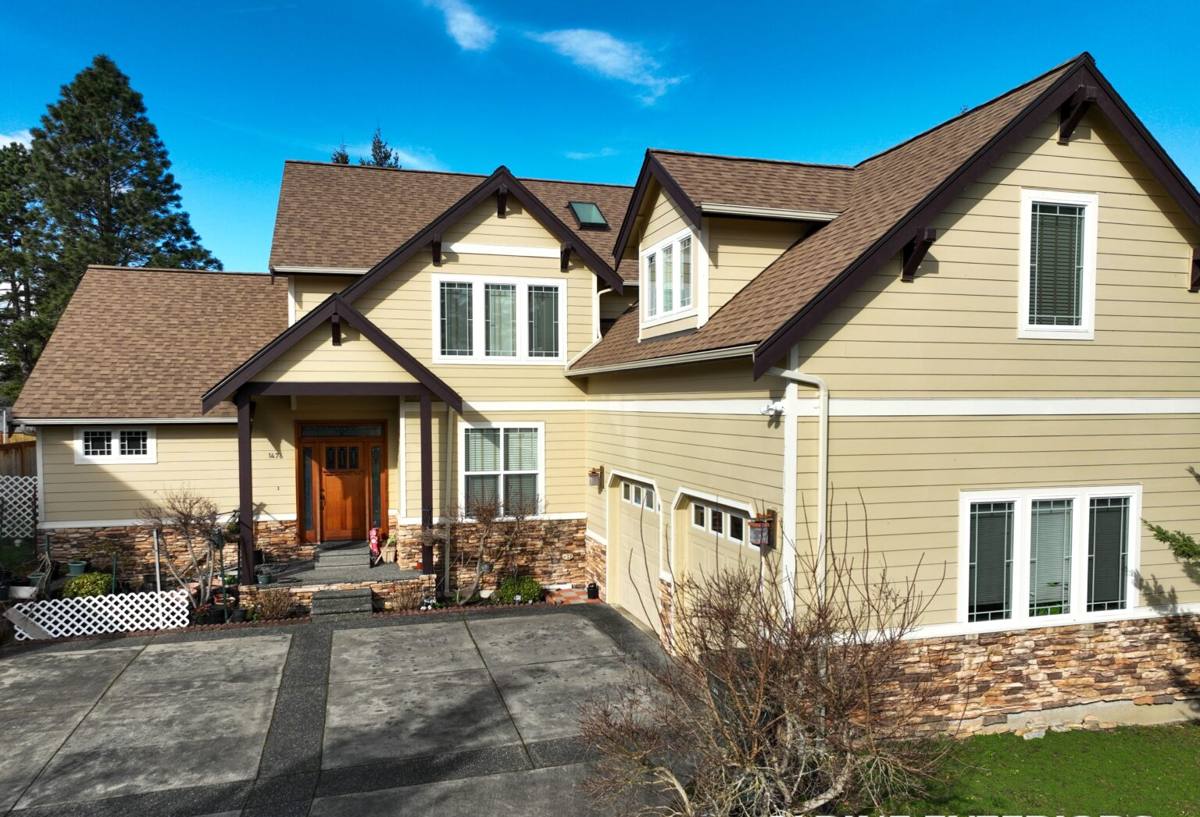
What a Climate-Engineered Product Actually Solves
James Hardie fiber cement siding is manufactured with regional exposure in mind, not as a one-size-fits-all product. It's engineered from cement, sand, and cellulose fibers, which makes it dimensionally stable across wet and dry cycles — it doesn't swell, cup, or absorb water the way wood-based siding can. It's also non-combustible, which matters increasingly in the Pacific Northwest as wildfire smoke and ember exposure become part of the regional conversation even in wetter coastal counties.
HardieZone Engineering for Marine Climates
Hardie manufactures its siding in two formulations tuned to climate zone: HZ10 for regions with hard freeze-thaw cycles, and HZ5 for milder, wetter climates like ours. Bellingham falls into the HZ5 zone, and the product specified here reflects that — it's built to perform under sustained moisture exposure rather than repeated deep freezes. Using the correct zone product isn't a marketing detail; it affects how the board handles moisture over its service life.
ColorPlus Finish vs. Field-Applied Paint
Hardie's ColorPlus finish is baked on in a factory-controlled process, which gives it more consistent adhesion and better resistance to fading and mildew growth than paint applied on-site after installation. In a climate where siding stays damp for extended stretches, a finish that resists moisture intrusion at the surface level matters more than it would somewhere drier. It also means touch-up work, when it's ever needed, uses matched proprietary product rather than a guess at a paint store.
What Correct Installation Involves Here
The product only performs as well as the installation behind it. Most siding failures we get called out to inspect in this region trace back to installation shortcuts, not the material itself.
Water Management Behind the Boards
A correct install starts with a drainage plane and rain screen gap that lets any moisture that gets behind the siding find its way back out instead of sitting against the sheathing. Flashing at windows, doors, and any horizontal trim needs to be lapped correctly so water sheds outward at every transition, and kick-out flashing needs to be present anywhere a roofline meets a wall. Skipping these details doesn't cause a problem on day one — it causes one three or five years in, hidden behind the siding where it's expensive to find.
Fastening for Coastal Air
Fastener choice matters more here than in a dry inland climate. Corrosion-resistant fasteners — stainless steel or hot-dip galvanized, per Hardie's fastening specifications — hold up against the slow corrosive effect of salt air. Cheaper fastener choices may hold the board just as well on installation day, but they're the first thing to fail years later, leaving streaking or loose boards behind.
Cut-Edge Sealing
Every field cut exposes raw fiber cement that isn't factory-finished. Sealing those cut edges with the manufacturer-specified product is a small step that takes a crew extra time on-site, and it's one of the first things skipped when a job is rushed. Left unsealed, cut edges are where moisture finds its way into the board first.
Moss, Algae, and Shaded Exposures
Happy Valley's mix of mature trees and hillside lots means a lot of homes have north- or east-facing wall sections that rarely see direct sun. Those are the sections where moss and algae take hold fastest, feeding on the moisture that lingers in shaded, low-airflow areas. Fiber cement doesn't feed organic growth the way wood siding can, but any siding will host surface growth if it stays damp long enough — the difference is how easily it cleans off and whether the growth compromises the material underneath.
ColorPlus finish sheds a soft wash far more easily than bare wood or field-applied paint, and the fiber cement substrate underneath isn't degraded by moss the way wood fiber can be. A yearly rinse with a garden hose or soft wash (no pressure washer directly on the surface) is usually enough to keep shaded elevations looking clean.
How Siding Materials Compare in This Climate
| Factor | James Hardie Fiber Cement | Vinyl | Wood / Cedar |
|---|---|---|---|
| Moisture-driven warping | Dimensionally stable, engineered for HZ5 | Can warp or buckle with temperature swings | Prone to cupping and swelling with repeated wetting |
| Moss/algae cleanup | Sheds soft wash cleanly, finish resists staining | Cleans easily but can look chalky over time | Absorbs organic growth into the grain |
| Salt air durability | Cement substrate unaffected; fasteners spec'd for corrosion resistance | Can become brittle with UV and salt exposure over time | Finish breaks down faster under salt exposure |
| Fire resistance | Non-combustible | Combustible | Combustible, requires added protection |
| Repaint/refinish cycle | Factory finish rated for years before repaint needed | Doesn't hold paint well if color change is wanted | Typically needs repainting or restaining every few years |
This isn't a knock on every other product on the market — vinyl and wood both have legitimate uses and plenty of homes wearing them without issue. It's why, for the climate our customers actually live in, we standardized on one system rather than installing whatever a homeowner saw at a big-box store.
Our Process for a Happy Valley Job
- Walk-through and moisture check. We look at the existing siding, sheathing condition where accessible, and any problem areas — shaded walls, low-slope roof intersections, areas near grade.
- Scope and product selection. We confirm HZ5 product lines and ColorPlus color, and identify any trim, flashing, or sheathing repair that needs to happen before new siding goes on.
- Tear-off and substrate prep. Old siding comes off, sheathing is inspected and repaired as needed, and the water-resistive barrier and rain screen gap go in correctly before anything else is installed.
- Installation to Hardie's fastening and flashing specifications. This includes corrosion-resistant fasteners, properly lapped flashing, and sealed cut edges throughout.
- Final walkthrough. We go over the finished job with the homeowner, including basic care guidance for the specific exposures on that house.
What Drives Cost on a Happy Valley Home
Every home is different, and the only way to get a real number is a walk-through, but the factors that move the price are consistent:
| Cost Factor | Why It Matters |
|---|---|
| Existing siding removal | Tear-off and disposal add labor, especially with multiple layers or hazardous materials to handle |
| Sheathing/framing repair | Rot found once old siding comes off has to be fixed before new siding can go on correctly |
| Home size and wall complexity | Dormers, multiple stories, and cut-up wall lines take more labor per square foot than simple rectangular walls |
| Trim and accessory scope | Corner boards, window trim, and fascia work add to material and labor beyond the flat wall area |
| Access and site conditions | Steep hillside lots, tight setbacks, and limited staging area are common in this neighborhood and affect labor time |
As a broad, honest range, full James Hardie siding replacement projects in this region commonly land somewhere in the low-to-mid five figures for an average-sized home, with total cost swinging based on the factors above. Anything more precise than that needs an actual look at your house.
What to Look for When Hiring for This Job
- Manufacturer training or certification specific to James Hardie installation, not just general siding experience
- A written scope that names the rain screen/drainage detail, flashing approach, and fastener type — not just "install siding"
- Willingness to walk you through sheathing condition once old siding is off, before covering it back up
- A warranty structure that covers both the product and the labor, and clarity on what each one actually includes
- Local references or completed work in Bellingham or Whatcom County, where the exposure conditions match your home
Why a Crew That Already Works This Neighborhood Matters
Happy Valley's mix of hillside grades, mature tree cover, and proximity to the water means the same siding detail that works fine on a flat, sun-exposed inland lot can under-perform here. A crew that regularly works this area already knows which walls tend to hold moisture, how the local permitting process runs, and what fastening and flashing details actually hold up against the salt air and driving rain this part of Bellingham sees. That's the difference between a generic install and one built for the house it's actually going on.
If you're weighing a siding replacement in Happy Valley, we're glad to come take a look and walk you through what your home specifically needs — no pressure, no obligation, just a straight answer and a free estimate.