 Bellingham Siding
 Why Blaine Homes Need a Different Approach to Siding
Blaine sits about as close to saltwater and open weather as a home in Whatcom County can get. That combination of salt-laden air off the Strait, wind-driven rain, and a shoulder season that barely dries out before the next system rolls in puts real stress on exterior materials year after year. Siding here isn't just decorative — it's the first and most exposed line of defense between the house and a genuinely tough marine climate.
We install James Hardie fiber cement siding exclusively, and Blaine is one of the areas where that choice matters most. Homes closer to the water deal with a faster cycle of wetting and drying, more airborne salt, and more moss and algae pressure than homes further inland toward Bellingham. Fiber cement handles that cycle without the swelling, softening, or fungal decay that wood-based and some engineered wood products are prone to in this exact environment.
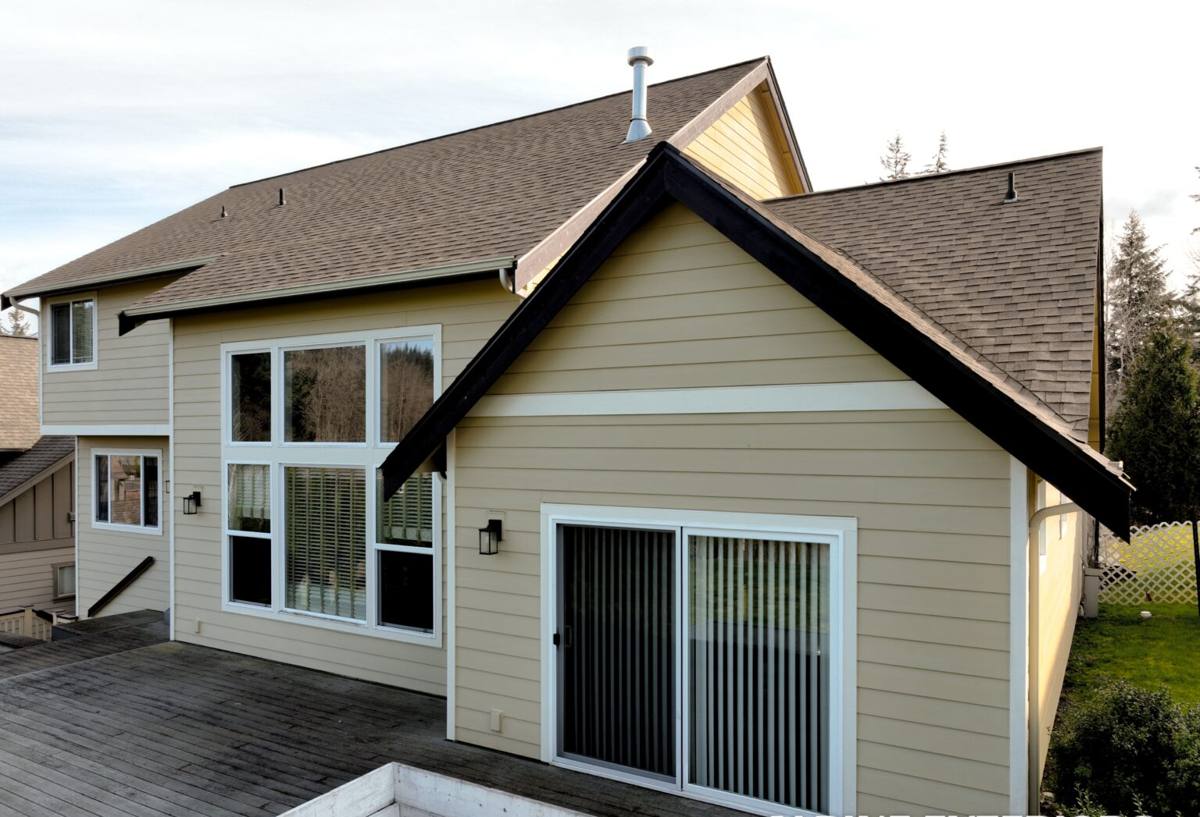
What Blaine's Climate Actually Does to Siding
Salt Air and Corrosion
Proximity to Semiahmoo Bay and the Strait of Georgia means airborne salt is a constant, low-level presence on exterior surfaces. Salt accelerates the breakdown of fasteners, trim, and paint film, and it speeds up moisture absorption in porous or engineered wood substrates. Fiber cement itself is inert to salt — it doesn't corrode or leach — but the fasteners, flashing, and trim details around it still need to be selected and installed correctly or they become the weak point.
Driving Rain
Storms coming off the water in this part of Whatcom County often bring rain sideways, not straight down. That means siding here takes on more wind-driven moisture at laps, corners, and penetrations than siding in a sheltered inland yard would. Every horizontal lap, every window and door opening, and every place siding meets trim is a spot where water can be pushed in rather than just running off.
Moss and Algae Season
Whatcom County's wet season stretches long, and north-facing and shaded walls in particular stay damp for extended stretches. That's exactly the environment moss and algae need to take hold. Once organic growth establishes on a porous or absorbent surface, it holds moisture against the substrate and accelerates whatever decay process is already underway underneath.
Why Fiber Cement Is the Right Material for This Environment
James Hardie fiber cement is cement, sand, and cellulose fiber — it doesn't rot, it doesn't support fungal growth the way wood does, and it isn't a food source for the organisms that cause moss and algae to spread on organic siding materials. It's also non-combustible, which matters in Whatcom County's increasingly dry late-summer stretches even though the wet-season concerns dominate most of the year.
The factory-applied ColorPlus finish is baked on under controlled conditions and backed by its own finish warranty, which matters directly in a salt-air, high-moisture environment: field-applied paint is more vulnerable to adhesion failure when it's fighting damp substrate and salt exposure from day one. A factory finish sidesteps that weak link.
Hardie's HZ5 product line is engineered specifically for wetter, harsher climate zones like ours, with enhanced moisture and freeze-thaw performance versus their standard formulation. For a Blaine home taking direct exposure off the water, that's not a marketing distinction — it's the difference between a product built for this climate and one that just happens to be sold here.
What a Correct Fiber Cement Install Involves in Blaine
The material only performs as well as the installation. In a high-exposure coastal environment, a handful of details separate a siding job that lasts decades from one that fails early despite using the right product.
- Weather-resistive barrier and drainage plane: a continuous, correctly lapped barrier behind the siding with a drainage gap so incidental moisture can escape instead of sitting against the substrate.
- Flashing at every penetration: windows, doors, hose bibs, light fixtures, and vents all need proper head flashing and kick-out flashing so driving rain is directed out, not in.
- Correct fastener spec: corrosion-resistant fasteners, driven to Hardie's specified depth and pattern — not overdriven, not underdriven — since fastener failure is one of the most common causes of early siding problems in salt-air zones.
- Proper clearance at grade and roofline: siding held off decks, patios, and roof surfaces per manufacturer minimums so it isn't sitting in standing water or repeated splash-back.
- Caulking only where Hardie specifies it: over-caulking traps moisture in the assembly; under-caulking leaves gaps at seams. Both are common mistakes from crews unfamiliar with the product.
- Butt joints and lap alignment: tight, properly flashed butt joints and consistent reveal so water sheds the way the system is designed to shed it.
Every one of those details is more forgiving in a dry inland climate and less forgiving here. A crew that hasn't specifically dealt with wind-driven coastal rain can get the product right and still get the install wrong in ways that only show up two or three winters later.
Fiber Cement vs. Other Siding Options for a Blaine Home
| Factor | James Hardie Fiber Cement | Vinyl | Wood / Primed Spruce / Cedar |
|---|---|---|---|
| Moisture resistance | Engineered for wet climates (HZ5) | Doesn't absorb, but seams and expansion gaps can let water track behind | Absorbent; prone to swelling and rot with sustained exposure |
| Salt air durability | Inert to salt exposure | Can become brittle and discolor over time | Salt accelerates decay and finish breakdown |
| Moss/algae resistance | Non-organic, doesn't feed growth | Can host surface growth in damp shade | Organic substrate feeds fungal and algae growth |
| Fire resistance | Non-combustible | Combustible, can melt/deform | Combustible |
| Finish longevity | Factory ColorPlus finish, warrantied | Color molded in, can fade/chalk | Field-applied paint needs recoating |
We don't install vinyl, LP SmartSide, or unfinished wood siding, and this climate is a big part of why. Vinyl's expansion and contraction and seam-based water management is a harder system to keep tight in a wind-driven-rain environment. Wood and engineered wood products give up their durability edge fast once sustained moisture and salt exposure enter the picture. Fiber cement, installed correctly, is the product we're willing to put our name behind on homes in this area.
Our Process for Blaine Siding Projects
1. On-Site Assessment
We walk the exterior and look specifically at exposure — which walls face the prevailing weather, where moss and staining are already showing, and where existing flashing or trim details are failing. This is different from a generic estimate; it's an assessment built around how this specific site takes on weather.
2. Substrate and Moisture Check
Before any new siding goes up, we check what's underneath. If sheathing or framing has taken on moisture damage from years of a failing exterior, that gets addressed first — new siding over a wet or compromised substrate just hides the problem.
3. Weather Barrier and Flashing Install
This is the step that determines long-term performance more than any other, and it's the step that's easiest for an inexperienced crew to shortcut. We install a continuous drainage plane and flash every penetration to spec before the first piece of siding goes up.
4. Hardie Panel Installation to Manufacturer Spec
Fastener pattern, reveal, clearances, and joint treatment all follow James Hardie's published installation requirements — which is also what keeps the manufacturer's warranty intact.
5. Final Walkthrough
We walk the finished job with the homeowner, checking sightlines, trim, and caulking, and confirm everything meets both our standard and Hardie's.
What to Check Before Hiring Anyone for Siding Work in Blaine
- Do they work in Whatcom County's coastal areas regularly, or is this an unfamiliar climate for them?
- Are they a factory-certified installer for the product they're proposing?
- Can they explain their flashing and drainage plane approach in specific terms, not just "we'll seal it up"?
- Do they carry proper licensing and insurance for exterior work in Washington?
- Will the manufacturer's warranty stay intact based on how they install it?
A crew that mainly works drier, inland jobs can do fine work there and still be out of their depth on a wind-exposed lot near the water. Experience with this specific climate isn't a nice-to-have on a Blaine project — it's the difference between a job that holds up and one that needs revisiting in a few years.
Get a Straightforward Estimate
If your Blaine home's siding is showing moss buildup, staining, soft spots, or failing caulk lines, it's worth having someone look at it before another wet season adds to the damage. We'll walk the exterior, tell you honestly what we see, and put together a clear estimate — no pressure, no obligation.