 Bellingham Siding
 Siding Repair Built for Ferndale's Coastal Climate
Ferndale sits close enough to the water that salt air is a real factor in how siding ages, on top of the driving rain and long, damp moss season that the rest of Whatcom County deals with every winter. Homes here take a different kind of beating than a house twenty miles inland, and siding repair that doesn't account for that combination tends to fail again within a few years. We work on homes throughout the Bellingham area, and Ferndale's mix of coastal exposure and heavy seasonal rain is one of the more demanding environments we see regularly.
This page is specifically about siding repair for Ferndale properties — not a replacement job, not a full re-side, just the process of finding what's actually wrong with your existing siding and fixing it correctly so it holds up to another wet season.
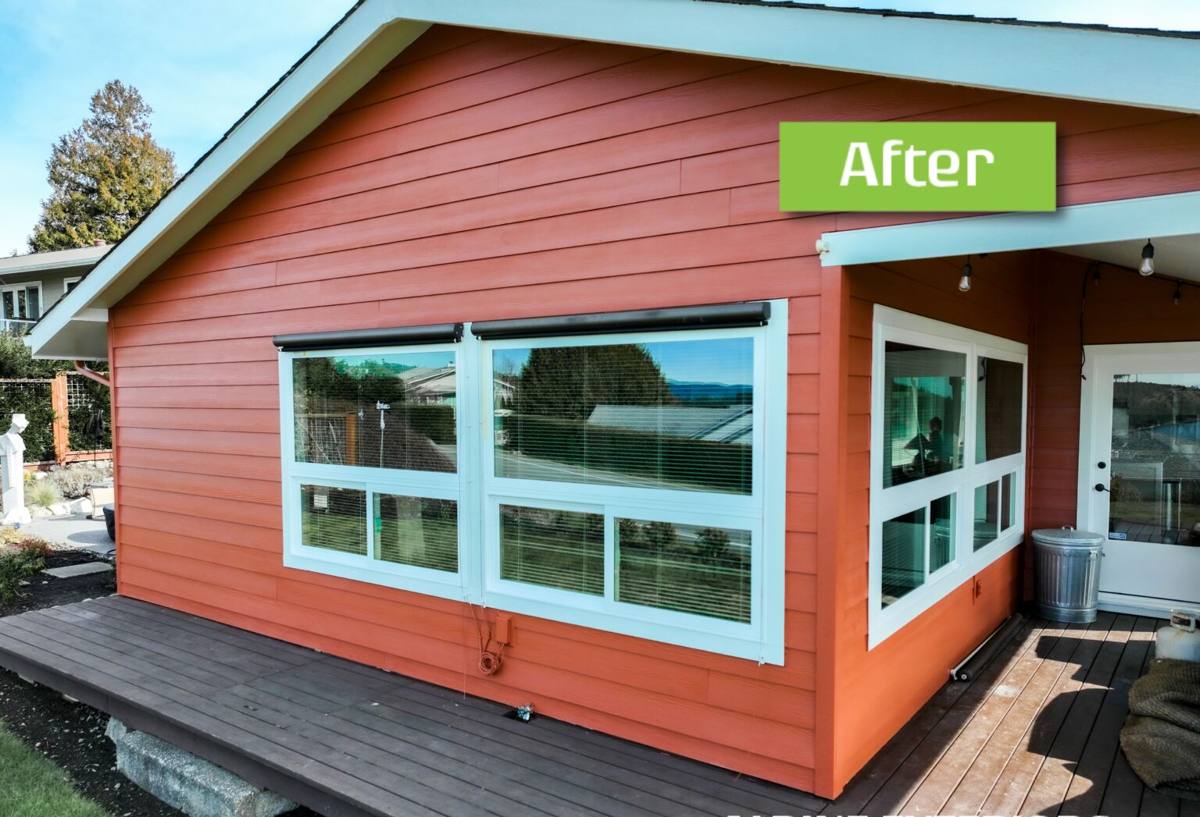
What Ferndale's Climate Does to Siding Over Time
Three conditions show up again and again on repair calls in this area:
- Salt-laden air: Proximity to the water accelerates corrosion on fasteners, flashing, and any exposed metal trim — which in turn can loosen siding panels or cause staining and rust streaks at the point of failure.
- Driving, wind-blown rain: Storms coming off the water don't just fall straight down — they get pushed sideways into wall assemblies, which stresses seams, butt joints, and anywhere caulk or flashing has started to fail.
- Extended moss and algae season: Mild, wet winters mean moss and algae have months to establish themselves on north-facing walls and anywhere siding stays shaded and damp, which traps moisture against the surface long after a storm has passed.
Individually, any one of these is manageable. Together, over years, they're what turns a small failure point — a cracked panel, a gap in caulking, a piece of trim that's pulled away — into a moisture problem behind the wall if it isn't addressed.
Why Small Damage Doesn't Stay Small Here
In a drier climate, a hairline crack in siding or a slightly open seam might sit for years without causing real damage. In Ferndale's climate, that same crack is exposed to driving rain repeatedly through the fall and winter, plus salt air that keeps humidity elevated even between storms. Moisture finds its way in, and once it's behind the siding, it's working on the sheathing and framing where you can't see it. That's the core argument for repairing promptly rather than waiting: the climate here doesn't give minor damage time to stay minor.
Signs Your Ferndale Home Needs Siding Repair
Most of what we get called out for falls into a handful of categories:
- Cracked, chipped, or split siding panels, especially near corners and window trim
- Soft or bubbling spots — a strong sign moisture has already gotten behind the surface
- Persistent moss or algae staining that keeps coming back after cleaning
- Gaps or separation at seams, butt joints, or where siding meets trim and flashing
- Rust streaking below nail heads or metal trim, common near the coast
- Visible warping, buckling, or panels that have pulled away from the wall
- Paint that's peeling or failing faster than expected in one specific area
That last point matters — localized failure (one wall, one section) almost always points to a specific cause: a flashing gap, a downspout dumping water against the wall, a shaded area that never fully dries out. Good repair work identifies that cause instead of just patching the visible damage.
What a Correct Repair Actually Involves
Siding repair done right is not just swapping a damaged board for a new one. It starts with figuring out why that spot failed in the first place — because if the underlying cause isn't fixed, the replacement piece will fail the same way on the same timeline.
Our process
- Diagnose the cause, not just the symptom. We look at flashing, caulking, grade slope, gutter and downspout behavior, and shading before we touch the siding itself.
- Check what's behind the siding. Any suspected moisture intrusion means checking the water-resistive barrier and sheathing in that section — repairing over hidden rot just hides the problem, it doesn't solve it.
- Match the repair to what's there, or recommend a better path. If the existing siding is a product we don't install, we'll tell you honestly whether a patch will hold or whether that section is a candidate for a proper Hardie replacement down the line.
- Correct the root cause. Reflash, reseal, redirect water, or address ventilation — whatever's actually driving the failure.
- Finish to blend, not just to function. A repair that works but looks obviously patched isn't a job well done.
Why We Only Repair and Install with James Hardie Fiber Cement
We don't install vinyl, LP SmartSide, cedar, primed spruce, Cemplank, or Allura — and when we're called out to repair a home with one of those products already on it, we'll be straight with you about what we're seeing. This isn't about running down other manufacturers; it's about what holds up to this specific climate over the long run.
James Hardie fiber cement is non-combustible, holds its ColorPlus factory finish far longer than field-applied paint typically lasts, and Hardie engineers specific product lines (the HZ5 line, for instance) for wetter climate zones like ours. It doesn't feed moss and algae growth the way wood-based products can, and it doesn't corrode or pit the way some metal or lower-grade composite trims do near salt air. When we do need to replace a damaged section, matching into existing Hardie siding is straightforward — color, profile, and texture all line up because it's a manufactured, consistent product.
If your home currently has a different siding product, we'll still do honest repair work on it. But we won't pretend a vinyl patch or a cedar board is going to hold up the same way a Hardie panel would in this specific environment, and we'll tell you that plainly rather than upselling you on something you didn't ask about.
Repair vs. Replacement: How We Help You Decide
| Factor | Repair likely makes sense | Replacement should be considered |
|---|---|---|
| Extent of damage | Isolated to one or two sections | Widespread across multiple walls |
| Age of siding | Well within expected service life | Near or past typical lifespan |
| Moisture intrusion | None found behind the surface | Sheathing or framing already affected |
| Product on the home | Hardie fiber cement, matchable | Discontinued profile or failing product type |
| Recurrence | First occurrence in that spot | Same area has failed multiple times |
We'll always tell you honestly which column your situation falls into. Most calls genuinely are repairs — full replacement is only the right call when the damage or the underlying product justifies it.
Why Hiring a Crew That Already Works Ferndale Matters
Repair work depends on understanding cause and effect for the specific conditions a house sits in. A crew that mostly works drier, inland climates may not immediately connect a recurring stain pattern to salt air corrosion on a fastener, or recognize that a north wall's moss problem is a ventilation and shading issue rather than a cleaning issue. We work across Bellingham and Whatcom County regularly, including Ferndale, so we've seen these specific failure patterns enough times to diagnose them quickly instead of guessing.
There's also a practical side: local crews can typically get to a repair faster, which matters when you're trying to close up an opening before the next storm rolls in off the water.
What to Check Before You Hire Anyone for Siding Repair
- Do they inspect what's behind the siding, or only patch what's visible?
- Can they explain why the damage happened in that specific spot, not just fix it?
- Do they carry proper licensing and insurance for exterior work in Washington?
- Will they give you a written scope of work before starting?
- Are they honest about repair vs. replacement, rather than defaulting to the bigger job?
- Do they have experience with the specific siding product currently on your home?
Get a Straight Answer About Your Siding
If you're seeing cracked panels, persistent moss staining, or soft spots on your Ferndale home, it's worth having someone look at it before another wet season sets in. We'll give you an honest assessment of what's actually going on, what it will take to fix it correctly, and whether repair or replacement is the right call — no pressure, no upsell. Request a free estimate below and we'll get back to you to schedule a look at your home.