 Bellingham Siding
 Why Fairhaven Roofs Wear Differently Than Roofs Ten Miles Inland
Fairhaven sits close to Bellingham Bay, and that proximity to saltwater changes how a roof ages. Salt-laden air corrodes exposed metal faster than it would a few miles east, driving rain off the water finds every weak seam in flashing and underlayment, and the shade from mature trees on many Fairhaven lots keeps roof surfaces damp long after a storm passes. Put those three things together with a Pacific Northwest moss season that can run eight or nine months out of the year, and you get a roof environment that punishes shortcuts. A roof replacement done for a dry-climate house doesn't hold up the same way here, and a contractor who mostly works inland neighborhoods may not think to account for it.
None of this means Fairhaven roofs fail faster than the rest of Bellingham as a rule. It means the details matter more, and skipping them costs homeowners sooner rather than later.
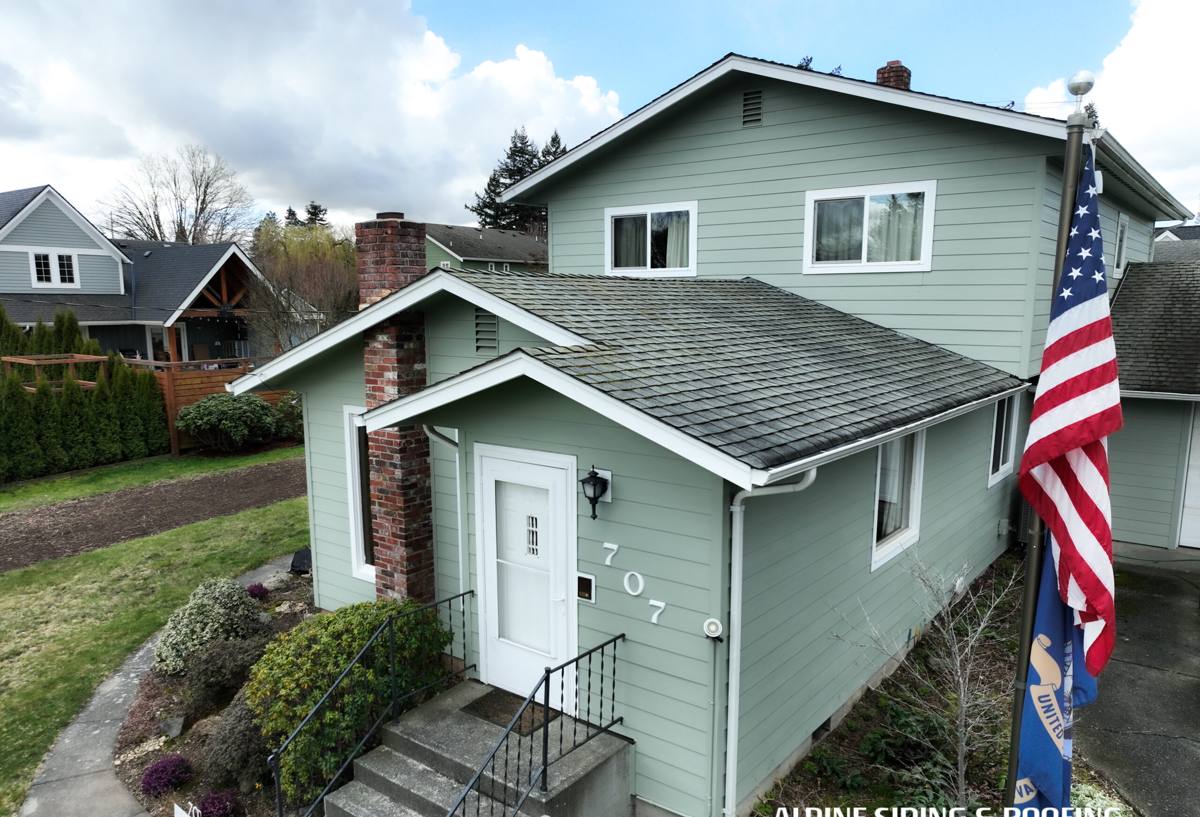
What Bellingham's Climate Actually Does to a Roof
Salt Air and Metal Fatigue
Nails, flashing, vents, and any exposed fasteners are the first things to show wear near the water. Standard galvanized fasteners can start rusting years before the shingles around them fail, and once a fastener corrodes, the seal it was holding goes with it. This is a bigger factor within roughly a mile or two of the bay, which covers most of Fairhaven.
Driving Rain and Wind-Driven Water
Storms coming off the water don't just fall straight down — wind pushes rain sideways and up under shingle edges, at ridge caps, and around any roof penetration (vents, chimneys, skylights). A roof that would be fine in a calmer climate with basic flashing can leak here if flashing details and underlayment coverage aren't upgraded to handle wind-driven moisture.
Moss, Shade, and Moisture Retention
Many Fairhaven properties have mature trees and north-facing or shaded roof sections that stay damp for days after rain. That's exactly the environment moss and moss spores need. Moss isn't just cosmetic — as it grows, it lifts shingle edges, holds water against the roof deck, and accelerates rot underneath. A roof replacement that doesn't account for moss will need moss treatment and cleaning far more often than one that does.
Signs a Fairhaven Roof Needs Replacement, Not Another Repair
- Shingles are cupping, curling, or losing granules in patches, not just at one isolated spot
- Moss has been growing back within a year or two of cleaning, even after treatment
- You've had two or more separate leak repairs in the last few years in different spots
- The roof deck feels soft, springy, or shows sagging when you're up there or from the attic
- Flashing around chimneys, vents, or skylights is rusted, cracked, or was never properly re-flashed during past repairs
- Your roof is nearing or past the manufacturer's expected lifespan for its material and you're seeing granules collecting in gutters
- Interior signs: water stains on ceilings, musty smell in the attic, or daylight visible through the roof deck
Any one of these on its own might just need a repair. Several together, especially on an older Fairhaven home, usually means the roof system as a whole is past the point where patching makes financial sense.
What a Correct Roof Replacement Involves Here
Full Tear-Off, Not Overlay
Roofing over existing shingles is sometimes allowed by code, but in a wet, mossy climate it traps moisture between layers and hides deck damage. A proper Fairhaven replacement starts with a full tear-off so the deck underneath can actually be inspected.
Deck Inspection and Repair
Once the old roofing is off, any soft, rotted, or delaminated plywood or sheathing needs to be identified and replaced before anything new goes down. Skipping this step is one of the most common ways a "new roof" fails early.
Upgraded Underlayment
Given the wind-driven rain off the bay, we treat ice-and-water shield membrane at eaves, valleys, and penetrations as standard, not optional, and pair it with synthetic underlayment across the rest of the deck for a second line of defense if wind pushes water past the shingle layer.
Flashing Done Right
Chimneys, skylights, sidewalls, and vent pipes are where most leaks actually start. Correct step flashing, counter-flashing, and sealed penetrations matter more here than shingle brand.
Ventilation
A roof deck that can't breathe traps moisture from inside the house, which speeds up rot from underneath — separate from the moss problem happening on top. Balanced intake and exhaust ventilation is part of a correct replacement, not an add-on.
Fastener and Metal Choices
Given salt air exposure, we favor corrosion-resistant fasteners and flashing metals over standard galvanized options where the roof is closer to the water or heavily shaded, since that's where corrosion shows up first.
Material Options for a Fairhaven Home
| Material | Moss Resistance | Salt Air / Wind Performance | Typical Lifespan | Trade-offs |
|---|---|---|---|---|
| Architectural asphalt shingle | Moderate (algae-resistant granules help) | Good with proper fastening and flashing | 20-30 years | Most economical; still needs periodic moss cleaning on shaded roofs |
| Standing seam metal | High — moss struggles to grip smooth metal | Very good if corrosion-resistant coating and fasteners are used | 40-50+ years | Higher upfront cost; needs correct fastener spec near the water |
| Synthetic/composite shingle | Good, resists moisture absorption | Good; check manufacturer wind rating | 30-50 years | Mid-to-upper cost; product quality varies by brand |
| Cedar shake | Low without regular treatment | Vulnerable to rot in persistent damp/shade | 15-25 years realistically in this climate | Traditional look fits older Fairhaven homes, but highest maintenance burden here |
We're honest with clients about cedar shake specifically: it can suit the historic character of some Fairhaven homes, but in a climate this wet and shaded, it demands more upkeep than most homeowners want to sign up for, and moisture behavior over time is its biggest weakness here. That's a maintenance trade-off, not a knock on the material itself.
Cost Factors for Fairhaven Roof Replacement
| Factor | Why It Matters Here |
|---|---|
| Roof pitch and access | Fairhaven's hillier lots and mature landscaping can complicate staging and safety setup |
| Deck condition | Older homes often need more sheathing replacement once the old roof comes off |
| Material choice | Metal and composite cost more upfront but reduce moss-related maintenance long-term |
| Flashing complexity | Chimneys, skylights, and dormers add labor and material cost but are critical in wind-driven rain |
| Tree cover | Heavy shade may call for wider ice-and-water shield coverage and closer moss monitoring after install |
| Permitting | Historic district considerations in parts of Fairhaven can affect timeline and material approval |
We give a firm, itemized number after a real roof inspection — not a phone estimate — because these factors vary house to house even within the same block.
Our Process, Start to Finish
- On-site inspection. We walk the roof and attic, check the deck, flashing, and ventilation, and take photos of anything that affects the scope.
- Written estimate. A clear breakdown of material, labor, and any deck repair allowance, with material options explained honestly.
- Permitting. We handle the City of Bellingham permit process, including any additional review that applies to Fairhaven's historic district.
- Tear-off and deck repair. Full removal, deck inspection, and replacement of any compromised sheathing before anything new goes down.
- Underlayment, flashing, and roofing installation. Built to the standard above, not the minimum code requirement.
- Cleanup and final walkthrough. Magnetic sweep for stray fasteners, debris haul-off, and a walkthrough so you know exactly what was done.
Why a Crew That Already Works Fairhaven Matters
A roof replacement isn't just about the shingles — it's about knowing what this specific corner of Whatcom County throws at a roof. A crew that regularly works Fairhaven already knows to spec corrosion-resistant fasteners near the water, to plan around narrow streets and sloped driveways for material staging, and to expect the historic district permitting steps rather than being surprised by them mid-project. That familiarity shows up as fewer callbacks, fewer surprises during tear-off, and a roof that's actually built for the conditions it has to survive rather than a generic install.
It also means we can speak plainly about what your specific roof needs instead of defaulting to whatever's easiest to sell. If your roof only needs another five years and a good moss treatment, we'll say so.
Keeping a New Roof Performing After Install
- Schedule a gutter and downspout check each fall before the wet season peaks
- Trim back tree limbs that overhang the roof to cut down on shade and debris buildup
- Have moss growth treated early — before it spreads — rather than waiting for a full cleaning
- Walk the attic once a year for signs of moisture, even with a new roof
- Keep records of your roof's install date, materials, and warranty paperwork somewhere you can find them
- Address any small leak immediately rather than waiting to see if it gets worse
If you're weighing a roof replacement for a home in Fairhaven, we're glad to come take a look, walk you through what we find, and put together a straightforward, no-pressure estimate. There's a form below to get started.