 Bellingham Siding
 Edgemoor's Siding Problem Is Different From the Rest of Bellingham
Edgemoor sits on the bluffs and shoreline above Bellingham Bay, and that position is exactly what makes siding wear differently here than it does a few miles inland. Homes closer to the water take on salt-laden air, wind-driven rain off the bay, and heavy tree canopy in the same package. That combination shows up on siding as a specific pattern: paint and finish failure on the water-facing walls first, moss and algae staining on the shaded north and east elevations, and soft or delaminating material at the bottom courses and around windows where wind-blown rain gets pushed sideways instead of falling straight down.
A lot of siding replacement advice online is written for a generic climate — dry summers, mild winters, no salt exposure. That's not Whatcom County, and it's especially not Edgemoor. If you're planning a siding replacement here, the job needs to account for what this specific stretch of Bellingham actually throws at a house year-round, not just what the product label says it can handle in ideal conditions.
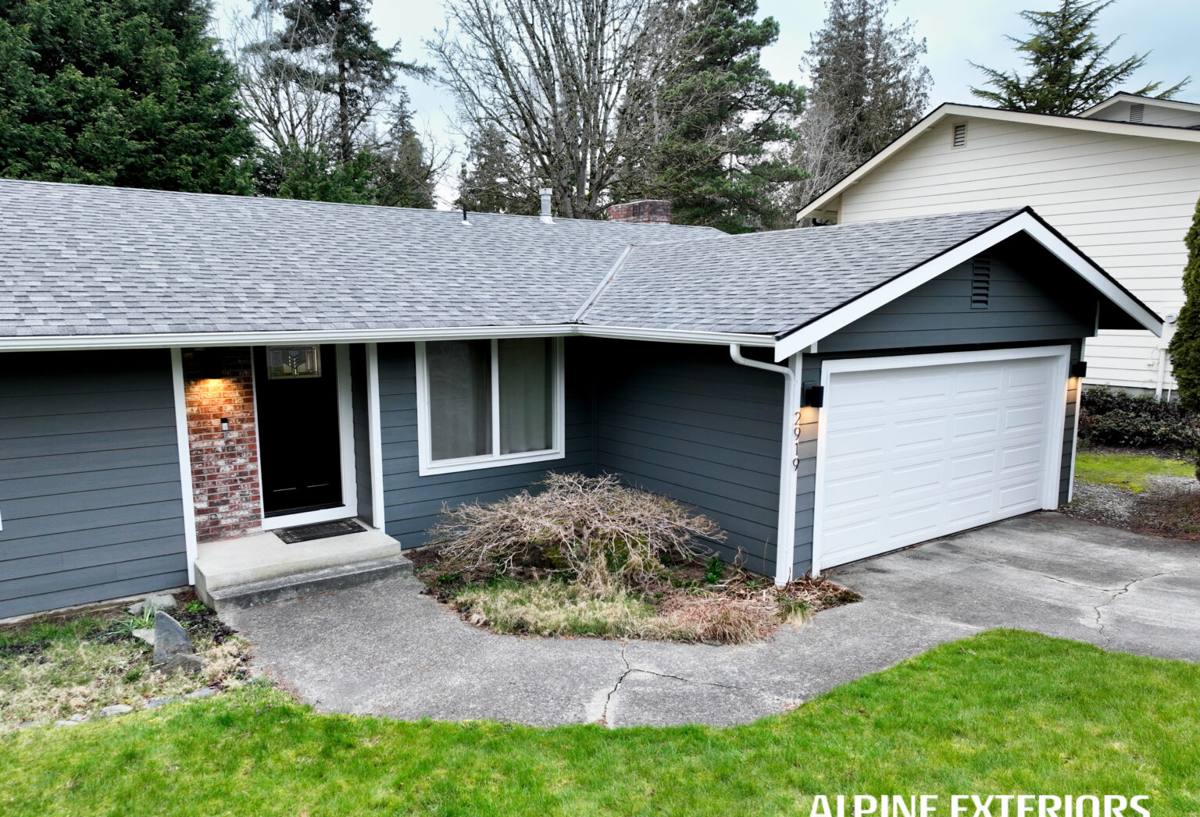
What Salt Air, Driving Rain, and a Long Moss Season Actually Do
Salt air
Airborne salt from Bellingham Bay accelerates the breakdown of paint film and caulk faster than it would inland. On lower-grade siding materials, this shows up as chalking, fading, and finish failure well ahead of the manufacturer's stated repaint interval. Fasteners and trim that aren't corrosion-rated are also more likely to bleed rust streaks down the face of the siding within a few years near the water.
Driving rain
Storms coming off the Salish Sea don't just drop rain straight down — they push it sideways into wall assemblies, especially on exposed and elevated lots like much of Edgemoor. That means the weather-resistive barrier, flashing, and lap details behind the siding matter as much as the siding itself. Water that gets past a poorly lapped joint or an unflashed window has nowhere to go but into the wall.
Moss and algae season
Whatcom County's wet season runs long, and Edgemoor's tree cover keeps shaded wall sections damp for extended stretches even between storms. Moss and algae don't just look bad — sustained moisture against a wall surface is what causes swelling, soft spots, and eventual rot in siding that can't handle repeated wetting and drying cycles.
None of this is unique to any one product, but it's the reason material choice and installation detail matter more here than they would in a drier part of the state.
Why a Patch Job Doesn't Solve an Edgemoor Siding Problem
We get calls from Edgemoor homeowners who want a few damaged boards replaced rather than a full re-side. Sometimes that's the right call — a single impact-damaged section on an otherwise sound wall doesn't need a full tear-off. But when the damage is moisture-driven (soft boards, staining that keeps coming back after cleaning, paint that won't hold), patching the visible spot usually just delays the real fix. The underlying wall may already be compromised, and new siding installed over an unaddressed moisture problem fails again, faster.
A correct siding replacement means pulling the old material far enough back to actually assess the sheathing and weather barrier underneath, not just swapping boards that look bad on the surface.
Why We Install Only James Hardie Fiber Cement
We don't install vinyl, LP SmartSide, primed spruce, cedar, or other fiber cement brands like Cemplank or Allura. That's a deliberate standard, not a lack of options, and it matters more in a bay-exposed, wet-climate neighborhood like Edgemoor than almost anywhere else in the region.
| Material | How it holds up near Bellingham Bay |
|---|---|
| Vinyl | Doesn't rot or absorb moisture, but it expands/contracts with temperature swings, can warp or crack in wind exposure, and offers no fire resistance — a real consideration given how much of Edgemoor is treed. |
| LP SmartSide (engineered wood) | Wood-based, so it depends heavily on caulking and paint film staying intact; in a long wet season with salt air degrading finishes faster, the maintenance window is tighter than most homeowners expect. |
| Cedar / primed spruce | Natural wood look, but requires ongoing refinishing and is the most vulnerable of the group to sustained moisture and moss growth on shaded elevations. |
| Other fiber cement (Cemplank, Allura) | Similar base material to Hardie, but we standardized on one product line so our crew has deep, repeatable install experience and warranty coverage is consistent across every job. |
| James Hardie fiber cement | Non-combustible, engineered moisture resistance (HZ5 line for the Pacific Northwest), factory-applied ColorPlus finish that resists salt-air fading better than field-applied paint, backed by a transferable warranty. |
To be fair to the alternatives: vinyl is inexpensive and low-maintenance in mild climates, and engineered wood and cedar can look excellent when properly maintained. The trade-off is that "properly maintained" is a bigger ask in a neighborhood dealing with salt air, driving rain, and moss on a near-constant basis. We'd rather install one product correctly than install several products with the caveat that homeowners need to stay on top of upkeep to avoid early failure.
What Correct Installation Involves Here
James Hardie siding performs to spec only when it's installed to spec — the material isn't the whole story.
- HZ5 product line: engineered for the wetter, harsher side of Hardie's climate zones, which fits Whatcom County's exposure.
- Correct clearances: proper gap between the bottom of the siding and grade, decks, or roof lines so splashback and standing water don't sit against the material.
- Weather-resistive barrier and flashing: housewrap and window/door flashing installed to shed driving rain outward, not just siding laid over whatever's already on the wall.
- Fastener spec: corrosion-resistant fasteners set to the manufacturer's pattern and depth — critical this close to salt air, where the wrong fastener rusts and stains the face of the siding.
- Caulking and joint treatment: factory-finished ColorPlus panels still need correctly sealed joints and butt seams to keep water out of end grain.
- Ventilation behind the cladding: a rainscreen gap where appropriate, so moisture that does get behind the siding can dry out instead of sitting against the wall.
Skip any one of these and you can end up with premium siding failing for the same reasons a cheaper product would.
Our Process for an Edgemoor Siding Replacement
- On-site assessment: we look at every elevation, not just the visibly damaged one — bay-facing and shaded walls usually show different problems.
- Tear-off and sheathing check: old siding comes off far enough to inspect for rot, soft sheathing, or existing moisture intrusion before anything new goes up.
- Weather barrier repair or replacement: any compromised housewrap or flashing gets corrected — this is the step that's easy to skip and expensive to skip.
- Hardie installation to manufacturer spec: correct clearances, fastening, and joint treatment as noted above.
- Trim, caulking, and finish detail: the small details around windows, corners, and transitions that determine how the wall performs in the next storm season.
- Final walkthrough: we go over the finished work with the homeowner before calling the job done.
What Siding Replacement Costs Depend On in a Neighborhood Like This
| Factor | Why it matters in Edgemoor specifically |
|---|---|
| Home elevation and access | Bluff-top and slope lots common in the area can mean more staging and setup work than a flat inland lot. |
| Extent of hidden damage | Bay exposure means a higher chance of finding moisture damage behind the old siding once it's opened up. |
| Wall square footage and complexity | Dormers, multiple gables, and varied elevations all add cutting and detail time. |
| Trim and accent work | Corner boards, window trim, and accent siding choices affect both material and labor. |
| Tear-off vs. overlay | We don't recommend installing over old siding when moisture is suspected — a full tear-off costs more upfront but avoids covering up a problem. |
We give straightforward, itemized numbers after an in-person look — not a ballpark over the phone, because the hidden-damage variable is real in this area.
Signs an Edgemoor Home May Need Siding Replacement Soon
- Paint or finish that's chalking, peeling, or fading unevenly, especially on the bay-facing side
- Moss or algae staining that returns quickly after cleaning
- Soft or spongy spots when you press on the siding near the bottom courses
- Visible gaps, warping, or separation at seams and corners
- Rust streaking below fasteners or trim
- Rising energy bills that suggest the wall assembly is no longer doing its job
- Interior signs like peeling paint or musty smell on exterior-facing walls
Why It Matters That We Already Work This Neighborhood
A crew that already works Edgemoor and the surrounding Bellingham waterfront knows what this exposure does to a wall before the tear-off even starts — where moisture tends to hide, which elevations need extra flashing attention, and how the local building department expects the work detailed. That's different from a crew that mostly works dry inland subdivisions and treats every job the same way. For a neighborhood dealing with salt air, driving rain, and a moss season that doesn't really end, that local pattern recognition is worth something real.
If you're weighing a siding replacement on your Edgemoor home, we're happy to take a look and give you a straight, no-pressure estimate — no obligation, just an honest read on what your walls actually need. Fill out the form below to get started.