 Bellingham Siding
 Why Edgemoor's Climate Is Harder on Siding Than It Looks
Edgemoor sits close enough to Bellingham Bay that salt-laden air reaches the siding on most homes in the area, even ones set back from the water under tree cover. Add Whatcom County's long wet season, driving rain that comes in sideways off the water during winter storms, and shaded, tree-heavy lots that stay damp for days after a rain, and you have a combination that wears out the wrong siding material faster than homeowners expect. Salt air accelerates corrosion on fasteners and trim. Wind-driven rain finds every gap in flashing and caulking. And the shade that makes Edgemoor's wooded lots attractive also means siding stays wet longer, which is exactly what moss, algae, and mildew need to take hold.
None of this is unique to any one house — it's the baseline condition for exterior materials anywhere near Bellingham Bay. But it means a siding choice that performs fine in a drier inland climate can underperform here, and it means installation details that seem minor elsewhere (a gap left at a butt joint, a missed flashing point above a window) turn into real problems faster in Edgemoor's air and rain exposure.
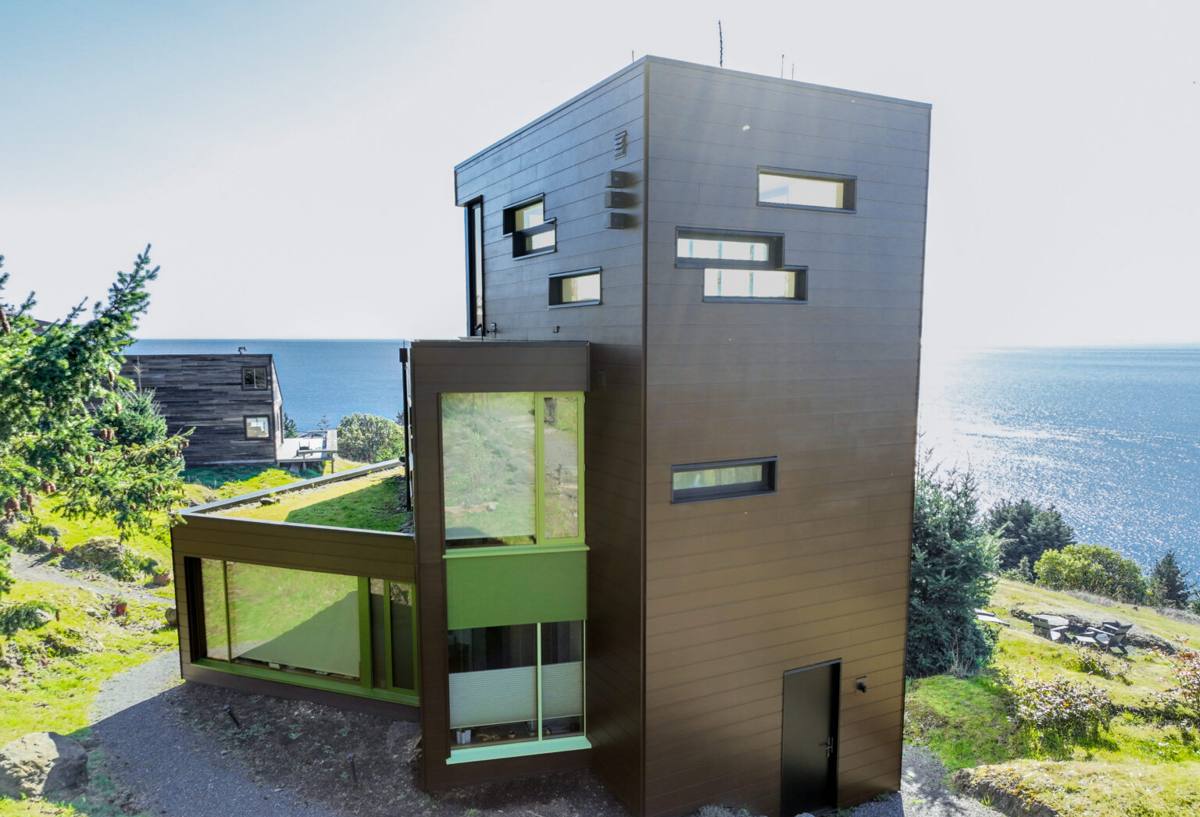
Why We Install Only James Hardie
We standardized on James Hardie fiber cement for every siding job we do, including in Edgemoor, because it's the product that holds up best against the specific stresses this area creates. Fiber cement doesn't rot, doesn't feed insects, and won't warp or swell the way wood-based products can when they take on repeated moisture. James Hardie's HZ5 product line is engineered for climates with significant moisture exposure — freeze-thaw cycling, wind-driven rain, and humidity — which describes Whatcom County's coastal weather well.
The factory-applied ColorPlus finish matters just as much here as the substrate. A baked-on finish resists fading and holds up to salt air better than a field-applied paint job, and it means the color coat isn't a weak point where moisture can get behind the surface. We don't install LP SmartSide, vinyl, Cemplank, Allura, primed spruce, or cedar. Each of those has situations where it can perform reasonably well, but for a marine-influenced climate with heavy moss pressure, we've chosen not to put our name behind installations that require more maintenance vigilance or carry more moisture risk than we think a homeowner should have to manage. James Hardie's combination of non-combustible material, factory finish, and a strong transferable warranty is what we've decided to build every job around.
What This Means Day to Day
- No repainting cycle every 5-7 years the way field-finished wood or fiber cement often needs
- No swelling or delaminating at cut edges and joints when moisture gets in
- No insect entry points that untreated wood-based products can develop over time
- A finish that's less likely to chalk or fade under UV and salt air exposure
What a Correct Installation Involves
James Hardie siding performs the way it's rated to perform only when it's installed to the manufacturer's specifications — and in a climate like this one, the details that get skipped on a rushed job are exactly the details that cause problems within a few wet seasons.
The Details That Matter Most Here
- Correct clearances: siding held above grade, decks, and roof lines per Hardie's minimum gaps so water has somewhere to go instead of wicking into the bottom edge
- Proper flashing: head flashing over every window and door, and step flashing where siding meets a roofline, so wind-driven rain doesn't get pushed behind the cladding
- Weather-resistive barrier done right: a continuous water-resistive barrier behind the siding with correctly lapped seams, since fiber cement is not itself a waterproofing layer
- Fastener spec: corrosion-resistant fasteners driven correctly (not overdriven, not underdriven) — a real consideration this close to salt air, since the wrong fastener corrodes and stains long before the siding itself would fail
- Joint treatment: factory-primed or ColorPlus edges sealed or gapped correctly at butt joints, since an unsealed cut edge is the fastest way for moisture to get into the panel
- Caulking that's meant to last: a quality sealant at trim and penetration points, since caulk failure is one of the most common causes of moisture intrusion behind otherwise sound siding
Every one of these is a place where a shortcut is invisible on installation day and shows up as a callback two or three winters later. In a climate that stays wet as long as this one does, we don't treat any of them as optional.
Our Process From Estimate to Finished Job
- On-site assessment: we look at your current siding condition, moisture damage if any, existing flashing and trim, and the specific exposure your home has — a lot near the water faces different wind-driven rain than a shaded interior lot
- Product and color selection: we walk through James Hardie's plank, shingle, and panel options and ColorPlus palette so the finished look fits the home and the neighborhood
- Written scope and estimate: a clear breakdown of what's being removed, what's being replaced, and what the flashing and moisture-barrier work involves — not just a square-footage price
- Tear-off and inspection of the sheathing: once old siding comes off, we check for rot or moisture damage underneath before anything new goes on, since covering a wet wall with new siding just hides the problem
- Installation to spec: weather-resistive barrier, flashing, correct clearances, and fastening done to James Hardie's published requirements
- Final walkthrough: we go over the finished job with you before we consider it done
Cost Factors for an Edgemoor Siding Project
Every home is different, and we don't quote a number without seeing the house, but the factors below are what actually move a siding estimate up or down.
| Factor | Why It Affects Cost |
|---|---|
| Current siding material and condition | Removal is more involved with multiple layers or hidden rot; sheathing repair adds cost but is not optional if damage is found |
| Home size and wall complexity | More corners, dormers, and trim detail means more cutting, flashing points, and labor time |
| Product line and profile | HZ5 planks, shingle-style panels, and trim boards vary in material cost and installation time |
| Flashing and moisture-barrier scope | A home with prior water damage or poor existing flashing needs more remediation before new siding goes up |
| Access and site conditions | Tree-heavy or sloped lots common in Edgemoor can add setup and staging time |
| ColorPlus vs. field-finished trim | Factory-finished color is more consistent and durable but priced differently than site-painted trim accents |
Signs Your Current Siding Is Already Losing the Fight
Because Edgemoor's climate speeds up moisture-related wear, it's worth knowing what to look for before a small issue becomes a sheathing repair.
- Green or black staining that returns quickly after cleaning, especially on shaded walls
- Soft spots or visible warping, particularly near the bottom courses and around window trim
- Paint that's peeling or bubbling rather than just fading evenly
- Gaps or separation at butt joints and corner boards
- Rust streaking below fasteners or trim fixtures
- A musty smell near exterior walls inside the home, which can indicate moisture has already gotten behind the siding
Any of these is worth a look before it's addressed with a full replacement, since sometimes it's a flashing or caulking repair and sometimes it means the underlying material has been compromised.
Why Local Experience in Edgemoor Actually Matters
A crew that already works in Edgemoor and the surrounding Bellingham area knows the exposure differences between a waterfront-adjacent wall and a shaded, tree-covered one on the same street, and adjusts flashing and detailing accordingly rather than installing every wall the same way. We know how fast moss reestablishes on north-facing and shaded siding here, which affects how we detail drainage and clearances. We know what Whatcom County's building department expects for permitting and inspection on a re-side, so there are no surprises partway through the job. And because we only install one product system, we're not juggling different manufacturer specs from one job to the next — every crew member installing your siding has done this exact scope of work repeatedly, on homes facing the same salt air and rain exposure yours does.
What to Expect After Installation
James Hardie siding installed correctly is genuinely low-maintenance, but "low-maintenance" isn't "no-maintenance." A periodic rinse to keep moss and organic growth from establishing on shaded walls, an occasional check of caulking at trim and penetrations, and prompt attention if you ever notice a fastener working loose or a section of trim separating will keep the system performing the way it's built to. That's a substantially lighter maintenance load than repainting cycles or moisture-related repairs on wood-based sidings, but it's not zero, and we'll walk you through exactly what to watch for at the end of your job.
If your Edgemoor home's siding is showing wear, or you're planning ahead for a replacement before problems start, we're happy to take a look and give you a straightforward, no-pressure estimate — no obligation, just an honest read on where your home stands.