 Bellingham Siding
 Board & Batten in Edgemoor: A Style That Has to Earn Its Keep
Board and batten shows up a lot on the wooded, waterfront-adjacent lots around Edgemoor, and it's not just a style preference. The vertical lines read well against tall firs and cedars, they pair naturally with the mix of mid-century homes and newer custom builds in the neighborhood, and the strong shadow lines hide the kind of minor wall imperfections that show up on older homes near the bay. But board and batten is also one of the least forgiving siding profiles to get wrong. Every batten creates a seam, every seam is a place water can find its way behind the cladding, and on a lot that sits close to Bellingham Bay, water finds every mistake eventually.
This page is about that one style, in this one neighborhood: what the site conditions actually demand, what a correct board and batten installation looks like when it's done with James Hardie fiber cement, and why hiring a crew that already understands Edgemoor's specific mix of salt air, shade, and rain matters more here than it would on a dry, open lot inland.
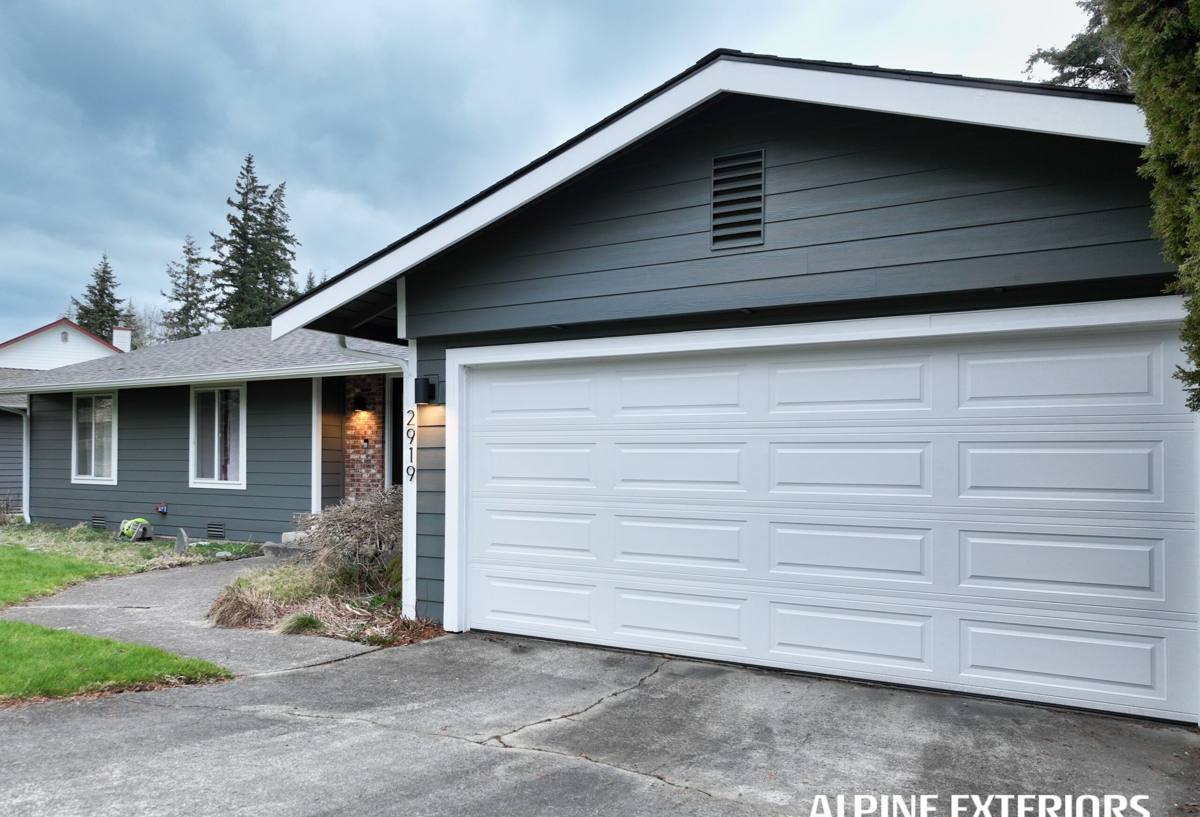
What Bellingham Bay Does to Vertical Siding
Edgemoor sits close enough to the water that homes there deal with a slightly different weather load than siding jobs a few miles inland. Three things matter most for board and batten specifically:
Salt air
Airborne salt off the bay accelerates corrosion on exposed metal — fasteners, flashing, and trim caps — faster than it would on an inland lot. Board and batten has more exposed vertical seams than lap siding, and every one of those seams depends on fasteners and flashing details staying sound for decades, not years.
Driving rain
Storms moving in off the water tend to drive rain sideways against west- and south-facing walls rather than letting it run straight down. Vertical battens can actually funnel that wind-driven water downward along the seam if the drainage plane behind the siding isn't built correctly, which is the opposite of what you want.
A long moss season
Between the tree cover common on Edgemoor's lots and Whatcom County's wet, mild winters, north- and shade-facing walls stay damp for months at a stretch. Moss and algae need exactly that — shade plus moisture — and untreated or poorly finished siding gives them a place to grip.
None of these are exotic problems. They're the same forces every Bellingham home deals with. Edgemoor just gets a slightly heavier dose of all three at once, which is why the installation details matter more here than the marketing on the siding box.
Why Board & Batten Is Less Forgiving Than Lap Siding
Horizontal lap siding is designed to shed water downward, lap over lap, almost by accident of its shape. Board and batten doesn't get that built-in advantage — the battens cover vertical joints, but the wall still needs a real drainage plane behind the boards to work correctly in a wet climate.
What has to happen behind the boards
- A weather-resistive barrier installed and lapped correctly, shingle-style, so water is always directed outward and down
- A drainage gap — typically furring strips or a dedicated rainscreen product — so any moisture that gets behind the panel can drain and the wall can dry
- Properly flashed window and door openings, since board and batten's strong vertical lines make sloppy flashing details more visible, not less
- Correct fastener placement and spacing per the manufacturer's installation instructions, not a generic "close enough" pattern
- Sealant only where the manufacturer's instructions call for it — over-caulking a board and batten wall traps water in as often as it keeps it out
Skip any one of these and the siding can still look right for a year or two. The failures that come from bad board and batten installs are almost always slow — trapped moisture, rot in the sheathing, staining behind the battens — which is exactly why the installation crew's habits matter more than the brand name on the boards.
The James Hardie Board & Batten System We Install
We install James Hardie fiber cement exclusively, and for board and batten that typically means HardiePanel vertical siding installed with Hardie-compatible battens, finished in a factory-applied ColorPlus coating. A few things about that system matter specifically for a bay-adjacent neighborhood like Edgemoor:
Built for this climate zone
Hardie engineers its products by climate zone (its HZ5 and HZ10 lines), accounting for regional moisture and temperature patterns rather than shipping one national product everywhere. Installed correctly, that engineering is what actually stands up to a marine climate over decades — the material doesn't rot, it doesn't feed mold or moss the way wood-based siding can, and it isn't a food source for the insects that thrive in wet coastal wood.
Factory finish instead of field-applied paint
ColorPlus finish is baked on at the factory under controlled conditions, which gives a harder, more UV- and moisture-resistant top coat than most siding gets when it's painted on site or primed and finished after installation. On a shaded, damp wall, that finish is doing real work holding moss and mildew at bay — it's not just about color retention.
Non-combustible
Fiber cement doesn't burn. That's not a bay-specific concern the way moisture is, but it's part of why we standardized on Hardie across every job we do, Edgemoor included.
What a Correct Installation Looks Like, Step by Step
- Tear-off and inspection — old siding comes off and the sheathing underneath gets inspected for hidden rot or moisture damage before anything new goes up. On older Edgemoor homes near the water, this step catches problems the exterior never showed.
- Weather-resistive barrier — a new water-resistive barrier is installed and properly lapped, repairing or replacing anything compromised underneath.
- Flashing at every penetration — windows, doors, hose bibs, vents, and any other wall penetration get flashed before the cladding goes on, not caulked over after the fact.
- Furring or rainscreen installation — the drainage gap goes in before a single Hardie panel is hung.
- Panel and batten installation — HardiePanel is installed to Hardie's fastening specifications, battens are set at consistent, correctly engineered spacing, and every cut edge that needs it gets sealed per manufacturer instructions.
- Trim and detail work — corners, transitions, and the joint where siding meets the roofline or foundation get finished so water is directed away from the wall, not into it.
- Final inspection and cleanup — a walkthrough against the job spec, plus site cleanup, including debris from the wooded lots that are common in the neighborhood.
Cost Factors for Board & Batten in Edgemoor
Every board and batten quote is different because every home is different, but the factors that actually move the number are consistent. This isn't a price list — it's what to ask about when you're comparing bids.
| Factor | Why It Moves the Price | Why It Matters Near the Bay |
|---|---|---|
| Wall condition underneath | Rotted or damaged sheathing found at tear-off has to be repaired before new siding goes on | Older homes near the water more often have hidden moisture damage from decades of salt-laden weather |
| Drainage plane detail | A proper rainscreen or furring system costs more in labor and material than a wall with no drainage gap | Non-negotiable here — without it, driving rain has nowhere to go but into the wall |
| Wall height and complexity | Tall walls, multiple gables, and dormers all add labor time | Common on Edgemoor's custom and multi-story homes |
| Access and site conditions | Tight, wooded, or sloped lots slow staging and material handling | Typical of Edgemoor's tree-covered, waterfront-adjacent parcels |
| Trim and detail scope | Corner treatments, window trim, and transition details add material and labor | Board and batten's vertical lines make trim quality more visible than on lap siding |
What to check before you sign anything
- Does the bid explicitly include a drainage plane (furring or rainscreen), or just panels and battens?
- Is tear-off and sheathing inspection included, or billed as a surprise change order later?
- Does the crew carry current licensing and insurance for exterior work in Washington?
- Will they provide the manufacturer's installation instructions they're actually following?
- Is the warranty explained in writing — both the product warranty and their own labor warranty?
Why a Crew That Already Works Edgemoor Matters
A lot of exterior work in this neighborhood comes with logistics that don't show up on an inland job: mature trees close to the house that require careful staging and site protection, sloped or waterfront-adjacent lots that limit where a dumpster or material stack can go, and homes old enough that what's under the existing siding is a bit of a mystery until tear-off. A crew that has already worked several jobs in Edgemoor has seen those conditions before and prices and plans for them up front instead of discovering them mid-project.
Properties near the bay can also fall under additional local or shoreline-related permitting depending on the specific parcel — that's a City of Bellingham and Whatcom County question that varies by property, and it's worth asking any contractor how they handle it rather than assuming it doesn't apply.
Maintenance Through a Long Moss Season
Correctly installed Hardie board and batten needs very little upkeep, but "very little" isn't "none." A short annual routine keeps it looking right through the wet months:
- Rinse shaded and north-facing walls in late fall before the heaviest rains set in, to knock back early moss and algae growth
- Keep tree limbs and shrubs trimmed back from the siding so walls get airflow and sunlight where possible
- Check caulking at trim and penetrations annually — it's the one maintenance item on a Hardie wall that isn't maintenance-free
- Clear debris and organic buildup from the base of the wall and any horizontal trim ledges, where moisture and moss both tend to collect first
None of this is heavy work, and it's a fraction of what wood-based board and batten siding demands in the same climate — but skipping it entirely lets a damp Bellingham winter get a head start on the wall.
Get an Honest Look at Your Home
If you're weighing board and batten for a home in Edgemoor, the most useful next step is a walk around the actual house — not a price over the phone. We'll look at wall exposure, existing moisture or rot risk, and what the drainage and trim details should look like for your specific lot before we talk numbers. The estimate is free, there's no pressure attached to it, and you'll walk away with a clear picture of what correct work involves either way.