 Bellingham Siding
 Decks in Puget Take a Different Kind of Beating
Puget sits close enough to the water that homes here deal with a different weather pattern than decks built further inland in Whatcom County. Salt-laden air moves through year-round, driving rain comes in sideways for months at a stretch, and the low, damp winters set up a moss season that can run from October into April. None of that is dramatic on its own, but stacked together over a decade or two, it's exactly the combination that ages a deck out from under a homeowner faster than they expect.
A deck that would last 20+ years in a dry climate can start showing real structural problems in half that time here if it wasn't built or maintained with this specific exposure in mind. That's not a knock on the original builder — a lot of decks in this area were built to a generic standard rather than a Puget-specific one. Replacement is the chance to correct that.
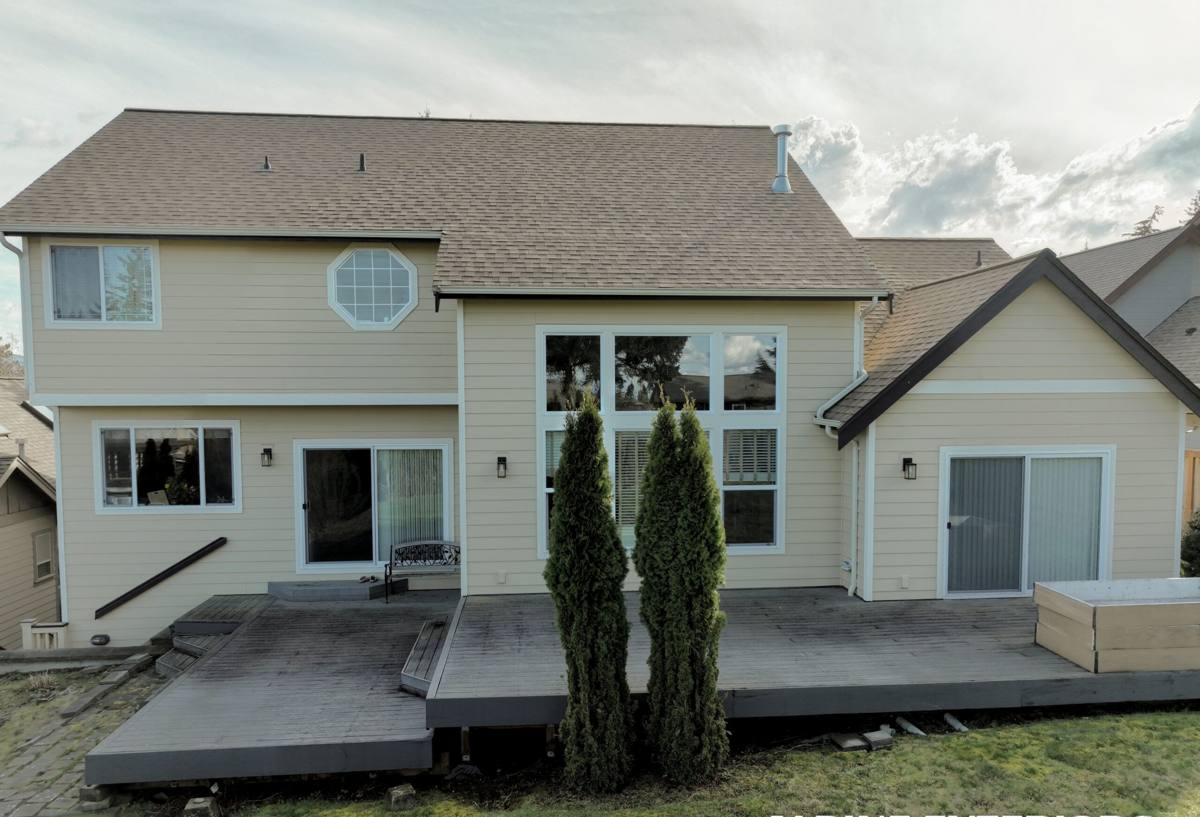
Signs a Puget Deck Needs Replacement, Not Repair
Repair makes sense when the problem is isolated — a few rotten boards, a loose railing, a cracked post cap. Replacement becomes the honest recommendation when the damage has moved past the surface and into the structure itself. In this climate, that usually shows up as:
- Soft or spongy spots in the decking that go beyond a single board
- Rot or discoloration around the ledger board where the deck meets the house
- Rust streaking or crumbling concrete at post bases and footings
- Persistent moss or algae growth that comes back within weeks of cleaning
- Railings or stair stringers that flex, wobble, or have visibly pulled away from fasteners
- A deck more than 20 years old that has never had the ledger flashing or joist tops inspected
If you're seeing two or more of these at once, it's usually a sign the moisture has been working on the structure longer than the surface let on. A trustworthy contractor will tell you plainly when repair is still the right call — replacement isn't always the answer, and we'd rather say so than oversell the job.
Why Moisture Damage Hides Well Here
The tricky part about this climate is that a deck can look fine from a few feet away while the framing underneath is already compromised. Driving rain gets pushed under railing caps and behind ledger boards by wind, then sits there because the air is rarely dry enough to fully evaporate it out between storms. By the time discoloration or softness shows on the visible surface, the framing members underneath have often been wet for a long time.
What a Correct Deck Replacement Involves
A deck replacement done right for this area isn't just swapping old boards for new ones. It's an opportunity to fix the parts of the original build that were never suited to this level of moisture exposure in the first place.
Framing and Structure
We replace ledger boards, joists, beams, and posts that show any rot or corrosion, and we don't reuse hardware that's been sitting in wet framing for years even if it still looks intact. Fasteners and structural connectors go in hot-dip galvanized or stainless rated for ground contact and coastal exposure — standard interior-grade hardware corrodes faster here than most homeowners realize, and a corroded joist hanger is a hidden liability, not a cosmetic issue.
Ledger Board and Flashing
The ledger-to-house connection is the single most common failure point on decks in this climate, because it's where water gets driven by wind and then trapped against the siding and framing. A correct replacement uses proper flashing — typically a metal drip cap paired with a self-adhering waterproof membrane behind it — set up so water sheds away from the house rather than pooling at the connection. This is also the point where we check the siding and sheathing directly behind the deck for hidden damage, since a failed ledger flashing often causes rot that extends beyond the deck itself.
Decking Material Selection
Material choice matters more here than in drier parts of the state, because whatever goes down has to handle standing moisture, moss growth, and salt air without breaking down early. We walk homeowners through the honest trade-offs rather than pushing one product.
| Material | Moisture & Moss Resistance | Maintenance | Typical Lifespan Here |
|---|---|---|---|
| Pressure-treated wood | Fair — needs sealing to perform well | Annual cleaning and re-sealing | 10–15 years |
| Cedar | Good natural resistance, but softens with age | Regular oiling or staining | 15–20 years |
| Composite decking | Very good — resists rot, needs periodic cleaning to prevent surface moss | Low — occasional wash | 25–30 years |
| PVC/capped composite | Excellent — fully sealed surface sheds moisture | Very low | 25–30+ years |
Composite and PVC decking cost more up front, but in a climate with this much sustained moisture and moss pressure, the reduced maintenance and longer service life often make them the more practical choice over the life of the deck. Wood is still a fine option for homeowners who want that look and are committed to yearly upkeep — we're honest about what that upkeep actually requires before you commit to it.
Our Deck Replacement Process
- On-site assessment — we inspect the existing deck, ledger connection, footings, and the siding behind the ledger for hidden moisture damage.
- Scope and material walkthrough — we go over what needs full replacement versus what can be reused, and lay out material options with honest cost and maintenance trade-offs.
- Permitting — most deck replacements of any real size require a permit through the local building department; we handle that paperwork so it isn't left on your plate.
- Demolition and disposal — old decking, framing, and hardware are removed and hauled off, with attention to protecting the ground and landscaping underneath.
- Structural rebuild — footings, posts, beams, and joists are replaced or reinforced to current code, using hardware rated for this climate.
- Ledger flashing and waterproofing — the connection to the house is rebuilt with proper flashing before any decking goes down.
- Decking, railing, and stairs installation — installed per manufacturer spacing and fastening specs, which matters for both appearance and drainage.
- Final walkthrough — we go over the finished deck with you, including what maintenance it will actually need going forward.
Permits and Local Considerations
Deck replacements in Whatcom County generally require a building permit once the project involves structural work — new footings, framing, or a deck built above a certain height off grade. Requirements can shift, so we confirm current rules with the local building department before work starts rather than assuming last year's requirements still apply. Skipping this step is a common shortcut some contractors take to move faster, but it can create real problems later at resale or insurance time, so we build it into the timeline up front.
Keeping Moss and Drainage Under Control Long-Term
No deck in this area is completely maintenance-free, even the low-upkeep materials. What changes with a correctly built replacement is how much effort that maintenance takes and how forgiving the deck is if you fall behind on it for a season. A few habits go a long way here:
- Sweep debris and standing leaves off the deck surface regularly through fall and winter — trapped organic matter is what feeds moss growth
- Rinse or gently power-wash the surface once or twice a year to knock back algae before it gets established
- Keep gutters and downspouts near the deck clear so runoff isn't dumping extra water onto the structure
- Check the ledger flashing and any caulked joints once a year for gaps or cracking
- Re-seal or re-stain wood decking on the schedule the product actually requires, not just when it looks faded
- Trim back overhanging vegetation that keeps the deck surface shaded and slow to dry
A deck that dries out quickly after rain is a deck that resists moss and rot. Drainage details — spacing between boards, slope away from the house, clearance underneath — matter as much as the material itself, and they're decisions made during the build, not after.
Why Hiring a Crew That Already Works in Puget Matters
A lot of deck problems we see started with a build that wasn't wrong anywhere else — it just wasn't built for this specific exposure. A contractor who works Puget and the surrounding Bellingham area regularly already knows which ledger details fail first in driving rain, which hardware actually holds up against salt air over time, and how aggressive the moss season really gets on a deck facing the wrong direction. That's not something you can fully substitute with a generic install checklist. It shows up in small decisions throughout the build — flashing details, fastener choice, board spacing — that add years to a deck's life without adding much to the cost.
We also know this area well enough to give straight answers about what a deck actually needs versus what's optional, instead of steering every homeowner toward the most expensive option out of habit.
Get a Straight Answer About Your Deck
If your deck is showing soft spots, rust at the connections, or moss that keeps coming back no matter how often you clean it, it's worth having someone look at the framing before deciding between repair and replacement. We'll give you an honest read on which one makes sense, walk through material options that actually hold up in Puget's climate, and lay out a clear cost range before any work starts. Request a free, no-pressure estimate using the form below.